
Pellet heat isn't the default in Hampton—here's when it still makes sense.
Hampton's mild, coastal Tidewater winters mean pellet stoves are the exception here, not the rule. We'll help you figure out if one fits your home—and connect you with a local dealer if it does.
Every Project Starts From One of These Five Situations
Hampton's mild winters don't call for whole-home pellet heat.
Hampton sits at essentially sea level—3 feet below it, technically—on the Chesapeake Bay side of the Hampton Roads peninsula, where the Atlantic keeps winters mild. With only 3,461 heating degree days and an average winter low of 32°F, Hampton's heating season looks nothing like Burlington, VT or Duluth, MN, where HDD totals run double or triple that and homeowners need a stove that can hold a fire through a genuine cold snap. Most Hampton homes get by fine on a heat pump or a gas system, and that's reflected in the numbers: pellet stoves here carry a 'not-applicable' relevance rating, right alongside wood-burning appliances.
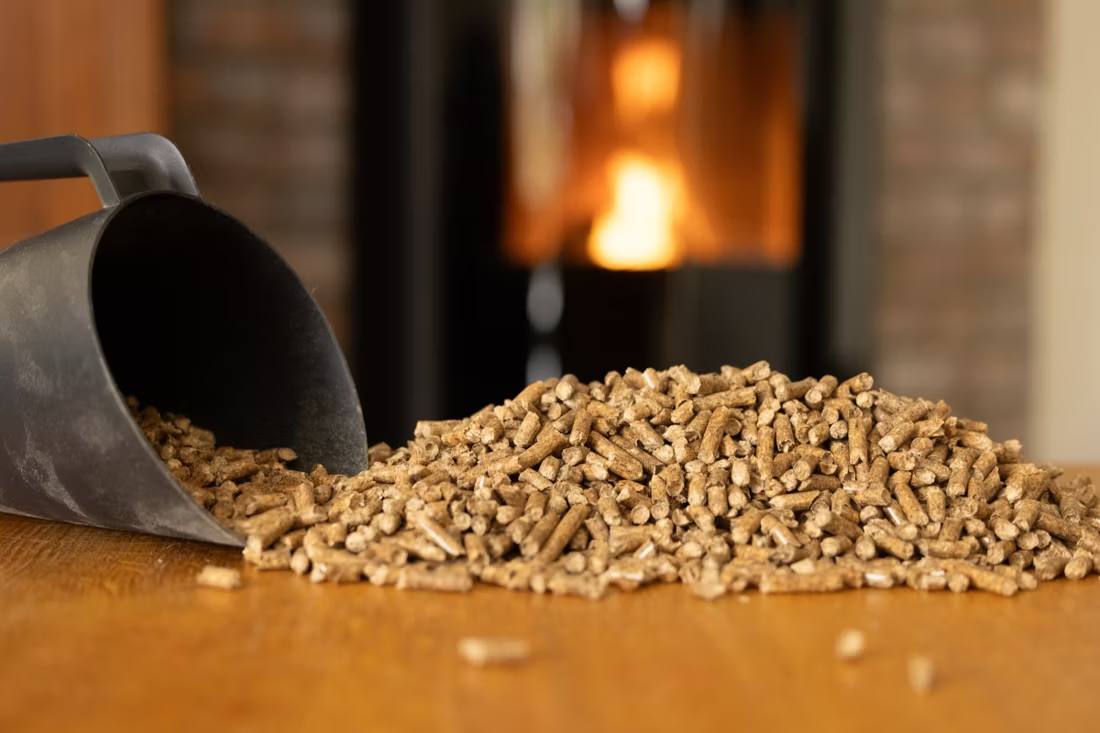
That doesn't mean pellet stoves are impossible to find or install in Hampton—it means they're a niche choice rather than a mainstream one. A handful of homeowners still want one for the ambiance of a real flame, as backup heat for a detached workshop, or because they moved from a colder region and already own the appliance. If that's you, regional pellet brands like Energex, Hamer Pellet Fuel, and Greene Team Pellet Fuel are produced within reach of Tidewater Virginia and available through farm-supply and hearth retailers. Just know going in: pellet stoves run on electricity to power the auger and combustion blower, which matters in a region where Dominion Energy's grid takes hits from nor'easters and hurricane remnants every year.
Three steps. No salesperson until you're ready.
Tell us about your project
Your zip code, your situation, and the fuel you're leaning toward—or let the answers point you to one.
See what's actually available
The brands dealers within 100 miles genuinely carry—real options, never a catalog mirage.
Get your dealer & Project Guide
A trusted local dealer, plus the free Project Guide & Parts List that names every component of the job.
Frequently Asked Questions
Is a pellet stove actually a good fit for a Hampton home?
For most Hampton homeowners, no—not as primary heat. With winter lows averaging 32°F and only 3,461 heating degree days a year, the heating load here is modest, and Dominion Energy's electric rates combined with widely available natural gas make heat pumps and gas inserts the more practical, more common choice. Pellet stoves make sense in Hampton in narrower cases: a detached garage or workshop without HVAC, a den where you want visible flame and steady heat without running gas line, or a home where the owner already has pellet stove experience from living somewhere colder. It's a legitimate option, just not the default one here.
What does a pellet stove installation cost in Hampton?
Nationally, pellet stove installs typically run $3,000 to $6,500 depending on the unit, whether you need a new through-wall vent kit, and any hearth pad or clearance work. Hampton doesn't have the dealer density that colder markets do, so expect fewer local installers to choose from and less price competition than you'd find for a gas insert or heat pump quote. It's worth getting quotes from two or three retailers who carry pellet equipment rather than assuming the first number you hear is competitive—with lower local demand, pricing can vary more than it would in a market where pellet stoves move in volume.
Will a pellet stove work during a power outage from a hurricane or nor'easter?
No—and this is the detail that trips people up. Pellet stoves rely on an electric auger to feed fuel and a blower to distribute heat and exhaust combustion gases, so when Dominion Energy's grid goes down during a coastal storm, the stove goes down with it unless you have a battery backup or generator running the unit. If backup heat during outages is your actual goal in Hampton—a real concern here given the area's exposure to tropical systems—a wood-burning option would serve that purpose better, though wood is also uncommon locally. A propane or natural gas fireplace with a standing pilot and battery-backup ignition is usually the more reliable outage-proof choice for this coastline.
What should I install instead of a pellet stove in Hampton?
Given Hampton's mild HDD numbers and existing gas and electric infrastructure, most homeowners here do better with a direct-vent gas fireplace or insert, or an electric fireplace for supplemental warmth and ambiance without any venting at all. Gas fuel relevance in Hampton is rated standard, meaning local retailers regularly install and service gas units and parts availability is solid. Electric fireplaces are also a strong fit for a coastal Virginia home—no venting, no fuel storage, and at Dominion Energy's residential rate of about $0.1409/kWh, running one for supplemental zone heat is inexpensive.
Can I still buy pellets locally if I already own a pellet stove?
Yes. Even though pellet stoves aren't common as new installs in Hampton, pellet fuel itself is easy enough to source. Regional producers including Energex, Hamer Pellet Fuel, and Greene Team Pellet Fuel supply the mid-Atlantic, and bags typically show up at farm-supply stores and some hardware retailers in the Hampton Roads area, sometimes on a seasonal or special-order basis rather than year-round shelf stock. If you're moving to Hampton with an existing pellet stove, plan to buy a season's supply early rather than counting on walking into a store in January and finding a full pallet waiting.
Do I need a permit to install a pellet stove in Hampton?
Yes—any new solid-fuel appliance installation, including a pellet stove, requires a building permit through the City of Hampton's Codes Compliance office, and the installation must meet clearance and venting code. Because Hampton sits at roughly sea level with a high water table and flood-zone considerations in many neighborhoods, exterior venting placement and any exterior fuel storage should be planned with drainage and flood elevation in mind, particularly in the low-lying zip codes near the waterfront. A retailer who regularly pulls permits in Hampton will know which zip codes carry extra flood-plain review.
What size pellet stove would I need in a Hampton home?
Because Hampton's heating demand is light compared to colder climates, most homeowners who do install a pellet stove here are looking for supplemental or zone heat rather than whole-home output—meaning a smaller-capacity stove, often in the 40,000–50,000 BTU range, is plenty for a single large room or open living area. A stove sized for a cold-climate home (60,000+ BTU, designed to run for hours on end at sub-zero temperatures) would be oversized and inefficient in a Hampton house, cycling on and off constantly rather than running a clean, steady burn.
Is pellet fuel cheaper than electric heat in Hampton?
It depends on usage patterns. Pellets nationally run roughly $250–$320 a ton, and a ton typically yields several weeks of heat for a single room when used as supplemental heat rather than a whole-home source. At Dominion Energy's residential rate of about $0.1409/kWh, running an electric space heater or electric fireplace for the same supplemental purpose in Hampton's mild climate often costs less overall once you account for the pellet stove's upfront hardware cost, annual hopper cleaning, and ash disposal. Pellet only pencils out ahead of electric in Hampton if you're heating a larger detached space for many hours a day, which is a smaller use case here than in colder regions.
Pellet or gas for supplemental heat in a Hampton home?
Gas is the more common answer for Hampton for a few practical reasons: natural gas and propane service are both widely available in the area, gas fireplaces need no fuel storage, and Hampton's humidity—this is a tidal, waterfront city—makes bagged pellet storage more of a hassle than it would be in a drier inland climate, since pellets absorb moisture and swell or crumble if not kept bone dry. Pellet still has a place if you want visible flame with a wood-like feel and don't mind managing fuel storage, but for most Hampton homeowners adding supplemental heat, a direct-vent gas insert or freestanding gas stove installs faster, needs less upkeep, and holds up better in this climate.
Why is a fireplace insert so efficient?
An insert does two things: it seals the chimney completely, so you stop losing air you already paid to heat, and it radiates warmth into the room through the firebox and glass. Most add a heat-exchange fan that pulls cool room air underneath, wraps it around the hot firebox, and pushes it back out warm. Your home is more efficient before you've even lit the first fire.
How often does a pellet stove need cleaning?
A clean pellet stove is a happy pellet stove. Plan on cleaning the burn pot about once a week when you're burning regularly—ash and clinkers gum up the air holes just like a pellet barbecue. Most pellet stove problems trace back to skipped cleaning that nobody explained up front. Some designs make it easy with a trapdoor burn pot: pull a lever and the gunk drops into the ash pan.
How much should I budget for a fireplace?
For an average home—covering the fireplace, the vent pipe, and basic installation—a budget between $3,900 and $5,500 gives you a lot of options across wood, gas, and pellet. By the time you add finish work, gas line, and electrical, the average complete installation lands between $5,000 and $12,000 all-in. In a remodel or new build, a good rule is to put about 2.5% of the total project cost toward the fireplace.
Can a fireplace actually lower my heating bill?
Yes—by creating a comfort zone. A furnace heats every square foot of the house just to warm the one room you're in; a gas fireplace on low burns roughly a sixth of the gas a typical furnace does. Set the furnace around 55–60 degrees as a baseline, then heat the rooms your family actually uses. Families who heat this way commonly save $20–$60 a month.
Pellet Brands Stocked Around Hampton
Manufacturers will point you to the nearest stocking dealer.
See what's actually available for pellet heat in Hampton.
Pellet stoves are a niche fit here, but if it's the right call for your home, we'll match you with a trusted local dealer and send you a free Project Guide & Parts List—the exact equipment, vent kit, and installer recommendation for your Hampton address.
Find Your Fireplace →