
Gas Heat Built for Hampton's Mild, Humid Winters.
Steady, on-demand warmth for Tidewater homes—plus backup heat when nor'easters knock out the power. Find the right gas fireplace or insert and connect with a trusted local dealer.
Every Project Starts From One of These Five Situations
Comfort and backup power for coastal winters, not survival heat.
Hampton sits at the mouth of the James River in Hampton Roads, at an elevation of roughly sea level—the city's official elevation is actually -3 feet. Winters here are short and mild by national standards: average lows hover around 32°F and the city's overall winter heating need is modest, just a fraction of what a place like Burlington, VT or Duluth, MN sees in a single season. That mild, humid subtropical climate is exactly why wood and pellet stoves are essentially absent from the local hearth market—there's neither the sustained cold nor the local firewood-cutting culture to support them. Gas, on the other hand, fits Hampton well: it delivers real ambiance and supplemental heat on the occasional 20-degree night, and—just as importantly along this stretch of coastline—a reliable heat source when nor'easters or hurricane-season storms take down the power grid.
Most of Hampton is served by Virginia Natural Gas, with Dominion Energy Virginia (listed in utility records as Virginia Electric & Power Co) providing the electric side at roughly 14.09 cents per kWh. Because so much of the city sits on slab foundations or shallow crawl spaces—a function of the high water table this close to the Chesapeake Bay—direct-vent sidewall installations are the norm rather than the exception. There's rarely a basement chimney to run venting through; instead, a short horizontal run out an exterior wall does the job, which keeps installation straightforward in ranch-style homes across neighborhoods like Wythe, Fox Hill, and Buckroe.
Three steps. No salesperson until you're ready.
Tell us about your project
Your zip code, your situation, and the fuel you're leaning toward—or let the answers point you to one.
See what's actually available
The brands dealers within 100 miles genuinely carry—real options, never a catalog mirage.
Get your dealer & Project Guide
A trusted local dealer, plus the free Project Guide & Parts List that names every component of the job.
Frequently Asked Questions
How much does a gas fireplace installation cost in Hampton?
Most gas fireplace and insert installations in Hampton run $3,500 to $9,000, with the low end covering a direct-vent insert into an existing masonry fireplace where a gas line is already nearby, and the high end covering new construction or additions where a fresh Virginia Natural Gas line has to be run to the unit. Homes on the older side—plenty of Hampton's housing stock near Buckroe and Wythe dates to the mid-20th century—sometimes need extra work to bring gas service to the fireplace location, which pushes cost toward the top of that range. A local installer will give you a firm number after seeing your specific gas line routing.
Can I convert my existing wood-burning fireplace to gas?
Yes, and it's a common upgrade in Hampton's older masonry-fireplace homes. A gas insert slides into the existing firebox, and a stainless liner runs up through the original chimney to vent safely—no new chimney needed. Because wood-burning was never heavily used here to begin with (Hampton's mild winters mean wood and pellet stoves are essentially not part of the local market), a lot of these older fireplaces have sat unused or underused for years, making them good candidates for a gas conversion that actually gets regular use again.
Do I need natural gas service, or should I use propane?
If your Hampton address is within Virginia Natural Gas's service area—which covers the large majority of the city, from Phoebus to Buckroe to the areas around Fort Monroe—natural gas is almost always the simpler and cheaper option, especially if your home already has gas for a water heater, range, or furnace. For the small number of homes on the fringes of the service territory, propane is a workable alternative, delivered and stored in a tank on the property. Either fuel works in most modern gas fireplace models; your installer just configures the orifice and regulator for whichever you're running.
Will a gas fireplace keep working if the power goes out?
For the most part, yes—which matters in a city that sees its share of nor'easters and tropical storm remnants moving up the Chesapeake. Gas fireplaces with IPI (intermittent pilot ignition) run on a small battery backup that kicks in automatically when utility power drops, so the unit lights and operates normally even with the lights out. Valor fireplaces go a step further: their pilot assembly generates its own electricity through a thermocouple, so there's no battery to remember to replace. For Hampton homeowners who've been through a multi-day outage after a hurricane, that kind of self-sufficient ignition is worth asking your dealer about.
What's the difference between a gas fireplace, insert, and stove?
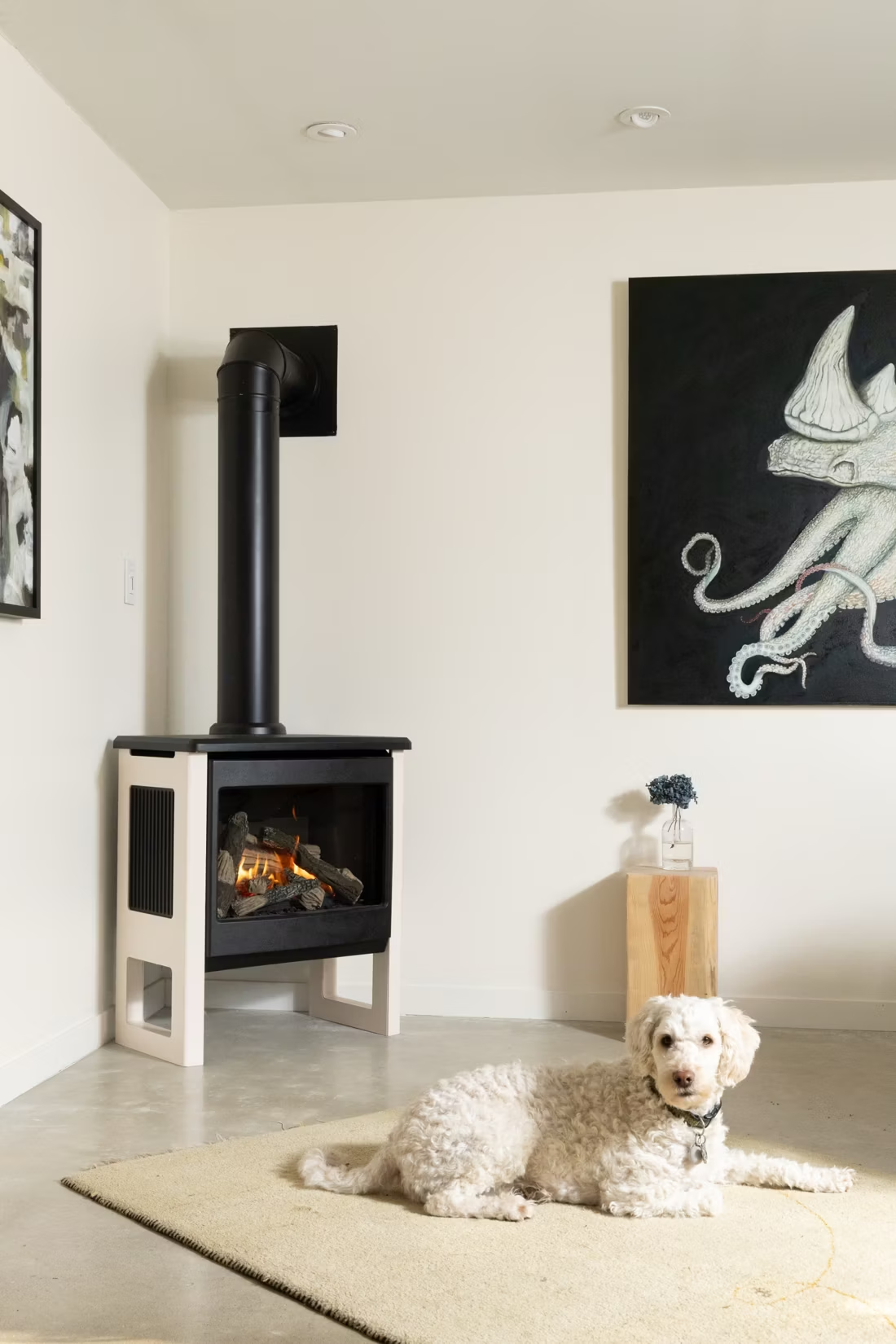
A gas fireplace is a built-in, framed-in unit—the right call for new construction or a remodel where there's no existing fireplace. A gas insert drops into an existing masonry firebox, which is the common path for Hampton's older homes with unused wood fireplaces. A gas stove is a freestanding cabinet-style unit that sits on the floor and vents out a nearby wall, a good option for homes without any existing fireplace opening at all—common in the ranch and rambler-style houses that make up a lot of Hampton's post-war neighborhoods.
Do I need a permit to install a gas fireplace in Hampton?
Yes—the City of Hampton requires a building permit and a separate gas permit for any new gas fireplace or insert installation, and the gas line work itself has to be done by a licensed gas fitter. Most hearth dealers handle the permitting and inspection scheduling as part of the installation, so you're not coordinating it yourself. If your home sits in one of Hampton's designated flood zones near the waterfront, your installer will also confirm the appliance and any gas meter work meet the city's base flood elevation requirements—worth flagging early if you live near the Hampton River or Back River.
Should I get a vented or vent-free gas fireplace?
Vented (direct-vent) units draw combustion air from outside and exhaust it back outside through a sealed pipe, keeping combustion byproducts out of your living space entirely. Vent-free units burn without any outside venting and release some water vapor and combustion gases into the room. Virginia permits vent-free units within specific room-size and ventilation rules, but they're a harder sell in a place like Hampton, where humidity is already a year-round concern near the Bay—adding more moisture into a home's air isn't ideal for a coastal, humid subtropical climate prone to mold and mildew issues. Direct-vent is the more common and more recommended choice locally for that reason.
How often does a gas fireplace need to be serviced?
Plan on an annual inspection, typically in early fall before the unit sees regular use through Hampton's short cold season. A technician checks the burner, pilot assembly, venting, and gas connections, and cleans the glass and interior—usually $150 to $250 for a standard service call from a Hampton Roads hearth or HVAC company. It's a quick appointment, but skipping it is how minor issues like a dirty flame sensor or a cracked gasket turn into no-heat calls on the one week of the year you actually need the fireplace.
Gas, electric, or wood—which fireplace fits my Hampton home?
For most Hampton homeowners, gas is the practical choice: real flame, instant on-off, and backup heat during power outages when paired with battery or self-generating ignition. Electric fireplaces (standard here, running on Dominion Energy's roughly 14-cent-per-kWh residential rate) are a solid fit for condos, rentals, and apartments near Langley or downtown Hampton where venting isn't an option—they plug into a standard outlet and need no gas line or chimney at all. Wood stoves, by contrast, are genuinely uncommon in Hampton; the mild winters and lack of a local firewood-cutting culture mean you'll see far more oak, hickory, and maple burned in backyard fire pits than in indoor wood stoves. A handful of homeowners do keep a wood-burning fireplace for atmosphere, but it's not a heating strategy most people here rely on.
Why is my open fireplace making my house colder?
Open fireplaces suck—literally. As the fire burns, it consumes air your furnace already paid to heat and pulls it out through the chimney, so the house is actually colder after the fire goes out than before you lit it. An insert fixes this: it seals the chimney, puts fixed glass across the front, and turns that hole in your house into a real heat source.
What's the difference between an insert and a zero-clearance fireplace?
An insert is a fireplace that slides into a pre-existing wood-burning fireplace—if you don't have one, there's nothing to insert it into. A zero-clearance fireplace is built into a framed wall, which makes it the answer for remodels and new construction. Simple test: existing masonry fireplace means insert; blank or framed wall means zero-clearance.
Can a fireplace actually lower my heating bill?
Yes—by creating a comfort zone. A furnace heats every square foot of the house just to warm the one room you're in; a gas fireplace on low burns roughly a sixth of the gas a typical furnace does. Set the furnace around 55–60 degrees as a baseline, then heat the rooms your family actually uses. Families who heat this way commonly save $20–$60 a month.
What is an in-home preview and do I need one?
It's a visit where a hearth professional measures your space, confirms the model you picked actually works in your home, and walks the specs—framing, gas line, venting, finish work—before anything is ordered. Some details you just can't know until you see the house. Never make a down payment without one; it's the single most-skipped step that burns buyers.
Find your gas fireplace in Hampton.
Tell us about your home and we'll put together your free Project Guide & Parts List—the exact parts, vent kit, and a trusted local Hampton dealer to get it installed right.
Find Your Fireplace →