
Keep Your Family Warm and Safe—No Matter What
Hampton's winters are mild by national standards, but Chesapeake Bay storms knock out power more often than most places. Find the right wood stove or insert, and connect with a trusted local dealer who can size it correctly for a Tidewater home.
Every Project Starts From One of These Five Situations
Not your primary heat—but your best backup.
Hampton sits on the Chesapeake Bay at the mouth of the James River, with a mild winter heating season and winter lows averaging around 32°F—a fraction of what a place like Duluth or Fargo sees. That's why wood stoves here are rarely a family's only heat source. Most Hampton homes run on heat pumps or gas furnaces for day-to-day comfort, and a wood stove or fireplace insert gets added for supplemental heat on the coldest nights, for the look and feel of a real fire, and—increasingly—as a hedge against the power outages that come with hurricane season and winter nor'easters.
Local hardwoods here run heavy to oak, hickory, and maple, all of which burn hot and dense and are widely available from regional firewood suppliers. Because Hampton has no air quality non-attainment issues and no winter burn curtailment periods, there's no seasonal restriction on when you can run a wood stove—unlike parts of the West Coast where inversion-driven burn bans are common. That makes wood heat here a straightforward, low-hassle option for anyone in Phoebus, Wythe, Fox Hill, Buckroe, or elsewhere in the city who wants a fireplace that still works when Dominion Energy's lines go down.
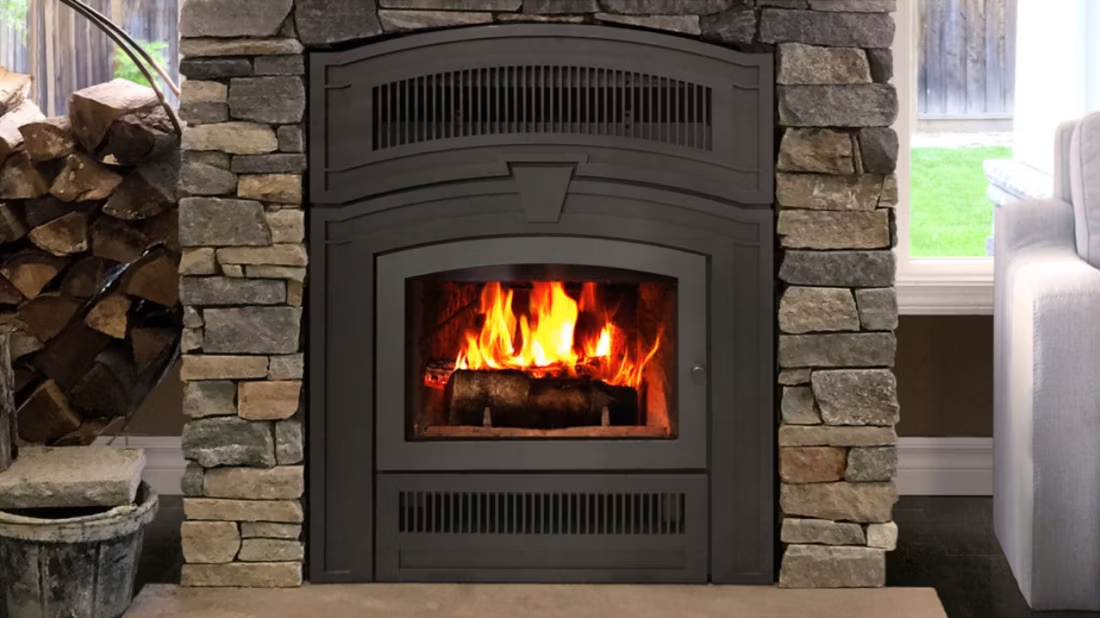
Three steps. No salesperson until you're ready.
Tell us about your project
Your zip code, your situation, and the fuel you're leaning toward—or let the answers point you to one.
See what's actually available
The brands dealers within 100 miles genuinely carry—real options, never a catalog mirage.
Get your dealer & Project Guide
A trusted local dealer, plus the free Project Guide & Parts List that names every component of the job.
Frequently Asked Questions
How much does a wood stove installation cost in Hampton?
Most wood stove and insert installations run in the $3,500 to $8,000 range depending on the unit, whether you already have a chimney or masonry fireplace to work with, and how much venting work is required. A wood insert going into an existing fireplace with a sound chimney sits toward the lower end. A freestanding stove in a home with no existing chimney—common in Hampton's newer subdivisions built around central HVAC—costs more once Class A chimney pipe and roof penetration are added. A local installer will give you a firm number after seeing the space in person.
Do I really need a wood stove if my winters are this mild?
It depends on what you're solving for. With a fairly mild winter heating season, Hampton doesn't need wood heat to survive winter the way a place like Burlington or Bismarck does. But Hampton Roads sees regular hurricane-season outages and nor'easters that can knock out power for days, and a wood stove is one of the few heat sources that keeps working when the grid doesn't. Plenty of Hampton homeowners install one specifically for that resilience, plus the ambiance of a real fire on the handful of genuinely cold nights each winter—not as their primary furnace replacement.
What size wood stove do I need for a Hampton home?
Because Hampton's winters are mild compared to colder parts of the country, most homes here do fine with a small to medium stove rated for supplemental heat rather than a large, whole-home unit. A stove sized for 1,000 to 1,500 square feet is typically plenty even in a larger house, since it's covering the coldest snaps and outage periods rather than running around the clock all winter. Oversizing is the more common mistake locally—a stove sized for a much colder climate will run too hot and force you to damper it down constantly. A local dealer can size it based on your square footage and whether you want backup heat or just a supplemental fireplace.
Where can I find certified wood stove installers near Hampton?
Look for installers with NFI (National Fireplace Institute) certification or CSIA (Chimney Safety Institute of America) credentials—both indicate formal training in wood-burning appliance installation and clearance requirements. Hearth retailers serving the Hampton Roads area typically cover Hampton, Newport News, and the Peninsula without a separate travel charge. Since most homes in the city were built for central heat rather than wood, proper venting and clearance work matters even more here—avoid handyman or general-contractor installs for a wood-burning unit.
Do I need a permit to install a wood stove in Hampton?
Yes—a building permit is required for new wood stove and insert installations in the city, and the unit itself needs to meet current EPA emissions standards. Most local hearth retailers handle the permit filing as part of the installation, so it's rarely something homeowners have to manage themselves. Because Hampton has no wildfire smoke or winter inversion issues, there's no seasonal burn curtailment to plan around—once it's installed and inspected, you can run it whenever you want.
What's the best wood stove for a mild, coastal climate like Hampton's?
For a climate with Hampton's winter lows—averaging around 32°F rather than sub-zero—a mid-sized non-catalytic stove from a brand like Pacific Energy or Lopi is usually a better fit than a large catalytic unit built for 20-hour burns in Rocky Mountain cold. You want something that heats a room well and starts easily for occasional and storm-driven use, not a stove designed to run around the clock all season. Local oak and hickory firewood burns hot and dense, so even a mid-size stove puts out plenty of heat once it's established. A local retailer can match the unit to your square footage and how often you expect to actually burn it.
How often should my chimney be inspected in Hampton?
The CSIA recommends an annual inspection for any wood-burning appliance, and that holds even in a mild climate like Hampton's—creosote builds up based on burn habits, not just how many months you burn. For a stove used mainly as backup heat during outages and cold snaps, an annual late-summer inspection before hurricane season is a good rhythm, since that's also when you want to confirm the stove is ready to run if the power goes out. Coastal humidity in Hampton Roads can also accelerate corrosion on chimney caps and metal flashing, so a yearly check catches issues before they become expensive.
Where can I get firewood in Hampton?
Local firewood suppliers around the Peninsula sell seasoned oak, hickory, and maple by the cord, which is the standard measure for a stacked pile 4 feet high, 4 feet deep, and 8 feet long. Hickory and oak are both dense hardwoods that burn long and hot, making them well suited to the occasional-use pattern most Hampton households actually have—you want wood that catches easily and holds heat through a cold snap or an outage, not a stove running nonstop all winter. Buy seasoned wood (moisture content under 20%) rather than green wood, since Hampton's humid summers slow down natural drying.
Wood stove vs. pellet stove—which makes more sense in Hampton?
Wood stoves work without electricity, which matters in Hampton given how often hurricane season and nor'easters take out power for days at a time—that's a real advantage over a pellet stove, which needs electricity to run its auger and blower. Pellet stoves, available locally in brands like Energex, Hamer Pellet Fuel, and Greene Team Pellet Fuel, are easier to load and burn cleaner with less ash, which appeals to homeowners who want convenience for everyday supplemental heat. If backup heat during outages is your main reason for adding a hearth appliance, wood is the more resilient choice. If you mainly want easy, clean supplemental warmth and don't expect to rely on it during a blackout, pellet is worth a look too.
Why won't my new wood stove get going like my old one?
New wood stoves are 70%+ efficient, so far less heat goes up the flue—which also means less draft to get a fire established. The rule: build a genuinely hot fire for about 45 minutes before you choke it down. Skip that and you get smoke in the room, creosote in the chimney, and a fire that never takes off. Most performance complaints trace straight back to this.
What's the difference between an insert and a zero-clearance fireplace?
An insert is a fireplace that slides into a pre-existing wood-burning fireplace—if you don't have one, there's nothing to insert it into. A zero-clearance fireplace is built into a framed wall, which makes it the answer for remodels and new construction. Simple test: existing masonry fireplace means insert; blank or framed wall means zero-clearance.
What is an in-home preview and do I need one?
It's a visit where a hearth professional measures your space, confirms the model you picked actually works in your home, and walks the specs—framing, gas line, venting, finish work—before anything is ordered. Some details you just can't know until you see the house. Never make a down payment without one; it's the single most-skipped step that burns buyers.
How much should I budget for a fireplace?
For an average home—covering the fireplace, the vent pipe, and basic installation—a budget between $3,900 and $5,500 gives you a lot of options across wood, gas, and pellet. By the time you add finish work, gas line, and electrical, the average complete installation lands between $5,000 and $12,000 all-in. In a remodel or new build, a good rule is to put about 2.5% of the total project cost toward the fireplace.
Stove and Fireplace Dealers in Hampton County
Listings include WhyFire partner dealers, dealers we have verified as authorized for the brands we recommend, and established local businesses that carry hearth products. Every listing shows which one it is. The ones marked Preferred run on WhyFire's software, so they can show you real pricing and book your appointment right here. No manufacturer pays for placement. How we verify dealers →
Fireside Hearth & Home - Newport News
Taylor's Do It Center
Ray Johnson's Fireplace Shop
Coastal Chimney & Contracting, Corp.
Taylor's Fire Works
Find your wood fireplace in Hampton.
Tell us a bit about your home and we'll match you with a wood stove or insert sized for Hampton's mild winters and storm season, plus a free Project Guide & Parts List and a trusted local dealer to install it.
Find Your Fireplace →