
Add real warmth to any room in Hampton—no chimney required.
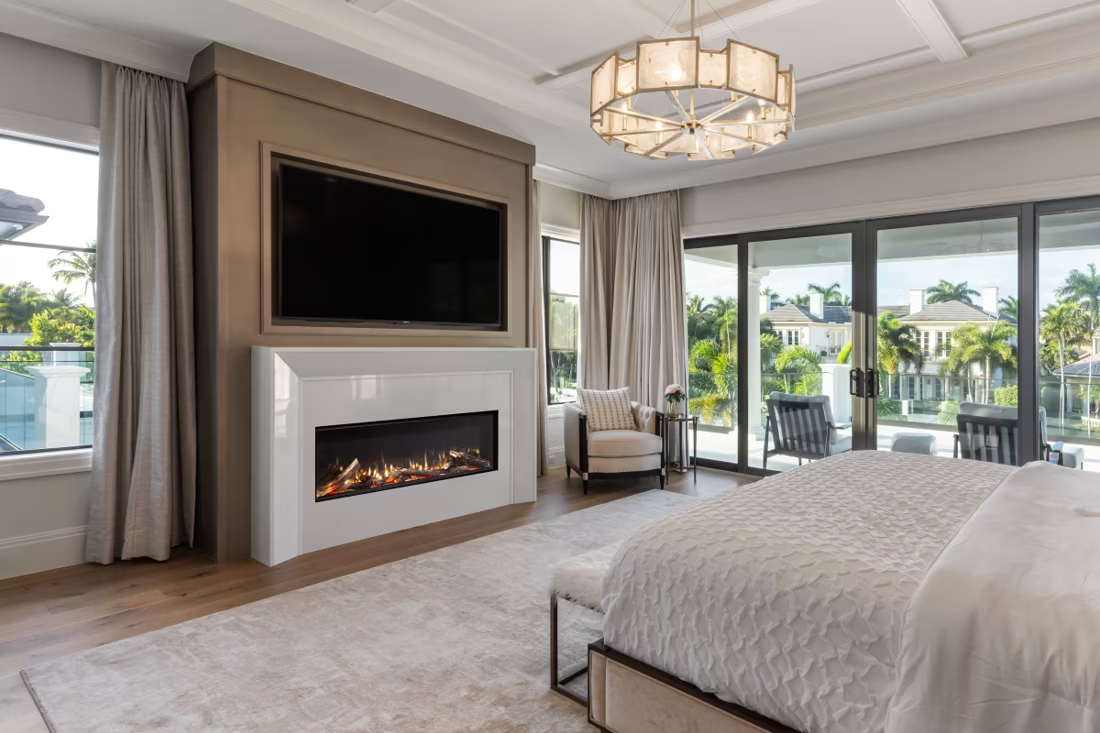
With a short, mild winter season and winter lows averaging 32°F, Hampton Roads doesn't demand a wood-fired furnace to stay comfortable. Electric fireplaces bring instant ambiance and supplemental zone heat to condos, historic Phoebus cottages, and Fox Hill homes alike—plug in or wire in, no venting or masonry required. We'll match you with a local dealer who can size the right unit for your room.
Every Project Starts From One of These Five Situations
Mild coastal winters, modern convenience.
Hampton sits on the Chesapeake Bay with a heating load that's modest by national standards—a mild winter season and an average winter low of 32°F, a fraction of what a home in Minneapolis or Burlington, Vermont sees in a typical season. That mild profile is exactly why electric fireplaces have found a real foothold here: most Hampton homes don't need a whole-house wood or gas system to stay warm, they need a way to take the chill off a bedroom, sunroom, or den during the shoulder months. An electric unit does that job well, and does it in neighborhoods like Wythe and Phoebus where many older homes were never built with a second flue.
Because there's no combustion, no gas line, and no chimney to maintain, electric fireplaces install almost anywhere—a wall-mount unit can go up with a dedicated circuit, and an electric insert can drop into an existing but unused masonry firebox in an older Hampton home, keeping the original mantel while eliminating ash and creosote. The one honest trade-off worth knowing: electric fireplaces run on the grid, and Hampton Roads sees its share of hurricane-season and nor'easter outages between June and November. Unlike a wood stove, an electric unit goes dark when Dominion Energy's lines go down, so most homeowners here treat it as daily comfort and ambiance rather than storm-season backup heat.
Three steps. No salesperson until you're ready.
Tell us about your project
Your zip code, your situation, and the fuel you're leaning toward—or let the answers point you to one.
See what's actually available
The brands dealers within 100 miles genuinely carry—real options, never a catalog mirage.
Get your dealer & Project Guide
A trusted local dealer, plus the free Project Guide & Parts List that names every component of the job.
Frequently Asked Questions
How much does an electric fireplace installation cost in Hampton?
Most electric fireplace projects in Hampton run $400 to $2,500. A plug-in wall-mount or freestanding unit sits at the low end and often needs no electrical work beyond an existing outlet. A built-in electric fireplace or an insert into an existing masonry firebox typically requires an electrician to run a dedicated 20-amp circuit, which pushes the cost toward the middle and upper end of that range depending on how far the circuit has to travel from the panel—an important factor in older Phoebus and Wythe homes with older wiring. Larger linear or mantel-style built-ins for new construction can run higher once framing and trim work are included.
What size electric fireplace do I need for my Hampton home?
Electric fireplaces are zone heaters, not whole-home furnaces, so sizing is about the room, not the square footage of the house. A standard 1,500-watt unit comfortably supplements heat in a 400 to 1,000 square foot space—enough for a den, primary bedroom, or open living area in a typical Hampton home. Given the region's mild winter lows around 32°F, most homeowners here are supplementing an already-adequate central system rather than replacing it, so bigger isn't always better—a correctly sized unit for the room will feel warmer and cycle more efficiently than an oversized one. A local dealer can walk your space and recommend wattage and placement.
Do I need a permit to install an electric fireplace in Hampton?
It depends on the installation. A freestanding, plug-in electric fireplace generally doesn't require a permit since it uses an existing outlet like any other appliance. A built-in unit or an insert that requires a new dedicated circuit or any electrical panel work does require a permit through the City of Hampton's building and code compliance office, and the electrical work should be done by a licensed electrician. Most local hearth dealers coordinate this as part of the installation, so you're not left tracking down permits yourself.
Will my electric fireplace work during a power outage?
No—and this is the one real limitation worth planning around in Hampton Roads. Electric fireplaces run entirely on grid power, so when a hurricane or nor'easter knocks out electricity, the unit goes dark along with everything else in the house. This is different from a wood stove, which keeps working regardless of the grid. For most Hampton homeowners this isn't a dealbreaker since electric fireplaces are chosen for daily zone heat and ambiance rather than emergency backup, but if storm-season resilience matters to you, pair the electric unit with a portable generator or consider a wood or gas option for at least one room in the house.
What's the difference between an electric fireplace, insert, and stove?
A built-in electric fireplace is designed to be framed into a wall like a window, common in new construction or remodels. An electric insert is sized to slide into an existing masonry firebox—a popular choice for older Hampton homes in Phoebus or Downtown that have a fireplace opening but no working chimney or no interest in burning wood. An electric stove is a freestanding cabinet-style unit that mimics a wood stove's look and can sit against nearly any wall without a hearth pad or clearance requirements. All three use the same basic heating cartridge; the choice mostly comes down to whether you're filling an existing opening, building new, or want something portable.
What's the best electric fireplace for Hampton's climate?
Because Hampton's winters are mild—average lows around 32°F and a short, gentle heating season—homeowners here generally prioritize flame realism and room ambiance over maximum BTU output, since the unit is supplementing an already-capable central system rather than replacing it. Brands like Dimplex and Napoleon are common choices among local dealers for their flame-effect quality and quiet operation. If you're converting an existing masonry firebox in an older Wythe or Buckroe home, ask about insert models sized specifically for standard firebox openings rather than a universal freestanding unit.
Electric vs. gas—which is right for my Hampton home?
Gas fireplaces deliver more heat output and real flame, and homes already served by Virginia Natural Gas can run a direct-vent unit efficiently, but gas requires venting and a gas line, which adds cost and construction complexity—a bigger hurdle in older Hampton neighborhoods without existing gas infrastructure. Electric skips all of that: no venting, no gas line, and a fraction of the install cost, though it can't match gas for raw heat output in a larger room. For a supplemental zone-heat application in Hampton's mild climate, electric is often the simpler and more cost-effective answer; for homeowners who want a fireplace that can meaningfully offset winter heating bills, gas is worth the extra investment.
Electric vs. pellet stove—which makes more sense here?
Pellet stoves burning regional fuel from brands like Energex, Hamer Pellet Fuel, or Greene Team Pellet Fuel produce more heat and can serve as a primary source in a colder climate, but they need venting, a hopper to refill, and—like an electric fireplace—they run on electricity to power the auger and blower, so neither option works during a power outage without a generator. Given Hampton's mild heating load, most homeowners don't need a pellet stove's higher output; an electric fireplace delivers comparable ambiance with none of the venting, fuel storage, or ash cleanup that a pellet appliance requires.
How much maintenance does an electric fireplace need?
Very little—that's one of the main appeals for Hampton homeowners tired of chimney sweeps or gas line inspections. An electric fireplace needs occasional dusting of the blower vents, an eventual LED or heating element replacement after years of use, and no annual professional service is required. There's no combustion byproduct, no creosote, and no venting to inspect, which makes it a low-maintenance option for rental properties, condos, and second homes throughout Hampton Roads.
Does an electric fireplace need a vent or chimney?
No—that's its superpower. An electric fireplace needs a wall and an outlet, period. No vent pipe, no gas line, no clearances to design around, which is why it works in bedrooms, offices, apartments, and walls where venting a gas or wood unit would be impractical or impossible. Installation is typically the simplest and least expensive of any fireplace type.
How much does an electric fireplace cost to run?
With the heater on, a typical unit draws about 1,500 watts—at average electric rates that's roughly 20 cents an hour. Run the flame effect alone and it costs pennies; the flames are LED-driven and use about as much power as a light bulb. There's no pilot light, no fuel delivery, and essentially no maintenance.
Can I install a fireplace myself?
If you're putting a fire in your house on purpose, it's best to work with an expert. Unless you're genuinely experienced in framing, gas line, vent pipe, and the national code on clearances to combustibles, have a professional do it—and ideally the same company that sells you the fireplace, so warranty, service, and liability all live under one roof.
Can a fireplace actually lower my heating bill?
Yes—by creating a comfort zone. A furnace heats every square foot of the house just to warm the one room you're in; a gas fireplace on low burns roughly a sixth of the gas a typical furnace does. Set the furnace around 55–60 degrees as a baseline, then heat the rooms your family actually uses. Families who heat this way commonly save $20–$60 a month.
Stove and Fireplace Dealers in Hampton County
Listings include WhyFire partner dealers, dealers we have verified as authorized for the brands we recommend, and established local businesses that carry hearth products. Every listing shows which one it is. The ones marked Preferred run on WhyFire's software, so they can show you real pricing and book your appointment right here. No manufacturer pays for placement. How we verify dealers →
Fireside Hearth & Home - Newport News
Taylor's Do It Center
Ray Johnson's Fireplace Shop
Coastal Chimney & Contracting, Corp.
Taylor's Fire Works
Find your electric fireplace in Hampton.
Tell us about your room and your home, and we'll match you with a trusted local Hampton dealer and send over a free Project Guide & Parts List—the exact unit, circuit requirements, and installation plan for your space.
Find Your Fireplace →