
Consistent, thermostat-controlled heat for Cumberland County homes.
From farmhouses along Route 60 to lake homes near Bear Creek Lake State Park, a pellet stove gives Cumberland County's Piedmont households steady, hands-off heat without splitting or stacking wood. Find the right unit and connect with a trusted local dealer.
Every Project Starts From One of These Five Situations
Hopper-fed heat that fits rural Piedmont living.
Cumberland County sits in Virginia's Piedmont, a rural stretch of farmland and hardwood forest between the James and Appomattox rivers, home to just a few hundred year-round residents scattered across the county's acreage near Bear Creek Lake State Park and the Cumberland State Forest. The county falls in climate zone 4A—the mixed-humid belt that covers most of central Virginia—with winter lows that can drop into the teens on the coldest nights but plenty of mild stretches in between. That kind of swing climate is exactly where a pellet stove earns its keep: set the thermostat, load the hopper, and let the auger do the rest instead of tending a fire through an unpredictable Piedmont winter.
Cumberland County has no wood-burning air quality restrictions to navigate, so the case for pellet heat here comes down to convenience rather than regulation. The county's oak, hickory, and maple forests support plenty of traditional wood-burning too, but pellet fuel offers cleaner, more consistent output with far less labor—appealing for smaller households, older homeowners, or anyone managing a rural property without the time to split and stack cordwood. Regional producers including Energex, Hamer Pellet Fuel, and Greene Team Pellet Fuel supply the mid-Atlantic pellet market, which generally means shorter supply lines and steadier pricing than pellets shipped in from farther away.
Three steps. No salesperson until you're ready.
Tell us about your project
Your zip code, your situation, and the fuel you're leaning toward—or let the answers point you to one.
See what's actually available
The brands dealers within 100 miles genuinely carry—real options, never a catalog mirage.
Get your dealer & Project Guide
A trusted local dealer, plus the free Project Guide & Parts List that names every component of the job.
Frequently Asked Questions
How much does a pellet stove installation cost in Cumberland County?
A typical pellet stove or insert installation runs roughly $3,000 to $6,500 depending on the unit, whether it's a freestanding stove or an insert going into an existing fireplace, and how much venting work is involved. Pellet appliances vent through a smaller-diameter pipe than wood stoves, which usually keeps labor lower, but homes farther out from Cumberland's dealer network—toward the county's edges near Farmville or Powhatan—may see a modest travel charge added to the quote. A local installer can give you a firm number after seeing your chimney or wall setup in person.
What size pellet stove do I need for my Cumberland County home?
Sizing comes down to square footage, ceiling height, and whether the stove is your main heat source or a supplement to central heat. For most of Cumberland County's farmhouses and single-story homes, a mid-size unit with a 40-to-60-pound hopper strikes the right balance—enough capacity to run overnight through a cold snap in the teens without needing the oversized hoppers you'd see in a harder winter climate like Burlington, Vermont. Larger, open-concept homes or drafty older farmhouses with less insulation may need to size up. Any local dealer will walk your space before recommending a specific model.
Where can I find a certified pellet stove installer near Cumberland County?
Look for installers with NFI (National Fireplace Institute) pellet certification, which covers proper venting, clearances, and combustion-air setup specific to pellet appliances. Given Cumberland County's small population and rural footprint, most homeowners end up working with a dealer based in a nearby hub—Farmville, Richmond, or the Lynchburg corridor—that regularly services this part of the Piedmont. That's normal here; the key is confirming the dealer actually installs in Cumberland County and stands behind the work, not just that they're the closest storefront on a map.
What's the difference between a pellet stove and a pellet insert?
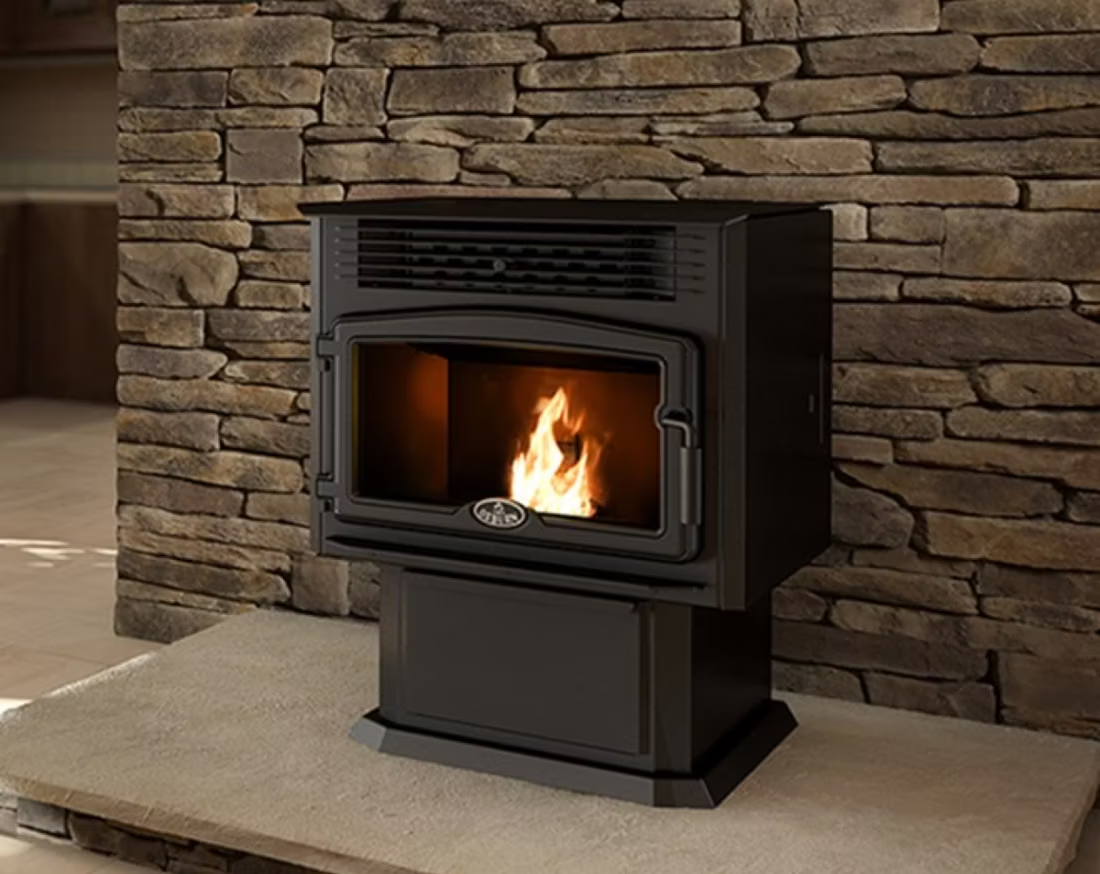
A pellet stove is a freestanding unit that sits on its own hearth pad and vents through a wall or existing chimney chase—it can go almost anywhere with the right clearances. A pellet insert is built to slide into an existing masonry fireplace opening, using a stainless liner run up the old chimney for venting. For Cumberland County homes with an older brick fireplace that rarely gets used, an insert is often the simpler upgrade since it repurposes a chimney you already have. Homes without an existing fireplace, including newer builds, typically go with a freestanding stove instead.
Do I need a permit to install a pellet stove in Cumberland County?
Yes—installing a new pellet stove or insert requires a building permit through Cumberland County's building department, and the work has to meet Virginia's Uniform Statewide Building Code along with the manufacturer's listed clearances. Most local dealers handle the permit application and schedule the inspection as part of the installation, so you typically aren't filing paperwork yourself. It's worth confirming with your installer up front that permitting is included in the quote rather than assuming it is.
What's the best pellet stove for Cumberland County's climate?
Because zone 4A winters swing between mild stretches and occasional hard cold, most Cumberland County homes do well with a mid-capacity pellet stove with auto-ignition and a modulating burn rate—you don't need the oversized hopper or extended burn times that a stove in a much colder market like Duluth, Minnesota would require. Popular brands sold through Piedmont-area dealers include Harman, Englander, and US Stove, all of which offer models sized for a single large room up to a full main living area. The right pick depends on your home's layout and insulation, which a local dealer will assess before recommending a model.
How much maintenance does a pellet stove need?
Pellet stoves need more routine attention than a gas unit but far less than a wood stove. Plan on emptying the ash pan every few days during regular use, cleaning the burn pot and glass weekly, and vacuuming the hopper and auger area periodically to keep pellet dust from building up. Once a year, have a technician clean the exhaust vent and inspect the combustion blower—this is typically a $150 to $250 service call. Staying current on this keeps efficiency high and prevents the auger jams that are the most common pellet-stove complaint.
Where can I buy pellet fuel near Cumberland County?
Regional producers including Energex, Hamer Pellet Fuel, and Greene Team Pellet Fuel are commonly stocked at hearth shops and farm-supply stores serving central Virginia, and prices generally run in the $230 to $300 per ton range for bagged hardwood pellets, though it pays to buy early—supply tightens once cold weather sets in. Given Cumberland's rural layout, some households buy a season's worth at once rather than making repeat trips, which is worth planning for given the county's limited in-town retail options.
Pellet stove vs. wood stove—which is right for my Cumberland County home?
Wood is abundant here—oak, hickory, and maple woodlots are common on Cumberland County properties, and with no local air quality restrictions on burning, a wood stove is a perfectly viable choice, especially if you're already cutting or have a source of free or cheap cordwood. Pellet stoves trade that self-sufficiency for convenience: no splitting, stacking, or hauling, more consistent heat output, and easier day-to-day operation, though they do require electricity to run the auger and blower, so they're not a backup source during a power outage the way a wood stove is. For smaller households, older homeowners, or anyone without the time or equipment to process their own wood, pellet is usually the more practical fit.
How often does a pellet stove need cleaning?
A clean pellet stove is a happy pellet stove. Plan on cleaning the burn pot about once a week when you're burning regularly—ash and clinkers gum up the air holes just like a pellet barbecue. Most pellet stove problems trace back to skipped cleaning that nobody explained up front. Some designs make it easy with a trapdoor burn pot: pull a lever and the gunk drops into the ash pan.
What's the difference between an insert and a zero-clearance fireplace?
An insert is a fireplace that slides into a pre-existing wood-burning fireplace—if you don't have one, there's nothing to insert it into. A zero-clearance fireplace is built into a framed wall, which makes it the answer for remodels and new construction. Simple test: existing masonry fireplace means insert; blank or framed wall means zero-clearance.
Does a fireplace add value to my home?
On average, a fireplace adds back to the home about the same amount you spent installing it. Add the monthly savings from heating the rooms you actually use instead of the whole house—often hundreds of dollars a year—and the value case is strong before you even count what a fire does for how your family uses the room.
What is an in-home preview and do I need one?
It's a visit where a hearth professional measures your space, confirms the model you picked actually works in your home, and walks the specs—framing, gas line, venting, finish work—before anything is ordered. Some details you just can't know until you see the house. Never make a down payment without one; it's the single most-skipped step that burns buyers.
Stove and Fireplace Dealers in Cumberland County
Listings include WhyFire partner dealers, dealers we have verified as authorized for the brands we recommend, and established local businesses that carry hearth products. Every listing shows which one it is. The ones marked Preferred run on WhyFire's software, so they can show you real pricing and book your appointment right here. No manufacturer pays for placement. How we verify dealers →
Adams Propane Company
Blossman Gas And Appliance
Interior 2000
Pellet Brands Stocked Around Cumberland County
Manufacturers will point you to the nearest stocking dealer.
Find your pellet stove in Cumberland County.
Tell us a bit about your home and we'll put together a free Project Guide & Parts List for your pellet project—the exact parts, including the vent kit, and a recommended local dealer who installs in Cumberland County.«»
Find Your Fireplace →