
Find the Right Fireplace for Your Cumberland County Home.
Wood, gas, pellet, and electric fireplace resources for Cumberland Courthouse and the rural communities spread across the county. Find the right unit for a Virginia Piedmont winter and connect with a trusted local hearth retailer.
Every Project Starts From One of These Five Situations
Quiet, rural heating in Cumberland County, Virginia.
Cumberland County sits in Virginia's mixed-humid Piedmont, climate zone 4A, between Richmond and Lynchburg. Winters here are moderate compared to the mountains or the Midwest—nothing like a Burlington, Vermont cold snap—but hard freezes and stretches of damp, gray weather are routine from December through February, and most homes still run a primary or supplemental heat source through the cold months. The county's oak, hickory, and maple forests have supplied firewood to local households for generations, and self-cut or locally split wood remains an affordable, practical option for the acreage-heavy properties that make up most of the county.
With a population of just 334, Cumberland County is one of the smaller and more rural counties in the state—homes are spread out, natural gas mains are limited, and most gas heat runs on propane rather than a piped utility. What you'll find on this hub: hearth retailers, service technicians, and fuel suppliers who cover the county, centered around Cumberland Courthouse and reaching into the surrounding unincorporated communities. Pick your fuel below for local dealers, installation costs, and recommended units for a Piedmont home.
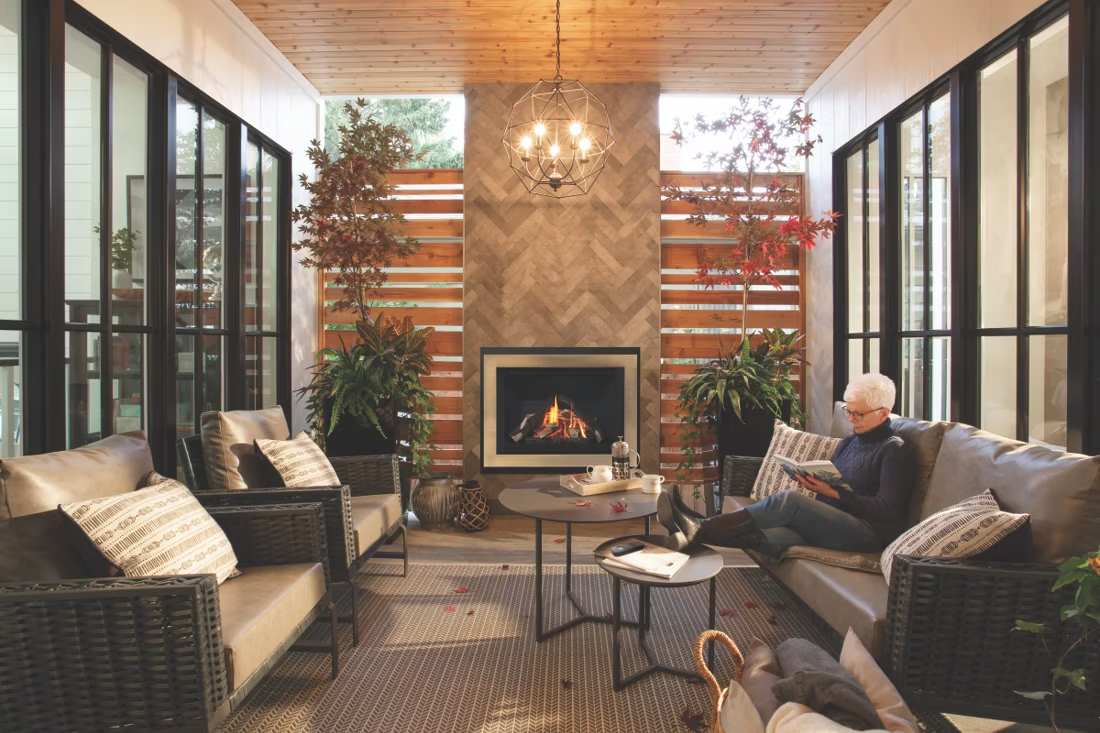
Four fuels. One honest answer for Cumberland County.
Wood
See what's available near Cumberland County.
Find your wood stove →Gas
See what's available near Cumberland County.
Find your gas fireplace →Pellet
See what's available near Cumberland County.
Find your pellet stove →Electric
See what's available near Cumberland County.
Find your electric fireplace →Three steps. No salesperson until you're ready.
Tell us about your project
Your zip code, your situation, and the fuel you're leaning toward—or let the answers point you to one.
See what's actually available
The brands dealers within 100 miles genuinely carry—real options, never a catalog mirage.
Get your dealer & Project Guide
A trusted local dealer, plus the free Project Guide & Parts List that names every component of the job.
Frequently Asked Questions
Which fuel works best in Cumberland County?
It depends on the property and how you plan to use it. Wood is a strong, traditional fit here—oak, hickory, and maple are abundant locally, and a lot of Cumberland County households already have access to a woodlot or a neighbor who does, keeping fuel costs low. Gas is mostly a propane conversation in this county rather than piped natural gas, since utility mains don't reach most of the rural footprint—propane fireplaces and inserts give you push-button heat without a wood supply to manage. Pellet is a solid middle ground: regional brands like Energex, Hamer Pellet Fuel, and Greene Team Pellet Fuel are sold within reasonable driving distance, so fuel supply isn't the obstacle it can be in more remote counties. Electric works well as a supplemental unit in a bedroom or den—zone 4A winters are moderate enough that electric heat can genuinely offset a room's needs during shoulder-season cold, even if it's not sized to carry the whole house through a hard freeze.
Do I need a permit to install a fireplace in Cumberland County?
In most cases, yes. New wood stoves, wood inserts, gas fireplaces, gas inserts, gas stoves, and pellet stoves typically require a building permit through the county building department, and any propane line work should be handled by a licensed gas-fitter as part of the install. Wood-burning appliances installed today need to meet current EPA emissions standards—this matters if you're replacing an older, pre-2020 stove rather than doing new construction. Electric fireplaces usually skip the permit process unless it's a built-in unit that requires new wiring or a dedicated circuit. Most local hearth retailers pull the permit as part of the installation, so you're not typically dealing with the county paperwork yourself.
Are there air quality restrictions on wood burning in Cumberland County?
No—Cumberland County doesn't have the kind of geography or population density that produces winter inversion events or non-attainment air quality designations, unlike basin or urban areas that see burn advisories. There's no local burn-ban program here. That said, choosing an EPA-certified stove is still worth doing on its own merits: modern catalytic and non-catalytic designs burn oak and hickory more completely, which means less smoke, less creosote buildup in the chimney, and meaningfully better fuel efficiency out of the same cord of wood.
Can one local hearth retailer handle all four fuel types in a county this small?
With a population of 334, Cumberland County itself doesn't support a large cluster of hearth retailers—most homeowners here end up working with a dealer based in a nearby larger town, commonly Farmville or the Richmond metro area, who then travels into the county for consultation and installation. That's actually an advantage in one respect: multi-fuel dealers serving a wider Piedmont territory tend to carry wood, gas, pellet, and electric side by side, so you can compare options with one retailer rather than shopping fuel-by-fuel. Ask any dealer up front about their service radius and typical response time for a Cumberland County address.
How does fireplace service work in a rural county like this?
Because Cumberland County is sparsely populated and spread across a large rural footprint, most chimney sweeps, gas technicians, and pellet stove service techs are based outside the county and build it into a broader service loop that includes neighboring communities. Expect a modest trip fee for a service call, and expect better scheduling flexibility if you book your annual chimney sweep or gas inspection in late summer or early fall rather than waiting for the first cold snap. If you're heating with wood as a primary source, plan your firewood supply—whether self-cut oak and hickory or a local seller—well before the season starts, since delivery routes in a low-density county take longer to fill.
What's the typical cost range for fireplace installation across all fuel types in Cumberland County?
Costs vary by fuel and by how much existing infrastructure your home already has. Wood stove or insert installation: roughly $4,000–$8,500 for a typical retrofit, more if new chimney or hearth construction is involved. Propane fireplace, insert, or stove: roughly $4,000–$10,000 depending on whether a propane tank and line already serve the home or need to be run new. Pellet stove or insert: roughly $4,000–$7,000 for a standard install, with Energex, Hamer, and Greene Team pellets all reasonably available regionally to keep ongoing fuel costs predictable. Electric fireplace: $200–$3,000 for the unit itself, plus $400–$1,200 in labor for anything beyond a simple plug-and-play placement. Rural trip charges from the installing dealer can add a modest amount on top of any of these, so ask for an all-in quote that includes travel.
Can I install a fireplace myself?
If you're putting a fire in your house on purpose, it's best to work with an expert. Unless you're genuinely experienced in framing, gas line, vent pipe, and the national code on clearances to combustibles, have a professional do it—and ideally the same company that sells you the fireplace, so warranty, service, and liability all live under one roof.
Does a fireplace add value to my home?
On average, a fireplace adds back to the home about the same amount you spent installing it. Add the monthly savings from heating the rooms you actually use instead of the whole house—often hundreds of dollars a year—and the value case is strong before you even count what a fire does for how your family uses the room.
What is an in-home preview and do I need one?
It's a visit where a hearth professional measures your space, confirms the model you picked actually works in your home, and walks the specs—framing, gas line, venting, finish work—before anything is ordered. Some details you just can't know until you see the house. Never make a down payment without one; it's the single most-skipped step that burns buyers.
How much should I budget for a fireplace?
For an average home—covering the fireplace, the vent pipe, and basic installation—a budget between $3,900 and $5,500 gives you a lot of options across wood, gas, and pellet. By the time you add finish work, gas line, and electrical, the average complete installation lands between $5,000 and $12,000 all-in. In a remodel or new build, a good rule is to put about 2.5% of the total project cost toward the fireplace.
Get matched with a local dealer for your Cumberland County project.
Tell us about your home and fuel preference, and we'll send a free Project Guide & Parts List—the exact parts, including the vent kit, and the local dealer we recommend for your Cumberland County installation.
Find Your Fireplace →