
Keep Your Family Warm and Safe—No Matter What
Charlottesville winters average a low around 28°F—mild by national standards—but ice storms and downed power lines in rural Albemarle County make a good wood stove more than decoration. Find the right stove or insert for your home, and connect with a trusted local dealer.
Every Project Starts From One of These Five Situations
A mild climate with serious hardwood behind it.
With around 4,109 heating degree days a year, Charlottesville and the surrounding Albemarle County Piedmont run far milder than the northern climates where wood heat is a survival tool—think a third of what a place like Burlington, VT sees in a typical winter. That means most local wood stoves and inserts here serve as supplemental heat and ambiance rather than the sole source of warmth in a home. But the region sits in the middle of some of the best oak-hickory-maple forest in the mid-Atlantic, and that hardwood burns hot, long, and clean.
There's another reason wood heat holds up well here: Charlottesville has no air quality non-attainment issues and no winter burn curtailment periods, so homeowners can run a stove whenever they want without checking an advisory first. What does drive demand locally is winter storm reliability—ice storms roll through the Piedmont most years and knock out power for a day or more, especially in the rural stretches of Albemarle County outside the city. A wood stove that doesn't need electricity to run is the difference between a cold, dark house and a warm one during those outages.
Three steps. No salesperson until you're ready.
Tell us about your project
Your zip code, your situation, and the fuel you're leaning toward—or let the answers point you to one.
See what's actually available
The brands dealers within 100 miles genuinely carry—real options, never a catalog mirage.
Get your dealer & Project Guide
A trusted local dealer, plus the free Project Guide & Parts List that names every component of the job.
Frequently Asked Questions
How much does a wood stove installation cost in Charlottesville?
A typical wood stove or insert installation in the Charlottesville area runs between $3,500 and $8,500, depending on the unit, whether you're installing into an existing masonry chimney, and whether new Class A chimney pipe is needed. Many of Charlottesville's older neighborhoods—Belmont, Fifeville, the Rugby Road area—have homes with existing fireplaces where a wood insert is a straightforward retrofit on the lower end of that range. New construction or homes without an existing chimney, common in newer Albemarle County subdivisions, run higher once full venting is factored in.
What size wood stove or insert do I need for my home?
Sizing depends on square footage, insulation, and whether the stove is your primary heat source or a supplemental/backup unit—which is the more common role in Charlottesville given the moderate 28°F average winter low. Small stoves work fine for a single room or a downtown bungalow, while medium and large stoves suit bigger farmhouses out toward Crozet, Free Union, or Earlysville, especially older drafty homes that lose heat fast. Because most Charlottesville installs are backup-heat focused rather than round-the-clock burners, local dealers often recommend a slightly smaller, easier-to-manage stove than they would in a colder climate like Buffalo, NY—but they'll size it to your actual home during an in-home visit.
Where can I find certified wood stove installers near me?
Look for NFI (National Fireplace Institute) or CSIA (Chimney Safety Institute of America) certification—both indicate real training in wood-burning appliance installation, not just general contracting experience. Certified installers serving Charlottesville and Albemarle County are familiar with the area's mix of historic in-town homes with original masonry chimneys and newer rural construction that needs venting built from scratch. Avoid handyman installs for wood-burning units; improper clearances and venting are the leading cause of chimney fires, and a bad install can void your homeowner's insurance.
What's the difference between a wood stove and a wood insert?
A wood stove is a freestanding unit on a hearth pad that vents through a chimney and can go almost anywhere with proper clearances. A wood insert slides into an existing masonry fireplace and turns it into a sealed, high-efficiency heat source. Charlottesville's older housing stock—plenty of homes near the Downtown Mall and in Belmont were built with working fireplaces—makes inserts a popular upgrade, since the existing chimney does most of the work. Newer Albemarle County homes without an existing fireplace usually go with a freestanding stove instead.
Do I need a permit to install a wood stove in Charlottesville?
Yes—a building permit is required for new wood stove and insert installations, issued through the City of Charlottesville building department if you're inside city limits, or Albemarle County if you're outside them. Most local dealers handle the permitting as part of the installation. Unlike parts of the country with winter air quality curtailment periods, Charlottesville has no non-attainment status and no burn restrictions, so once the stove is installed and inspected, there's nothing further to check before lighting a fire.
What's the best wood stove for the Charlottesville area?
Because winters here are moderate compared to true cold-climate markets, a 20-plus-hour overnight burn isn't the priority it would be somewhere like Bozeman, MT. Mid-size, non-catalytic stoves from brands like Jotul, Pacific Energy, or Vermont Castings are a good fit for most Charlottesville homes—they're easier to operate day-to-day and well-matched to local oak and hickory, which burn hot and steady even in a smaller firebox. For homes prioritizing extended power-outage backup, a catalytic model that holds a longer, lower burn is worth discussing with a local dealer.
How often should my chimney be inspected and cleaned?
The CSIA recommends an annual inspection for any wood-burning appliance, and that holds true in Charlottesville even for stoves used only occasionally. It matters even more here because many local chimneys are original masonry in homes decades or a century old—mortar joints and flue liners degrade over time whether or not the stove gets heavy use. Plan on a fall inspection before burning season, timed to catch any issues before the first cold snap or ice storm.
Where can I get firewood delivered in the Charlottesville area?
Local firewood suppliers around Charlottesville and Albemarle County sell seasoned oak, hickory, and maple by the cord, typically in the $220 to $320 range depending on species mix and how well-seasoned it is. Oak and hickory both burn longer and hotter than softer woods, which is one reason they're the regional standard. If you're buying for backup heat during winter storms, ask suppliers about kiln-dried or well-seasoned (at least 6-12 months) stock—wet wood is a common cause of poor stove performance and creosote buildup.
Wood stove vs. pellet stove—which is right for me?
Wood stoves burn cordwood, run without electricity, and are the more reliable choice for the ice storms that periodically knock out power across Albemarle County—a real consideration here even though winters are otherwise mild. Pellet stoves, fed by regional brands like Energex, Hamer Pellet Fuel, and Greene Team Pellet Fuel, are more convenient day-to-day and burn cleaner, but the auger and blower need electricity, so they go dark in an outage unless paired with a battery backup. For homes focused on storm resilience, wood tends to win. For in-town homes with reliable power that just want easy, low-maintenance heat, pellet is worth a look.
Why is a fireplace insert so efficient?
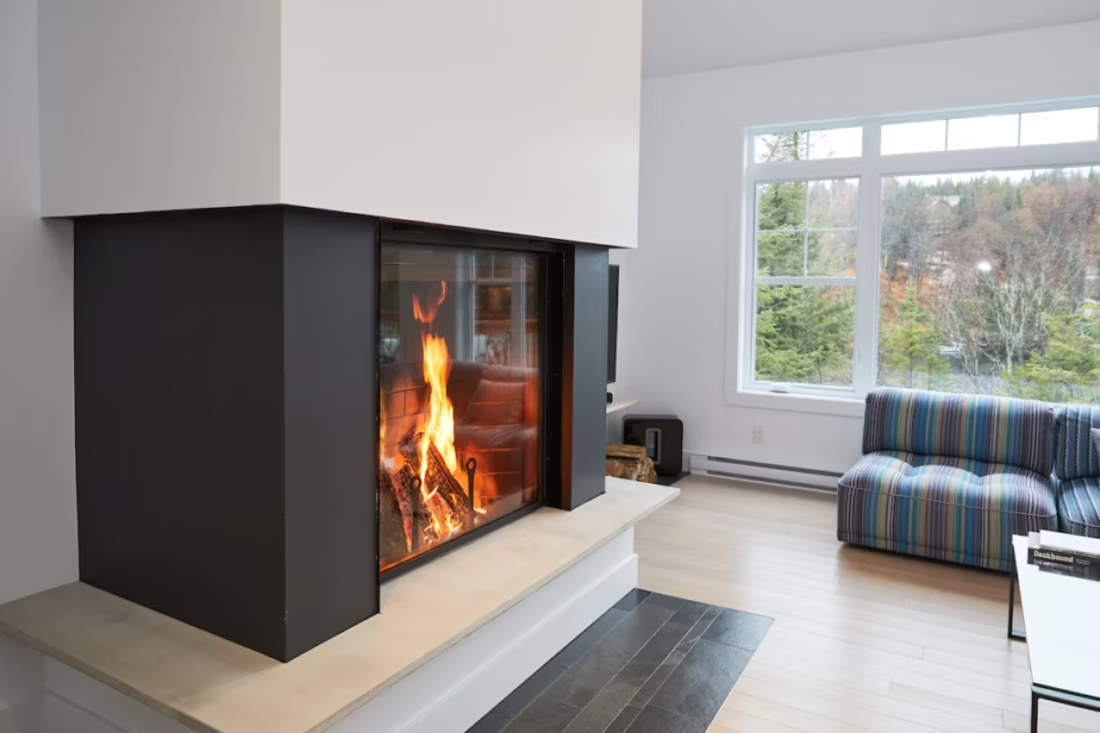
An insert does two things: it seals the chimney completely, so you stop losing air you already paid to heat, and it radiates warmth into the room through the firebox and glass. Most add a heat-exchange fan that pulls cool room air underneath, wraps it around the hot firebox, and pushes it back out warm. Your home is more efficient before you've even lit the first fire.
Do I have to leave the stove door cracked open to start a fire?
On many stoves, yes—a new fire needs extra air, and cracking the door a couple inches is how most stoves get it. But some modern stoves offer an automatic startup air system: engage it when you light, and timed air jets feed the fire for the first 20 minutes with the door fully shut, then close automatically. It's mechanical—like an egg timer, no electricity—and it means you can load it, light it, and walk away.
Can a fireplace actually lower my heating bill?
Yes—by creating a comfort zone. A furnace heats every square foot of the house just to warm the one room you're in; a gas fireplace on low burns roughly a sixth of the gas a typical furnace does. Set the furnace around 55–60 degrees as a baseline, then heat the rooms your family actually uses. Families who heat this way commonly save $20–$60 a month.
Should the dealer who sells my fireplace also install it?
Ideally, yes. A fireplace project involves vent pipe, gas line, electrical, and often tile or stone. Hire three or four separate trades and you own the liability and the game of telephone between them. One company selling and installing means one accountable party, start to finish—ask about factory training, on-time completion records, and what happens if an inspection fails.
Stove and Fireplace Dealers in Charlottesville County
Listings include WhyFire partner dealers, dealers we have verified as authorized for the brands we recommend, and established local businesses that carry hearth products. Every listing shows which one it is. The ones marked Preferred run on WhyFire's software, so they can show you real pricing and book your appointment right here. No manufacturer pays for placement. How we verify dealers →
Foster Fuels
Acme Stoves Of Charlottesville
The Chimney Guys
Blossman Gas And Appliance
Mid-Atlantic Masonry Heat
Valley Filter & Maintenance
Find your wood stove in Charlottesville, VA.
Tell us about your home and we'll match you with the right wood stove or insert, plus a free Project Guide & Parts List—including the vent kit and your recommended local Charlottesville-area dealer.
Find Your Fireplace →