
Warm up smarter this winter in Charlottesville, Virginia.
Wood, gas, pellet, and electric fireplace resources for the city of Charlottesville and the Piedmont communities around it—Crozet, Earlysville, Keswick, and beyond. Oak, hickory, and maple keep local woodstoves burning hot; we'll help you find the right local dealer for your home.
Every Project Starts From One of These Five Situations
Mild Piedmont winters, real local hearth expertise.
Charlottesville sits in Virginia's Piedmont, at the foot of the Blue Ridge, where winters are noticeably gentler than the northern heating markets most fireplace advice is written for. Average winter lows hover around 28°F and the area has roughly less than half the winter heating load of a place like Burlington, VT or Madison, WI in a typical season. That doesn't mean heat doesn't matter here; it means the equation is different. Homes need efficient supplemental heat for the cold snaps and shoulder-season chill more than they need a stove built to run 20 hours a day at sub-zero temps. The hardwood forests around Charlottesville—oak, hickory, and maple—happen to be some of the best firewood species in the country, dense and high-BTU, and that heritage still shows up in how many local homes heat.
This hub covers hearth retailers, service technicians, and fuel suppliers working across the city of Charlottesville and the surrounding Albemarle County communities—Crozet to the west, Earlysville and Free Union to the north, Keswick and Cismont to the east, Ivy and North Garden along Route 29 and 250. Pick your fuel below for local dealers, installation costs, and the specifics that apply to your project, whether you're in a downtown Charlottesville rowhouse or a farmhouse out past Scottsville.
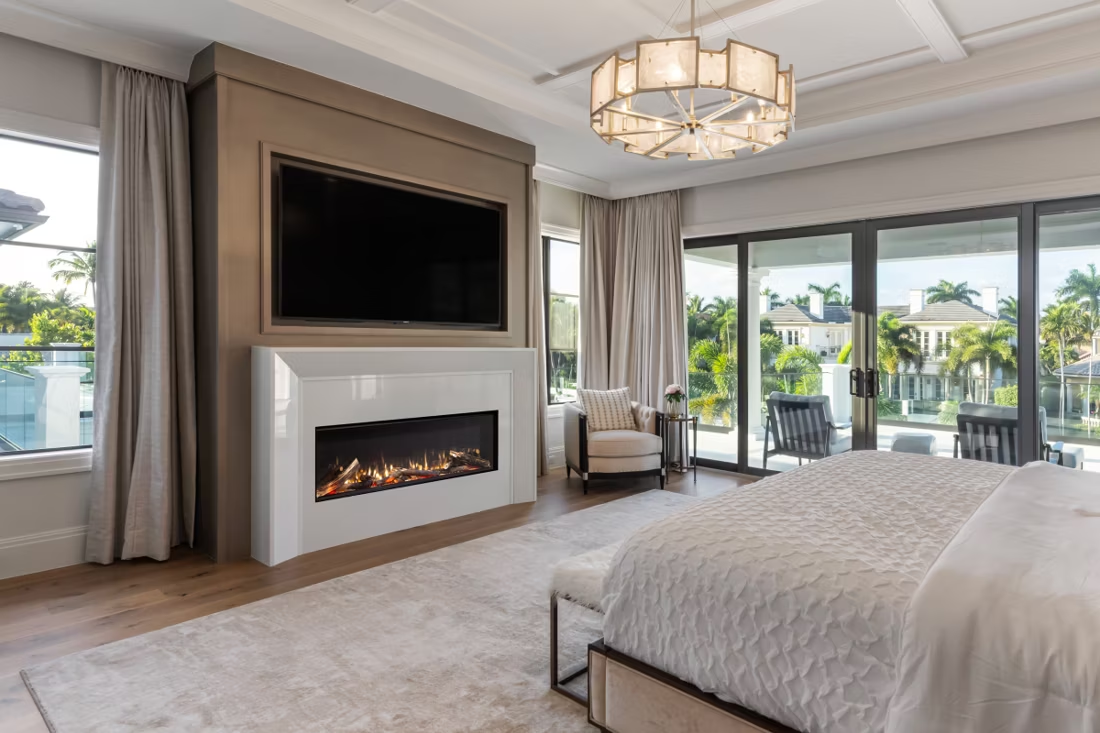
Four fuels. One honest answer for Charlottesville County.
Wood
81 models available near Charlottesville County.
Find your wood stove →Gas
358 models available near Charlottesville County.
Find your gas fireplace →Pellet
See what's available near Charlottesville County.
Find your pellet stove →Electric
11 models available near Charlottesville County.
Find your electric fireplace →Three steps. No salesperson until you're ready.
Tell us about your project
Your zip code, your situation, and the fuel you're leaning toward—or let the answers point you to one.
See what's actually available
The brands dealers within 100 miles genuinely carry—real options, never a catalog mirage.
Get your dealer & Project Guide
A trusted local dealer, plus the free Project Guide & Parts List that names every component of the job.
Frequently Asked Questions
Which fuel works best around Charlottesville?
With winter lows averaging 28°F and a heating season far milder than colder markets, Charlottesville doesn't demand the extreme-cold performance that drives fuel choice in places like Duluth or Bozeman—so the decision here tends to come down to lifestyle more than survival heat. Wood is genuinely practical: oak, hickory, and maple are abundant in the Piedmont hardwood forests and burn hot and long, and a lot of rural Albemarle homes still rely on a wood stove as primary or near-primary heat. Gas is the low-maintenance choice for in-town Charlottesville homes served by Charlottesville Gas, or propane for homes further out—instant on, no wood handling, easy to zone to one room. Pellet is a solid middle path, especially with regional suppliers like Energex, Hamer Pellet Fuel, and Greene Team Pellet Fuel keeping local pellet costs reasonable and delivery straightforward. Electric fireplaces work well as supplemental or ambiance units in a mild climate like this—a bedroom or sunroom insert can genuinely cover the shoulder-season chill without ever touching the furnace.
Do I need a permit to install a fireplace in Charlottesville?
Yes, in almost every case. Inside the city, permits for wood stoves, inserts, gas fireplaces, and pellet stoves go through City of Charlottesville Building Inspections; just outside the city line, Albemarle County Community Development handles the same review for Crozet, Earlysville, Keswick, and the rest of the surrounding towns. Gas installations need a separate gas-line permit and a licensed gas fitter for the connection. New wood-burning appliances have to meet current EPA 2020 NSPS emissions standards—you can't newly install an old uncertified stove. Electric units are usually permit-free unless you're hardwiring a built-in with a new circuit. Most hearth retailers in the area handle this paperwork as part of the installation, so it's rarely something homeowners have to navigate solo.
Are there air quality restrictions on wood burning around Charlottesville?
Not the kind you'd see in a western inversion basin or a wildfire-smoke region—Charlottesville has no non-attainment designation and no seasonal burn curtailment program. That said, the standard rules still apply: new wood stoves and inserts sold and installed here must meet EPA 2020 NSPS certification, and open burning of yard debris is regulated separately from indoor hearth appliances. Practically speaking, this means a Charlottesville-area wood burner deals with far less regulatory friction than someone in the Klamath Basin or the Central Valley—the main considerations are proper venting, seasoned oak or hickory (dry hardwood, not green), and normal chimney maintenance rather than air-quality advisories.
Can one local hearth retailer handle all four fuel types?
Several dealers serving the Charlottesville area carry three or four fuel types under one roof, which is useful if you're still deciding between, say, a wood insert and a gas conversion. Multi-fuel retailers typically keep working displays of wood, gas, and pellet units, with electric fireplaces as a smaller supplementary line. Dedicated fuel suppliers—the firewood dealers selling seasoned oak and hickory, or the outlets stocking Energex and Greene Team pellet bags—generally aren't full hearth retailers and won't handle installation. If you're cross-shopping fuels for a Charlottesville or Albemarle County home, a multi-fuel dealer that can walk you through both a wood and a gas option side by side is worth the extra visit.
How does service work in the rural parts of Albemarle County?
Most chimney sweeps, gas techs, and pellet stove technicians serving Charlottesville are based in or near the city and travel out to Crozet, Earlysville, Keswick, Scottsville, and North Garden for scheduled appointments. Given the region's relatively mild winters, service demand is less of a scramble than in harsher climates, but pre-season scheduling—ideally September or October, before the first real cold front—still gets you the widest choice of appointment times. Rural calls sometimes carry a modest travel fee depending on distance from Charlottesville proper, but most technicians cover the full county without treating it as an edge case.
What's the typical cost range for fireplace installation across all fuel types near Charlottesville?
Costs run in line with typical mid-Atlantic pricing. Wood stove or insert installation: roughly $3,800–$8,000 for a standard install, more for new masonry chimney work. Gas fireplace, insert, or stove: about $4,000–$10,000, with the low end covering conversions where gas service (Charlottesville Gas or existing propane) is already in place. Pellet stove or insert: typically $4,000–$7,000 installed. Electric fireplace: $200–$3,000 for the unit itself, plus $300–$1,000 in labor for anything beyond a simple plug-in, which covers most wall-mount and insert installs. Exact numbers depend on venting complexity and whether you're retrofitting an existing chimney or building new—the county + fuel pages above break this down further by fuel type.
Can a fireplace actually lower my heating bill?
Yes—by creating a comfort zone. A furnace heats every square foot of the house just to warm the one room you're in; a gas fireplace on low burns roughly a sixth of the gas a typical furnace does. Set the furnace around 55–60 degrees as a baseline, then heat the rooms your family actually uses. Families who heat this way commonly save $20–$60 a month.
Can I install a fireplace myself?
If you're putting a fire in your house on purpose, it's best to work with an expert. Unless you're genuinely experienced in framing, gas line, vent pipe, and the national code on clearances to combustibles, have a professional do it—and ideally the same company that sells you the fireplace, so warranty, service, and liability all live under one roof.
Wood, gas, pellet, or electric—how do I choose?
Match the fuel to your life, not the other way around. Wood: lowest fuel cost and total power-outage independence, but you're hauling and stacking. Gas: press a button, set a thermostat, no maintenance to speak of. Pellet: wood economics with automatic feeding, in exchange for weekly cleaning and a need for electricity. Electric: plugs in anywhere with honest supplemental heat. Nobody regrets the fuel that fits how they actually live.
Does a fireplace add value to my home?
On average, a fireplace adds back to the home about the same amount you spent installing it. Add the monthly savings from heating the rooms you actually use instead of the whole house—often hundreds of dollars a year—and the value case is strong before you even count what a fire does for how your family uses the room.
Stove and Fireplace Dealers in Charlottesville County
Listings include WhyFire partner dealers, dealers we have verified as authorized for the brands we recommend, and established local businesses that carry hearth products. Every listing shows which one it is. The ones marked Preferred run on WhyFire's software, so they can show you real pricing and book your appointment right here. No manufacturer pays for placement. How we verify dealers →
Foster Fuels
Acme Stoves Of Charlottesville
The Chimney Guys
Blossman Gas And Appliance
Mid-Atlantic Masonry Heat
Valley Filter & Maintenance
Find your fireplace in Charlottesville.
Pick your fuel below and we'll match you with a trusted local dealer and a free Project Guide & Parts List—the exact plan, parts, and venting for your Charlottesville-area project.
Find Your Fireplace →