
Keep Your Family Warm and Safe—No Matter What
Most Burke homes run on natural gas and Dominion Energy power, but a handful of homeowners still want a wood stove for backup heat or a real fire. We'll help you figure out if it's realistic for your lot and connect you with a local installer who knows Fairfax County code.
Every Project Starts From One of These Five Situations
A backup heat source, not the default choice.
Burke sits at 343 feet in Fairfax County, in climate zone 4A with a comparatively mild winter average low of 23°F and a moderate heating season—nowhere near the cold-climate demands of a place like Bismarck, ND or Duluth, MN. Most of Burke was built out as suburban tract housing from the 1970s onward, with natural gas widely available through Washington Gas and reliable electric service from Virginia Electric & Power Co. (Dominion Energy). Between gas availability, tight suburban lots, and HOA covenants common in neighborhoods like Kings Park West, Cardinal Forest, and Burke Centre that restrict exterior chimney pipe and visible smoke, wood-burning appliances are genuinely uncommon here—not a cultural default the way they are in the Appalachian foothills or rural Southside Virginia.
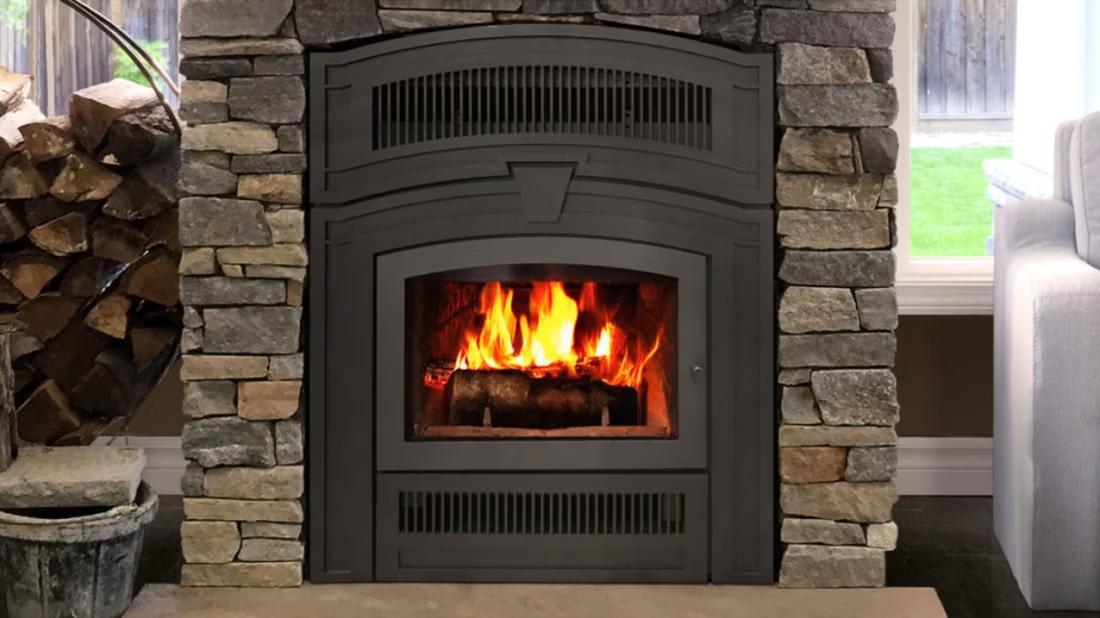
That said, wood isn't nonexistent in Burke. Homeowners on larger, older lots—particularly those with mature oak and hickory that occasionally comes down in storms—sometimes install a stove or insert for backup heat during multi-day Dominion Energy outages, which Northern Virginia has seen from derechos and ice storms. Others simply want the ambiance of a real fire in a family room. If that's you, the honest starting point is confirming your HOA's exterior-venting rules and Fairfax County's permit requirements before you fall in love with a specific unit.
Three steps. No salesperson until you're ready.
Tell us about your project
Your zip code, your situation, and the fuel you're leaning toward—or let the answers point you to one.
See what's actually available
The brands dealers within 100 miles genuinely carry—real options, never a catalog mirage.
Get your dealer & Project Guide
A trusted local dealer, plus the free Project Guide & Parts List that names every component of the job.
Frequently Asked Questions
Is a wood stove even realistic for a house in Burke?
It depends mostly on your lot and your HOA, not the climate—Burke's winters are mild enough that wood isn't a heating necessity here. If your home has an existing masonry fireplace and chimney, converting it to a wood insert is usually straightforward. If you'd need new Class A chimney pipe run through the roof of a standard suburban two-story, you're looking at more construction and a harder conversation with your homeowners association about exterior venting. Neighborhoods like Kings Park West and Burke Centre Conservancy have architectural review committees that can restrict visible flue pipe, so check your covenants before you get attached to a plan.
What does a wood stove installation cost in a Burke home?
Nationally, wood stove and insert installations typically run $3,500 to $8,500 depending on the unit and venting work, and Burke tends toward the higher end of that range because most homes here don't have an existing masonry chimney to work with—that means new Class A pipe, roof penetration, and often a hearth pad addition on top of the appliance cost. A straightforward insert into an existing fireplace and flue is the cheapest path; a freestanding stove in a home with no chimney at all is the most expensive.
Do I need a permit to install a wood stove in Fairfax County?
Yes. New wood-burning appliance installations require a building permit through Fairfax County's Land Development Services, and the stove itself must meet current EPA 2020 NSPS emissions standards. Most local hearth dealers who serve the Burke area handle the permit application and inspection scheduling as part of the installation, so you're not coordinating it yourself. Because wood installs are less common here than in more rural parts of Virginia, it's worth confirming your installer has recent experience pulling permits specifically in Fairfax County rather than neighboring jurisdictions.
Will my HOA let me install a wood stove?
That depends entirely on your specific community. Many Burke neighborhoods—including sections of Kings Park West and Burke Centre—have architectural guidelines that regulate exterior chimney pipe, roof penetrations, and visible smoke, sometimes requiring board approval before you install anything. A few older or larger-lot sections have fewer restrictions. Before you contact an installer, pull your HOA's architectural guidelines or call the management company directly—this is the single biggest factor in whether a wood stove is realistic for your specific address in Burke, more so than the appliance or the cost.
Where would I even get firewood in Burke?
Since Fairfax County has no national forest or large public timberland nearby, self-cut firewood isn't really an option the way it is in more rural parts of Virginia. Most Burke households that burn wood buy delivered cordwood from local tree services or firewood suppliers serving Northern Virginia, typically running $275 to $375 per cord for seasoned oak or hickory—prices run higher here than in rural areas because of suburban delivery logistics. Some homeowners supplement with wood from their own property after storm damage, since oak, hickory, and maple are the dominant species in Fairfax County yards and take a full season or more to season properly before burning.
Why would someone install a wood stove in Burke if gas is available?
The main reason we hear is backup heat. Dominion Energy's grid is generally reliable, but Northern Virginia has seen multi-day outages from derechos and ice storms, and a wood stove is one of the few heating appliances that works with zero electricity. The other reason is simply the experience of a real fire—some homeowners with an existing fireplace want to upgrade it to an efficient insert rather than replace it with gas. For most Burke homes, though, a gas fireplace or insert is the more practical and far more common choice given existing gas service and simpler permitting.
How often does a wood stove need to be inspected in a Burke home?
The Chimney Safety Institute of America recommends an annual inspection for any wood-burning appliance, and that holds regardless of how often you actually burn. Because wood stoves see lighter, more occasional use in Burke compared to colder climates, creosote buildup is usually slower, but an annual sweep before burning season is still the standard recommendation—skipping it is the leading cause of chimney fires nationally, and insurers may ask for proof of inspection if you ever file a claim.
Will installing a wood stove affect my homeowners insurance?
It can. Many insurers serving Fairfax County will ask about wood-burning appliances during underwriting or renewal, and some require documentation that the stove is EPA-certified and was installed to code with a Fairfax County permit. A few carriers add a modest premium surcharge; others simply want an inspection certificate on file. It's worth calling your insurance agent before installation, not after, since retrofitting paperwork for an appliance that's already in is more of a hassle than confirming requirements up front.
Wood stove vs. gas fireplace—which makes more sense for a Burke home?
For most Burke homeowners, gas wins on practicality: natural gas service is widely available through Washington Gas, installation is simpler without new chimney construction, and it sidesteps most HOA concerns about exterior wood-smoke venting. Wood wins in one specific scenario—you want a heat source that still works when the power is out, and derecho or ice-storm outages are a real, if occasional, concern in Northern Virginia. If backup heat during outages matters more to you than everyday convenience, wood is worth pursuing despite the extra permitting and HOA legwork. If you mainly want the ambiance of a fire with the least hassle, gas is almost always the better fit here.
What's the difference between an insert and a zero-clearance fireplace?
An insert is a fireplace that slides into a pre-existing wood-burning fireplace—if you don't have one, there's nothing to insert it into. A zero-clearance fireplace is built into a framed wall, which makes it the answer for remodels and new construction. Simple test: existing masonry fireplace means insert; blank or framed wall means zero-clearance.
Why won't my new wood stove get going like my old one?
New wood stoves are 70%+ efficient, so far less heat goes up the flue—which also means less draft to get a fire established. The rule: build a genuinely hot fire for about 45 minutes before you choke it down. Skip that and you get smoke in the room, creosote in the chimney, and a fire that never takes off. Most performance complaints trace straight back to this.
How much should I budget for a fireplace?
For an average home—covering the fireplace, the vent pipe, and basic installation—a budget between $3,900 and $5,500 gives you a lot of options across wood, gas, and pellet. By the time you add finish work, gas line, and electrical, the average complete installation lands between $5,000 and $12,000 all-in. In a remodel or new build, a good rule is to put about 2.5% of the total project cost toward the fireplace.
Can I install a fireplace myself?
If you're putting a fire in your house on purpose, it's best to work with an expert. Unless you're genuinely experienced in framing, gas line, vent pipe, and the national code on clearances to combustibles, have a professional do it—and ideally the same company that sells you the fireplace, so warranty, service, and liability all live under one roof.
Nearby Dealers
Hearth shops serving Burke and the surrounding area.
Find your wood fireplace option in Burke.
Tell us about your home, your lot, and any HOA restrictions, and we'll help you figure out what's realistic—then match you with a local installer and a free Project Guide & Parts List for your specific address.
Find Your Fireplace →