
Keep Your Family Warm and Safe—No Matter What
In the coal-country mountains of Wise County, hardwood heat never really went away—even as most new hearth installs in town have shifted toward gas and electric. We'll help you find a dealer who still does wood right.
Every Project Starts From One of These Five Situations
A hardwood heritage, a shrinking retail market.
Big Stone Gap sits at about 1,500 feet in the mountains of Wise County, ringed by the oak, hickory, and maple forests that have heated homes here since the coal-camp era. Winters are real but not brutal—average lows around 24°F and a heating season that's just a fraction of what a place like Duluth, Minnesota sees. Plenty of longtime residents still burn wood they or a neighbor cut off family land, and that tradition hasn't disappeared.
What has changed is the retail side. Most hearth dealers serving Wise County have shifted their showroom focus toward gas inserts and electric units, which are easier to stock, service, and sell to homeowners upgrading an old fireplace. New EPA-certified wood stoves and inserts are still available, but you'll typically need to work with a dealer who special-orders them or a regional distributor rather than walk into a showroom full of them. That's exactly the kind of local matchmaking Find My Fireplace was built for—connecting you with someone who actually carries what you're after instead of steering you toward whatever's easiest to sell.
Three steps. No salesperson until you're ready.
Tell us about your project
Your zip code, your situation, and the fuel you're leaning toward—or let the answers point you to one.
See what's actually available
The brands dealers within 100 miles genuinely carry—real options, never a catalog mirage.
Get your dealer & Project Guide
A trusted local dealer, plus the free Project Guide & Parts List that names every component of the job.
Frequently Asked Questions
Is wood heat still practical in Big Stone Gap?
Yes, for the right household. Wise County's oak, hickory, and maple forests make firewood genuinely abundant, and plenty of local homes still rely on wood cut from family land or a neighbor's woodlot. What's gotten harder is buying new equipment locally—as a retail category, wood stoves have become less common here than gas or electric, so expect to spend a bit more time finding a dealer who stocks or special-orders EPA-certified units rather than assuming every hearth shop in town carries them.
How much does a wood stove installation cost in Big Stone Gap?
Because new wood stove installs are a smaller slice of the local market than gas or electric, there isn't a deep bench of local pricing data the way there is for those fuels. As a national baseline, a freestanding EPA-certified wood stove with a new Class A chimney typically runs $3,000 to $7,000 installed, and an insert into an existing masonry fireplace—common in Big Stone Gap's older coal-camp-era homes—often lands toward the lower half of that range since the chimney is already in place. A local dealer can confirm firm numbers once they've seen your chimney and home.
What firewood works best around Big Stone Gap?
Oak and hickory are the workhorses here—dense hardwoods that burn long and hot once properly seasoned, which for oak usually means a full 12 months split and stacked under cover. Maple is also plentiful and burns a bit faster but still respectably, and it's a good choice for shoulder-season fires when you don't need an all-nighter burn. If you're buying rather than cutting your own, ask whether the wood has actually seasoned through a summer—green oak is one of the most common causes of smoky, inefficient fires in this region.
Should I get a wood insert or a freestanding stove?
A lot of it comes down to what's already in your house. Many homes in and around Big Stone Gap date to the early-1900s coal boom and still have a working masonry fireplace—for those, a wood insert is usually the better fit, since it uses the existing chimney (typically with a stainless liner) and turns a drafty open hearth into real heat. Newer construction without an existing fireplace, or anyone wanting to heat a detached workshop or addition, is generally better served by a freestanding stove, which just needs proper clearances and a new Class A chimney run.
Do I need a permit to install a wood stove in Wise County?
Most new wood stove and insert installations require a building permit through the Wise County Building Inspections Department, primarily to confirm clearances, chimney construction, and hearth protection meet code. Big Stone Gap has no air quality nonattainment designation and no winter burn curtailment program, so unlike some western towns, you won't run into seasonal burn bans here. Any new stove you install still needs to meet current EPA emissions standards—most dealers handle permitting as part of the install, so you generally don't have to navigate it solo.
What kind of wood stove makes sense for this climate?
Big Stone Gap's winters—averaging around 24°F with a moderate heating season—are cold enough to want a stove that actually earns its keep, but nowhere near the extremes of places like Bismarck, North Dakota or Duluth, Minnesota, where 20-hour catalytic burn times matter every night. A well-sized non-catalytic stove is usually plenty here. Worth noting: England's Stove Works, maker of the Timber Ridge and other EPA-certified wood stoves, is manufactured just up the road in Marion, Virginia—a genuinely regional option worth asking a local dealer about.
How often should my chimney be swept in Big Stone Gap?
The Chimney Safety Institute of America recommends an annual inspection for any wood-burning system, and that holds true here regardless of how mild or heavy your burning season runs. If you're heating primarily with wood through the winter, plan on a full sweep before burning season starts, typically in late summer or early fall. Homes burning oak and hickory tend to build creosote a bit more slowly than softwood-burning regions, but skipping the annual check is still the most common preventable cause of chimney fires.
Where can I get firewood in or around Big Stone Gap?
Many households here source firewood informally—cut from family land, a neighbor's woodlot, or downed timber after storms—which is part of why a commercial wood-stove retail market never developed as strongly here as in more remote, colder regions. For those without their own supply, the Clinch Ranger District of the Jefferson National Forest lies within reach of Wise County and issues personal-use firewood permits; contact the district office directly for current season dates and per-cord rates, since these are set and updated by the Forest Service rather than published locally.
Should I go with wood, or switch to gas or electric instead?
This is the real question for a lot of Big Stone Gap homeowners, since gas and electric are the more standard, better-supported options in today's local market. Electric fireplaces and inserts are simple to install (often $400–$1,200), run on power from Virginia Electric & Power Co at a residential rate around 14 cents per kWh, and need no venting or fuel storage—a strong fit if you mainly want ambiance and supplemental warmth. Gas offers instant, thermostat-controlled heat without wood handling. Wood remains the right call if you already have access to free or cheap hardwood, want heat that works without electricity during an outage, or simply prefer the real thing—you'll just want to work with a dealer through Find My Fireplace who actually carries new wood equipment rather than assuming the nearest hearth shop does.
Why is a fireplace insert so efficient?
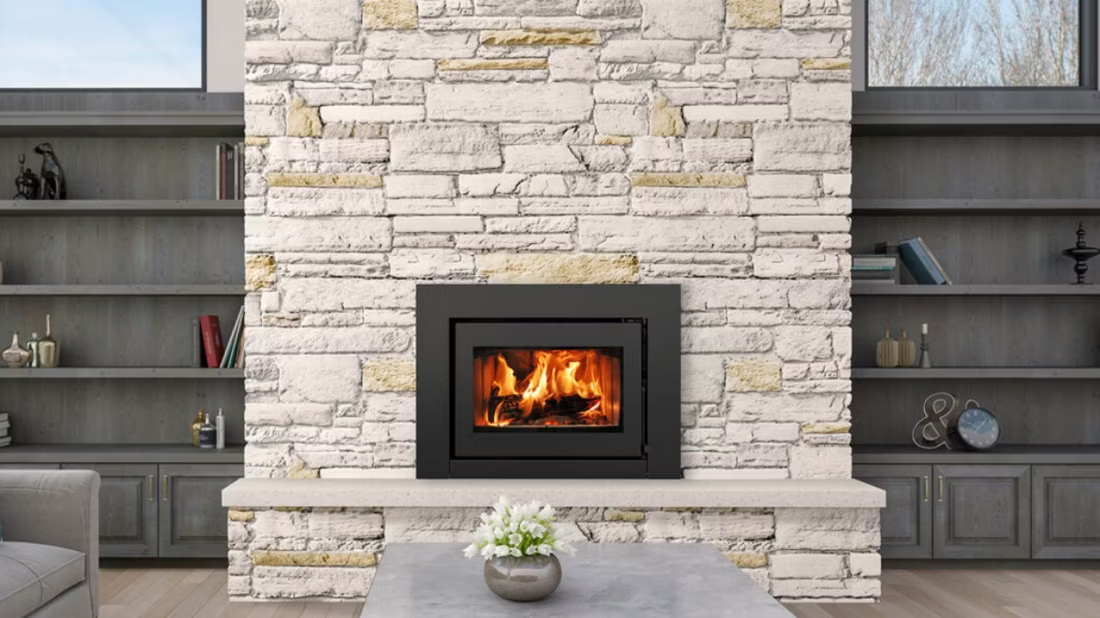
An insert does two things: it seals the chimney completely, so you stop losing air you already paid to heat, and it radiates warmth into the room through the firebox and glass. Most add a heat-exchange fan that pulls cool room air underneath, wraps it around the hot firebox, and pushes it back out warm. Your home is more efficient before you've even lit the first fire.
What's the difference between an insert and a zero-clearance fireplace?
An insert is a fireplace that slides into a pre-existing wood-burning fireplace—if you don't have one, there's nothing to insert it into. A zero-clearance fireplace is built into a framed wall, which makes it the answer for remodels and new construction. Simple test: existing masonry fireplace means insert; blank or framed wall means zero-clearance.
Can a fireplace actually lower my heating bill?
Yes—by creating a comfort zone. A furnace heats every square foot of the house just to warm the one room you're in; a gas fireplace on low burns roughly a sixth of the gas a typical furnace does. Set the furnace around 55–60 degrees as a baseline, then heat the rooms your family actually uses. Families who heat this way commonly save $20–$60 a month.
What is an in-home preview and do I need one?
It's a visit where a hearth professional measures your space, confirms the model you picked actually works in your home, and walks the specs—framing, gas line, venting, finish work—before anything is ordered. Some details you just can't know until you see the house. Never make a down payment without one; it's the single most-skipped step that burns buyers.
Nearby Dealers
Hearth shops serving Big Stone Gap and the surrounding area. Every listing shows whether it is a WhyFire partner, a dealer we have verified as authorized for the brands we recommend, or a local business carrying hearth products. No manufacturer pays for placement. How we verify dealers →
Hce Systems Inc.
Suburban Propane
Lee Propane
Southwest Heating & Air
Quality Parts Inc.
Myers Home Center
Find your wood fireplace in Big Stone Gap.
Tell us about your home and your existing chimney or hearth, and we'll match you with a local dealer who actually carries new wood stoves and inserts—plus a free Project Guide & Parts List covering the exact parts, including the vent kit, for your project.
Find Your Fireplace →