
Add Real Heat to Any Room in Big Stone Gap—No Chimney Required.
No gas line, no masonry, no venting—just plug in or wire in and you have zone heat for the Powell Valley's cold snaps. Find the right unit and a local dealer who can install it correctly.
Every Project Starts From One of These Five Situations
Simple, safe heat for Wise County's older homes.
Tucked between the Cumberland Mountains and the Powell River at about 1,500 feet, Big Stone Gap sees real winter—average lows near 24°F and roughly 4,663 heating degree days a year. That's a genuine heating season, though far short of a place like Bozeman, Montana, where HDD tops 7,000. Much of the town's housing stock dates to the coal-boom era, including the frame homes and brick bungalows near the historic district around the June Tolliver House—houses that were never built with a chimney flue in every room they now need heated.
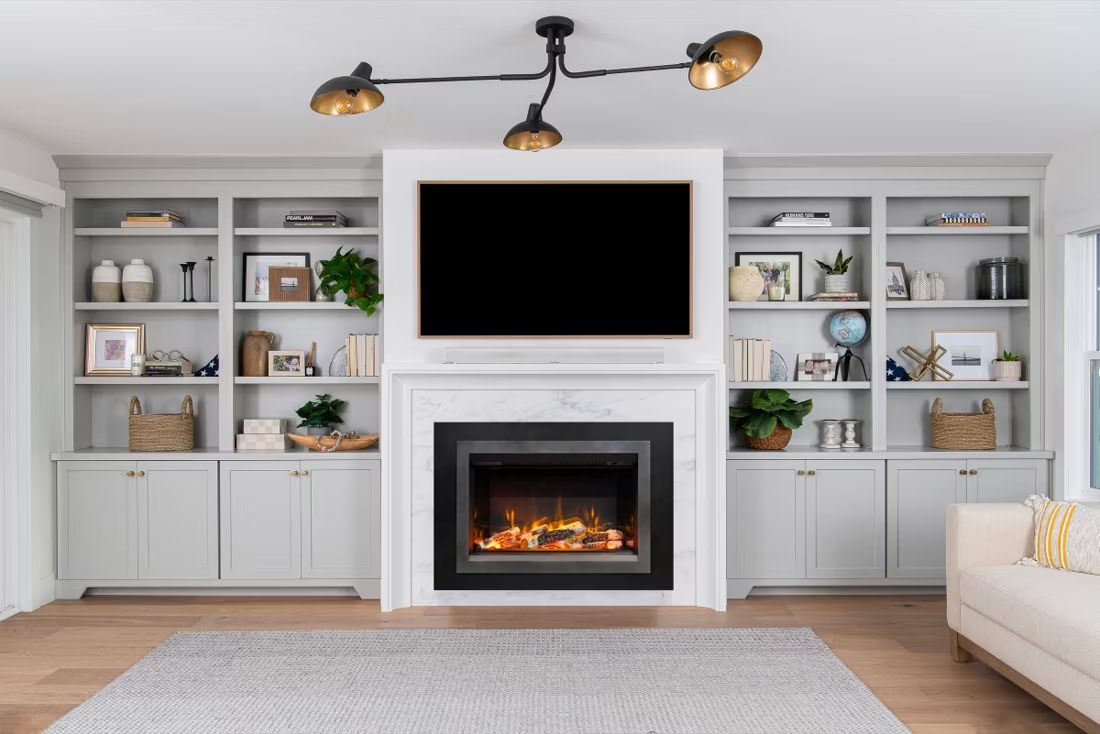
That's where electric fireplaces earn their keep. Virginia Electric & Power Co (Dominion Energy) serves Big Stone Gap at a residential rate around $0.1409 per kWh, which makes running a 1,500-watt electric unit for zone heating in a bedroom or den fairly cheap compared to heating the whole house. There's no gas line to run, no masonry to disturb, and no annual chimney sweep. For a lot of homeowners here, an electric insert or mantel unit is less about replacing central heat and more about taking the chill off a back room or add-on without touching the HVAC system.
Three steps. No salesperson until you're ready.
Tell us about your project
Your zip code, your situation, and the fuel you're leaning toward—or let the answers point you to one.
See what's actually available
The brands dealers within 100 miles genuinely carry—real options, never a catalog mirage.
Get your dealer & Project Guide
A trusted local dealer, plus the free Project Guide & Parts List that names every component of the job.
Frequently Asked Questions
How much does it cost to install an electric fireplace in Big Stone Gap?
Electric fireplaces are the least expensive hearth product to install because there's no venting, no gas line, and no chimney work involved. A plug-in freestanding unit or mantel package needs no professional installation at all and typically runs $150 to $600 for the unit itself. A built-in wall unit or insert that requires a dedicated electrical circuit—common in older Big Stone Gap homes with aging panel capacity—usually runs $600 to $2,500 once a licensed electrician is involved. Compare that to $4,500 and up for a gas conversion in this area, and the appeal for a quick supplemental-heat project is obvious.
Electric or gas—which makes more sense for a Wise County home?
It depends mostly on what's already run to your house. Big Stone Gap and the surrounding parts of Wise County don't have a natural gas utility listed for residential service, so a gas fireplace here typically means propane—a tank, a delivery contract, and a gas line installation. Electric skips all of that: if you have a standard outlet or can run a 120V or 240V circuit, you can add heat. For homes already on propane for cooking or water heating, gas can make sense. For homes without existing propane infrastructure, electric is usually the simpler, cheaper path to a heated room.
How much does it cost to run an electric fireplace here?
At Dominion Energy's residential rate of about $0.1409 per kWh, a typical 1,500-watt electric fireplace running on full heat costs roughly 21 cents an hour, or about $1.69 for an 8-hour evening of use. Most units let you run the flame effect without the heater engaged, which draws only 30 to 100 watts and costs pennies a day—a common choice for ambiance during Big Stone Gap's milder shoulder-season evenings when you don't need the extra heat.
Do I need a permit to install an electric fireplace in Big Stone Gap?
A plug-in freestanding or mantel-style electric fireplace generally doesn't require a permit since it involves no new wiring or combustion venting. If you're installing a built-in unit that requires a new dedicated circuit, your electrician will typically pull an electrical permit through the Wise County Building Inspections Office as a routine part of the job. Because there's no combustion, there's no gas inspection or chimney clearance review to worry about—the process is far simpler than a wood or gas install.
What size electric fireplace do I need for my room?
Most electric fireplaces are rated for 400 to 1,000 square feet of supplemental heating, which covers a typical living room, bedroom, or den in the older homes common around Big Stone Gap. A compact wall-mount or small insert works well for a single room; larger great rooms or open floor plans may need a higher-wattage unit or two smaller units placed in different zones. Since electric fireplaces are primarily zone heaters rather than whole-house furnaces, sizing is more about matching the room than matching the whole home's square footage.
What types of electric fireplaces are available?
Options include built-in wall units that recess into a framed wall, freestanding stoves that mimic a wood stove's footprint, mantel packages that combine an electric insert with a surround, and log-set inserts sized to slide into an existing masonry fireplace opening—a popular choice for Big Stone Gap's older homes that already have a fireplace but no interest in burning wood or running a gas line to it. A local dealer can tell you which option fits your existing opening or wall framing.
Can an electric fireplace be my main source of heat?
For most Big Stone Gap homes, no—electric fireplaces are best used as supplemental zone heat alongside a central heat pump or furnace, not as the sole heat source through a full winter. With average lows around 24°F and a real but moderate heating season, an electric unit is well suited to taking the edge off a specific room during the coldest stretches, letting you turn down the central thermostat and heat only the space you're using. That's usually the most cost-effective way to use one given current Dominion Energy rates.
Are electric fireplaces safe for older or historic Big Stone Gap homes?
Yes—in fact, electric units are often the safest option for the older housing stock near the historic district around the June Tolliver House and downtown Big Stone Gap. There's no open flame, no combustion byproducts, and no risk of chimney fire or carbon monoxide, which matters in homes with aging or unlined masonry chimneys. A log-set insert can slide into an existing fireplace opening without altering the historic mantel or surround, giving you visual warmth without touching the original masonry.
What's the real difference between electric and gas fireplace heat?
Gas fireplaces produce genuine, higher-BTU heat and can serve as a more serious secondary heat source, but in Wise County that typically means installing and maintaining a propane tank and delivery contract since there's no natural gas utility serving most of Big Stone Gap. Electric fireplaces produce lower heat output per unit but need nothing more than power—no tank, no delivery, no annual gas appliance service. For homeowners who want ambiance and modest zone heat without adding a fuel contract, electric is usually the more practical fit; for those who already have propane and want stronger heat output, gas is worth a look.
Does an electric fireplace need a vent or chimney?
No—that's its superpower. An electric fireplace needs a wall and an outlet, period. No vent pipe, no gas line, no clearances to design around, which is why it works in bedrooms, offices, apartments, and walls where venting a gas or wood unit would be impractical or impossible. Installation is typically the simplest and least expensive of any fireplace type.
Can I put a TV above my fireplace?
Yes—with an asterisk. Fireplaces are hot and TVs don't like heat. Either put a mantel between them to deflect rising warmth, or choose a fireplace with heat-management technology that creates a cool zone on the wall above—the wall stays around 125 degrees, barely warm, while the room still gets full heat. If you like clean lines and don't want a mantel, heat management is the answer.
How much should I budget for a fireplace?
For an average home—covering the fireplace, the vent pipe, and basic installation—a budget between $3,900 and $5,500 gives you a lot of options across wood, gas, and pellet. By the time you add finish work, gas line, and electrical, the average complete installation lands between $5,000 and $12,000 all-in. In a remodel or new build, a good rule is to put about 2.5% of the total project cost toward the fireplace.
Does a fireplace add value to my home?
On average, a fireplace adds back to the home about the same amount you spent installing it. Add the monthly savings from heating the rooms you actually use instead of the whole house—often hundreds of dollars a year—and the value case is strong before you even count what a fire does for how your family uses the room.
Nearby Dealers
Hearth shops serving Big Stone Gap and the surrounding area. Every listing shows whether it is a WhyFire partner, a dealer we have verified as authorized for the brands we recommend, or a local business carrying hearth products. No manufacturer pays for placement. How we verify dealers →
Hce Systems Inc.
Suburban Propane
Lee Propane
Southwest Heating & Air
Quality Parts Inc.
Myers Home Center
Electric Service in Big Stone Gap
An electric fireplace's heater draws about 1,500 watts—pennies per hour at local rates.
Virginia Electric & Power Co
Find your electric fireplace in Big Stone Gap.
Tell us about your room and your home's wiring, and we'll match you with the right electric fireplace, insert, or stove—plus a trusted local dealer who can install it correctly.
Find Your Fireplace →