
Find the right pellet stove for Albemarle County's mixed winters.
Automated, efficient heat for the Piedmont—from Charlottesville and the University of Virginia corridor out to Crozet, Scottsville, and the farmland near Monticello. Find the right unit and connect with a trusted local dealer.
Every Project Starts From One of These Five Situations
Steady, efficient heat without tending a woodpile.
Albemarle County's Piedmont climate (zone 4A, a moderate winter heating season, average winter lows around 28°F) isn't punishing the way it is in the mountains further west—but it's cold enough, often enough, that a lot of homeowners want dependable zone heat without the daily work of splitting and stacking oak, hickory, or maple. Pellet stoves have become a popular fit here for exactly that reason: they light with a switch, hold a steady thermostat-controlled burn, and run clean enough that Albemarle's lack of any air quality non-attainment designation makes them an easy, unrestricted choice year-round.
With no burn curtailment periods or winter inversion advisories to work around here, pellet stoves in Albemarle County are simply a practical heating decision—for a rural farmhouse outside Free Union that needs supplemental heat in the west wing, for a Crozet home near the Blue Ridge foothills, or for a Charlottesville homeowner who wants real heat in the family room without dealing with a full cord delivery. Local pellet fuel brands including Energex, Hamer Pellet Fuel, and Greene Team Pellet Fuel are sold throughout the region, so keeping the hopper full doesn't mean driving far.
Three steps. No salesperson until you're ready.
Tell us about your project
Your zip code, your situation, and the fuel you're leaning toward—or let the answers point you to one.
See what's actually available
The brands dealers within 100 miles genuinely carry—real options, never a catalog mirage.
Get your dealer & Project Guide
A trusted local dealer, plus the free Project Guide & Parts List that names every component of the job.
Frequently Asked Questions
How much does a pellet stove installation cost in Albemarle County?
A typical pellet stove installation runs roughly $3,500 to $6,500 in Albemarle County, depending on the unit, whether it's a freestanding stove or an insert going into an existing masonry fireplace, and how much venting and electrical work is involved. Unlike wood stoves, pellet units need a nearby standard electrical outlet to run the auger and blower, which occasionally adds a small electrician cost if there's no outlet near the hearth. Homes further out toward White Hall, Greenwood, or Earlysville may see a modest travel charge added to the install quote, but Albemarle's relatively compact geography keeps most installs close to town pricing.
What size pellet stove do I need for my home?
With Albemarle County's moderate winter heating season and average winter lows in the high 20s, most homes here use a pellet stove for zone heating rather than whole-home primary heat—a medium-sized unit (rated for 1,000–2,000 sq ft) covers a main living area or open floor plan comfortably. Older, less-insulated farmhouses common in the rural stretches around Scottsville or Free Union sometimes need a larger unit, or benefit from running the stove on a higher setting more consistently through the coldest weeks. A local retailer can size the unit correctly during an in-home visit—oversizing wastes pellets and undersizing leaves you running the stove at max output constantly.
Where can I find certified pellet stove installers near me?
Look for installers with NFI (National Fireplace Institute) pellet-specific certification, which covers venting, clearances, and electrical hookup specific to pellet appliances. Hearth retailers serving the Charlottesville area typically cover all of Albemarle County, including Crozet and Scottsville, with a small travel fee for homes further into the western county near the Blue Ridge. Because pellet stoves combine venting work with an electrical connection, it's worth confirming your installer handles both rather than piecing the job together with separate contractors.
What's the difference between a pellet stove and a pellet insert?
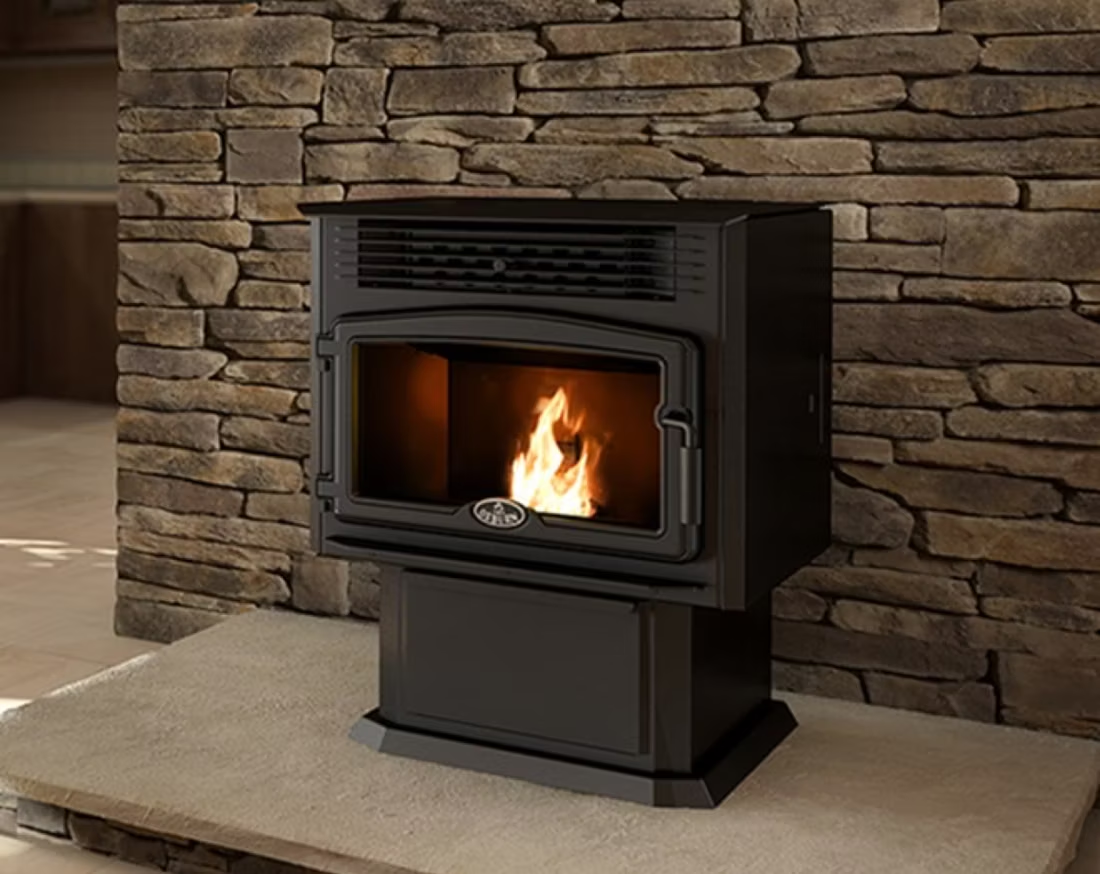
A pellet stove is a freestanding appliance that sits on its own hearth pad and vents through a wall or existing chimney chase—it can go almost anywhere with the right clearances and power access. A pellet insert is built to slide into an existing masonry fireplace opening, which is common in older Albemarle County homes in and around Charlottesville's established neighborhoods. For a home with an existing but rarely-used fireplace, an insert converts that opening into an efficient, automated heat source. For a room without a fireplace, or a newer home without existing masonry, a freestanding stove is usually the simpler install.
Do I need a permit to install a pellet stove in Albemarle County?
Yes—new pellet stove and insert installations require a building permit through Albemarle County Building Inspections, covering the venting and any electrical work tied to the unit. Most local installers handle the permit paperwork as part of the job, so it's rarely something you have to manage yourself. One advantage in Albemarle County: because there's no designated air quality non-attainment area or winter inversion advisory system here, there are no curtailment days or burn restrictions to track once your stove is installed and permitted—you can run it whenever you want.
What's the best pellet stove for Albemarle County's climate?
Because Albemarle's winters are moderate compared to true mountain or northern climates, most homeowners here don't need an extreme cold-rated pellet stove—a mid-range unit from a manufacturer like Harman, Quadra-Fire, or England's Stove Works covers the vast majority of homes comfortably. What matters more locally is matching the stove's hopper capacity to how often you want to refill it, and confirming your local retailer stocks compatible pellets—Energex, Hamer Pellet Fuel, and Greene Team Pellet Fuel are the regional brands most commonly carried at Albemarle-area hearth and farm supply stores, so it's worth confirming compatibility before you buy.
How often does a pellet stove need to be cleaned and serviced?
Pellet stoves need more frequent light maintenance than wood stoves but far less heavy work than a chimney sweep. Plan on emptying the ash pan and cleaning the burn pot every few days to weekly during regular use, and a full professional service—checking the exhaust vent, hopper, auger, and gaskets—once a year, ideally before the season starts. Homes running the stove daily through a full Albemarle winter should lean toward the more frequent end of that schedule. Skipping the annual service is the most common cause of ignition or feed problems mid-season.
Where can I buy pellets locally in Albemarle County?
Regional pellet brands including Energex, Hamer Pellet Fuel, and Greene Team Pellet Fuel are sold at hearth retailers and farm supply stores throughout the Charlottesville and Albemarle County area, typically in 40-pound bags sold individually or by the ton pallet. Buying a full ton ahead of the season is usually the better value if you have dry storage space—a garage or shed works fine as long as bags stay off damp concrete. Local retailers can advise on which brand burns cleanest in your specific stove model, since ash content varies somewhat between brands.
Pellet stove vs. wood stove—which is right for my home?
Wood stoves burn cordwood—often local oak, hickory, or maple—and keep working without electricity, which matters if you want backup heat during a winter power outage. Pellet stoves need electricity to run the auger and blower, so they go dark in an outage unless paired with a battery backup, but they offer thermostat-controlled, hands-off heat and far less daily mess than splitting and stacking wood. For an Albemarle County home in town where convenience matters most, pellet usually wins. For a rural property where power reliability is a concern or where free or low-cost firewood is already available, wood can make more sense. Plenty of local homes end up running both.
Why is my open fireplace making my house colder?
Open fireplaces suck—literally. As the fire burns, it consumes air your furnace already paid to heat and pulls it out through the chimney, so the house is actually colder after the fire goes out than before you lit it. An insert fixes this: it seals the chimney, puts fixed glass across the front, and turns that hole in your house into a real heat source.
What's the difference between an insert and a zero-clearance fireplace?
An insert is a fireplace that slides into a pre-existing wood-burning fireplace—if you don't have one, there's nothing to insert it into. A zero-clearance fireplace is built into a framed wall, which makes it the answer for remodels and new construction. Simple test: existing masonry fireplace means insert; blank or framed wall means zero-clearance.
How much should I budget for a fireplace?
For an average home—covering the fireplace, the vent pipe, and basic installation—a budget between $3,900 and $5,500 gives you a lot of options across wood, gas, and pellet. By the time you add finish work, gas line, and electrical, the average complete installation lands between $5,000 and $12,000 all-in. In a remodel or new build, a good rule is to put about 2.5% of the total project cost toward the fireplace.
Can a fireplace actually lower my heating bill?
Yes—by creating a comfort zone. A furnace heats every square foot of the house just to warm the one room you're in; a gas fireplace on low burns roughly a sixth of the gas a typical furnace does. Set the furnace around 55–60 degrees as a baseline, then heat the rooms your family actually uses. Families who heat this way commonly save $20–$60 a month.
Stove and Fireplace Dealers in Albemarle County
Listings include WhyFire partner dealers, dealers we have verified as authorized for the brands we recommend, and established local businesses that carry hearth products. Every listing shows which one it is. The ones marked Preferred run on WhyFire's software, so they can show you real pricing and book your appointment right here. No manufacturer pays for placement. How we verify dealers →
Acme Stoves Of Charlottesville
Foster Fuels
The Chimney Guys
Blossman Gas And Appliance
Mid-Atlantic Masonry Heat
Pellet Brands Stocked Around Albemarle County
Manufacturers will point you to the nearest stocking dealer.
Find your pellet stove in Albemarle County.
Tell us a bit about your home and we'll match you with the right pellet stove or insert, plus a free Project Guide & Parts List—and connect you with a trusted local dealer serving Albemarle County.
Find Your Fireplace →