
Find the right fireplace for your Albemarle County home.
Wood, gas, pellet, and electric fireplace resources for every town in Albemarle County—from Charlottesville's suburbs to the ridgelines near Crozet and Scottsville. Find the right unit and connect with a trusted local hearth retailer.
Every Project Starts From One of These Five Situations
Piedmont winters in Albemarle County, Virginia.
Albemarle County sits in Virginia's central Piedmont, wrapping around Charlottesville from the rolling farmland east of town up into the foothills of the Blue Ridge near Crozet and White Hall. Winters are moderate by national standards—average lows around 28°F and roughly 4,100 heating degree days, a fraction of what a place like Duluth or Fargo sees—but cold snaps into the teens and single digits do arrive, usually a handful of times each winter. Oak, hickory, and maple are the dominant firewood species locally, split from the hardwood forests that cover much of the county, and they burn hot and long compared to softer woods used further west.
What you'll find on this hub: hearth retailers, service technicians, and fuel suppliers serving every community in the county—from the Charlottesville urban ring out to Crozet, Scottsville, Earlysville, and Free Union. Pick your fuel below to drill into specifics—local dealers, installation costs, recommended units, and the resources that match your project. Whether you're heating a farmhouse off Route 20 or adding ambiance to a townhome near Pantops, this is the starting point.
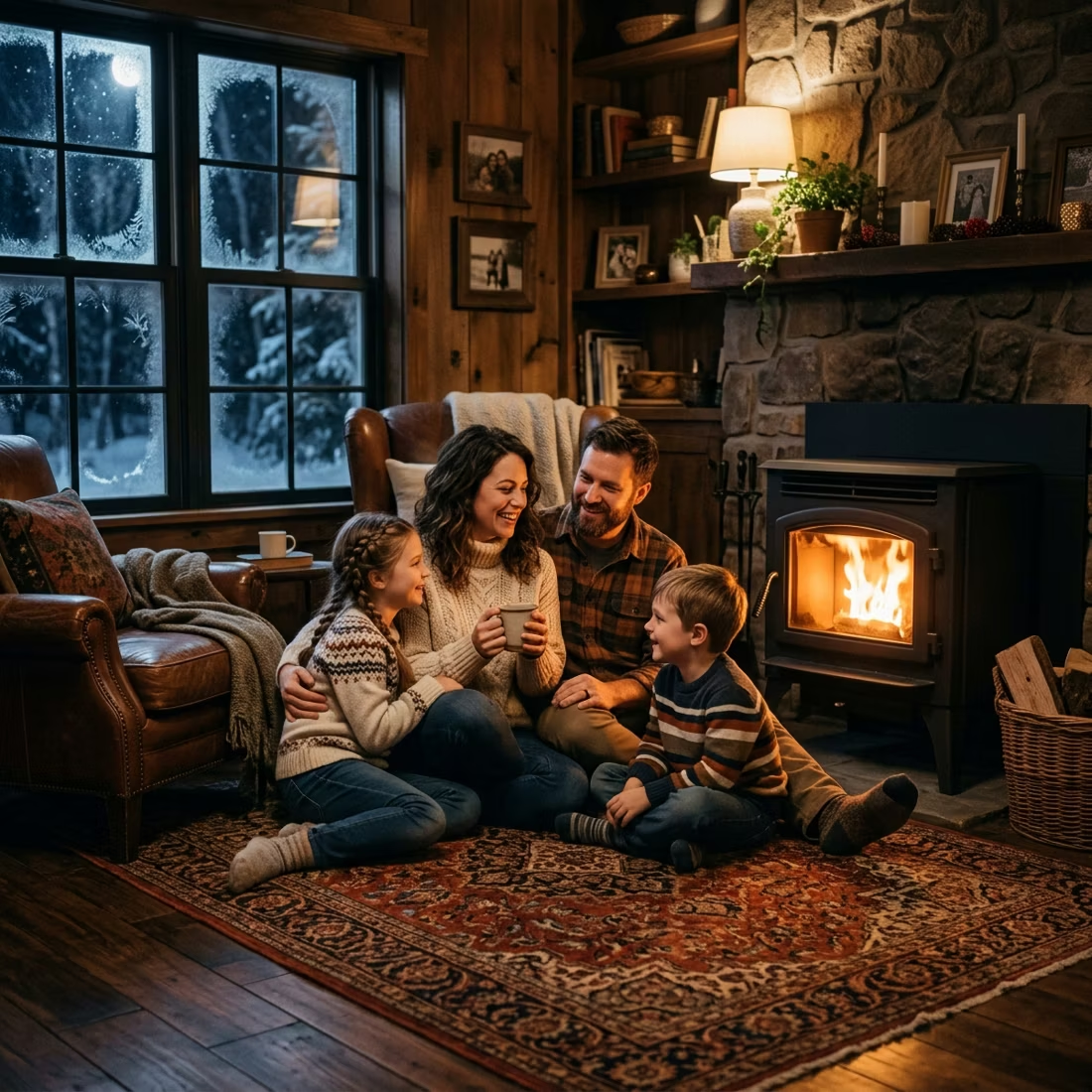
Four fuels. One honest answer for Albemarle County.
Three steps. No salesperson until you're ready.
Tell us about your project
Your zip code, your situation, and the fuel you're leaning toward—or let the answers point you to one.
See what's actually available
The brands dealers within 100 miles genuinely carry—real options, never a catalog mirage.
Get your dealer & Project Guide
A trusted local dealer, plus the free Project Guide & Parts List that names every component of the job.
Frequently Asked Questions
Which fuel works best in Albemarle County?
It depends on your home and how you use it. Wood is a strong fit here—oak, hickory, and maple are abundant and split easily, and a well-sized stove or insert can carry a farmhouse through the occasional deep-cold stretch without leaning on the furnace. Gas is the convenience choice for Charlottesville-area homes with natural gas service or propane tanks—instant heat, no wood handling, and a clean look for renovated living rooms. Pellet is a solid middle ground, especially with regional supply from Energex and Greene Team Pellet Fuel keeping fuel costs predictable; it's popular in newer Crozet and Pantops subdivisions where full wood setups aren't practical. Electric works well as supplemental heat and ambiance in condos, bedrooms, and finished basements, but with only about 4,100 heating degree days here, it's rarely asked to be a primary heat source. Many Albemarle homes end up mixing fuels—wood or pellet in the main living space, gas or electric elsewhere.
Do I need a permit to install a fireplace in Albemarle County?
In most cases, yes. Albemarle County requires building permits for new wood stoves, wood-burning inserts, gas fireplaces, gas inserts, gas stoves, and pellet stoves, issued through the Albemarle County Department of Community Development. Gas installations also need a separate gas line permit, and the gas connection itself has to be done by a licensed gas-fitter. Electric fireplaces are typically permit-exempt for plug-in units, though built-in electric fireplaces that require new wiring or a dedicated circuit usually need an electrical permit. If your property is inside Charlottesville city limits rather than unincorporated Albemarle County, permits route through the city instead of the county—worth confirming before you start. Most local hearth retailers manage this paperwork as part of the installation, so homeowners rarely have to navigate it solo.
Are there air quality restrictions on wood burning in Albemarle County?
No, not in the way some western counties experience. Albemarle County doesn't sit in a geographic bowl prone to winter inversions, and there are no non-attainment designations or mandatory burn curtailment periods here. That said, EPA 2020 NSPS emissions standards still apply to any new wood stove installation—older uncertified units can't be newly installed, and most local retailers only stock certified models anyway. Practically speaking, this means Albemarle County homeowners can burn wood on cold nights without checking an air quality advisory first, which isn't the case everywhere in the country.
Can one local hearth retailer handle all four fuel types?
Several dealers serving the Charlottesville and Albemarle County area carry three or four fuel types under one roof, which makes cross-shopping easier if you're not yet sure which fuel fits your home. Dealers with broader lineups typically show working wood, gas, and pellet displays side by side, plus a few electric units for comparison. Smaller shops closer to Crozet or Scottsville may lean more heavily into wood and pellet, given the rural customer base and strong local firewood supply. If you're comparing fuels for the first time, a multi-fuel retailer near Charlottesville is generally the easiest starting point—you can see real units burning rather than judging from photos.
How does service work in rural areas of Albemarle County?
Most chimney sweeps and gas techs serving Albemarle County are based near Charlottesville and drive out to the surrounding districts—Crozet and White Hall to the west, Scottsville to the south, Earlysville and Free Union to the north. Rural service calls sometimes carry a modest travel fee, generally in the $30–$60 range depending on distance from the city. Fall (September–November) is the easiest window to book annual wood chimney sweeps or gas system inspections before the first real cold snap hits; waiting until December often means a longer wait. If you're on a rural property with a septic-and-well setup and no easy gas access, pairing a wood stove with a pellet unit as backup is a common local strategy for keeping heat available during a winter power outage.
What's the typical cost range for fireplace installation across all fuel types in Albemarle County?
Ranges vary by fuel and by how much existing infrastructure you already have. Wood stove or insert installation: roughly $4,000–$8,500 for a typical retrofit, more if new chimney chase construction is required. Gas fireplace, insert, or stove: roughly $4,000–$10,000 depending on whether a new gas line has to be run; conversions of an existing wood-burning fireplace to gas tend to land on the lower end. Pellet stove or insert: roughly $4,000–$7,000 for a standard install. Electric fireplace: $200–$3,000 for the unit itself, plus $300–$1,000 in labor for anything beyond a simple plug-in, such as a built-in wall unit requiring a dedicated circuit. For more specific pricing tied to local retailers, see the county + fuel pages above.
Can a fireplace actually lower my heating bill?
Yes—by creating a comfort zone. A furnace heats every square foot of the house just to warm the one room you're in; a gas fireplace on low burns roughly a sixth of the gas a typical furnace does. Set the furnace around 55–60 degrees as a baseline, then heat the rooms your family actually uses. Families who heat this way commonly save $20–$60 a month.
What is an in-home preview and do I need one?
It's a visit where a hearth professional measures your space, confirms the model you picked actually works in your home, and walks the specs—framing, gas line, venting, finish work—before anything is ordered. Some details you just can't know until you see the house. Never make a down payment without one; it's the single most-skipped step that burns buyers.
Does a fireplace add value to my home?
On average, a fireplace adds back to the home about the same amount you spent installing it. Add the monthly savings from heating the rooms you actually use instead of the whole house—often hundreds of dollars a year—and the value case is strong before you even count what a fire does for how your family uses the room.
Can I install a fireplace myself?
If you're putting a fire in your house on purpose, it's best to work with an expert. Unless you're genuinely experienced in framing, gas line, vent pipe, and the national code on clearances to combustibles, have a professional do it—and ideally the same company that sells you the fireplace, so warranty, service, and liability all live under one roof.
Stove and Fireplace Dealers in Albemarle County
Listings include WhyFire partner dealers, dealers we have verified as authorized for the brands we recommend, and established local businesses that carry hearth products. Every listing shows which one it is. The ones marked Preferred run on WhyFire's software, so they can show you real pricing and book your appointment right here. No manufacturer pays for placement. How we verify dealers →
Acme Stoves Of Charlottesville
Foster Fuels
The Chimney Guys
Blossman Gas And Appliance
Mid-Atlantic Masonry Heat
Get matched with a local Albemarle County dealer.
Pick your fuel below and we'll match you with a trusted local hearth retailer, plus a free Project Guide & Parts List—the exact parts, including the vent kit, and the dealer we recommend for your project.
Find Your Fireplace →