
Keep Your Family Warm and Safe—No Matter What
Six-plus months of heating season, sugar maple and yellow birch stacked in every dooryard, and a hearth tradition that predates the power grid. Find the right stove or insert for your Windsor County home and connect with a trusted local dealer.
Every Project Starts From One of These Five Situations
Sugar maple country runs on wood heat.
Windsor County sits along the Connecticut River valley and climbs west into the Green Mountain foothills, home to just under 10,000 residents spread across small towns like Woodstock, White River Junction, Springfield, Ludlow, Windsor, and Hartford. This is Climate Zone 6A—winter lows average 13°F, and the county racks up roughly 6,827 heating degree days a year, a heating demand in the same range as Madison, Wisconsin. Heating season here runs from October into May, and it's not unusual for a cold snap to hold single digits for a week straight.
The hardwood forests that define Windsor County—sugar maple, yellow birch, american beech, white ash, red oak—are also what heats it. Cutting permits through the Green Mountain & Finger Lakes National Forest and White Mountain National Forest run about $20 per cord from May through October, and there's no non-attainment designation or winter burn-ban history in this part of Vermont, so wood heat here isn't fighting the air-quality restrictions common in western valley towns. A properly sized stove or insert—installed by someone who knows how to run a liner up an old farmhouse chimney and get the clearances right—turns that abundant hardwood into real, dependable heat for the coldest months of the year.
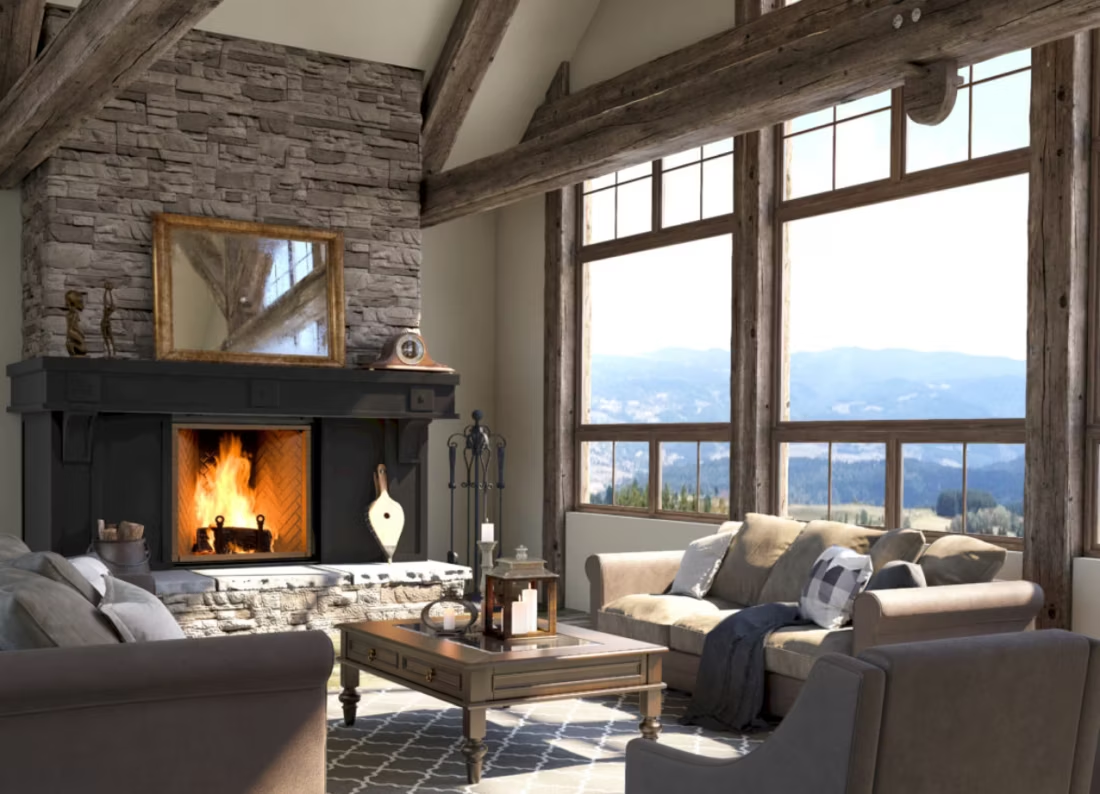
Firewood Cutting Permits Near Windsor County
Three steps. No salesperson until you're ready.
Tell us about your project
Your zip code, your situation, and the fuel you're leaning toward—or let the answers point you to one.
See what's actually available
The brands dealers within 100 miles genuinely carry—real options, never a catalog mirage.
Get your dealer & Project Guide
A trusted local dealer, plus the free Project Guide & Parts List that names every component of the job.
Frequently Asked Questions
How much does a wood stove installation cost in Windsor County?
Most wood stove installations in Windsor County run in the $4,000 to $9,500 range, depending on the stove, whether you're installing into an existing masonry fireplace or starting from scratch, and how much chimney work is involved. Older farmhouses common throughout the county—in Woodstock, Weathersfield, Chester, and the smaller river towns—often need a new stainless liner run through an existing flue, which adds to the cost but is usually less expensive than building new Class A chimney from the ground up. Get a firm quote after an in-home visit; a stove sized for a tight, well-insulated cape will cost less to run and install than one sized for a drafty 1840s farmhouse with 9-foot ceilings.
What size wood stove do I need for my home?
Sizing depends on square footage, ceiling height, insulation, and whether the stove is your primary heat or a supplement to propane or electric baseboard—common in Windsor County's older housing stock. As a rough guide for this climate: small stoves handle up to about 1,000 square feet, medium stoves cover 1,000 to 2,000 square feet, and large stoves can carry a well-insulated home above that. Older, less-insulated farmhouses around Ludlow and Springfield typically need to size up compared to newer, tighter construction near White River Junction. An undersized stove won't keep up when the mercury drops into single digits; an oversized one smolders and fouls the chimney with creosote. A local dealer will size your space properly during a home visit—most do this at no charge.
Where can I find certified wood stove installers near me?
Look for NFI (National Fireplace Institute) certified installers or CSIA (Chimney Safety Institute of America) credentialed technicians—both indicate real training in wood-burning appliance clearances and venting, not just general contracting experience. Trusted dealers serving Windsor County cover the corridor from Woodstock and White River Junction down through Springfield and Ludlow, and most bundle the sale and install together so warranty coverage and code compliance stay with one company. Skip the handyman route on wood-burning units—improper clearances and undersized liners are the leading cause of chimney fires in old New England housing stock, and Windsor County has plenty of it.
What's the difference between a wood stove and a wood insert?
A wood stove is freestanding, sits on a hearth pad, and vents up through a chimney—it can go almost anywhere with the right clearances. A wood insert slides into an existing masonry fireplace and converts it into a sealed, high-efficiency heat source, using the existing chimney (typically with a new stainless liner) as the vent path. Windsor County's older homes—many with original brick fireboxes dating back a century or more—are frequently better candidates for an insert, since it puts a modern, efficient firebox behind a fireplace opening that's already there. Homes without an existing fireplace, or new construction, are usually better suited to a freestanding stove.
Do I need a permit to install a wood stove in Windsor County?
Yes—new wood stove installations require a permit through your local town building or zoning office (Woodstock, Springfield, Hartford, and Ludlow each handle their own), and the installation itself needs to meet NFPA 211 clearance and venting standards along with current EPA emissions certification for the stove itself. Most local dealers handle the permitting and inspection scheduling as part of the install price, so it's rarely something the homeowner has to manage directly. Because Windsor County has no air-quality non-attainment designation, there's no seasonal curtailment period to worry about—once it's installed and inspected, you're free to burn.
What's the best wood stove for Windsor County's climate?
With winter lows averaging 13°F and roughly 6,827 heating degree days a year, a catalytic stove that holds a long, steady burn is worth the premium—Blaze King's catalytic line is built for exactly this kind of overnight cold, holding a fire well past 12 hours on a single load of seasoned sugar maple or red oak. Vermont Castings, originally built just up the road in Randolph, is another common choice locally and pairs well with the hardwood species that dominate Windsor County woodlots. For a supplemental-heat setup rather than a primary one, a non-catalytic stove from Pacific Energy or Lopi is simpler to run and still puts out serious heat. A local dealer can match the stove to your home's insulation and how hard you plan to lean on it.
How often should my chimney be inspected and cleaned?
The CSIA recommends an annual inspection for any wood-burning appliance, and in Windsor County that's best scheduled in late summer before the first cold nights arrive in September or October. Homes burning primarily hardwood—sugar maple, yellow birch, beech—tend to produce less creosote than softwood-burning setups, but a full season of daily use still warrants a Level 1 sweep every year. Older masonry chimneys common in the county's 19th-century farmhouses deserve extra attention, since deteriorating mortar and old flue liners are more common finds than in newer construction. Don't skip this step going into a Vermont winter—a chimney fire in a rural stretch of the county means a longer wait for a fire department response.
Where can I get firewood or a cutting permit in Windsor County?
For self-cut firewood, permits through the Green Mountain & Finger Lakes National Forest and the White Mountain National Forest run about $20 per cord, valid during the May-through-October cutting season—a popular option given how much sugar maple, yellow birch, white ash, and red oak grows on public land in and around the county. For delivered firewood, local suppliers sell by the cord (a stacked 4×4×8 foot pile), and prices vary by species and how well-seasoned the wood is—hardwoods like sugar maple and oak split and dry earlier in the year burn hotter and cleaner than green wood cut too close to heating season. Plan ahead: wood cut in spring for the following winter is standard practice throughout Windsor County.
Wood stove vs. pellet stove—which is right for me?
Wood stoves burn cordwood, work with zero electricity—a real advantage in rural Windsor County where ice storms can knock out power for days—and pair naturally with the hardwood already on most local properties. Pellet stoves burn compressed wood pellets from regional suppliers like New England Wood Pellet, Lignetics, or Maine Woods Pellet Co, run cleaner with less ash, and are simpler to load and set, but they need electricity for the auger and blower, so they go dark in an outage unless you add a battery backup. For county homes where self-sufficient heat during a winter power outage matters most, wood is usually the better call. For homes prioritizing convenience with reliable grid power, pellet is a strong option—both are available through local dealers.
What's the difference between an insert and a zero-clearance fireplace?
An insert is a fireplace that slides into a pre-existing wood-burning fireplace—if you don't have one, there's nothing to insert it into. A zero-clearance fireplace is built into a framed wall, which makes it the answer for remodels and new construction. Simple test: existing masonry fireplace means insert; blank or framed wall means zero-clearance.
Why won't my new wood stove get going like my old one?
New wood stoves are 70%+ efficient, so far less heat goes up the flue—which also means less draft to get a fire established. The rule: build a genuinely hot fire for about 45 minutes before you choke it down. Skip that and you get smoke in the room, creosote in the chimney, and a fire that never takes off. Most performance complaints trace straight back to this.
Can I install a fireplace myself?
If you're putting a fire in your house on purpose, it's best to work with an expert. Unless you're genuinely experienced in framing, gas line, vent pipe, and the national code on clearances to combustibles, have a professional do it—and ideally the same company that sells you the fireplace, so warranty, service, and liability all live under one roof.
Does a fireplace add value to my home?
On average, a fireplace adds back to the home about the same amount you spent installing it. Add the monthly savings from heating the rooms you actually use instead of the whole house—often hundreds of dollars a year—and the value case is strong before you even count what a fire does for how your family uses the room.
Stove and Fireplace Dealers in Windsor County
Listings include WhyFire partner dealers, dealers we have verified as authorized for the brands we recommend, and established local businesses that carry hearth products. Every listing shows which one it is. The ones marked Preferred run on WhyFire's software, so they can show you real pricing and book your appointment right here. No manufacturer pays for placement. How we verify dealers →
Mills Hardware Inc.
New England Outdoor Furnaces
Chimney Savers
Find your wood stove in Windsor County.
Tell us about your home and heating goals, and we'll match you with a trusted local Windsor County dealer and send over a free Project Guide & Parts List—the stove, venting, and installation plan sized for your house and this climate.
Find Your Fireplace →