
Real Heat, No Wood Splitting Required.
Instant, reliable heat for Franklin County's long, cold winters—find the right gas fireplace or insert and connect with a trusted local dealer.
Every Project Starts From One of These Five Situations
Dependable warmth for a place where winter settles in and stays.
St. Albans sits at just 393 feet along the Lake Champlain valley, but don't let the low elevation fool you—Franklin County has a heavier winter heating load than nearby Burlington, with winter lows that average around 8°F. That's dairy-farm country, and homes here are built to fight a season that runs from October well into April.
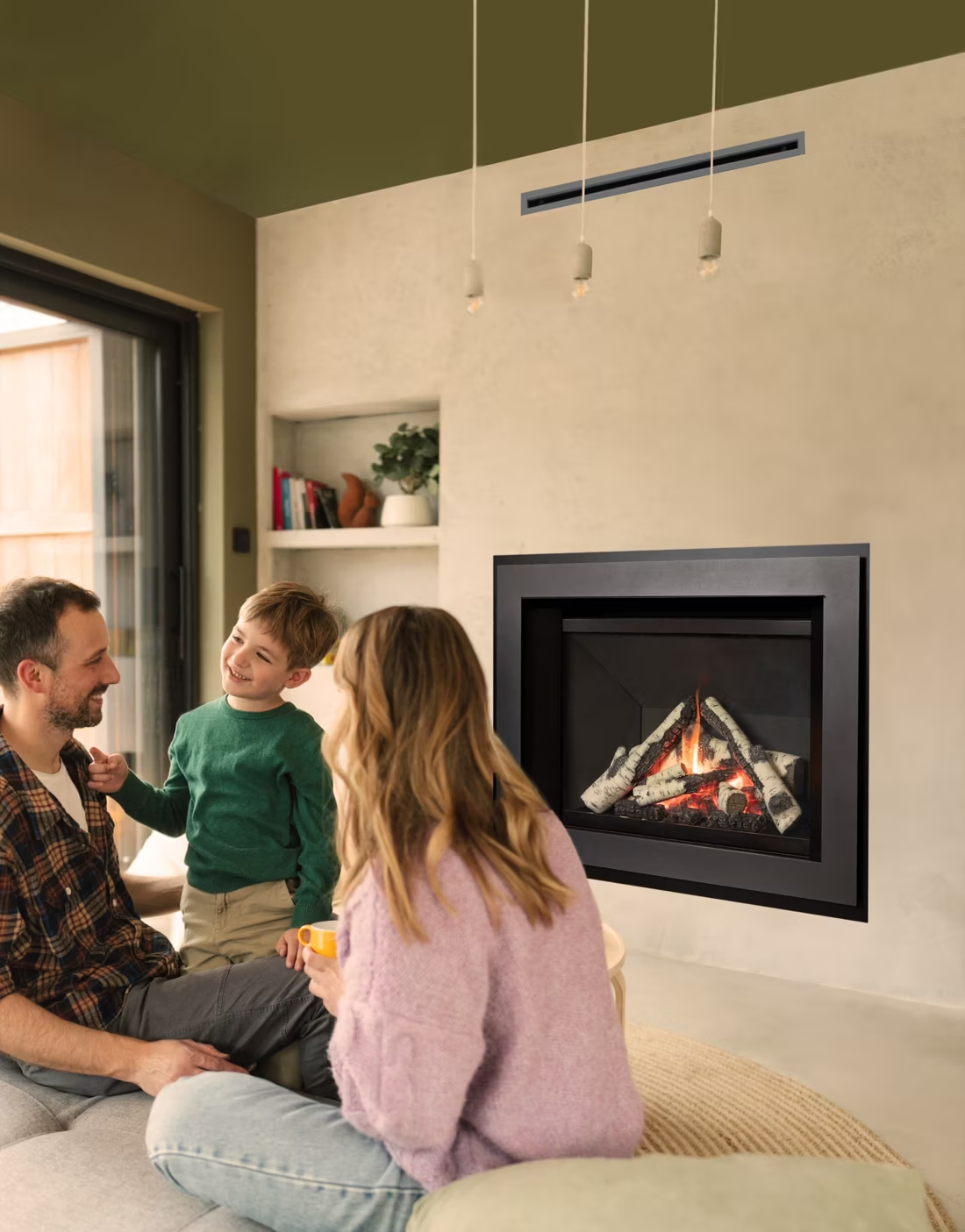
Natural gas mains are limited in Franklin County, so most St. Albans homeowners heat with propane rather than piped natural gas—delivered and stored in a tank on the property. Either way, a gas fireplace or insert gives you heat at the flip of a switch, no wood to split or stack, and—with the right ignition system—a unit that keeps running when a Champlain Valley ice storm takes down the power lines. It's a natural complement to central heat in a county where the thermometer barely climbs above freezing for weeks at a stretch.
Three steps. No salesperson until you're ready.
Tell us about your project
Your zip code, your situation, and the fuel you're leaning toward—or let the answers point you to one.
See what's actually available
The brands dealers within 100 miles genuinely carry—real options, never a catalog mirage.
Get your dealer & Project Guide
A trusted local dealer, plus the free Project Guide & Parts List that names every component of the job.
Frequently Asked Questions
How much does a gas fireplace installation cost in St. Albans?
Most gas fireplace and insert installations in St. Albans run between $4,500 and $10,500, depending on the unit, whether a propane tank needs to be installed or upsized, and how much venting or gas line work is involved. A direct-vent insert going into an existing masonry fireplace with propane already on-site tends to land on the lower end. New construction or a fresh built-in fireplace with a new propane tank and line run pushes toward the higher end. Efficiency Vermont has occasionally offered incentives on qualifying high-efficiency hearth appliances, so it's worth asking your local dealer what's currently available before you sign a quote.
Is natural gas available in St. Albans, or do I need propane?
Most homes in St. Albans and the rest of Franklin County run on propane rather than piped natural gas—the natural gas distribution network in Vermont is concentrated further south and doesn't reach most of the county. That means your gas fireplace will be set up to run on propane, with fuel delivered and stored in an above-ground or buried tank. Local hearth dealers and propane suppliers coordinate tank sizing and placement together, and most fireplace models can be configured for propane with the correct orifice and regulator, so fuel type doesn't limit your appliance choices.
Can I convert my existing wood fireplace to gas?
Yes, and it's a common upgrade in older St. Albans homes with a masonry fireplace originally built to burn sugar maple, yellow birch, or white ash. A propane insert typically slides into the existing firebox, using a stainless liner run up your current chimney for venting. Costs usually fall in the $4,500 to $9,000 range locally, with the propane tank installation as a separate line item if you don't already have one on the property. You keep the look of the original hearth but gain instant, thermostat-controlled heat instead of a fire you have to feed and tend.
Will my gas fireplace still work during a winter power outage?
Most modern propane fireplaces will, if you choose the right ignition system. Units with intermittent pilot ignition (IPI) run on a small battery backup that kicks in automatically when Green Mountain Power or Vermont Electric Cooperative service drops—which does happen during Franklin County ice storms. Valor fireplaces take it further: their pilot assembly generates its own electricity through the thermocouple, so there's no battery to remember to replace. Given how long some rural outages here can run, ask your local dealer specifically about the ignition system before you buy.
What's the difference between a gas fireplace, gas insert, and gas stove?
A gas fireplace is a fully built-in unit framed into a wall, typically chosen for new construction or a remodel. A gas insert is sized to slide into an existing masonry firebox, sealing it up and venting through the original chimney with a liner—the right call for the many older farmhouses and Victorian-era homes around St. Albans that already have a fireplace. A gas stove is a freestanding cabinet-style unit that sits on the floor like a wood stove but burns propane. For a home with an existing hearth, an insert is usually the simplest and most cost-effective path.
Do I need a permit to install a gas fireplace in St. Albans?
Yes—the City of St. Albans and Franklin County both require a building permit for new gas hearth installations, and any propane line or tank work needs to be handled by a licensed gas-fitter or propane technician. Most local hearth retailers coordinate the permit, the propane hookup, and the final inspection as part of the installation package, so you're not left managing separate trades. If you're just replacing a like-for-like unit, ask your installer whether a simplified permit applies—rules can vary by scope of work.
What's the difference between vented and vent-free gas fireplaces?
Vented (direct-vent) gas fireplaces pull combustion air from outside and exhaust it back outside through a sealed pipe—they're the standard, code-compliant choice everywhere including Vermont. Vent-free units burn fuel directly into the room without outside venting; they're legal in Vermont but come with strict room-sizing and oxygen-depletion-sensor requirements, and they add moisture and combustion byproducts to indoor air. In a tight, well-insulated St. Albans home built to handle a long, heavy winter heating season, that extra moisture load matters more than it would in a leaky older structure—most local dealers steer homeowners toward direct-vent units for that reason.
How often does a gas fireplace need to be serviced?
Plan on an annual inspection, ideally in late summer or early fall before the heating season starts in earnest. A technician checks the burner, pilot assembly, venting, and gas connections, and cleans the glass and interior—a much smaller job than sweeping a wood chimney, but it matters for safety and for keeping any manufacturer warranty intact. Local gas appliance technicians typically charge $150 to $250 for this service, and it's worth scheduling before the first hard freeze rather than after.
Gas vs. wood—which makes more sense for a St. Albans home?
Wood is the traditional choice in this part of Franklin County, where sugar maple, yellow birch, american beech, white ash, and red oak are all locally abundant and burn well, and a wood stove keeps working with zero electricity during an outage. Gas trades that self-sufficiency for convenience: instant on-off heat, no splitting or hauling wood, and a consistent output that pairs cleanly with a home's existing propane-fueled furnace or water heater. Given how expensive electricity runs here—Green Mountain Power and Vermont Electric Cooperative both bill north of 22 cents per kWh—a propane fireplace with battery-backed ignition is often a more practical outage backup than an electric unit, even if it costs more upfront than relying on wood alone. Plenty of local households run both: wood in a den or barn-adjacent space, propane in the main living area.
What's the difference between an insert and a zero-clearance fireplace?
An insert is a fireplace that slides into a pre-existing wood-burning fireplace—if you don't have one, there's nothing to insert it into. A zero-clearance fireplace is built into a framed wall, which makes it the answer for remodels and new construction. Simple test: existing masonry fireplace means insert; blank or framed wall means zero-clearance.
Why is my open fireplace making my house colder?
Open fireplaces suck—literally. As the fire burns, it consumes air your furnace already paid to heat and pulls it out through the chimney, so the house is actually colder after the fire goes out than before you lit it. An insert fixes this: it seals the chimney, puts fixed glass across the front, and turns that hole in your house into a real heat source.
Can I install a fireplace myself?
If you're putting a fire in your house on purpose, it's best to work with an expert. Unless you're genuinely experienced in framing, gas line, vent pipe, and the national code on clearances to combustibles, have a professional do it—and ideally the same company that sells you the fireplace, so warranty, service, and liability all live under one roof.
What is an in-home preview and do I need one?
It's a visit where a hearth professional measures your space, confirms the model you picked actually works in your home, and walks the specs—framing, gas line, venting, finish work—before anything is ordered. Some details you just can't know until you see the house. Never make a down payment without one; it's the single most-skipped step that burns buyers.
Nearby Dealers
Hearth shops serving St. Albans and the surrounding area. Every listing shows whether it is a WhyFire partner, a dealer we have verified as authorized for the brands we recommend, or a local business carrying hearth products. No manufacturer pays for placement. How we verify dealers →
McCuin Fuels, Inc.
Taylor Rental
Blazing Designs
Find your gas fireplace in St. Albans.
Tell us about your home and heating goals, and we'll match you with a trusted local dealer and send over a free Project Guide & Parts List for your St. Albans gas fireplace project.
Find Your Fireplace →