
Keep Your Family Warm and Safe—No Matter What
Wood heat for the long, cold season on both sides of the Green Mountains—from Rutland City to Killington, Wallingford, Pawlet, and every hill town in between. Find the right stove or insert and connect with a trusted local dealer.
Every Project Starts From One of These Five Situations
Wood heat is a Vermont tradition, not a luxury.
Rutland County runs from the Taconic Mountains in the west across the Otter Creek valley to the western slopes of the Green Mountains, taking in Rutland City, Killington, Wallingford, Pawlet, Fair Haven, and a long list of small hill towns. At Climate Zone 6A, with an average winter low of 8°F and a long, cold heating season, the county sits in roughly the same cold-climate tier as Caribou, Maine—a heating season that stretches from October into April and runs longer still at the higher elevations around Killington and Pittsfield. Wood heat isn't a novelty here; it's how a lot of these towns have kept warm for generations, and it still supplements or replaces oil and propane furnaces in a substantial share of county homes.
The hardwood growing on this side of the Green Mountains—sugar maple, yellow birch, American beech, white ash, red oak—is dense, high-BTU firewood, and it's abundant. Cutting permits through the Green Mountain & Finger Lakes National Forest and the White Mountain National Forest run about $20 per cord, with a cutting season from May through October, so self-sufficient wood gathering is still a normal part of life for a lot of county residents. Rutland County also carries none of the winter air-quality curtailment rules you'd find in a Western non-attainment basin—there's no Yellow Curtailment Period here, no burn ban triggered by an inversion. A properly installed, EPA-certified stove or insert can run all winter without restriction.
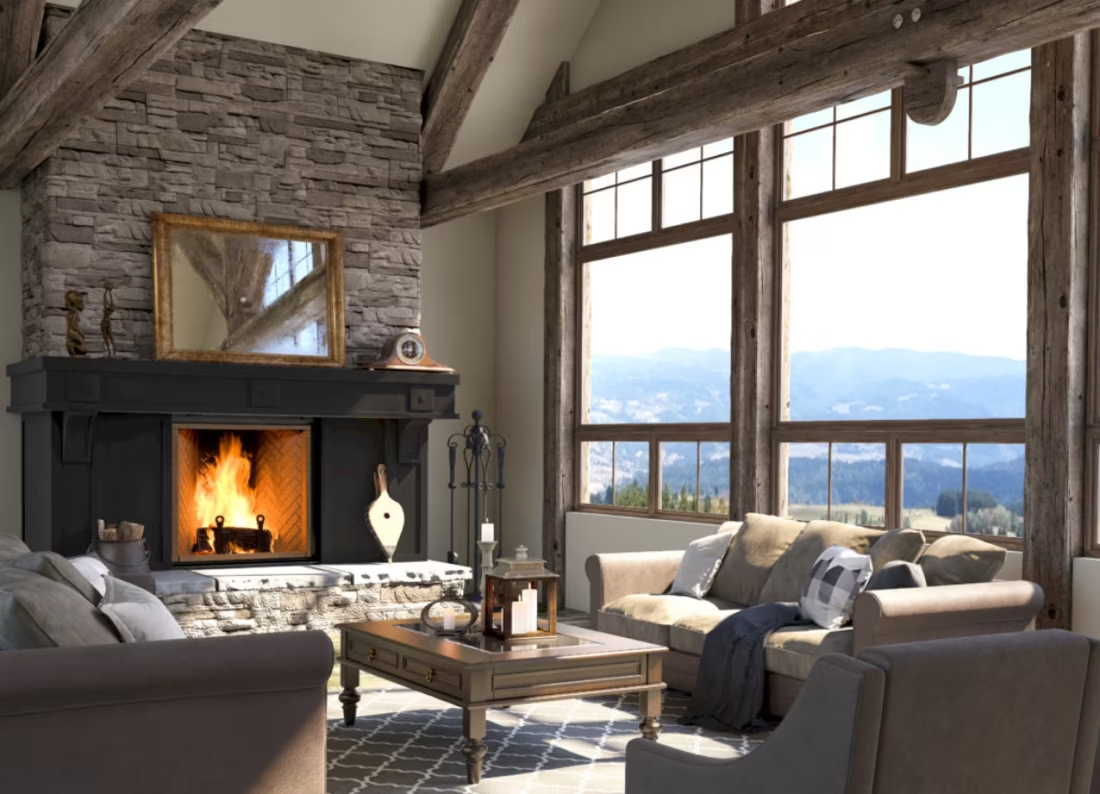
Firewood Cutting Permits Near Rutland County
Three steps. No salesperson until you're ready.
Tell us about your project
Your zip code, your situation, and the fuel you're leaning toward—or let the answers point you to one.
See what's actually available
The brands dealers within 100 miles genuinely carry—real options, never a catalog mirage.
Get your dealer & Project Guide
A trusted local dealer, plus the free Project Guide & Parts List that names every component of the job.
Frequently Asked Questions
How much does a wood stove installation cost in Rutland County?
A wood stove or insert installation in Rutland County typically runs $4,000 to $9,500, depending on the unit, whether a Class A chimney needs to run through an existing masonry flue or be built new, and whether the hearth pad needs modification for clearance. Homes in Killington, Chittenden, or other higher-elevation towns can land toward the top of that range when travel time and access add to labor. Ask a local retailer for a firm quote after an in-home site visit—chimney height, roof pitch, and existing masonry condition all move the number.
What size wood stove or insert do I need for my home?
Sizing depends on square footage, insulation, and how much of the heating load the stove needs to carry. Given the county's long, cold winters and average winter lows around 8°F, local installers generally size generously—a mid-size stove rated for 1,000 to 2,000 sq ft is common even in smaller homes, since a lot of the older farmhouse stock in towns like Wallingford and Poultney runs drafty and under-insulated. Homes at higher elevation near Killington or Pittsfield, where winters run colder and longer, often need the next size up from what square footage alone would suggest. A local dealer will size your space for free during an in-home visit.
Where can I find certified wood stove installers near me?
Look for NFI (National Fireplace Institute) or CSIA (Chimney Safety Institute of America) certification. Rutland County doesn't have a county building department—Vermont handles building permits at the town level—so the retailer's own credentials matter more here than any county-wide vetting system. Local hearth shops that install what they sell typically carry these certifications and coordinate directly with the relevant town office, whether that's Rutland City, Killington, Wallingford, or one of the smaller hill towns. Avoid handyman or general-contractor installs for wood-burning units; improper venting and clearance work is the leading cause of chimney fires.
What's the difference between a wood stove and a wood insert?
A wood stove is a freestanding unit that sits on a hearth pad and vents through a chimney—it can go almost anywhere with proper clearances. A wood insert is built to slide into an existing masonry fireplace, turning that drafty open hearth into a sealed, high-efficiency heat source. Rutland County has plenty of older homes with original masonry fireplaces, especially in Rutland City and the historic villages, where an insert makes sense because it reuses the chimney you already have. Newer homes or rooms without an existing fireplace are usually better suited to a freestanding stove.
Do I need a permit to install a wood stove in Rutland County?
Yes, in most cases—but the permit comes from the town, not the county. Vermont doesn't have county building departments, so a project in Rutland City goes through the city's zoning and building office, while a project in Killington, Wallingford, or Pawlet goes through that town's clerk or zoning administrator. The stove itself needs to meet current EPA emissions standards. Most local installers handle the town permit application as part of the job, so you typically don't have to chase it down yourself. There's no regional air-quality curtailment program here, so once installed, you can burn without seasonal restriction.
What's the best wood stove for Rutland County's climate?
For a climate averaging 8°F overnight lows and a long, cold heating season, a catalytic stove that holds a long, steady burn matters. Blaze King's catalytic models can hold a fire 20+ hours on a load, which is useful on the coldest Green Mountain nights. It's also worth noting Vermont Castings—the brand got its start just up the road in Randolph and Bethel, and its cast-iron stoves remain a common sight in county homes for good reason: they hold heat well and are built for exactly this kind of winter. For smaller homes or supplemental heat, non-catalytic models from Pacific Energy or Jotul are also common locally. A local retailer can match the model to your home's elevation, insulation, and square footage.
How often should my chimney be inspected and cleaned?
The CSIA recommends an annual inspection for any wood-burning appliance. For a stove getting regular winter use in Rutland County, plan on a full sweep and inspection each late summer or early fall before burning season starts. Homes burning wood as a primary heat source—common in the hill towns and at higher elevations near Killington—often need a mid-season cleaning if creosote builds up faster than usual. Skipping inspections is the leading cause of chimney fires, and it's especially worth staying current in the more rural parts of the county where fire department response times run longer.
Where can I get firewood in Rutland County?
Local firewood suppliers throughout the county sell hardwood—mostly the sugar maple, yellow birch, American beech, white ash, and red oak that grow on both the Taconic and Green Mountain sides—typically by the cord, with prices varying by species and how well-seasoned the wood is. For self-cutting, permits through the Green Mountain & Finger Lakes National Forest and the White Mountain National Forest run about $20 per cord, available during the May-through-October cutting season, a popular route for rural residents who heat primarily with wood.
Wood stove vs. pellet stove—which is right for me?
Wood stoves burn cordwood, work without electricity—a real advantage during winter power outages in the more rural parts of the county—and pair naturally with self-cut hardwood from local National Forest permits. Pellet stoves burn compressed wood pellets from regional brands like New England Wood Pellet, Lignetics, or Maine Woods Pellet Co., are easier to load and run on a thermostat, and burn cleaner with less ash, but they need electricity to run the auger and blower, so they won't help during an outage. For homes in Killington, Pittsfield, or other spots where outages are common, wood is often the more reliable choice. For homes in town that prioritize convenience, pellet can be the better fit. Both are available through local retailers.
What's the difference between an insert and a zero-clearance fireplace?
An insert is a fireplace that slides into a pre-existing wood-burning fireplace—if you don't have one, there's nothing to insert it into. A zero-clearance fireplace is built into a framed wall, which makes it the answer for remodels and new construction. Simple test: existing masonry fireplace means insert; blank or framed wall means zero-clearance.
Why won't my new wood stove get going like my old one?
New wood stoves are 70%+ efficient, so far less heat goes up the flue—which also means less draft to get a fire established. The rule: build a genuinely hot fire for about 45 minutes before you choke it down. Skip that and you get smoke in the room, creosote in the chimney, and a fire that never takes off. Most performance complaints trace straight back to this.
How much should I budget for a fireplace?
For an average home—covering the fireplace, the vent pipe, and basic installation—a budget between $3,900 and $5,500 gives you a lot of options across wood, gas, and pellet. By the time you add finish work, gas line, and electrical, the average complete installation lands between $5,000 and $12,000 all-in. In a remodel or new build, a good rule is to put about 2.5% of the total project cost toward the fireplace.
What is an in-home preview and do I need one?
It's a visit where a hearth professional measures your space, confirms the model you picked actually works in your home, and walks the specs—framing, gas line, venting, finish work—before anything is ordered. Some details you just can't know until you see the house. Never make a down payment without one; it's the single most-skipped step that burns buyers.
Stove and Fireplace Dealers in Rutland County
Listings include WhyFire partner dealers, dealers we have verified as authorized for the brands we recommend, and established local businesses that carry hearth products. Every listing shows which one it is. The ones marked Preferred run on WhyFire's software, so they can show you real pricing and book your appointment right here. No manufacturer pays for placement. How we verify dealers →
Proctor Gas
Mills Hardware Inc.
Find your wood fireplace in Rutland County.
Tell us a bit about your home and we'll match you with the right wood stove or insert, plus a free Project Guide & Parts List—the exact parts, including the vent kit, and a recommended local Rutland County dealer to install it.
Find Your Fireplace →