
Clean, instant heat for Franklin County's coldest nights.
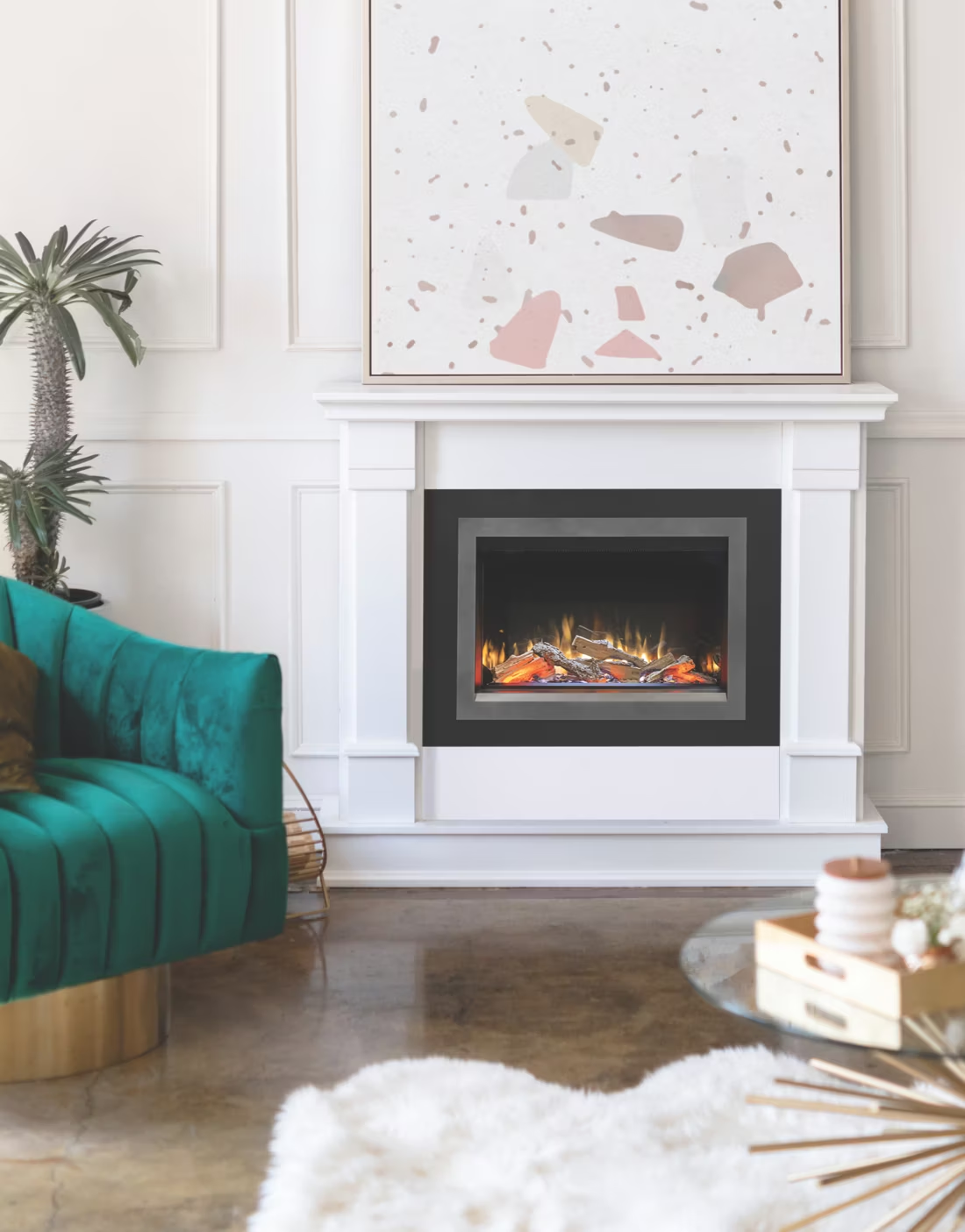
Franklin County runs roughly 7,810 heating degree days a year with average winter lows near 8°F—colder than most of the Lower 48. Electric fireplaces and inserts bring clean, no-venting warmth to living rooms, bedrooms, and finished basements from St. Albans to Richford. Find the right unit and connect with a trusted local dealer.
Every Project Starts From One of These Five Situations
A clean supplement for a genuinely cold county.
Franklin County sits against the Canadian border in Vermont's far northwest corner, from the shore of Lake Champlain in Swanton and Highgate east through St. Albans, Enosburg Falls, Richford, and the farm towns of Sheldon, Berkshire, and Montgomery. At climate zone 6A and roughly 7,810 heating degree days a year, winters here run colder and longer than in Buffalo NY or Madison WI—average lows sit near 8°F, and hard cold snaps well below zero are routine from December through February. The county is modest in population, just over 9,000 across its covered towns, and most homes are older farmhouses, ranches, and camps rather than new construction.
That combination—real cold, older housing stock, and a genuinely clean electric grid supplied largely through Vermont Electric Cooperative (VEC) and Swanton's own municipal utility—makes electric fireplaces a practical, honest fit here, but mostly as a supplement rather than a primary heat source. Vermont's grid draws heavily on hydro power, so an electric insert produces genuinely low-carbon heat, and it needs no chimney, no venting, and no wood handling—a real advantage for condos near downtown St. Albans, finished basements, or homes where a wood or pellet stove already carries the bulk of the heating load. For most Franklin County households, wood remains the workhorse fuel—sugar maple, yellow birch, and white ash are the common local species—with an electric insert added for instant, zero-mess heat in a bedroom or den.
Three steps. No salesperson until you're ready.
Tell us about your project
Your zip code, your situation, and the fuel you're leaning toward—or let the answers point you to one.
See what's actually available
The brands dealers within 100 miles genuinely carry—real options, never a catalog mirage.
Get your dealer & Project Guide
A trusted local dealer, plus the free Project Guide & Parts List that names every component of the job.
Frequently Asked Questions
How much does an electric fireplace or insert cost to install in Franklin County?
Plug-in electric inserts and freestanding units that run on a standard 120-volt outlet typically run $150 to $600 installed, since no electrician is required beyond confirming the circuit can handle the load. Built-in wall units and larger inserts that need a dedicated 240-volt circuit run higher—typically $1,500 to $3,500 once an electrician runs new wiring, especially in older Franklin County farmhouses with knob-and-tube wiring or undersized panels that need upgrading first. Local dealers can usually tell you within a few minutes whether your existing electrical service supports the unit you want.
What size electric fireplace do I need for my Franklin County home?
Electric heaters are rated in watts, and most units top out around 5,000 to 6,000 watts—roughly enough supplemental heat for a single room or open living area under ideal conditions, not a whole farmhouse. Given how cold Franklin County gets, plan on an electric insert comfortably carrying one room while your furnace, boiler, or wood stove handles the rest of the house. A local dealer will size the unit to your specific room, ceiling height, and window exposure rather than square footage alone.
Can an electric fireplace heat my whole house?
Not in this climate. At roughly 7,810 heating degree days and average winter lows near 8°F, Franklin County is too cold for electric resistance heat to serve as a home's primary system economically—running an all-electric baseboard approach to whole-home heat here gets expensive fast. Electric fireplaces and inserts work best as zone heat: warming the room you're actually in so you can turn down the thermostat on the furnace or boiler elsewhere, or as a clean layer on top of an existing wood stove or heat pump system.
Do I need a permit or electrician to install an electric fireplace?
Plug-in units generally don't require a permit—you're simply adding an appliance to an existing outlet. Built-in units on a dedicated circuit do require licensed electrical work, and Vermont handles electrical permitting through the Division of Fire Safety in towns without their own local inspector, which covers most of Franklin County outside St. Albans city limits. St. Albans runs its own building and electrical inspection process through the city. Either way, a licensed electrician should verify your panel has capacity before adding a 240-volt circuit, particularly in older homes around Enosburg Falls and Richford still running original service.
What's the difference between an electric fireplace, insert, and stove?
An electric fireplace is typically a built-in or wall-mounted unit designed to look like a framed fireplace, often with a mantel surround. An electric insert is sized to slide into an existing masonry or wood-burning fireplace opening, giving an old unused hearth in a Franklin County farmhouse a second life without any chimney work. An electric stove mimics a freestanding wood stove's shape and can sit anywhere near an outlet. All three use the same basic heating element technology—the choice comes down to the look you want and whether you're filling an existing fireplace opening.
Are electric fireplaces a good fit for Franklin County's older farmhouses?
Yes, particularly as inserts into an existing but unused fireplace. Many of the county's older homes around Sheldon, Fairfax, and Montgomery have a masonry fireplace that's inefficient or no longer used for wood burning—an electric insert reactivates that space with real heat output and none of the draft or creosote concerns of the original hearth. For newer or renovated homes without an existing fireplace, a built-in wall unit works just as well and can be framed into almost any wall with power access.
How much does it cost to run an electric fireplace in Franklin County?
Running cost depends on your electric rate and how much you use it. Vermont Electric Cooperative, which serves much of rural Franklin County, and the Swanton Village Electric Department both bill in the mid-to-high teens per kilowatt-hour range, so a 1,500-watt unit run for several hours a night adds a modest but noticeable amount to a winter bill—generally far less than heating an equivalent space with baseboard electric heat around the clock. Because Vermont's grid draws heavily on hydro power, it's also a genuinely low-carbon way to add heat, which matters to a lot of local buyers.
Electric vs. wood or pellet—which is right for my home?
Wood remains the primary heat source for a lot of Franklin County households, burning local sugar maple, yellow birch, white ash, and beech, and it keeps working during the ice storms and power outages that hit this part of Vermont most winters. Pellet stoves, using brands like Lignetics, New England Wood Pellet, or Maine Woods Pellet Co that are common in this region, offer more convenience than wood but still need electricity to run the auger and blower. Electric fireplaces beat both on cleanliness and simplicity—no fuel storage, no ash, no venting—but they go dark the moment the power does, which matters given how often winter storms take out lines in the border towns. Many local homes pair an electric unit for daily convenience with a wood or pellet stove as backup.
Will my electric fireplace work during a power outage?
No—electric fireplaces and inserts need power to run the fan and heating element, so they shut down immediately in an outage. That's a real limitation in Franklin County, where ice storms and heavy snow load regularly take down lines in the rural stretches around Richford, Berkshire, and Montgomery, sometimes for days at a time. If backup heat during outages matters to your household, plan on a wood stove, a pellet stove with a battery backup, or a propane unit with battery ignition as your primary or secondary source, and treat the electric fireplace as everyday convenience rather than emergency heat.
Can I put a TV above my fireplace?
Yes—with an asterisk. Fireplaces are hot and TVs don't like heat. Either put a mantel between them to deflect rising warmth, or choose a fireplace with heat-management technology that creates a cool zone on the wall above—the wall stays around 125 degrees, barely warm, while the room still gets full heat. If you like clean lines and don't want a mantel, heat management is the answer.
Do electric fireplaces actually produce heat?
Yes—most put out around 4,800–5,000 BTUs from a standard outlet, which comfortably warms a bedroom, office, or den as a comfort-zone heater. What they won't do is carry a whole house the way wood, gas, or pellet can. Think of electric as ambiance-first with honest supplemental heat: flames on with no heat in July, flames plus warmth in January.
What is an in-home preview and do I need one?
It's a visit where a hearth professional measures your space, confirms the model you picked actually works in your home, and walks the specs—framing, gas line, venting, finish work—before anything is ordered. Some details you just can't know until you see the house. Never make a down payment without one; it's the single most-skipped step that burns buyers.
Can a fireplace actually lower my heating bill?
Yes—by creating a comfort zone. A furnace heats every square foot of the house just to warm the one room you're in; a gas fireplace on low burns roughly a sixth of the gas a typical furnace does. Set the furnace around 55–60 degrees as a baseline, then heat the rooms your family actually uses. Families who heat this way commonly save $20–$60 a month.
Stove and Fireplace Dealers in Franklin County
Listings include WhyFire partner dealers, dealers we have verified as authorized for the brands we recommend, and established local businesses that carry hearth products. Every listing shows which one it is. The ones marked Preferred run on WhyFire's software, so they can show you real pricing and book your appointment right here. No manufacturer pays for placement. How we verify dealers →
McCuin Fuels, Inc.
Suroît Boutique (Cowansville)
Blazing Designs
Taylor Rental
Stoves & Chimneys
Chauffage Gadbois
Piscines Jacques-Cartier
Gaz Propane Rainville Inc.
Actions Multi-Flammes Granby
Find your electric fireplace in Franklin County.
Tell us a bit about your home and we'll match you with the right electric fireplace or insert—and send a free Project Guide & Parts List with the exact parts for your Franklin County project and our recommended local dealer to install them.
Find Your Fireplace →