
Keep Your Family Warm and Safe—No Matter What
With winters as cold as Duluth, Minnesota and winter lows averaging 10°F, Essex Junction homes lean on wood heat for a reason. Find the right stove or insert, and connect with a trusted local dealer.
Every Project Starts From One of These Five Situations
Hardwood country, built for burning.
Essex Junction sits in the Champlain Valley at just 363 feet of elevation, but don't let the low elevation fool you—with a winter heating load about as cold as Duluth, Minnesota over the course of a winter, this corner of Chittenden County runs about as cold as Duluth, Minnesota over the course of a winter. The woodlots surrounding Essex Junction are stocked with sugar maple, yellow birch, american beech, white ash, and red oak—dense hardwoods that burn hot and long, which is a big part of why wood heat remains so common here.
Vermont has none of the winter air-quality curtailment issues you'd find in Western mountain towns—there are no non-attainment restrictions to work around here, so a certified stove can run whenever you need it. The Green Mountain & Finger Lakes National Forest issues cutting permits from May through October at $20 per cord, which keeps self-supplied firewood realistic for households willing to do the work. And with Green Mountain Power's residential rate sitting near 22 cents per kWh—well above the national average—a good wood stove does real work lowering a Vermont heating bill, not just adding ambiance.
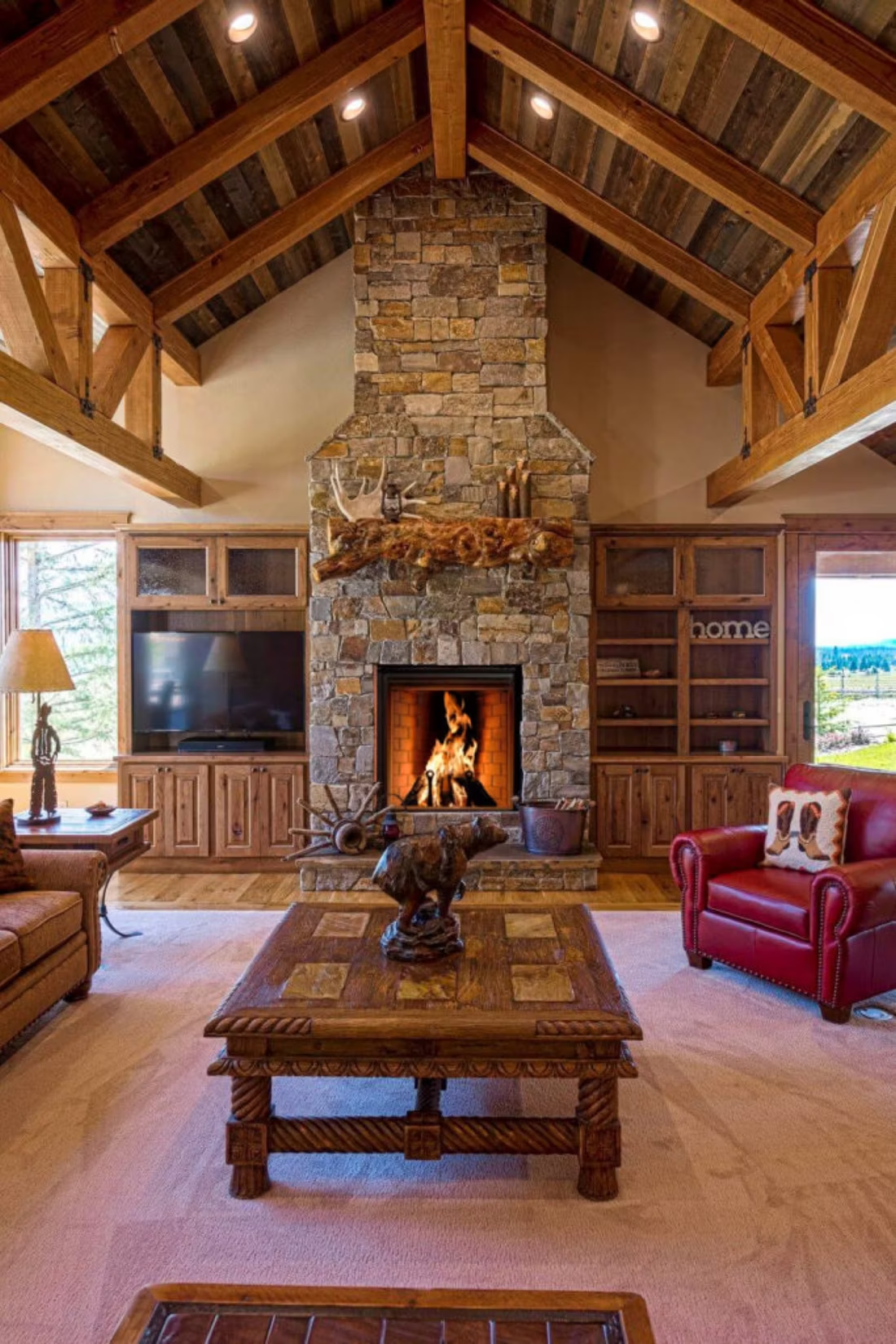
Firewood Cutting Permits Near Essex Junction
Three steps. No salesperson until you're ready.
Tell us about your project
Your zip code, your situation, and the fuel you're leaning toward—or let the answers point you to one.
See what's actually available
The brands dealers within 100 miles genuinely carry—real options, never a catalog mirage.
Get your dealer & Project Guide
A trusted local dealer, plus the free Project Guide & Parts List that names every component of the job.
Frequently Asked Questions
How much does a wood stove installation cost in Essex Junction?
A wood insert installed into an existing masonry fireplace typically runs $4,000 to $8,000 in the Essex Junction area, including a stainless steel liner sized for the flue. A freestanding stove with a full Class A chimney system—common in homes without an existing masonry fireplace—usually falls between $4,500 and $9,500. New construction or additions that need a chimney built from the foundation up can run higher, often $8,000 to $13,000. The City of Essex Junction Building & Zoning Department requires a permit for new wood-burning appliance installs, and most local dealers handle that paperwork as part of the job.
What size wood stove do I need for a Vermont winter?
With winter lows averaging 10°F and plenty of nights well below that, Essex Junction homes generally need more heating capacity than the national average suggests. A small stove (rated for roughly 1,000 sq ft) suits a single room or a tight cape-style home; a medium stove (1,000–2,000 sq ft) covers most main living areas; larger stoves handle open floor plans or whole-home heating in well-insulated newer construction. Older farmhouses common around Chittenden County often lose heat faster than their square footage implies, so a local dealer's in-home BTU assessment matters more here than a size chart.
Where can I find certified wood stove installers near Essex Junction?
Look for NFI (National Fireplace Institute) or CSIA (Chimney Safety Institute of America) certification—both indicate real training in wood-burning appliance clearances and venting, not just general contracting experience. In Chittenden County, most hearth shops that sell stoves also employ their own certified installers, which keeps the permit, the install, and the warranty under one roof. Given how dense Vermont's old housing stock is with non-standard chimneys and masonry fireplaces built decades before modern clearance codes existed, this isn't a project for a general handyman.
Wood insert or freestanding stove—which fits my Essex Junction home?
A lot of housing stock in and around Essex Junction predates 1950 and already has a working masonry fireplace—for those homes, a wood insert is usually the better call. It reuses the existing chimney (with a new stainless liner) and turns an inefficient open hearth into a real heat source, often cutting wood consumption significantly compared to an open fire. Newer homes, additions, or rooms without an existing chimney are better suited to a freestanding stove, which can be placed almost anywhere with proper clearances and a new Class A chimney run.
Do I need a permit to install a wood stove in Essex Junction?
Yes—new wood stove and insert installations require a building permit through the City of Essex Junction, and the unit itself needs to meet current EPA emissions standards. Most local dealers fold the permit into the installation process. Unlike parts of the West with winter inversion advisories, Essex Junction has no air-quality curtailment periods, so once your stove is installed and permitted, you can burn it on any cold night without checking a daily air-quality notice.
What's the best wood stove for a climate like Essex Junction's?
With winters in the same range as Duluth, Minnesota or International Falls—a stove built for long, cold-climate burns matters. Vermont Castings, headquartered right in Randolph, Vermont, makes cast-iron stoves designed for exactly this kind of winter, and buying one means supporting a Vermont manufacturer. Catalytic models from Blaze King are also popular locally for their 20+ hour burn times on the coldest nights. Given the hardwood available regionally—dense sugar maple and red oak in particular—most mid-size stoves in this climate zone will hold a fire well overnight; a local dealer can match burn time to your specific home.
How often should my chimney be inspected in Vermont?
CSIA recommends an annual inspection for any wood-burning appliance, and that holds especially true in Essex Junction where a full burning season often runs six months or more, from October through April. Homes burning hardwood species like sugar maple and beech as primary heat—common here—should plan on an inspection and sweep every fall before the season starts, since heavy creosote buildup is more likely with extended, high-volume burning than with occasional weekend fires.
Where can I get firewood in Essex Junction?
Local firewood suppliers around Chittenden County sell seasoned cordwood—sugar maple, yellow birch, and red oak are the most common species sold—typically running $250 to $325 per cord delivered, with unseasoned wood priced lower. For self-cutting, the Green Mountain & Finger Lakes National Forest issues personal-use cutting permits at $20 per cord during the May-through-October season, which is enough lead time to cut, split, and season wood before the following winter's burn season.
Wood stove or pellet stove—which makes more sense here?
Wood stoves run on cordwood you can source locally or cut yourself through the National Forest permit program, and they keep working during a power outage—a real consideration in Vermont, where ice storms take down lines most winters. Pellet stoves, stocked regionally by brands like New England Wood Pellet and Lignetics, are more convenient to load and burn cleaner, but they need electricity to run the auger and blower—and with Green Mountain Power's residential rate near 22 cents per kWh, running one during a multi-day outage on a generator adds real cost. For Essex Junction homes that want reliable backup heat, wood tends to be the more resilient choice; for homes prioritizing convenience with reliable grid power, pellet is a reasonable alternative.
What's the difference between an insert and a zero-clearance fireplace?
An insert is a fireplace that slides into a pre-existing wood-burning fireplace—if you don't have one, there's nothing to insert it into. A zero-clearance fireplace is built into a framed wall, which makes it the answer for remodels and new construction. Simple test: existing masonry fireplace means insert; blank or framed wall means zero-clearance.
Why is my open fireplace making my house colder?
Open fireplaces suck—literally. As the fire burns, it consumes air your furnace already paid to heat and pulls it out through the chimney, so the house is actually colder after the fire goes out than before you lit it. An insert fixes this: it seals the chimney, puts fixed glass across the front, and turns that hole in your house into a real heat source.
What is an in-home preview and do I need one?
It's a visit where a hearth professional measures your space, confirms the model you picked actually works in your home, and walks the specs—framing, gas line, venting, finish work—before anything is ordered. Some details you just can't know until you see the house. Never make a down payment without one; it's the single most-skipped step that burns buyers.
Can a fireplace actually lower my heating bill?
Yes—by creating a comfort zone. A furnace heats every square foot of the house just to warm the one room you're in; a gas fireplace on low burns roughly a sixth of the gas a typical furnace does. Set the furnace around 55–60 degrees as a baseline, then heat the rooms your family actually uses. Families who heat this way commonly save $20–$60 a month.
Preferred Dealer in Essex Junction
Marked Preferred because they run on WhyFire's software—so they can show you real pricing and book your appointment right here. No manufacturer pays for placement. How we verify dealers →
Find your wood fireplace in Essex Junction.
Tell us about your home and heating goals, and we'll match you with a trusted local dealer and send over a free Project Guide & Parts List—the exact parts, venting, and recommended installer for your Essex Junction wood project.
Find Your Fireplace →