
Pellet Heat Is Rare in West Jordan—Here's What Actually Works.
Pellet stoves aren't the default heating choice along the Wasatch Front, but for a detached shop, a cabin without gas service, or backup heat, they still have a place. We'll help you figure out if one fits your situation and connect you with a dealer who actually stocks and installs them.
Every Project Starts From One of These Five Situations
Natural gas dominates the Salt Lake Valley—pellet stoves fill a narrow niche.
West Jordan sits in the Salt Lake Valley at 4,667 feet, with a heating season comparable to other Zone 5B winters and average winter lows around 25°F—a real Zone 5B winter, but not an extreme one. Piped natural gas reaches nearly every subdivision in the city, and it's the default fuel for both new construction and remodels. On top of that, the Salt Lake Valley traps winter inversions that push particulate matter to unhealthy levels for weeks at a time, and Salt Lake County's Division of Air Quality calls mandatory no-burn action days that specifically target solid-fuel devices during those episodes. Even though EPA-certified pellet stoves are typically exempt from those curtailment orders, the combined effect of easy gas access and inversion-driven scrutiny of solid-fuel burning means pellet stoves never really caught on here the way they have in more wood-dependent parts of the Mountain West.
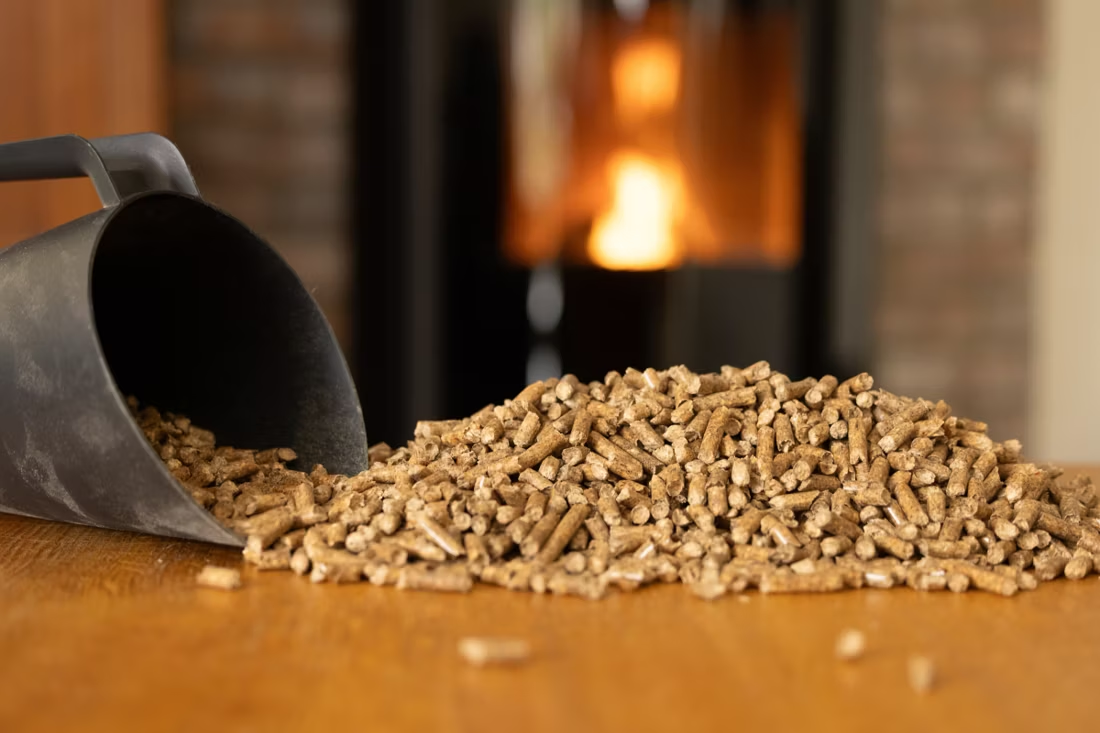
That doesn't mean pellet heat is off the table. A handful of West Jordan households still install a pellet stove in a detached shop or garage that isn't plumbed for gas, as backup heat for a finished basement, or in a cabin up toward the Uinta-Wasatch-Cache National Forest where gas service doesn't reach. Regional pellet brands like Bear Mountain, Lignetics, and Forest Energy are sold at area hardware and farm-supply stores for the homeowners who do burn pellets, but far fewer local hearth dealers keep pellet units in the showroom compared to gas fireplaces and inserts. If a pellet stove is genuinely the right tool for your specific building, we can still point you to a dealer who carries one and knows how West Jordan's permitting and air quality rules apply.
Three steps. No salesperson until you're ready.
Tell us about your project
Your zip code, your situation, and the fuel you're leaning toward—or let the answers point you to one.
See what's actually available
The brands dealers within 100 miles genuinely carry—real options, never a catalog mirage.
Get your dealer & Project Guide
A trusted local dealer, plus the free Project Guide & Parts List that names every component of the job.
Frequently Asked Questions
Is a pellet stove actually a good fit for a home in West Jordan?
For most West Jordan homes, no—not as primary heat. With natural gas lines already run to nearly every neighborhood and a gas furnace or fireplace far cheaper to install and operate, pellet stoves end up being a specialty choice rather than a mainstream one. Where they do make sense: a detached garage or shop without a gas line, a finished basement that needs supplemental heat, or a cabin property outside city limits near the Uinta-Wasatch-Cache National Forest where gas service simply isn't an option. If your situation matches one of those, a pellet stove can still be the right call—it's just not the default here the way it is in more rural, wood-heavy parts of Utah.
How much does a pellet stove installation cost in West Jordan?
Expect somewhere in the $3,500 to $6,500 range for the stove, venting, and hearth pad, on the higher side of national averages because fewer West Jordan hearth dealers specialize in pellet appliances compared to gas. Costs climb if the install requires a dedicated electrical circuit for the auger and blower motor, or if venting has to run through masonry or a longer exterior wall. Because so few local installers stock pellet units, it's worth getting a quote before assuming a price—a dealer who actually carries pellet stoves can tell you quickly whether your home is a straightforward install or a more involved one.
Do Salt Lake County's winter air quality rules affect pellet stoves?
They can, but less than you'd expect. Salt Lake County's Division of Air Quality issues mandatory action days during winter inversions, when PM2.5 builds up in the valley and solid-fuel burning is restricted. EPA-certified pellet stoves usually qualify for exemptions during these action days because they burn far cleaner than open wood fireplaces or older uncertified stoves—but you'll want written confirmation from your installer that the specific model you're buying carries that certification. Standard building permit requirements through the City of West Jordan Building Division still apply regardless of exemption status.
Why is natural gas so much more common than pellet heat in West Jordan?
Two reasons: infrastructure and regulation. Piped natural gas reaches almost every West Jordan subdivision, so a gas fireplace or furnace install rarely requires anything beyond a standard gas line tap—usually cheaper and faster than adding pellet venting and a dedicated electrical circuit. On top of that, Salt Lake County's inversion-season air quality scrutiny makes solid-fuel appliances, pellet included, feel like more of a hassle to homeowners even when the appliance itself would qualify for an exemption. For anyone with gas already run to their lot, it's usually the simpler and cheaper path.
Where can I buy pellet fuel in West Jordan?
Regional brands including Bear Mountain, Lignetics, and Forest Energy show up at hardware stores and farm-supply retailers throughout the Salt Lake Valley, typically in the $275 to $375 per ton range depending on the season and how far in advance you buy. Because pellet stoves are a smaller market here than in more wood-dependent parts of Utah, it's worth calling ahead in fall to confirm stock rather than assuming a store keeps pellets on the shelf year-round.
What permits do I need to install a pellet stove in West Jordan?
New pellet stove installations require a building permit through the City of West Jordan Building Division, and the venting and electrical work need to meet current code, including a dedicated circuit for the auger and combustion blower in most cases. Because pellet installs are less common here, it's worth confirming with the building division that your installer is pulling the permit correctly—a dealer who regularly handles gas fireplace permits but rarely does pellet work may need to double-check the specific requirements for a solid-fuel appliance.
Pellet stove or gas fireplace—which makes more sense in West Jordan?
For nearly every West Jordan home with natural gas already run to the property, gas wins on cost, simplicity, and maintenance—a direct-vent gas fireplace or insert installs faster, runs on a thermostat, and doesn't need fuel storage or hopper refills. Pellet makes sense mainly where gas isn't an option: a detached shop, an outbuilding, or a cabin property without utility gas service. If you're weighing the two for a main living space inside city limits, gas is almost always the more practical and more widely supported choice among local dealers.
Will a pellet stove keep working during a power outage?
Not without a battery backup or generator. Pellet stoves rely on an electric auger to feed fuel and a blower to distribute heat, so they shut down the moment power drops—which matters given that Wasatch Front windstorms occasionally knock out PacifiCorp service for hours at a time. If backup heat during outages is your main goal, a gas fireplace with an IPI ignition system and battery backup, or a Valor unit that self-generates power through its pilot's thermocouple, is a more reliable choice than a pellet stove for that specific use case.
Is wood or pellet heat a better option for a cabin near West Jordan?
If the property sits within West Jordan city limits, neither is a common choice—gas access and air quality scrutiny push most homeowners toward gas heat. But for a cabin or second home up toward the Uinta-Wasatch-Cache National Forest, wood is often the more self-sufficient option: cutting permits run $5 to $20 per cord during the May-to-October season, and pinyon, juniper, and aspen are all available locally. Pellet stoves are cleaner and easier to load but depend on trucked-in fuel and electricity, which can be a drawback for a remote property. For a true off-grid cabin, wood tends to be the more practical choice; for a property with reliable power but no gas line, pellet is worth considering.
How often does a pellet stove need cleaning?
A clean pellet stove is a happy pellet stove. Plan on cleaning the burn pot about once a week when you're burning regularly—ash and clinkers gum up the air holes just like a pellet barbecue. Most pellet stove problems trace back to skipped cleaning that nobody explained up front. Some designs make it easy with a trapdoor burn pot: pull a lever and the gunk drops into the ash pan.
Can a pellet stove heat a whole house?
It genuinely can. I burned a pellet stove as my only heat source for years after a furnace died, and it kept the entire house warm. Pellets feed automatically from a hopper, so you get wood-heat economics with thermostat-style control. Two honest caveats: it needs weekly cleaning during the season, and most models need electricity to run—ask about battery backup if outages are a concern.
Does a fireplace add value to my home?
On average, a fireplace adds back to the home about the same amount you spent installing it. Add the monthly savings from heating the rooms you actually use instead of the whole house—often hundreds of dollars a year—and the value case is strong before you even count what a fire does for how your family uses the room.
How much should I budget for a fireplace?
For an average home—covering the fireplace, the vent pipe, and basic installation—a budget between $3,900 and $5,500 gives you a lot of options across wood, gas, and pellet. By the time you add finish work, gas line, and electrical, the average complete installation lands between $5,000 and $12,000 all-in. In a remodel or new build, a good rule is to put about 2.5% of the total project cost toward the fireplace.
Nearby Dealers
Hearth shops serving West Jordan and the surrounding area.
(Sugar House) Alpine Fireplaces (In Breezeway Next To Theatres)
Hearth & Home Distributors Of Utah - Salt Lake City
Pellet Brands Stocked Around West Jordan
Manufacturers will point you to the nearest stocking dealer.
Find your pellet stove in West Jordan.
Tell us about your shop, cabin, or backup heat situation and we'll match you with a local dealer who actually carries pellet stoves—plus a free Project Guide & Parts List with the exact vent kit and parts your install needs.
Find Your Fireplace →