
Reliable heat for Wayne County's remote high desert winters.
From Loa and Bicknell to Torrey and Hanksville, Wayne County's scattered ranches and Capitol Reef-area homes need heat that doesn't depend on a two-hour drive for parts. Find the right pellet stove and connect with a trusted local dealer.
Every Project Starts From One of These Five Situations
Convenient heat for a county where the nearest big-box store is an hour away.
Wayne County is one of Utah's least populated counties—just 1,908 people spread across nearly 2,500 square miles of high desert plateau, red rock canyon, and the pinyon-juniper woodland that surrounds Capitol Reef National Park. Elevation swings hard across the county, from around 4,300 feet near Hanksville to over 7,000 feet at Loa and Bicknell, where winter nights can turn as sharp and dry-cold as a Helena, Montana evening. For homes at that elevation, a heat source that lights consistently and holds a steady output through the night matters more than convenience alone.
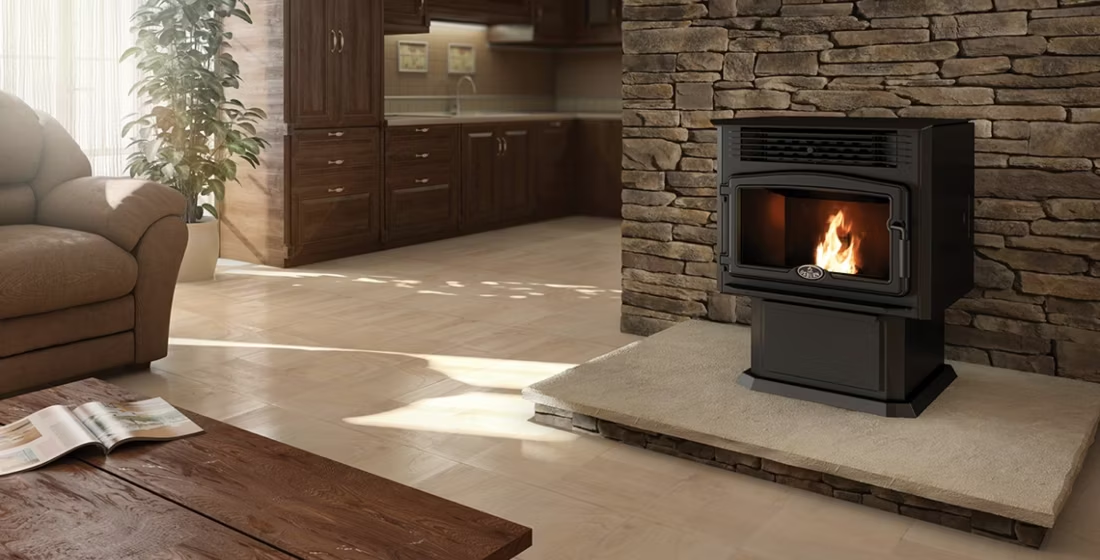
Pellet stoves solve a real problem for Wayne County residents: they burn cleaner than open wood fires during the wildfire-smoke season that regularly settles over the Fishlake and Dixie National Forest boundaries, and most pellet units are exempt from the burn restrictions that can shut down wood stoves during red-flag conditions. The tradeoff in a county this remote is supply—Bear Mountain, Lignetics, and Forest Energy pellets aren't sitting on a shelf in every town here, so buying ahead and knowing which local dealer actually stocks and installs matters. That's exactly the gap a trusted local match closes: no guessing which farm-supply store carries pellets in October, no undersized stove ordered off a big-box website with nobody around to size the venting correctly.
Three steps. No salesperson until you're ready.
Tell us about your project
Your zip code, your situation, and the fuel you're leaning toward—or let the answers point you to one.
See what's actually available
The brands dealers within 100 miles genuinely carry—real options, never a catalog mirage.
Get your dealer & Project Guide
A trusted local dealer, plus the free Project Guide & Parts List that names every component of the job.
Frequently Asked Questions
How much does a pellet stove installation cost in Wayne County?
A typical pellet stove installation runs roughly $3,500 to $6,500 depending on the unit, whether it vents through an existing wall or needs new venting run, and whether a hearth pad is required for clearance. Because Wayne County has very few resident hearth technicians, installers frequently travel from Richfield or Cedar City, and that travel time is often reflected as a modest trip charge on the final quote—worth asking about up front when you're comparing bids.
What size pellet stove do I need for a Wayne County home?
Sizing depends on square footage, insulation, and elevation. A home in Bicknell or Loa at over 7,000 feet will generally need a larger-output stove than a comparably sized home down near Hanksville at 4,300 feet, since the higher elevation towns see colder, drier overnight temperatures. Small stoves suit a single room or cabin, medium units handle most main living areas in a ranch-style home, and larger units are appropriate for older, less-insulated farmhouses common throughout the county. A local dealer sizing your specific home avoids the two most common mistakes: an undersized stove that runs constantly on high, or an oversized one that short-cycles and wastes pellets.
Where can I find certified pellet stove installers near Wayne County?
Given the county's small population, most certified installers are based outside Wayne County proper—typically out of Richfield in neighboring Sevier County or as far as Cedar City—and serve Loa, Bicknell, Torrey, and Hanksville on a scheduled or by-appointment basis. Look for NFI (National Fireplace Institute) certification and confirm the installer is comfortable with electrical work, since every pellet stove needs a dedicated circuit for the auger and blower. Booking early in the fall matters here more than in denser counties, since a handful of traveling installers cover a very large service area.
Is pellet fuel actually available in a county this remote?
It's a fair question, and the honest answer is that Wayne County doesn't have a big-box hearth retailer of its own. Bear Mountain, Lignetics, and Forest Energy pellets are typically available through farm-supply and hardware outlets in Richfield, about an hour from Loa, with some seasonal stock carried locally in Wayne County during peak fall demand. Because winter storms can close mountain routes for stretches, most residents who heat primarily with pellets buy a season's worth—often a full ton or more—in September or October rather than restocking bag by bag through winter.
Do I need a permit to install a pellet stove in Wayne County?
Yes—new pellet stove installations generally require a building permit through the Wayne County Building Department, covering the venting and the dedicated electrical circuit the stove needs to run its auger and blower. There's some good news on the air-quality side: because pellet stoves burn cleaner and more completely than open wood fires, they're typically exempt from the seasonal burn restrictions that apply during wildfire-smoke advisories tied to the nearby Fishlake and Dixie National Forests—a real advantage during a summer or fall with heavy regional smoke.
What's the best pellet stove for Wayne County's climate?
For the higher-elevation towns—Loa, Bicknell, and the Torrey/Capitol Reef area—look for a stove with a larger hopper capacity so you're not refilling multiple times a day during the coldest stretches, and enough rated BTU output to handle nights that regularly dip well below freezing at 7,000 feet. Homes closer to Hanksville, at lower elevation, generally do fine with a mid-size unit. Whatever model you choose, confirm it's rated to burn the standard hardwood pellet blends sold regionally—Bear Mountain, Lignetics, and Forest Energy pellets all work in most modern EPA-certified stoves, but it's worth confirming with your dealer before you buy a season's supply.
How does wildfire smoke affect pellet stove use in Wayne County?
Wayne County sits surrounded by Fishlake and Dixie National Forest land, and like much of the Intermountain West it sees periods of heavy regional wildfire smoke, particularly in late summer. During red-flag and high-fire-danger periods, open wood burning is sometimes restricted by state or county advisory. Pellet stoves burn hotter and more completely than an open wood fire, and most EPA-certified units are exempt from those burn bans—which makes pellet a dependable choice for anyone who wants uninterrupted heat regardless of the season's fire conditions.
Wood vs. pellet—which is right for my Wayne County home?
Wood is deeply practical here—pinyon, juniper, and aspen are all locally available, often cut on nearby public land, and a wood stove keeps working with zero electricity, which matters in a county where storm-related outages can stretch longer than in more urban areas. Pellet stoves are more convenient day to day—load the hopper, set the thermostat, less ash—and burn cleaner during wildfire-smoke season, but they require electricity to run the auger and blower, so they're not a fallback heat source during a power outage unless paired with a battery backup or generator. Many Wayne County households end up with one of each: pellet for daily convenience, wood as the backup plan.
How often does a pellet stove need cleaning and maintenance?
Plan on emptying the ash pan every few days during regular use and a deeper cleaning of the burn pot and heat exchanger every one to two weeks depending on how much the stove runs. A full annual service—checking the auger motor, exhaust fan, and gaskets—should happen before the season starts, ideally in late summer. Because most certified technicians serving Wayne County travel in from Richfield or Cedar City, it's worth scheduling that fall service call early, before their calendars fill up with the rest of their rural service area.
Why is my open fireplace making my house colder?
Open fireplaces suck—literally. As the fire burns, it consumes air your furnace already paid to heat and pulls it out through the chimney, so the house is actually colder after the fire goes out than before you lit it. An insert fixes this: it seals the chimney, puts fixed glass across the front, and turns that hole in your house into a real heat source.
Are pellet stoves loud?
They make some noise—there are two fans running plus an auger motor that turns as it feeds pellets. But there's a real range: premium models are engineered quiet, and the best offer a whisper-quiet mode you can comfortably watch TV next to. If noise matters in your room, ask to hear a stove running before you buy—it's a five-minute test that saves years of annoyance.
Can I install a fireplace myself?
If you're putting a fire in your house on purpose, it's best to work with an expert. Unless you're genuinely experienced in framing, gas line, vent pipe, and the national code on clearances to combustibles, have a professional do it—and ideally the same company that sells you the fireplace, so warranty, service, and liability all live under one roof.
Can a fireplace actually lower my heating bill?
Yes—by creating a comfort zone. A furnace heats every square foot of the house just to warm the one room you're in; a gas fireplace on low burns roughly a sixth of the gas a typical furnace does. Set the furnace around 55–60 degrees as a baseline, then heat the rooms your family actually uses. Families who heat this way commonly save $20–$60 a month.
Stove and Fireplace Dealers in Wayne County
Listings include WhyFire partner dealers, dealers we have verified as authorized for the brands we recommend, and established local businesses that carry hearth products. Every listing shows which one it is. The ones marked Preferred run on WhyFire's software, so they can show you real pricing and book your appointment right here. No manufacturer pays for placement. How we verify dealers →
Dugmore Appliance
Larsen’s Ace Hardware
Blake Electric Company
Peterson Refrigeration & Mechanical
Hill's Heating & Air Con
Southwest Plumbing Supply - Ephraim
Pellet Brands Stocked Around Wayne County
Manufacturers will point you to the nearest stocking dealer.
Find your pellet stove in Wayne County.
Tell us a bit about your home in Wayne County and we'll match you with a trusted local dealer and send over a free Project Guide & Parts List—the exact parts, including the vent kit, for your pellet stove project.
Find Your Fireplace →