
Heat Your Home Through Wayne County's Long, Cold Winters.
Wood, gas, pellet, and electric fireplace resources for every town in Wayne County—from Loa and Bicknell to Torrey and Hanksville near Capitol Reef National Park. Get matched with a trusted local dealer who can install what actually works at 7,000 feet.
Every Project Starts From One of These Five Situations
High-elevation heating in one of Utah's smallest counties.
Wayne County is home to fewer than 2,000 year-round residents spread across Loa, Bicknell, Torrey, Lyman, Hanksville, and Caineville—most sitting between 6,800 and 7,000 feet along the Fremont River below Capitol Reef National Park. Winters here run cold and dry, with a feel closer to Bozeman, Montana than the Wasatch Front two hours north. Pinyon, juniper, and aspen are the wood species most homeowners burn, whether self-cut on nearby BLM and Forest Service ground or bought from a local supplier. Because the county's real air quality issue is wildfire smoke drifting off the surrounding slickrock and forest in summer and fall, rather than the winter inversions that plague Utah's urban valleys, wood-burning rules here are lighter than in Salt Lake or Utah County.
This hub gathers what's actually available across all four fuel types for Wayne County: hearth retailers, service technicians, and fuel suppliers who cover the towns along Highway 24 and Highway 12. Given the county's small population, most retailers and installers are based in regional hubs like Richfield or Cedar City and travel in for consultations and installs. Pick a fuel below to see costs, recommended units, and the dealers who genuinely service homes here—whether you're heating a ranch house in Loa or a vacation cabin near Torrey.
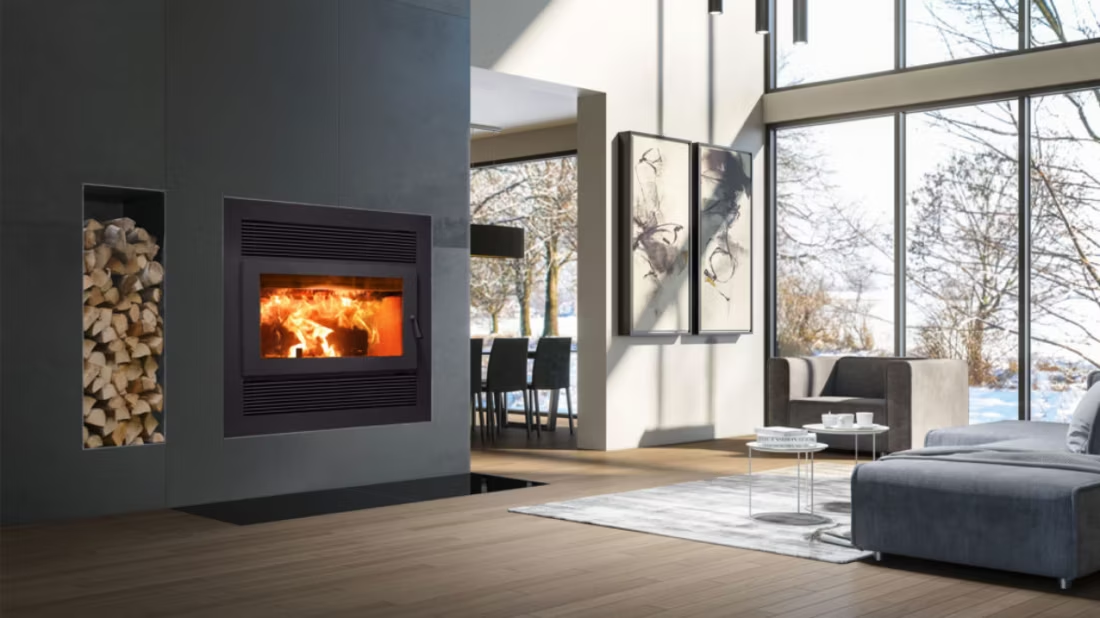
Four fuels. One honest answer for Wayne County.
Three steps. No salesperson until you're ready.
Tell us about your project
Your zip code, your situation, and the fuel you're leaning toward—or let the answers point you to one.
See what's actually available
The brands dealers within 100 miles genuinely carry—real options, never a catalog mirage.
Get your dealer & Project Guide
A trusted local dealer, plus the free Project Guide & Parts List that names every component of the job.
Frequently Asked Questions
Which fuel works best in Wayne County?
It depends on the home and how remote it sits. Wood remains a practical primary heat source in Wayne County—pinyon, juniper, and aspen are the local species, and many households cut their own under BLM or Forest Service permits, which keeps fuel costs down and gives you heat during a power outage. Propane is the common convenience fuel here since Wayne County has little to no piped natural gas; propane fireplaces and inserts give instant heat with none of the wood-hauling. Pellet stoves are a solid middle option—you get wood-style ambiance without splitting rounds, and Bear Mountain, Lignetics, and Forest Energy pellets are available through regional suppliers. Electric fireplaces work well as supplemental heat or for the vacation cabins scattered around Torrey and Capitol Reef, but they're not built to carry a home through a 6,800-foot winter on their own. Many Wayne County homes run wood or propane as primary heat with electric or pellet in a secondary room.
Do I need a permit to install a fireplace in Wayne County?
In most cases, yes. New wood stoves, inserts, propane fireplaces, propane inserts, and pellet stoves generally require a building permit through the Wayne County Building Department, and wood-burning appliances need to meet current EPA emissions standards to be installed new. Propane installations also require a certified gas-fitter for the tank and line connection. Electric fireplaces usually skip the permit process unless you're doing a hardwired built-in that adds a new circuit. Because Wayne County doesn't have a large in-county contractor base, most local and regional retailers who install here are used to handling the permitting paperwork as part of the job, which saves a homeowner a drive to the county seat in Loa.
Are there air quality restrictions on wood burning in Wayne County?
Not in the way you'd see in Salt Lake or Utah County, where winter inversions trigger mandatory burn bans. Wayne County isn't in a PM2.5 nonattainment area, so day-to-day wood burning isn't restricted the same way. The air quality concern that actually shows up here is wildfire smoke—summer and fall fire activity on the forests and slickrock around Capitol Reef can push smoke through the Fremont River valley for days at a time, which affects outdoor air quality independent of anyone's chimney. If you're installing new, an EPA-certified wood stove burning seasoned pinyon or juniper will run cleaner and more efficiently than an old uncertified unit, which matters for your own indoor air as much as anything regulatory.
Can one local hearth retailer handle all four fuel types?
Within Wayne County itself, dedicated hearth showrooms are rare simply because the population is under 2,000—most homeowners end up working with a retailer based in Richfield or Cedar City who travels in for the install. Regionally, dealers that carry wood, propane, pellet, and electric side by side are worth seeking out if you're still deciding between fuels, since they can show you working displays and talk through venting and clearance requirements for your specific house rather than just quoting a single product line. If you already know you want propane or pellet, a more focused dealer with strong local delivery and service coverage may actually be the better fit.
How does service work in remote areas of Wayne County?
Distances matter here—Loa to Hanksville is close to an hour, and Torrey to the nearest larger service base in Richfield is another hour past that. Most technicians covering Wayne County build in travel time and often batch service calls by area rather than same-day dispatch, so scheduling your annual chimney sweep or propane system check in late summer or early fall, before the Highway 24 corridor gets its first snow, is the easiest way to avoid a midwinter wait. It's worth keeping a backup heat source on hand too—a wood stove as backup for a propane system, or vice versa—since a service delay during a cold snap at 7,000 feet is a longer wait here than in a bigger market.
What's the typical cost range for fireplace installation across all fuel types in Wayne County?
Costs run a bit higher than statewide averages once you factor in travel from Richfield or Cedar City. Wood stove or insert installation typically runs $4,500–$9,500, more if new chimney work is needed for a full new-construction install. Propane fireplace, insert, or stove installation runs $4,500–$11,000 depending on tank setup and line work, since most of the county isn't on piped gas. Pellet stove or insert installation typically runs $4,500–$8,000. Electric fireplace units run $200–$3,000 for the unit itself, plus $400–$1,200 in labor for anything beyond a plug-and-play install. For exact numbers tied to your project, the county-plus-fuel pages above break down costs by fuel in more detail.
Can I install a fireplace myself?
If you're putting a fire in your house on purpose, it's best to work with an expert. Unless you're genuinely experienced in framing, gas line, vent pipe, and the national code on clearances to combustibles, have a professional do it—and ideally the same company that sells you the fireplace, so warranty, service, and liability all live under one roof.
How much should I budget for a fireplace?
For an average home—covering the fireplace, the vent pipe, and basic installation—a budget between $3,900 and $5,500 gives you a lot of options across wood, gas, and pellet. By the time you add finish work, gas line, and electrical, the average complete installation lands between $5,000 and $12,000 all-in. In a remodel or new build, a good rule is to put about 2.5% of the total project cost toward the fireplace.
Can a fireplace actually lower my heating bill?
Yes—by creating a comfort zone. A furnace heats every square foot of the house just to warm the one room you're in; a gas fireplace on low burns roughly a sixth of the gas a typical furnace does. Set the furnace around 55–60 degrees as a baseline, then heat the rooms your family actually uses. Families who heat this way commonly save $20–$60 a month.
What are the biggest mistakes people make buying a fireplace?
Five come up constantly: budgeting for the unit but not the full job (vent, gas line, electrical, finish work); drowning in options instead of starting from style and fuel; buying without an in-home preview; handing installation to a handyman instead of a pro; and giving up out of sheer indecision. Every one is avoidable with a clear plan—step one, step two, step three.
Stove and Fireplace Dealers in Wayne County
Listings include WhyFire partner dealers, dealers we have verified as authorized for the brands we recommend, and established local businesses that carry hearth products. Every listing shows which one it is. The ones marked Preferred run on WhyFire's software, so they can show you real pricing and book your appointment right here. No manufacturer pays for placement. How we verify dealers →
Dugmore Appliance
Larsen’s Ace Hardware
Blake Electric Company
Peterson Refrigeration & Mechanical
Hill's Heating & Air Con
Southwest Plumbing Supply - Ephraim
Find your fireplace in Wayne County.
Tell us about your home and we'll match you with a trusted local dealer and send a free Project Guide & Parts List—the exact parts, vent kit, and recommended installer for your fireplace project in Wayne County.'
Find Your Fireplace →