
Find the right pellet stove for Tooele County's high desert winters.
Consistent, thermostat-controlled heat for the Great Salt Lake Desert's cold nights—from Tooele City to Grantsville and Stansbury Park. Get matched with a trusted local dealer who can size and install it right.
Every Project Starts From One of These Five Situations
Steady heat, less hauling, fewer smoke worries.
Tooele County sits in Utah's West Desert, ringed by the Stansbury and Oquirrh Mountains, with a winter heating load similar to Bismarck, ND, and average winter lows around 21°F—a climate similar in bite to Bismarck, ND, though drier. Winters here are long enough that a set-and-forget heat source matters, and pellet stoves fill that role well for homeowners in Tooele City, Grantsville, Stansbury Park, and the more rural stretches toward Vernon and Rush Valley.
Wood is still cut locally through the Uinta-Wasatch-Cache National Forest—pinyon, juniper, and aspen are the common species, with cutting permits running $5 to $20 per cord during the May-to-October season. But pellet stoves offer something wood can't: a hopper-fed burn that holds a steady temperature for 12 to 24 hours without reloading, and combustion clean enough to matter on days when wildfire smoke already has the valley hazy. Regional pellet brands like Bear Mountain, Lignetics, and Forest Energy are stocked by dealers throughout the region, so fuel supply isn't a concern even in a county this spread out.
Three steps. No salesperson until you're ready.
Tell us about your project
Your zip code, your situation, and the fuel you're leaning toward—or let the answers point you to one.
See what's actually available
The brands dealers within 100 miles genuinely carry—real options, never a catalog mirage.
Get your dealer & Project Guide
A trusted local dealer, plus the free Project Guide & Parts List that names every component of the job.
Frequently Asked Questions
How much does a pellet stove installation cost in Tooele County?
Pellet stove installations in Tooele County typically run in line with regional pricing for the fuel type—expect the bulk of the cost to be the unit itself plus venting, since pellet stoves vent through a smaller-diameter pipe than wood stoves and often exit through an exterior wall rather than a full chimney. Homes without an existing hearth or chimney will see costs on the higher end once wall penetration, hearth pad, and electrical work (pellet stoves need a standard outlet for the auger and blower) are factored in. Local dealers provide a firm quote after seeing your home, since Tooele County's mix of older ranch homes and newer Stansbury Park construction affects the install path.
What size pellet stove do I need for my home?
Sizing depends on square footage, ceiling height, and how leaky or tight your home is. As a rough guide for Tooele County's 5B climate: smaller units (under 1,200 sq ft coverage) suit a single room or a compact home in town, while larger units (2,000+ sq ft coverage) can carry a full ranch-style home through a January cold snap. Homes at higher elevation on the Stansbury bench or exposed to wind off the valley floor often need to size up compared to a similarly sized home in a sheltered spot. A local dealer will size your space during an in-home visit—this is one area where getting it right up front saves you from a stove that runs constantly on high and still can't keep up.
Where can I find pellet stove dealers near me in Tooele County?
Hearth dealers serving Tooele County typically cover the whole county from a base in Tooele City or the Salt Lake Valley, with installation service extending to Grantsville, Stansbury Park, Erda, and out toward Rush Valley and Vernon. Look for a dealer that both sells and installs—pellet stoves need correctly sized venting and a level, code-compliant hearth pad, and a dealer who handles both the sale and the install will stand behind the whole job rather than pointing fingers between the retailer and the installer.
What's the difference between a pellet stove and a pellet insert?
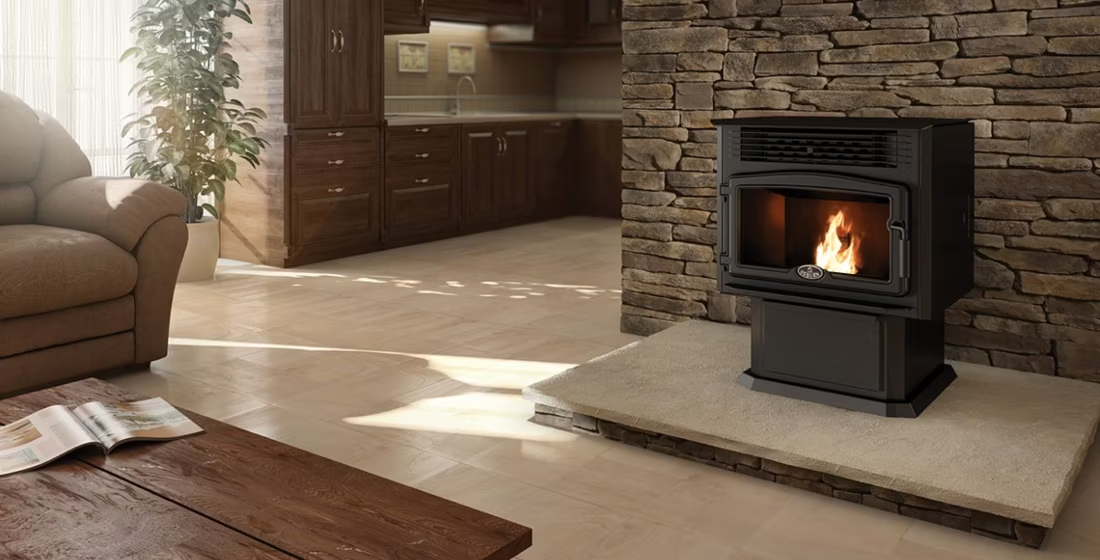
A pellet stove is a freestanding unit on its own hearth pad, vented through a wall or existing chimney chase—it can go almost anywhere with the right clearances. A pellet insert is built to slide into an existing masonry fireplace opening, turning a rarely-used wood fireplace into an efficient, thermostat-controlled heat source. For Tooele County homes with an existing masonry fireplace that mostly sits cold, an insert is often the more practical upgrade since it reuses the chimney chase. Homes without an existing fireplace opening are better suited to a freestanding stove.
Do I need a permit to install a pellet stove in Tooele County?
Yes—new pellet stove installations generally require a building permit, and most local dealers handle the permitting as part of the installation so you're not navigating it solo. Pellet appliances are exempt from most wildfire-smoke-driven burn restrictions that occasionally affect wood-burning appliances in the region, since they burn far cleaner—one more reason they're a solid fit for a county that sees periodic wildfire smoke impacting air quality.
What's the best pellet stove for Tooele County's climate?
For a climate with Tooele County's winter heating load—comparable to a mild version of Fargo, ND's winter—look for a pellet stove with a large hopper capacity so you're not reloading multiple times a day during a cold stretch, and a reliable auger feed system since consistent burn rate matters most on the coldest nights. Bear Mountain, Lignetics, and Forest Energy pellets are all readily available regionally, so fuel sourcing isn't a limiting factor when choosing a stove. A local dealer can walk you through hopper size, BTU output, and which models handle the West Desert's wind-driven cold most reliably.
How often does a pellet stove need to be cleaned and serviced?
Pellet stoves need more frequent attention than people expect, even though they're cleaner-burning than wood. Plan on emptying the ash pan every few days during regular use, a deeper clean of the burn pot and heat exchanger tubes every couple of weeks, and a full professional service annually—ideally before the county's heating season kicks in around late fall. Skipping the annual service is the most common cause of feed jams and igniter failures mid-winter, which is an inconvenient time to be without heat in a place where lows regularly sit in the low 20s.
Where can I buy pellets in Tooele County?
Regional brands including Bear Mountain, Lignetics, and Forest Energy are commonly stocked by hearth dealers and home improvement retailers serving the county, with pellets typically sold by the 40-lb bag or by the ton on pallets. Buying a season's supply (roughly 2-3 tons for a primary-heat home in this climate) ahead of the cold months is worth doing, since availability can tighten once the first real cold snap hits and demand spikes across the Wasatch Front and West Desert simultaneously.
Pellet stove vs. wood stove—which is right for me?
Wood stoves burn cordwood cut locally through the Uinta-Wasatch-Cache National Forest—pinyon, juniper, and aspen are common—and they work without electricity, which matters for backup heat during a winter power outage. Pellet stoves need electricity to run the auger and blower, so they're not a grid-down solution, but they offer thermostat-level consistency, less daily tending, and cleaner combustion on days when wildfire smoke is already a concern in the valley. For Tooele County homes prioritizing hands-off convenience and steady heat over multiple hours, pellet often wins. For rural properties where power outages are a real risk and self-cut firewood is cheap and available, wood may be the better backup. A local dealer can help you weigh both against your specific home and property.
Why is a fireplace insert so efficient?
An insert does two things: it seals the chimney completely, so you stop losing air you already paid to heat, and it radiates warmth into the room through the firebox and glass. Most add a heat-exchange fan that pulls cool room air underneath, wraps it around the hot firebox, and pushes it back out warm. Your home is more efficient before you've even lit the first fire.
Why is my open fireplace making my house colder?
Open fireplaces suck—literally. As the fire burns, it consumes air your furnace already paid to heat and pulls it out through the chimney, so the house is actually colder after the fire goes out than before you lit it. An insert fixes this: it seals the chimney, puts fixed glass across the front, and turns that hole in your house into a real heat source.
What is an in-home preview and do I need one?
It's a visit where a hearth professional measures your space, confirms the model you picked actually works in your home, and walks the specs—framing, gas line, venting, finish work—before anything is ordered. Some details you just can't know until you see the house. Never make a down payment without one; it's the single most-skipped step that burns buyers.
How much should I budget for a fireplace?
For an average home—covering the fireplace, the vent pipe, and basic installation—a budget between $3,900 and $5,500 gives you a lot of options across wood, gas, and pellet. By the time you add finish work, gas line, and electrical, the average complete installation lands between $5,000 and $12,000 all-in. In a remodel or new build, a good rule is to put about 2.5% of the total project cost toward the fireplace.
Stove and Fireplace Dealers in Tooele County
Listings include WhyFire partner dealers, dealers we have verified as authorized for the brands we recommend, and established local businesses that carry hearth products. Every listing shows which one it is. The ones marked Preferred run on WhyFire's software, so they can show you real pricing and book your appointment right here. No manufacturer pays for placement. How we verify dealers →
Heritage Homes & Fireplaces
Wasatch Fireplace & Stove
Degrees Above Fireplaces
Standard Plumbing
Bills Comfort Systems
Ignite Fireplace
Pellet Brands Stocked Around Tooele County
Manufacturers will point you to the nearest stocking dealer.
Get matched with a pellet dealer in Tooele County.
Tell us about your home and heating goals, and we'll match you with a trusted local dealer plus a free Project Guide & Parts List—the exact parts, vent kit included, for your pellet stove project in Tooele County.
Find Your Fireplace →