
Pellet stoves are rare in Grantsville, but not impossible.
Tooele County winters push well below freezing, but pellet heat has never caught on here the way it has elsewhere. If you're still considering one, we'll connect you with a local dealer who'll give you a straight answer.
Every Project Starts From One of These Five Situations
Gas and electric do the heavy lifting here—pellet fills a narrow niche.
Grantsville sits at 4,266 feet in Tooele County, on the western edge of the Wasatch Front airshed, with winter lows averaging 19°F and a heating season on par with the coldest parts of the Mountain West—cold enough that plenty of homes here run supplemental heat all winter. But unlike mountain towns in Montana or Wisconsin where pellet and wood stoves are everyday appliances, Tooele County falls inside the same winter inversion zone as the Salt Lake Valley, and the Utah Division of Air Quality's mandatory and voluntary no-burn action days discourage solid-fuel heating on the worst inversion days. That's part of why both wood and pellet appliances are unusual choices in Grantsville—most homes lean on natural gas or PacifiCorp electric service instead.
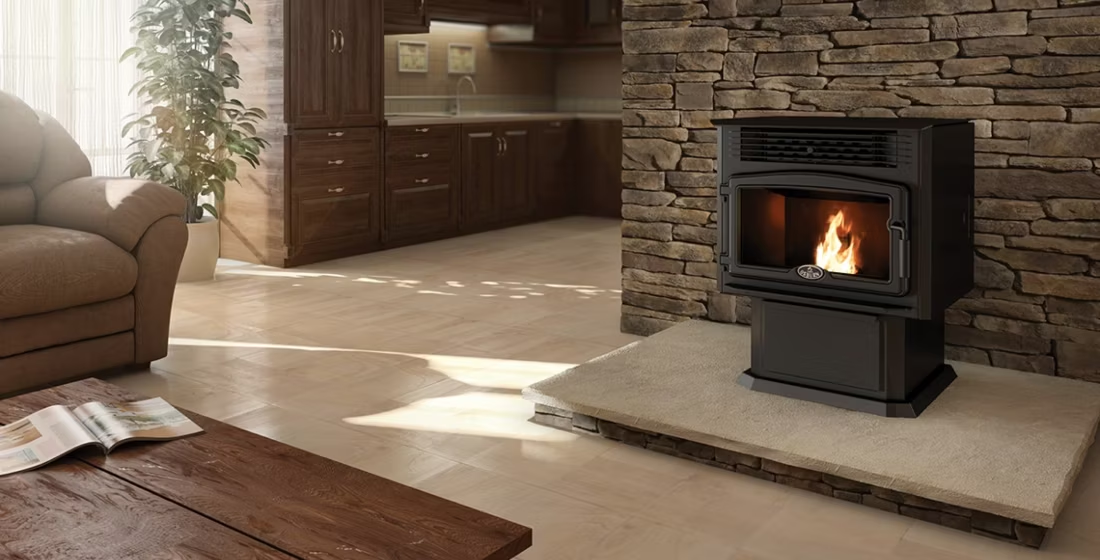
That doesn't make a pellet stove impossible—it makes it a deliberate choice rather than the default. Homeowners who still install one are usually heating a shop, cabin, or addition without a gas line, adding backup heat for a rural property, or simply prefer the look and feel of a hopper-fed fire over a gas insert. Regional pellet brands like Bear Mountain, Lignetics, and Forest Energy are sold through hearth dealers serving the Tooele Valley, so fuel supply isn't the obstacle—fit for the home and the local air quality rules usually is. A local dealer can walk you through whether it makes sense for your specific situation rather than just selling you a unit.
Three steps. No salesperson until you're ready.
Tell us about your project
Your zip code, your situation, and the fuel you're leaning toward—or let the answers point you to one.
See what's actually available
The brands dealers within 100 miles genuinely carry—real options, never a catalog mirage.
Get your dealer & Project Guide
A trusted local dealer, plus the free Project Guide & Parts List that names every component of the job.
Frequently Asked Questions
Are pellet stoves common in Grantsville?
Not really. Grantsville homes overwhelmingly heat with natural gas or PacifiCorp electric service, and pellet stoves show up mostly as a secondary or niche choice—a shop heater, a cabin unit, or a backup for a rural property. If you're picturing pellet heat as the default winter setup the way it is in parts of the Upper Midwest, that's not the local pattern here. It's a legitimate option, just not a mainstream one.
Why isn't pellet heat more popular here given how cold it gets?
Two things work against it. First, Tooele County sits inside the Wasatch Front's winter inversion airshed, and the Utah Division of Air Quality calls mandatory and voluntary no-burn action days during the worst inversion stretches—which pushes homeowners toward cleaner-burning gas or electric heat by default. Second, natural gas and grid electricity are both widely available and relatively affordable in Grantsville, so there's less of the self-sufficiency motive that drives pellet and wood adoption in more remote, off-grid parts of the West.
Can I still install a pellet stove in Grantsville legally?
Yes. EPA-certified pellet stoves are generally treated more leniently than open wood burning under Utah's air quality program, and you can still install one with a permit through Tooele County's building department. You'll need a certified unit, proper pellet venting (a small-diameter PVC or stainless vent, not a full masonry chimney), and clearance-to-combustibles documentation from the installer. It's a straightforward permit process—it's just not a project most local dealers see very often.
What does a pellet stove installation cost in Grantsville?
Because pellet installs are infrequent here, pricing tends to track regional Utah averages rather than a deep local market: expect roughly $3,000 to $6,000 for the stove, venting, and hearth pad, depending on the model and whether you need new floor protection or wall penetration work. That's typically less than a wood stove install because pellet venting is smaller and simpler, but more than a basic electric unit. A local dealer who actually stocks pellet appliances can give you a firm number after seeing the space.
What pellet brands can I actually get near Grantsville?
Bear Mountain, Lignetics, and Forest Energy are the regional pellet brands most likely to show up at Utah dealers and farm supply stores serving the Tooele Valley. Because demand is lower here than in pellet-heavy markets, selection can be thinner and you may need to plan ahead for bulk purchases rather than picking up a bag on short notice. A local hearth dealer can tell you which brands they stock or can order reliably.
How does pellet heat compare to gas or electric for my Grantsville home?
Gas fireplaces and inserts give you instant, thermostat-controlled heat with no fuel handling, and natural gas service covers most of Grantsville—that's why gas is the standard choice locally. Electric heaters and inserts are simple and low-cost to install (often under $1,200) but cost more to run at PacifiCorp's roughly $0.1252 per kWh residential rate if used as a primary heat source. Pellet stoves sit in between: cheaper to run than electric resistance heat, but they require hauling and storing bagged fuel and cleaning an ash pan, which is extra work most Grantsville homeowners with gas already available choose to skip.
Will a pellet stove work during a power outage?
No—pellet stoves need electricity to run the auger that feeds fuel and the blower that distributes heat, so a standard unit goes dark the moment the power does. If backup heat during an outage is your main goal, a battery-backed gas fireplace or a wood-burning appliance (where locally allowed) will serve you better than pellet. Some homeowners pair a pellet stove with a small generator or battery inverter specifically to keep it running through outages, but that's an added cost worth discussing with your installer.
Does wildfire smoke affect pellet stove use in Grantsville?
Wildfire smoke is a real seasonal concern in Tooele County, particularly in late summer, but it affects outdoor air quality rather than pellet stove operation directly. Where it matters is combined with winter inversion days: on the worst air quality days, Utah's DAQ guidance encourages homeowners to minimize any combustion heating, pellet included, in favor of gas or electric. It's one more reason pellet stoves tend to be a secondary heat source here rather than a primary one.
Where can I buy pellets in or near Grantsville?
Pellets aren't stocked on every corner here the way they are in pellet-heavy markets, but farm supply and hardware stores serving the Tooele Valley carry regional brands like Bear Mountain and Lignetics, typically in the $250 to $350 per ton range seasonally. Because Grantsville isn't a high-volume pellet market, it's worth buying a season's supply early rather than assuming you can restock mid-winter. A local dealer can point you to whoever currently carries stock near you.
Why is my open fireplace making my house colder?
Open fireplaces suck—literally. As the fire burns, it consumes air your furnace already paid to heat and pulls it out through the chimney, so the house is actually colder after the fire goes out than before you lit it. An insert fixes this: it seals the chimney, puts fixed glass across the front, and turns that hole in your house into a real heat source.
Why is a fireplace insert so efficient?
An insert does two things: it seals the chimney completely, so you stop losing air you already paid to heat, and it radiates warmth into the room through the firebox and glass. Most add a heat-exchange fan that pulls cool room air underneath, wraps it around the hot firebox, and pushes it back out warm. Your home is more efficient before you've even lit the first fire.
What is an in-home preview and do I need one?
It's a visit where a hearth professional measures your space, confirms the model you picked actually works in your home, and walks the specs—framing, gas line, venting, finish work—before anything is ordered. Some details you just can't know until you see the house. Never make a down payment without one; it's the single most-skipped step that burns buyers.
Can I install a fireplace myself?
If you're putting a fire in your house on purpose, it's best to work with an expert. Unless you're genuinely experienced in framing, gas line, vent pipe, and the national code on clearances to combustibles, have a professional do it—and ideally the same company that sells you the fireplace, so warranty, service, and liability all live under one roof.
Nearby Dealers
Hearth shops serving Grantsville and the surrounding area. Every listing shows whether it is a WhyFire partner, a dealer we have verified as authorized for the brands we recommend, or a local business carrying hearth products. No manufacturer pays for placement. How we verify dealers →
Heritage Homes & Fireplaces
Wasatch Fireplace & Stove
Degrees Above Fireplaces
Standard Plumbing
Bills Comfort Systems
Ignite Fireplace
(Sugar House) Alpine Fireplaces (In Breezeway Next To Theatres)
Comfort Solutions
Croft Fireplaces (Bountiful)
Pellet Brands Stocked Around Grantsville
Manufacturers will point you to the nearest stocking dealer.
See if a pellet stove makes sense for your Grantsville home.
Tell us about your space and we'll give you an honest read on whether pellet fits—plus a free Project Guide & Parts List with the exact venting and parts needed, and a match to a local dealer who actually installs pellet appliances in the Tooele Valley.
Find Your Fireplace →