
Clean gas warmth for Taylorsville, even on red air days.
With winter lows averaging 28°F and Salt Lake Valley's inversion season limiting solid-fuel burning, gas is the heat source that keeps working. Find the right unit and connect with a trusted local dealer.
Every Project Starts From One of These Five Situations
Built for a valley that watches its air quality.
Taylorsville sits at 4,350 feet in the Salt Lake Valley, where the surrounding Wasatch and Oquirrh ranges trap cold air against the valley floor for weeks at a time each winter. That temperature inversion concentrates smoke and particulates close to the ground, which is why Salt Lake County is one of the most closely regulated air basins in the West. With a long, cold winter heating season and winter lows that average 28°F, homes here need real heat for a real season—but the Utah Division of Air Quality's mandatory no-burn actions during red and yellow air days apply specifically to solid-fuel devices, not gas appliances.
That regulatory reality is a big part of why gas fireplaces, inserts, and stoves are the standard hearth choice in Taylorsville. Dominion Energy provides natural gas service throughout most of the Salt Lake Valley, so most homes already have a gas line running to the furnace or water heater—adding a fireplace or insert is usually a straightforward tie-in. A direct-vent gas unit delivers instant, controllable heat that pairs well with central HVAC, runs regardless of what the air quality index says outside, and skips the ash, creosote, and chimney maintenance that come with solid-fuel burning.
Three steps. No salesperson until you're ready.
Tell us about your project
Your zip code, your situation, and the fuel you're leaning toward—or let the answers point you to one.
See what's actually available
The brands dealers within 100 miles genuinely carry—real options, never a catalog mirage.
Get your dealer & Project Guide
A trusted local dealer, plus the free Project Guide & Parts List that names every component of the job.
Frequently Asked Questions
How much does a gas fireplace installation cost in Taylorsville?
Most gas fireplace and insert installations in the Taylorsville area run roughly $4,000 to $10,000, with the spread driven by the venting path and whether new gas line work is needed. A direct-vent insert going into an existing masonry fireplace with a gas line already nearby sits toward the lower end. A new built-in gas fireplace for a remodel or new construction—with framing, a fresh gas run, and exterior venting—lands toward the higher end. A licensed local dealer will confirm the number after seeing your existing fireplace or wall cavity in person.
Can I still run a gas fireplace during a mandatory no-burn day?
Yes. The Utah Division of Air Quality's mandatory action program during winter inversions in Salt Lake County restricts solid-fuel burning devices—wood stoves, wood fireplaces, and outdoor fire pits—on red and yellow air days. Gas fireplaces, inserts, and gas log sets are not covered by those restrictions and can run normally. For Taylorsville homeowners who want reliable heat on the exact days the valley's air is worst, that's one of the strongest arguments for gas over wood.
I have an old wood-burning fireplace. Should I convert it to gas?
It's one of the most common projects local hearth dealers handle in the Salt Lake Valley. A gas insert drops into your existing masonry firebox and vents through a stainless liner run up your current chimney, so you keep the look of the fireplace but gain heat that isn't subject to Utah's no-burn restrictions and doesn't require cutting or hauling wood. Conversions typically run toward the lower half of the $4,000–$10,000 range when the home already has gas service nearby, since no new trenching or long line runs are needed.
Do I need natural gas, or can I use propane?
Natural gas through Dominion Energy reaches most of Taylorsville and the surrounding Salt Lake Valley, so if your home already has gas appliances—a furnace, range, or water heater—adding a fireplace usually means tapping into that existing service. Propane is uncommon inside city limits here and is really only relevant for a handful of properties without natural gas access, in which case a tank installation from a regional propane supplier would be needed. Most gas fireplace models can be configured for either fuel; your installer sets the correct orifice and regulator.
Will my gas fireplace still work if the power goes out?
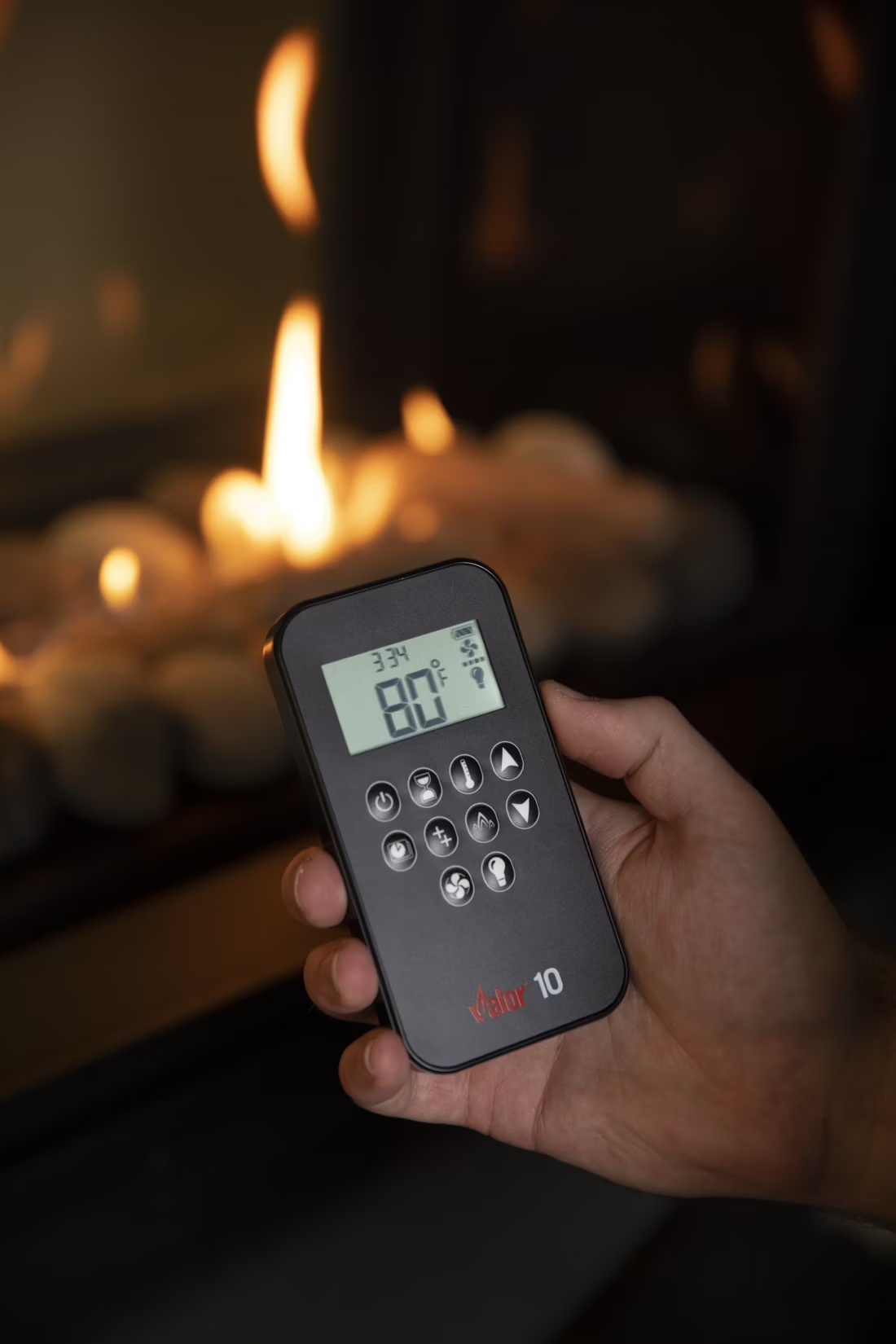
Most direct-vent gas fireplaces with intermittent pilot ignition (IPI) include a battery backup—typically a few AA batteries inside the unit—that keeps the igniter working when the power drops. Valor's lineup does this differently: the pilot's thermocouple generates the small amount of electricity the valve needs, so there are no batteries to remember at all. Given how often Wasatch Front winter storms can knock out power for a few hours, either option keeps a Taylorsville living room warm without waiting on the electric utility.
What's the difference between vented and vent-free gas fireplaces, and which is allowed here?
Vented (direct-vent) gas fireplaces draw combustion air from outside and exhaust it back outside through sealed venting—they're the standard choice and the type nearly every local dealer installs. Vent-free units burn fuel directly into the room air without external venting; they're legal in Utah under strict room-sizing and ventilation rules, but they add humidity and combustion byproducts to indoor air that's already dealing with inversion-season particulates outside. For that reason, most Taylorsville installers steer homeowners toward direct-vent units, which deliver real heat without any indoor air quality trade-off.
Gas fireplace, gas insert, or gas stove—what's right for my home?
A gas fireplace is a fully built-in unit, generally chosen for new construction or a wall-framing remodel. A gas insert fits inside an existing masonry firebox and is the go-to option for older Taylorsville homes with a fireplace they want converted off solid fuel. A gas stove is a freestanding unit that sits on a hearth pad like a wood stove but runs on gas—a good fit for a room without an existing chimney or firebox where you still want a stand-alone visual. A local dealer can walk your space and tell you which format actually fits.
How often does a gas fireplace need servicing?
Plan on an annual inspection, ideally before the heating season starts each fall. A technician checks the burner, pilot assembly, venting, and gas connections, and cleans the glass and interior—a much lighter lift than chimney sweeping for a wood-burning unit. Expect to pay somewhere in the $150–$250 range for a standard annual service call from a local gas hearth technician.
Why is gas so much more common than wood or pellet stoves in Taylorsville?
It comes down to the valley's air. Salt Lake County's winter inversions trap wildfire smoke and combustion particulates against the valley floor, and Utah's mandatory no-burn program specifically targets solid-fuel devices—wood stoves, wood fireplaces, and pellet stoves—on red and yellow air days. That makes wood and pellet appliances impractical as a primary heat source for most Taylorsville homes, even though pinyon, juniper, and aspen are all common firewood species in the surrounding foothills and Uinta-Wasatch-Cache National Forest issues cutting permits for $5–$20 per cord each May through October. Gas sidesteps the restriction entirely, which is why it's the standard hearth fuel here rather than the exception.
Is my gas fireplace wasting gas?
If it was installed more than 15 years ago, probably. Older gas fireplaces keep a standing pilot light burning all the time, and that little flame can cost a couple hundred dollars a year. Newer models use pilot-on-demand ignition—the pilot lights only when you use the fireplace and goes out when you turn it off.
What's the difference between radiant and convective fireplace heat?
Most fireplaces are a thin metal box—they heat fine, but you rely on the fan to move the warmth into the room. Radiant models use a thick cast-ceramic firebox, about an inch and a quarter thick, that soaks up the fire's heat and radiates roughly 25–30% more warmth into the room with no fan running. If you watch TV in the same room or want heat in a power outage, radiant is worth asking about.
Can I install a fireplace myself?
If you're putting a fire in your house on purpose, it's best to work with an expert. Unless you're genuinely experienced in framing, gas line, vent pipe, and the national code on clearances to combustibles, have a professional do it—and ideally the same company that sells you the fireplace, so warranty, service, and liability all live under one roof.
What is an in-home preview and do I need one?
It's a visit where a hearth professional measures your space, confirms the model you picked actually works in your home, and walks the specs—framing, gas line, venting, finish work—before anything is ordered. Some details you just can't know until you see the house. Never make a down payment without one; it's the single most-skipped step that burns buyers.
Nearby Dealers
Hearth shops serving Taylorsville and the surrounding area.
(Sugar House) Alpine Fireplaces (In Breezeway Next To Theatres)
Hearth & Home Distributors Of Utah - Salt Lake City
Find your gas fireplace in Taylorsville.
Tell us a bit about your home and we'll match you with a trusted local dealer and send over a free Project Guide & Parts List—the exact parts, vent kit, and installer recommendation for your Taylorsville gas fireplace project.
Find Your Fireplace →