
Keep Your Family Warm and Safe—No Matter What
St. George's mild desert winters mean most homes don't need wood heat—but for cabins, outlying communities, and backup power, the right setup still makes sense. We'll connect you with a local dealer who'll tell you the truth about it.
Every Project Starts From One of These Five Situations
Mild desert winters make wood heat optional, not essential.
St. George sits at 2,536 feet in Utah's Dixie region, in climate zone 3B—one of the mildest heating climates in the country. With an average winter low of just 28°F and a light overall heating load each year, the city gets a fraction of the cold that drives wood-heat culture in places like Bozeman, MT or Fargo, ND, where homeowners routinely face a heating season more than twice as demanding and subzero nights for weeks at a stretch. Here, a furnace or heat pump comfortably handles the handful of genuinely cold nights each winter, and most new construction is built around natural gas or electric heat rather than a chimney.
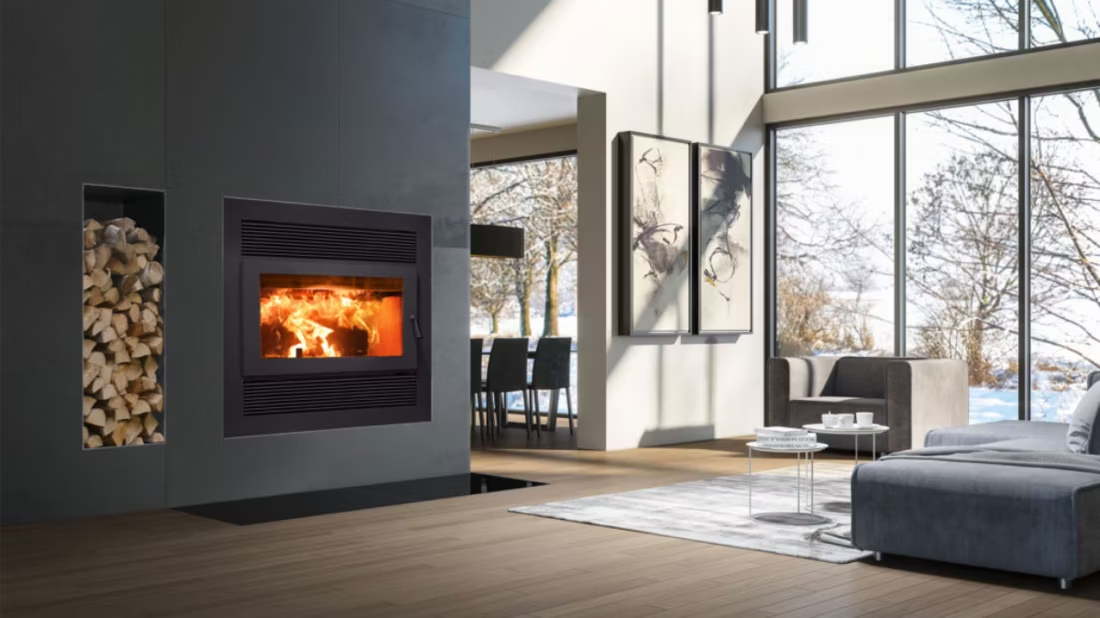
That said, wood heat hasn't disappeared entirely from Washington County. Cabin owners in higher-elevation communities like Pine Valley and Central, where snow actually accumulates, sometimes install a wood stove for real heat and off-grid resilience. A smaller number of St. George homeowners add a wood-burning unit for ambiance, backup heat during rare winter storms, or the smell and sound of a real fire in a great room. If that's you, pinyon and juniper—the dominant species on the lower desert slopes—burn hot and dense, while aspen from higher elevations near the Pine Valley Mountains lights quickly and works well for kindling. Firewood cutting permits through Dixie National Forest run $5 to $20 per cord during the May-to-October season.
Firewood Cutting Permits Near St. George
Three steps. No salesperson until you're ready.
Tell us about your project
Your zip code, your situation, and the fuel you're leaning toward—or let the answers point you to one.
See what's actually available
The brands dealers within 100 miles genuinely carry—real options, never a catalog mirage.
Get your dealer & Project Guide
A trusted local dealer, plus the free Project Guide & Parts List that names every component of the job.
Frequently Asked Questions
Is wood heat common in St. George?
No, and it's worth saying plainly: wood stoves are uncommon in St. George. With an average winter low around 28°F and a fairly light heating load overall each year, most homes here rely on gas furnaces, heat pumps, or electric heat rather than a wood-burning chimney. Where wood stoves do show up, it's typically in cabins or homes in higher-elevation outlying areas like Pine Valley or Central, where actual snow and cold make a real difference, or in homes that want a wood stove purely for ambiance or emergency backup heat. If you're inside St. George city limits, expect fewer local dealers stocking wood units compared to gas or electric fireplaces.
How much does it cost to install a wood stove in St. George?
Because so few homes in the St. George area install wood stoves, there isn't a deep well of local pricing data. Based on typical installations in Utah's higher, colder communities—Cedar City or the mountain towns above the Dixie basin—a wood stove or insert with proper Class A chimney venting generally runs $3,500 to $8,000, depending on the unit and whether you're venting through an existing masonry chimney or building new. If you're in an outlying Washington County community at higher elevation, a dealer who also serves Cedar City can typically give you the most accurate quote, since they install more of these units regularly.
Where can I get firewood or a cutting permit near St. George?
Dixie National Forest issues personal-use firewood cutting permits for $5 to $20 per cord, with cutting allowed May through October. The forest surrounding Washington County produces pinyon and juniper at lower elevations—both dense, slow-burning woods well suited to a stove—and aspen higher up near Pine Valley Mountain, which burns faster and works well for getting a fire started. If you'd rather buy split, seasoned wood instead of cutting your own, ask a local hearth dealer for a firewood supplier recommendation; because wood heat is a smaller market here, delivery services are less standardized than in colder states.
Do I need a permit to install a wood stove in St. George?
Yes. Any new wood-burning appliance installation requires a building permit through the City of St. George Building Division, or Washington County's building department if you're outside city limits. The stove itself needs to meet current EPA 2020 NSPS emissions standards. Because wood stove installs are relatively rare locally, it's worth confirming with the building office ahead of time that your contractor is familiar with the inspection process—some smaller installers who mostly do gas work may not handle wood-burning permits as often.
Does wildfire smoke affect wood stove use in St. George?
Wildfire smoke is a real seasonal air quality concern for St. George, but it's mostly a summer and fall issue tied to regional fires across the Southwest, not a winter wood-stove-smoke problem like the inversion issues seen in basins such as Klamath Falls, OR. There's no local burn-curtailment program targeting wood stoves here the way there is in some Western cities. Still, an EPA-certified stove burns cleaner and more efficiently than an old uncertified unit, which matters on the occasional day when regional smoke is already thick.
What kind of firewood works best in St. George?
Pinyon and juniper are the two most available species locally, both harvested from Dixie National Forest land at lower and mid elevations. They're dense woods that burn hot and slow, which is useful if you want a stove to hold a fire for hours rather than needing constant reloading. Aspen, found at higher elevations near Pine Valley, is lighter and burns faster—good for starting a fire or quick evening use, but it won't hold overnight heat the way pinyon or juniper will. Whichever you use, make sure it's seasoned at least six months to a year; unseasoned wood in a rarely-used stove is one of the fastest ways to build up creosote.
Who actually installs a wood stove in St. George—and why?
The homeowners I see pursue wood heat here generally fall into a few groups: cabin or second-home owners in Pine Valley, Central, or other higher-elevation Washington County communities where real winter cold shows up; homeowners who want a wood stove specifically as backup heat in case of a winter power outage, since a wood stove needs no electricity to run; and a smaller number who simply want the ambiance of a real fire in a great room or den. If none of those describe your situation, a gas or electric fireplace is very likely the better fit for a St. George home—and it's what most local dealers will steer you toward first.
Wood stove vs. gas fireplace—which makes sense in St. George?
For most St. George homes, gas wins by a wide margin. Natural gas is the standard heating fuel locally, installation is generally simpler since there's no chimney or masonry work required, and a gas fireplace gives you instant, thermostat-controlled heat without wood handling, ash, or annual chimney sweeps. Wood only pulls ahead in specific cases: off-grid or outage-prone cabin properties at higher elevation, or homeowners who specifically want the experience of tending a real fire rather than flipping a switch. If you're weighing the two, most local retailers can walk you through both, but expect them to have far more gas inventory and expertise on hand.
Wood stove vs. electric fireplace—which makes sense in St. George?
Electric fireplaces are common in St. George and pair well with the city's mild climate—City of St. George's residential electric rate runs about 11.4 cents per kWh, among the more affordable rates in the region, which makes electric heat inexpensive to run for supplemental warmth. Electric units also install in an afternoon with no permitting hassle, no venting, and no combustion byproducts. A wood stove only makes sense over electric if you specifically need heat that works without power—during an outage, for instance—or you want the physical presence of a real, wood-fed fire rather than a simulated flame. For most everyday St. George living rooms, electric is the simpler and more common choice.
Why is my open fireplace making my house colder?
Open fireplaces suck—literally. As the fire burns, it consumes air your furnace already paid to heat and pulls it out through the chimney, so the house is actually colder after the fire goes out than before you lit it. An insert fixes this: it seals the chimney, puts fixed glass across the front, and turns that hole in your house into a real heat source.
What does it take to replace an existing fireplace?
Fireplaces are like icebergs—bigger behind the wall than in front of it. Replacement means removing the surrounding tile or stone (the finish material laps onto the fireplace face), pulling the old unit, setting the new one in the same enclosure, and re-finishing the wall. A hearth professional can determine what's behind your wall without demolition during an in-home preview.
Can I install a fireplace myself?
If you're putting a fire in your house on purpose, it's best to work with an expert. Unless you're genuinely experienced in framing, gas line, vent pipe, and the national code on clearances to combustibles, have a professional do it—and ideally the same company that sells you the fireplace, so warranty, service, and liability all live under one roof.
How much should I budget for a fireplace?
For an average home—covering the fireplace, the vent pipe, and basic installation—a budget between $3,900 and $5,500 gives you a lot of options across wood, gas, and pellet. By the time you add finish work, gas line, and electrical, the average complete installation lands between $5,000 and $12,000 all-in. In a remodel or new build, a good rule is to put about 2.5% of the total project cost toward the fireplace.
Nearby Dealers
Hearth shops serving St. George and the surrounding area.
Find out if wood heat makes sense for your St. George property.
Tell us about your home or cabin and we'll put together a free Project Guide & Parts List—the right unit, the vent kit, and a trusted local dealer who actually installs wood stoves in this region.
Find Your Fireplace →