
Pellet heat isn't the norm in St. George—but it still has a place.
With winter lows averaging 28°F and just 3,205 heating degree days a year, most St. George homes get by fine on gas or electric. For cabins, vacation properties, and homeowners who want a real flame, we'll connect you with a local dealer who'll tell you honestly whether pellet makes sense.
Every Project Starts From One of These Five Situations
St. George's desert winters rarely call for a pellet stove.
St. George sits at 2,536 feet in the Mojave Desert transition zone of what locals call Utah's Dixie, and its climate is a poor match for pellet heat as a primary fuel. Winter lows average just 28°F, and the city logs only about 3,205 heating degree days a year—less than half the heating load of a cold-climate city like Bozeman, Montana or Minneapolis, Minnesota. Add wildfire smoke as the area's main air-quality concern, rather than the winter inversions that drive wood-and-pellet curtailment rules along the Wasatch Front, and it's easy to see why most homes here handle winter with a gas furnace or an electric heat pump instead of a dedicated pellet appliance.
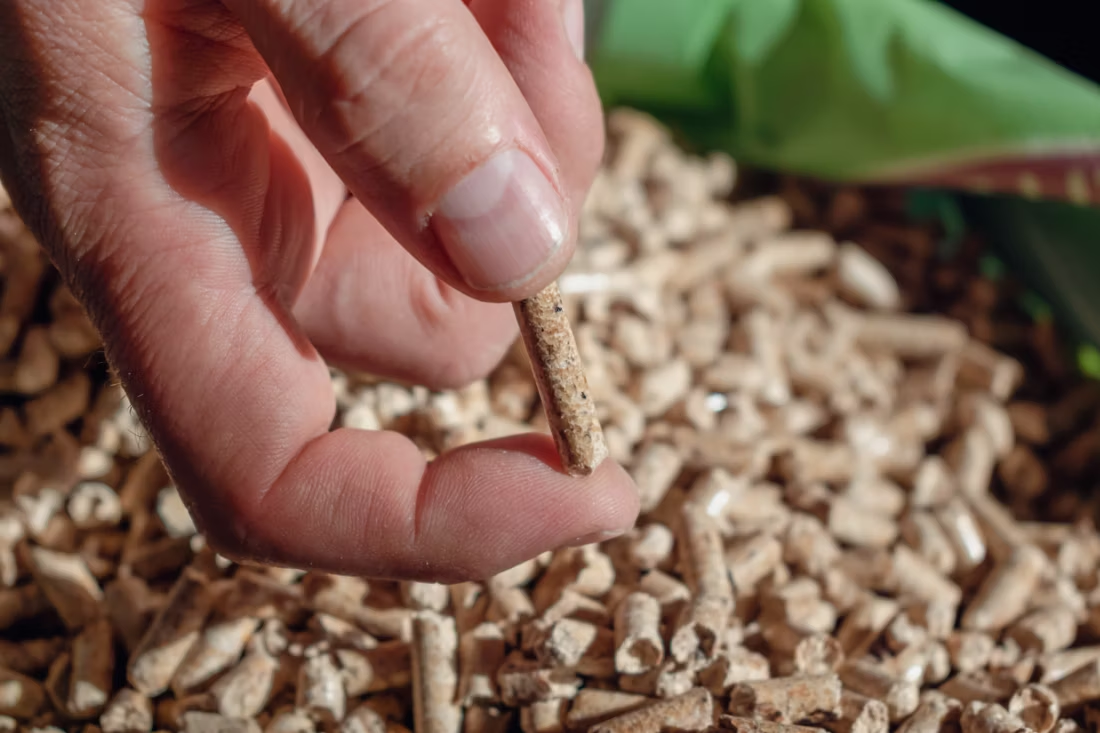
That said, pellet stoves aren't nonexistent in Washington County. Homeowners with cabins or second homes at higher elevation—toward Pine Valley, Cedar Breaks, or Brian Head—sometimes choose pellet for the same reason people elsewhere choose wood: real flame and radiant heat when the mercury actually drops. In St. George proper, the appeal is usually ambiance or supplemental warmth in a casita or shop rather than whole-house heat. Regional pellet brands including Bear Mountain, Lignetics, and Forest Energy are sold through area farm and feed suppliers, though because demand is thin, availability and pricing vary more than they would somewhere pellet heat is standard. Electricity here comes from the City of St. George's own municipal utility at roughly 11.4 cents per kWh—cheap enough that most backup and supplemental heat in town leans electric rather than pellet.
Three steps. No salesperson until you're ready.
Tell us about your project
Your zip code, your situation, and the fuel you're leaning toward—or let the answers point you to one.
See what's actually available
The brands dealers within 100 miles genuinely carry—real options, never a catalog mirage.
Get your dealer & Project Guide
A trusted local dealer, plus the free Project Guide & Parts List that names every component of the job.
Frequently Asked Questions
Are pellet stoves actually installed in St. George, or is this mostly a cold-climate product?
They're installed here, but they're the exception. With a winter low average of 28°F and only about 3,205 heating degree days a year, St. George doesn't have the sustained cold that makes pellet heat worth the investment for most households—gas and electric cover the winter heating load without much trouble. The homes that do install pellet stoves tend to be cabins or second homes at higher elevation around Pine Valley or up toward Cedar Breaks and Brian Head, where winters run considerably colder than in the valley.
What does a pellet stove installation cost in St. George?
Because pellet stoves aren't common locally, there isn't a well-established local price range the way there is for gas fireplaces here. Nationally, a freestanding pellet stove with venting typically runs $3,000 to $6,000 installed, and that's a reasonable starting estimate for St. George—though expect the dealer may need to special-order the unit rather than pull one off a showroom floor, since local demand doesn't support large pellet inventories the way it does farther north.
Where can I buy wood pellets in St. George?
Bagged pellets from regional brands like Bear Mountain, Lignetics, and Forest Energy show up at farm and feed supply stores in Washington County, but because pellet heat is uncommon here, stock isn't guaranteed year-round the way it is in colder parts of the state. If you do install a pellet stove, buy your season's supply early—in the fall, before demand from the handful of local users picks up—rather than assuming you can walk in mid-January and find a full pallet.
Why isn't pellet heat more popular in St. George?
It comes down to degree days. St. George logs about 3,205 heating degree days a year, compared to 7,000-plus in a place like Duluth, Minnesota. A pellet stove earns its keep by running for months at a stretch; in a climate with a 28°F average winter low and mild shoulder seasons, most households simply don't accumulate enough cold days to justify the appliance, the venting, and the fuel storage. Gas furnaces and electric heat pumps handle the occasional cold snap here more efficiently for most floor plans.
Who in the St. George area actually chooses a pellet stove?
Mostly two groups: owners of cabins or vacation properties at elevation—Pine Valley, Cedar Breaks, Brian Head—where winters are genuinely cold, and St. George homeowners who want a real-flame focal point in a den, casita, or shop rather than a primary heat source. If your goal is whole-house heat in town, a pellet stove is rarely the right tool; if your goal is ambiance or supplemental warmth in one room, it can still make sense.
Should I consider a wood stove instead of pellet in St. George?
Honestly, neither is a natural fit for this climate—both wood and pellet appliances are unusual choices in St. George for the same reason: winters here are too short and mild to justify them as primary heat. If you're weighing the two anyway, wood requires seasoned cordwood (pinyon, juniper, and aspen are the common regional species, with Forest Service cutting permits through Dixie National Forest running $5 to $20 per cord from May through October), while pellet requires bagged fuel and continuous electricity. Pellet is cleaner and easier to store in a garage; wood works during a power outage and pellet doesn't. For most St. George homes, the honest answer is that neither is necessary.
Will my pellet stove still work if the power goes out?
No—pellet stoves depend on electricity to run the auger that feeds fuel and the fan that distributes heat, so a power outage shuts them down along with everything else. The City of St. George's municipal electric utility is generally reliable, so this is less of a concern here than in areas with frequent winter outages, but if backup heat during an outage is a priority, a pellet stove won't deliver it. That's one more reason most St. George homeowners treat pellet as a secondary or ambiance appliance rather than a primary heat source.
Do I need a permit to install a pellet stove in St. George?
Yes—venting a solid-fuel appliance like a pellet stove through an exterior wall requires a building permit through the City of St. George Building Department, or Washington County if your property sits outside city limits. St. George doesn't have the winter-inversion-driven burn curtailment ordinances you'd find along the Wasatch Front; the area's main air-quality concern is wildfire smoke in late summer, which doesn't affect pellet stove permitting or operation.
Pellet vs. gas—which makes more sense for a St. George home?
For nearly all St. George homes, gas wins. It's the standard heating fuel here, it delivers instant, thermostat-controlled heat, and it doesn't require fuel storage or hopper refills. Pellet's real advantage is ambiance and the experience of a live flame, plus a fuel source that's more self-contained than wood. Unless you're heating a cabin at elevation or specifically want a pellet appliance for a den or shop, gas is the more practical choice for year-round comfort in a climate this mild.
How often does a pellet stove need cleaning?
A clean pellet stove is a happy pellet stove. Plan on cleaning the burn pot about once a week when you're burning regularly—ash and clinkers gum up the air holes just like a pellet barbecue. Most pellet stove problems trace back to skipped cleaning that nobody explained up front. Some designs make it easy with a trapdoor burn pot: pull a lever and the gunk drops into the ash pan.
Can a pellet stove heat a whole house?
It genuinely can. I burned a pellet stove as my only heat source for years after a furnace died, and it kept the entire house warm. Pellets feed automatically from a hopper, so you get wood-heat economics with thermostat-style control. Two honest caveats: it needs weekly cleaning during the season, and most models need electricity to run—ask about battery backup if outages are a concern.
Can I install a fireplace myself?
If you're putting a fire in your house on purpose, it's best to work with an expert. Unless you're genuinely experienced in framing, gas line, vent pipe, and the national code on clearances to combustibles, have a professional do it—and ideally the same company that sells you the fireplace, so warranty, service, and liability all live under one roof.
What is an in-home preview and do I need one?
It's a visit where a hearth professional measures your space, confirms the model you picked actually works in your home, and walks the specs—framing, gas line, venting, finish work—before anything is ordered. Some details you just can't know until you see the house. Never make a down payment without one; it's the single most-skipped step that burns buyers.
Nearby Dealers
Hearth shops serving St. George and the surrounding area.
Pellet Brands Stocked Around St. George
Manufacturers will point you to the nearest stocking dealer.
Find your pellet stove match in St. George.
Tell us about your home—whether it's a cabin near Pine Valley or a house in town—and we'll connect you with a local dealer plus a free Project Guide & Parts List for your pellet project, if it turns out to be the right fit.
Find Your Fireplace →