
Pellet Stoves Are Uncommon in Murray—Here's What Still Works.
Salt Lake Valley's winter inversion rules make pellet stoves a rare choice in Murray. If one still makes sense for your home, we'll connect you with a local dealer who knows the air quality rules cold.
Every Project Starts From One of These Five Situations
Salt Lake Valley's inversion air keeps solid-fuel heat rare here.
Murray sits at 4,337 feet in the Salt Lake Valley, boxed in by the Wasatch Range and the Oquirrh Mountains—geography that traps cold, stagnant air against the valley floor most winters. With winters comparable to Bozeman, MT or Helena, MT and average winter lows around 23°F, the climate itself would support wood or pellet heat. But the Wasatch Front's winter inversions concentrate PM2.5 pollution so severely that Salt Lake County and the Utah Division of Air Quality restrict solid-fuel burning devices—including pellet stoves—on mandatory and voluntary action days each winter. That regulatory reality, not the climate, is why pellet stoves never became common here the way they have in other 5B zones.
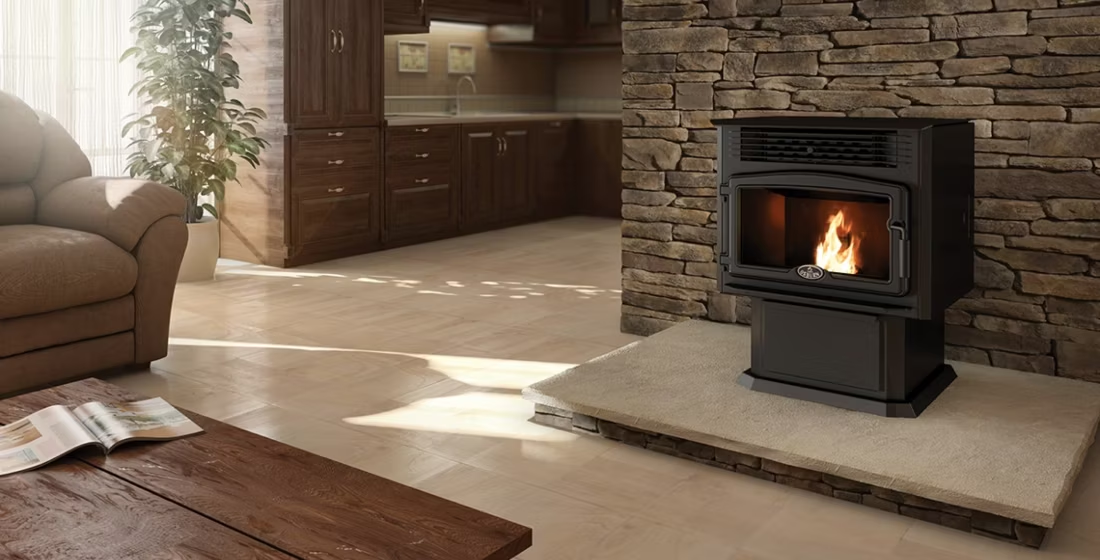
Gas and electric heat dominate in Murray as a result, and most hearth retailers along the Wasatch Front stock accordingly. That said, pellet stoves haven't disappeared entirely—homeowners in homes without a gas line, cabin properties up-canyon outside city restrictions, or households that register a stove as their sole source of heat with the Salt Lake County Health Department still install them. Regional pellet brands like Bear Mountain, Lignetics, and Forest Energy are all available through Wasatch Front dealers even though shelf space is limited. If a pellet stove genuinely fits your situation, I can match you with a local dealer who understands both the equipment and Murray's no-burn rules, rather than one who'll sell you a unit you can't legally run on a red air day.
Three steps. No salesperson until you're ready.
Tell us about your project
Your zip code, your situation, and the fuel you're leaning toward—or let the answers point you to one.
See what's actually available
The brands dealers within 100 miles genuinely carry—real options, never a catalog mirage.
Get your dealer & Project Guide
A trusted local dealer, plus the free Project Guide & Parts List that names every component of the job.
Frequently Asked Questions
Are pellet stoves even legal to install in Murray, UT?
Yes, they're legal to install, but their use is restricted. Salt Lake County participates in Utah's mandatory action day program, which prohibits burning in solid-fuel devices—wood or pellet—on days when PM2.5 levels spike during winter inversions, unless the device is registered with the Salt Lake County Health Department as your home's sole source of heat. Most Murray homeowners installing a pellet stove today are doing so as supplemental or backup heat, which means the appliance sits idle on red air days. If you're depending on it as your only heat source, ask your local dealer about the sole-source registration process before you buy.
How much does a pellet stove installation cost in Murray?
A typical pellet stove installation in the Murray area runs roughly $3,500 to $6,500, depending on the unit and whether you're venting through an exterior wall with 3- or 4-inch PL pipe versus running a longer horizontal run. Because pellet stoves need a standard 120V outlet to run the auger and combustion blower, homes without an existing outlet near the install location sometimes need minor electrical work added to that range. Given limited local demand, expect fewer dealers stocking pellet units than gas or electric options—plan on a slightly longer lead time for parts.
Why don't more homes in Murray use pellet stoves if the winters are cold?
The climate would actually support it—Murray's winters, comparable to Duluth, MN, and 23°F average winter low are in the same range as plenty of cities where pellet heat is common, like Duluth, MN. The limiting factor is air quality regulation, not temperature. The Salt Lake Valley's winter inversions trap fine particulate pollution against the valley floor, and Utah's response has been to restrict solid-fuel burning devices on action days. Combined with widespread natural gas service through Dominion Energy Utah, most Murray homeowners find gas fireplaces or inserts more practical for daily heating, and reserve pellet or wood for the days when burning is actually allowed.
What are 'mandatory action days' and how do they affect my pellet stove?
Utah's Division of Air Quality issues voluntary and mandatory action alerts through UtahAir.org during winter inversion episodes, typically running from November through February along the Wasatch Front. On a mandatory action day, all solid-fuel burning devices—including pellet stoves—must stay off unless registered as a home's sole source of heat. Voluntary action days ask residents to refrain but don't carry the same enforcement weight. If you install a pellet stove in Murray, check the daily air quality status before lighting it during winter months; some homeowners simply switch to a gas insert or electric heater in the same room on those days.
Where can I buy pellets locally in Murray?
Pellet supply is thinner here than in states where pellet heat is standard, but Wasatch Front hearth retailers and some home improvement stores carry regional brands including Bear Mountain, Lignetics, and Forest Energy, generally running $230 to $300 per ton depending on the brand and time of year. Because demand is lower than in pellet-heavy markets, it's worth buying your season's supply early in fall before inversion season starts and store availability tightens up. A local dealer can usually tell you which brands burn cleanest in their most commonly sold stove models.
Can a pellet stove keep my house warm during a power outage?
Not without a backup power source. Pellet stoves rely on an electric auger to feed fuel and a blower to distribute heat, so they shut down the moment the power goes out—unlike a wood stove, which burns without electricity. If backup heat during outages is a priority for your Murray home, some homeowners pair a pellet stove with a small battery backup or generator rated for the stove's draw (usually under 100 watts continuous), or they choose a wood-burning option instead for that specific need. Ask your local dealer about UPS-compatible models if outage resilience matters to you.
What size pellet stove do I need for a Murray home?
Sizing depends on square footage, insulation, and whether the stove is primary or supplemental heat. Small units (rated for 500,000–800,000 BTU of pellet capacity per hopper load, roughly heating 1,000 sq ft) suit a single room or finished basement. Medium units handle 1,500 to 2,000 sq ft main living areas. Given how few Murray homes run pellet as their only heat source, most local installs lean toward the smaller end—supplementing a gas furnace on the days burning is permitted. A local dealer will size the unit to your specific room during an in-home visit rather than going by square footage alone.
Are there rebates available for pellet stoves in Murray or Salt Lake County?
Utah doesn't currently offer a statewide pellet stove rebate program comparable to some other cold-climate states, and neither PacifiCorp nor the City of Murray's municipal electric utility list pellet stove incentives at this time. Occasionally the Utah Division of Air Quality has run limited wood-stove changeout programs targeting older, uncertified units in nonattainment counties like Salt Lake—those programs come and go, so it's worth asking a local dealer whether one is currently active before you buy. EPA-certified units are generally required regardless of rebate status.
Pellet stove vs. gas fireplace—which makes more sense in Murray?
For most Murray homes, gas wins on practicality: natural gas service is widely available through Dominion Energy Utah, a gas fireplace or insert runs on inversion days without restriction, and it requires none of the fuel storage or ash cleanup a pellet stove does. Pellet stoves make sense in narrower cases—a home without gas service, a detached shop or cabin, or a homeowner who specifically wants the ambiance and lower fuel cost of pellet fuel and is willing to work around no-burn days. If you're weighing the two, a local dealer can walk you through both options for your specific address and utility situation.
Why is my open fireplace making my house colder?
Open fireplaces suck—literally. As the fire burns, it consumes air your furnace already paid to heat and pulls it out through the chimney, so the house is actually colder after the fire goes out than before you lit it. An insert fixes this: it seals the chimney, puts fixed glass across the front, and turns that hole in your house into a real heat source.
What's the difference between an insert and a zero-clearance fireplace?
An insert is a fireplace that slides into a pre-existing wood-burning fireplace—if you don't have one, there's nothing to insert it into. A zero-clearance fireplace is built into a framed wall, which makes it the answer for remodels and new construction. Simple test: existing masonry fireplace means insert; blank or framed wall means zero-clearance.
Can I install a fireplace myself?
If you're putting a fire in your house on purpose, it's best to work with an expert. Unless you're genuinely experienced in framing, gas line, vent pipe, and the national code on clearances to combustibles, have a professional do it—and ideally the same company that sells you the fireplace, so warranty, service, and liability all live under one roof.
What is an in-home preview and do I need one?
It's a visit where a hearth professional measures your space, confirms the model you picked actually works in your home, and walks the specs—framing, gas line, venting, finish work—before anything is ordered. Some details you just can't know until you see the house. Never make a down payment without one; it's the single most-skipped step that burns buyers.
Nearby Dealers
Hearth shops serving Murray and the surrounding area.
(Sugar House) Alpine Fireplaces (In Breezeway Next To Theatres)
Hearth & Home Distributors Of Utah - Salt Lake City
Pellet Brands Stocked Around Murray
Manufacturers will point you to the nearest stocking dealer.
Find out if pellet heat makes sense for your Murray home.
Tell us about your home and how you'd use the stove, and we'll match you with a trusted local dealer who understands Murray's air quality rules. You'll get a free Project Guide & Parts List—the exact parts, including the vent kit, and the dealer we recommend for your project.
Find Your Fireplace →