
Clean-Burning Heat for Salt Lake Valley's Inversion Season.
Pellet heat that keeps running on the red air days when Salt Lake County tells wood-burners to stop. Find the right stove and connect with a trusted local dealer in Magna.
Every Project Starts From One of These Five Situations
Heat that keeps burning when the valley says no to wood.
Magna sits at the base of the Oquirrh Mountains on the west side of the Salt Lake Valley, at about 4,200 feet, where winter lows average 25°F and the area sees a long, solidly cold heating season. That's meaningful cold, though it's the valley's geography—not just the temperature—that shapes heating decisions here. Salt Lake County is one of the most inversion-prone air basins in the country: cold air settles between the Oquirrhs and the Wasatch Range and traps wood smoke, vehicle exhaust, and wildfire haze against the valley floor for days at a time each winter.
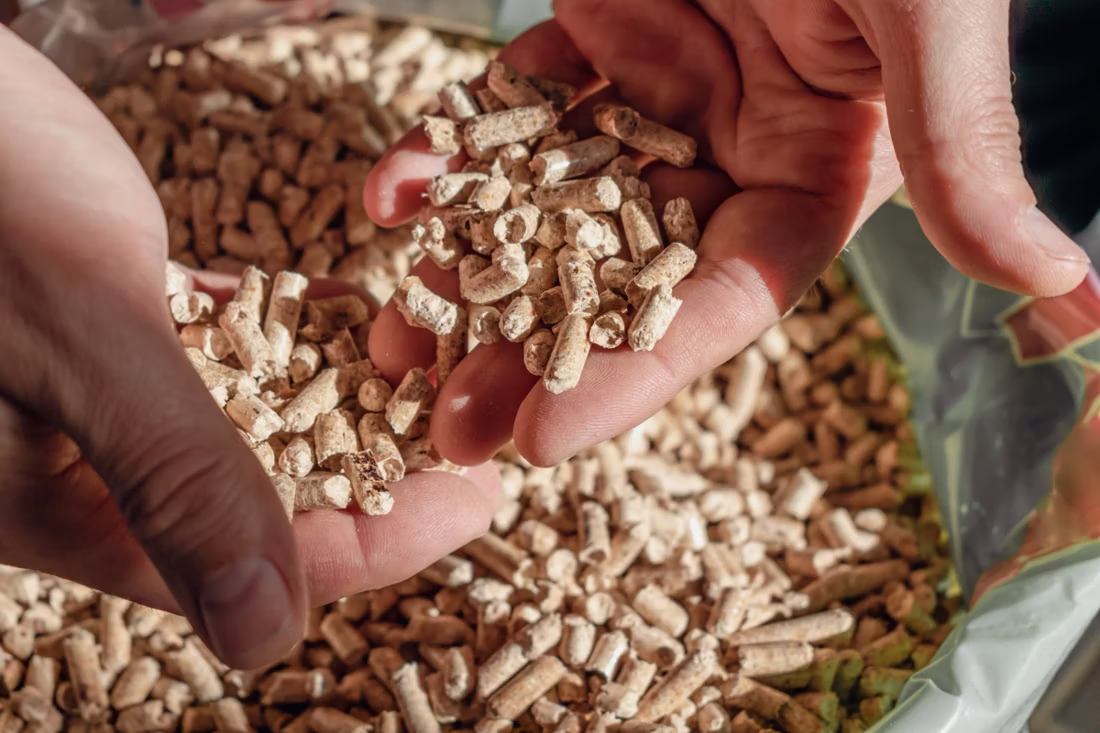
When the Utah Division of Air Quality declares a mandatory action day during a bad inversion, uncertified wood-burning devices are legally required to sit cold—but EPA-certified pellet stoves are typically exempt from those restrictions because they burn cleaner and more completely. That single fact drives a lot of pellet adoption in Magna and across the west valley. Pellets themselves are a bagged, consistent fuel—regional brands like Bear Mountain, Lignetics, and Forest Energy are sold at hardware stores and building suppliers throughout the Salt Lake area, so you're not dependent on cut-your-own cordwood or a hauling truck. The stove's auger and blower run on standard household current through PacifiCorp (Rocky Mountain Power), Magna's electric provider, at a residential rate around 12.5 cents per kWh—a small, predictable add to your winter electric bill.
Three steps. No salesperson until you're ready.
Tell us about your project
Your zip code, your situation, and the fuel you're leaning toward—or let the answers point you to one.
See what's actually available
The brands dealers within 100 miles genuinely carry—real options, never a catalog mirage.
Get your dealer & Project Guide
A trusted local dealer, plus the free Project Guide & Parts List that names every component of the job.
Frequently Asked Questions
How much does a pellet stove installation cost in Magna?
Most pellet stove installations in the Magna area run $3,000 to $6,500, with the spread driven mainly by venting. A pellet stove venting straight through an exterior wall with a short horizontal run is on the lower end. Installing into an existing masonry fireplace as a pellet insert, or running vent pipe up through a chimney chase in a two-story home, pushes toward the higher end. A hearth pad, electrical outlet nearby for the auger and blower, and any framing work around the vent penetration are the other line items a local installer will price out during an in-home visit.
Are pellet stoves exempt from Salt Lake County's winter burn bans?
Generally, yes. Utah's Division of Air Quality issues mandatory action orders during severe winter inversions, when pollution gets trapped against the Oquirrh and Wasatch ranges and can't disperse. Uncertified and older wood-burning stoves and fireplaces are prohibited from operating on those days. EPA-certified pellet stoves are typically exempt from these curtailment rules because their combustion is cleaner and more complete than open wood burning. This is one of the biggest reasons Magna homeowners choose pellet over cordwood—you can keep running your stove on the exact days a wood-burning neighbor has to let the fire go out. Always check the current Utah DAQ status and your specific unit's certification before assuming exemption.
What size pellet stove do I need for a home in Magna?
With winter lows averaging around 25°F and a long, solidly cold heating season, Magna sits solidly in a moderate-to-cold heating zone—colder than coastal climates but not the deep-freeze territory of somewhere like Bozeman, Montana. For most homes here, a stove rated for 1,000 to 1,800 square feet handles a main living area as supplemental heat, while a larger unit rated to 2,200+ square feet can serve as primary heat in a well-insulated home. Older homes near the base of the Oquirrhs with less insulation and more infiltration often run better with the next size up. A local dealer will size the stove based on your square footage, ceiling height, and window exposure during a home visit.
Where can I buy pellets in the Magna area, and what do they cost?
Bear Mountain, Lignetics, and Forest Energy are the pellet brands most commonly stocked at hardware stores and building suppliers throughout the Salt Lake Valley, including outlets serving Magna and the west side. Expect to pay in the neighborhood of $250 to $320 per 40-pound bag ton-equivalent depending on brand, softwood versus hardwood blend, and whether you buy by the pallet (typically 50 bags) in the fall when supply is highest. Buying a season's worth early—before the first cold snap drives demand up—is the standard move locally.
How much electricity does a pellet stove use, and will it work in a power outage?
A typical pellet stove draws somewhere between 100 and 500 watts running normally—mostly the auger motor and combustion blower—which adds up to a modest amount on a PacifiCorp bill at the local residential rate of about 12.5 cents per kWh. The catch is that a standard pellet stove won't run at all without power, since the auger that feeds pellets into the firebox is electric. Some homeowners in Magna pair their stove with a small battery backup or generator for winter outages; without one, a pellet stove isn't a stand-alone emergency heat source the way a wood stove can be.
Pellet stove or wood stove—which makes more sense in the Salt Lake Valley?
Wood is the more traditional option, and pinyon, juniper, and aspen are all cut locally under permits through the Uinta-Wasatch-Cache National Forest, running roughly $5 to $20 per cord during the May-to-October season. But wood-burning is exactly what gets restricted on mandatory action days during winter inversions, which can stack up for a week or more in a bad year. Pellet stoves sidestep that problem, burn more consistently without daily fire-tending, and produce far less particulate smoke to begin with. For a lot of Magna homeowners, especially those in tighter subdivisions where a neighbor's chimney smoke matters, pellet wins on convenience and air-quality compliance. For homeowners with reliable access to cheap or self-cut wood and less concern about curtailment days, wood still has a place.
Do I need a permit to install a pellet stove in Magna?
Yes—a building permit is required for a new pellet stove installation, typically through Salt Lake County or the relevant local building authority for Magna, and the unit needs to meet current EPA emissions certification. Most established local hearth dealers handle the permit application and inspection scheduling as part of the installation package, so you're not filing paperwork yourself. Because pellet stoves are usually exempt from the air-quality curtailment rules that apply to wood-burning devices, there's no separate air-quality permitting step the way there sometimes is for uncertified wood stoves near a home sale.
How much maintenance does a pellet stove need?
Pellet stoves need more routine attention than a gas unit but less than a wood stove's chimney sweep. Plan on emptying the ash pan every few days to weekly depending on use, wiping the glass as needed, and vacuuming the burn pot and heat exchanger tubes every couple of weeks during heavy winter use. Most manufacturers recommend a full professional cleaning and inspection once a year, including the exhaust venting and combustion blower, ideally before the inversion season ramps up in November. Skipping this leads to feed jams and reduced efficiency, not usually safety hazards—but it's still worth keeping on schedule.
What's a good pellet stove for Magna's climate and inversion pattern?
Look for a unit with a large hopper capacity—40 to 80 pounds—so it can run unattended through a long, cold overnight without needing a refill, useful during multi-day inversion events when you'll be running the stove around the clock. Models with a thermostat-controlled auger feed rather than a fixed feed rate tend to modulate better through the swing between a mild afternoon and a 20-degree evening, which is common in this part of the valley. A local dealer carrying Bear Mountain, Lignetics, or Forest Energy fuel can also confirm which stove models are calibrated well for the pellet quality typically available in the Salt Lake market.
Why is my open fireplace making my house colder?
Open fireplaces suck—literally. As the fire burns, it consumes air your furnace already paid to heat and pulls it out through the chimney, so the house is actually colder after the fire goes out than before you lit it. An insert fixes this: it seals the chimney, puts fixed glass across the front, and turns that hole in your house into a real heat source.
How often does a pellet stove need cleaning?
A clean pellet stove is a happy pellet stove. Plan on cleaning the burn pot about once a week when you're burning regularly—ash and clinkers gum up the air holes just like a pellet barbecue. Most pellet stove problems trace back to skipped cleaning that nobody explained up front. Some designs make it easy with a trapdoor burn pot: pull a lever and the gunk drops into the ash pan.
Does a fireplace add value to my home?
On average, a fireplace adds back to the home about the same amount you spent installing it. Add the monthly savings from heating the rooms you actually use instead of the whole house—often hundreds of dollars a year—and the value case is strong before you even count what a fire does for how your family uses the room.
How much should I budget for a fireplace?
For an average home—covering the fireplace, the vent pipe, and basic installation—a budget between $3,900 and $5,500 gives you a lot of options across wood, gas, and pellet. By the time you add finish work, gas line, and electrical, the average complete installation lands between $5,000 and $12,000 all-in. In a remodel or new build, a good rule is to put about 2.5% of the total project cost toward the fireplace.
Nearby Dealers
Hearth shops serving Magna and the surrounding area.
(Sugar House) Alpine Fireplaces (In Breezeway Next To Theatres)
Hearth & Home Distributors Of Utah - Salt Lake City
Pellet Brands Stocked Around Magna
Manufacturers will point you to the nearest stocking dealer.
Find your pellet stove in Magna.
Tell us a bit about your home and we'll match you with a trusted local dealer and a free Project Guide & Parts List—the exact equipment, venting, and installation plan for a pellet stove that keeps running on Magna's toughest inversion days.
Find Your Fireplace →