
Pellet heat in Herriman: a narrow fit, not a common one.
Herriman's newer subdivisions run on natural gas, and pellet stoves stay a specialty choice here—but for the right home, one still makes sense. We'll connect you with a dealer who can tell you honestly whether it does.
Every Project Starts From One of These Five Situations
Gas runs this valley. Pellet fills a narrow niche.
Herriman sits at just over 5,000 feet on the southwest edge of the Salt Lake Valley, with average winter lows around 25°F and roughly 5,115 heating degree days a year—a genuinely cold climate zone 5B winter, but not an extreme one. Unlike mountain towns where off-grid wood and pellet heat are a way of life, Herriman is one of the fastest-growing suburbs on the Wasatch Front, and its housing stock reflects that: newer construction, already plumbed for natural gas, with central forced-air furnaces as the default. That infrastructure is a big part of why pellet stoves haven't caught on here the way they have in more rural corners of Utah.
There's also the valley's winter inversion problem to consider. Salt Lake County sees mandatory and voluntary no-burn action days each winter when PM2.5 traps in the basin, and county health guidance is squarely aimed at reducing solid-fuel smoke. EPA-certified pellet stoves burn cleaner than open wood fires, which sometimes gives them more flexibility on restricted days—but few local hearth shops in the far south valley stock or install them regularly, since demand stays low next to gas inserts. Regional pellet brands like Bear Mountain, Lignetics, and Forest Energy are sold through valley retailers, so fuel supply isn't the barrier—installer availability and homeowner awareness are.
Three steps. No salesperson until you're ready.
Tell us about your project
Your zip code, your situation, and the fuel you're leaning toward—or let the answers point you to one.
See what's actually available
The brands dealers within 100 miles genuinely carry—real options, never a catalog mirage.
Get your dealer & Project Guide
A trusted local dealer, plus the free Project Guide & Parts List that names every component of the job.
Frequently Asked Questions
Are pellet stoves actually available in Herriman, or is this a niche product here?
They're niche. Herriman's housing stock is mostly newer construction already piped for natural gas, and most hearth retailers along the Wasatch Front stock far more gas fireplaces and inserts than pellet units, since that's where the local demand sits. Pellet stoves are still installable—a handful of Salt Lake Valley dealers carry them and can order specific models—but you'll likely be working with a retailer based farther north in the valley rather than a shop in Herriman proper. If you want one, expect a slightly longer lead time and a more deliberate search than you'd have shopping for a gas insert.
How much does a pellet stove installation cost in Herriman?
Because pellet installs are uncommon in this specific market, there isn't a deep local pricing history to draw from—but as a general ballpark, a freestanding pellet stove with venting typically runs in the low-to-mid thousands once you add the stove, vent kit, and hearth pad work, with inserts running somewhat higher if a liner is needed. The honest answer is that pricing here depends heavily on which dealer you use and how far they're traveling for the install. A local retailer can give you a firm number after seeing your home—that's exactly the kind of site-specific quote our matching process is built to get you.
Where can I buy pellet fuel in Herriman?
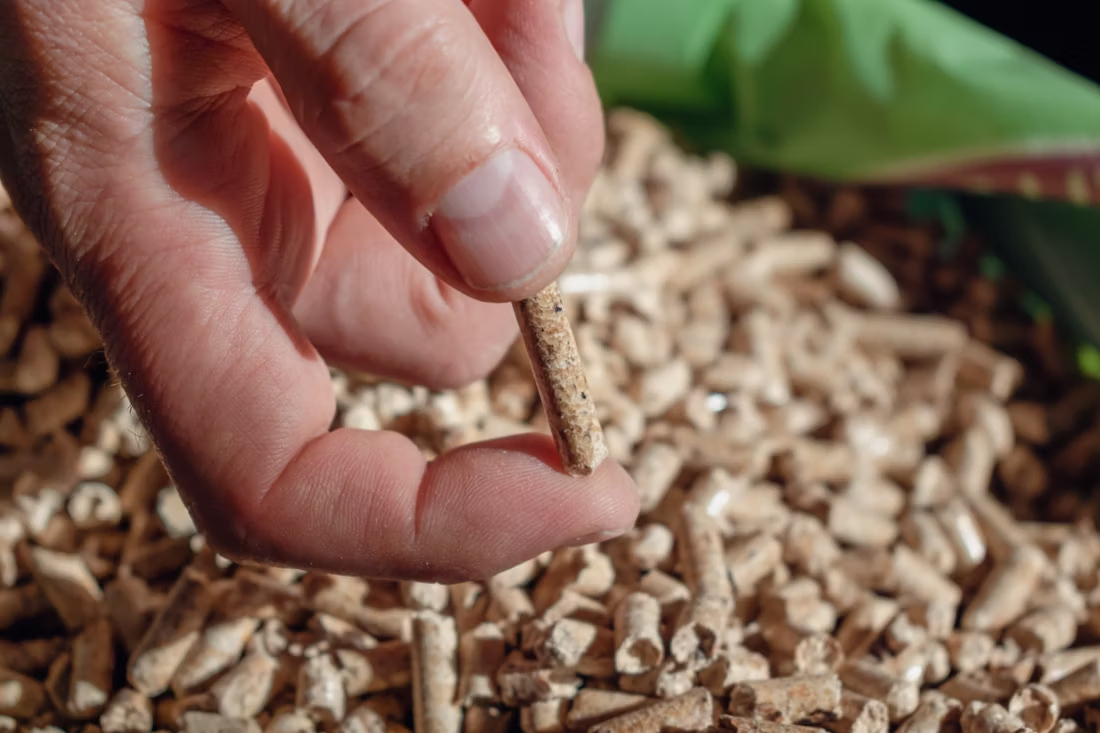
Regional brands like Bear Mountain, Lignetics, and Forest Energy are sold at hearth and hardware retailers throughout the Salt Lake Valley, though selection in Herriman itself is thinner than in cities with more established pellet-stove ownership. Because pellet heat isn't the default here, it's worth stocking up early in the fall—bags can sell out at individual retailers during cold snaps when demand spikes and restocking takes a few days. Buying by the ton, if a dealer offers it, is usually more economical than buying 40-lb bags one at a time through the winter.
Will a pellet stove keep my house warm during a power outage?
No—and this is one of the biggest reasons pellet stoves haven't taken off in Herriman despite Salt Lake Valley's occasional winter storm outages. Pellet stoves rely on an electric auger to feed fuel and a blower to circulate heat, so when PacifiCorp power drops, the stove stops working unless you have a battery backup or generator running. If backup heat during outages is your main goal, a wood stove or a gas fireplace with a standing pilot and battery-backed ignition is a more reliable choice for this area.
Do winter inversion burn restrictions in Salt Lake County apply to pellet stoves?
Salt Lake County Health Department issues mandatory and voluntary action days during winter PM2.5 inversions, and the rules are aimed primarily at open wood burning and older, uncertified solid-fuel appliances. EPA-certified pellet stoves generally burn cleaner and sometimes have more leeway than traditional wood stoves during these advisories, but rules can change year to year, so check current Utah Division of Air Quality guidance before you rely on a pellet stove during a red-air-day stretch. This nuance is actually one of the few reasons a Herriman homeowner might choose pellet over wood in the first place.
What size pellet stove would a Herriman home need?
With winter lows averaging around 25°F and roughly 5,115 heating degree days, Herriman's climate calls for a moderate-output stove rather than an extreme cold-climate unit—most homes here would land in the small-to-medium range (roughly 1,000 to 2,000 square feet of heating capacity) if pellet heat is supplementing an existing gas furnace, which is the more common setup than using it as primary heat. A dealer can size it precisely based on your square footage, insulation, and whether the stove needs to carry the whole house or just one zone.
Pellet stove vs. gas fireplace—which makes more sense in Herriman?
For most Herriman homes, gas wins on pure practicality: the house is already plumbed for it, installers are plentiful, and a gas fireplace or insert runs instantly with no fuel storage or ash cleanup. Pellet stoves make more sense in specific situations—a homeowner who wants a real flame with a wood-look ember bed, lower emissions during inversion season, or a heat source that doesn't depend on utility gas pricing. But pellet still needs electricity to run, so it doesn't solve for outages the way wood does. If convenience and simplicity matter most, gas is the more natural fit for this city; if you have a particular reason to want pellet, it's still available through valley dealers.
Do I need a permit to install a pellet stove in Herriman?
Yes—a building permit is required for a new solid-fuel or pellet-burning appliance, typically through the City of Herriman's building department, or Salt Lake County if your property sits outside city jurisdiction. The stove itself needs to be EPA-certified, and the vent-through-wall or vent-through-roof work needs to meet clearance codes. Because pellet installs are less frequent here than gas, it's worth confirming your installer has pulled solid-fuel permits before—not every general contractor in a gas-first market has recent experience with the process.
I have an existing gas fireplace—can it be converted to pellet?
Not directly. Gas fireplaces and pellet stoves use fundamentally different venting and combustion systems, so a true conversion usually means removing the gas unit and installing a pellet insert or freestanding stove with its own vent kit, rather than adapting the existing gas hardware. If you have a masonry fireplace behind the gas unit, a pellet insert can sometimes use the existing chimney with a liner. Given how few Herriman households run pellet appliances, this kind of project benefits from an in-home evaluation—a local dealer can tell you quickly whether your existing chimney or wall makes this practical.
What's the difference between an insert and a zero-clearance fireplace?
An insert is a fireplace that slides into a pre-existing wood-burning fireplace—if you don't have one, there's nothing to insert it into. A zero-clearance fireplace is built into a framed wall, which makes it the answer for remodels and new construction. Simple test: existing masonry fireplace means insert; blank or framed wall means zero-clearance.
Why is my open fireplace making my house colder?
Open fireplaces suck—literally. As the fire burns, it consumes air your furnace already paid to heat and pulls it out through the chimney, so the house is actually colder after the fire goes out than before you lit it. An insert fixes this: it seals the chimney, puts fixed glass across the front, and turns that hole in your house into a real heat source.
Does a fireplace add value to my home?
On average, a fireplace adds back to the home about the same amount you spent installing it. Add the monthly savings from heating the rooms you actually use instead of the whole house—often hundreds of dollars a year—and the value case is strong before you even count what a fire does for how your family uses the room.
Can a fireplace actually lower my heating bill?
Yes—by creating a comfort zone. A furnace heats every square foot of the house just to warm the one room you're in; a gas fireplace on low burns roughly a sixth of the gas a typical furnace does. Set the furnace around 55–60 degrees as a baseline, then heat the rooms your family actually uses. Families who heat this way commonly save $20–$60 a month.
Nearby Dealers
Hearth shops serving Herriman and the surrounding area.
(Sugar House) Alpine Fireplaces (In Breezeway Next To Theatres)
Hearth & Home Distributors Of Utah - Salt Lake City
Pellet Brands Stocked Around Herriman
Manufacturers will point you to the nearest stocking dealer.
Find your pellet stove in Herriman.
Pellet heat is a smaller market here, which is exactly why matching with the right dealer matters more. Tell us about your home and we'll connect you with a trusted local pro and send over a free Project Guide & Parts List—the specific parts, vent kit, and recommended dealer for your Herriman pellet project.
Find Your Fireplace →