
Keep Your Family Warm and Safe—No Matter What
With roughly 3,000 heating degree days and winter lows averaging 29°F, wood isn't the default heat source here the way it is farther north—but plenty of Vernon-area homeowners still want one for cold snaps, power outages, or the look of a real fire. We'll connect you with a local dealer who knows what actually works in this climate.
Every Project Starts From One of These Five Situations
A mild climate keeps wood heat mostly decorative here.
Wilbarger County sits in Climate Zone 3B, and its roughly 2,999 annual heating degree days are a fraction of what a place like Fargo, ND (close to 9,000) logs every winter. Winter lows average around 29°F, with only occasional stretches that dip into the 20s or teens. That's not the kind of climate that demands a wood stove running around the clock—most homes in Vernon and the surrounding county rely on central gas or electric systems for their day-to-day heat, and a wood-burning fireplace or insert, if installed at all, is usually a supplemental or occasional-use feature rather than the primary heat source.
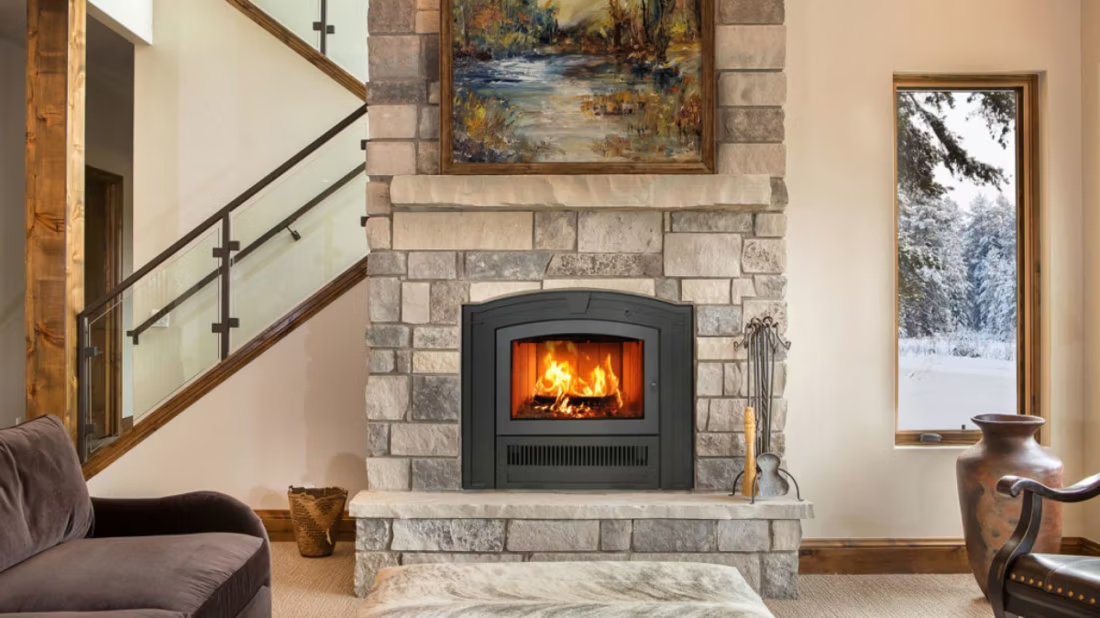
That said, wood has a real presence in the local landscape—oak, pecan, and mesquite grow throughout the county, and most residents know these species better from the smoker than the fireplace. Mesquite and pecan in particular are Texas BBQ staples, and a fair amount of the seasoned hardwood cut locally goes toward grilling rather than heating. Some homeowners still choose a wood-burning fireplace or stove for the ambiance of a real fire, for backup heat during grid disruptions like the 2021 winter storm, or simply because a ranch-style home calls for one. Wilbarger County isn't in an air-quality non-attainment area, so there are no wood-smoke curtailment days limiting when you can burn—the main constraints are cost and finding an installer who does this kind of work regularly.
Three steps. No salesperson until you're ready.
Tell us about your project
Your zip code, your situation, and the fuel you're leaning toward—or let the answers point you to one.
See what's actually available
The brands dealers within 100 miles genuinely carry—real options, never a catalog mirage.
Get your dealer & Project Guide
A trusted local dealer, plus the free Project Guide & Parts List that names every component of the job.
Frequently Asked Questions
How much does a wood fireplace installation cost in Wilbarger County?
There isn't a deep bench of local pricing data for wood-burning installs the way there is for gas or electric work in this county, simply because so few homeowners here go this route. As a general benchmark, a factory-built wood-burning fireplace or freestanding stove with proper Class A chimney venting typically runs $3,500 to $8,500 installed; a full masonry fireplace build costs considerably more and is rare in new construction anywhere in this climate zone. Because wood-burning installers are less common around Vernon than gas or electric technicians, get at least two quotes and confirm the contractor is specifically certified for wood-burning clearances and venting, not just gas line work.
What firewood is available locally in Wilbarger County?
Oak, pecan, and mesquite are the three species you'll find most often around Wilbarger County, and all three season well for burning. Mesquite in particular burns hot and fast, which is part of why it's prized for grilling but requires more frequent reloading in a fireplace than a denser oak. Because there's no organized public-land firewood permit system here—this part of Texas is ranchland and private property, not national forest—most residents source wood from tree services, ranch cleanup, or local sellers rather than a permit office. If you're planning occasional use rather than daily burning, a cord or two of seasoned oak will last most homeowners the better part of a mild winter.
Do I need a permit to install a wood-burning fireplace in Wilbarger County?
Most likely yes, though the process is straightforward. Inside city limits, permitting for a new wood-burning fireplace or stove typically runs through the City of Vernon building department; outside city limits, it falls under the county. A reputable installer will usually handle the permit application and inspection as part of the job, since they need the clearances and venting to pass inspection anyway. Given how uncommon full wood-burning installs are locally, it's worth confirming upfront that whoever you hire has actually pulled a wood-burning permit before, not just a gas fireplace permit.
Is wood heat practical as a primary heat source in Wilbarger County?
Generally, no. With about 3,000 heating degree days and winter lows that average in the high 20s, most homes here simply don't need the heat output a wood stove is built to provide—central gas or electric systems handle the job more efficiently for the number of genuinely cold days in a typical winter. Where wood does make sense is as backup heat during grid outages (Texas has had real reasons to think about this in recent winters) or as a supplemental, ambiance-focused feature in one room. If you're weighing wood against a whole-home heating upgrade, a local dealer can walk you through which role actually fits your house.
Should I get a wood fireplace or a gas fireplace in Wilbarger County?
For most homes in Wilbarger County, gas is the more practical everyday choice—it's the standard heating fuel option locally, lights instantly, needs no wood handling, and doesn't require the chimney maintenance a wood-burning unit does. Wood still has a place if you specifically want the experience of a real fire, plan to burn only occasionally, or want a heat source that works without electricity during an outage. A lot of homeowners here who want both end up choosing a gas fireplace for daily use and skip the wood-burning install altogether, since the mild climate rarely calls for a true backup heat source.
How does an electric fireplace compare to a wood-burning one here?
Electric fireplaces are a standard, low-hassle option in this climate—no venting, no chimney, no wood to store, and installation costs are a fraction of a wood-burning setup. They provide ambiance and light supplemental warmth but won't help during a power outage, which is the one scenario where a wood-burning unit has a real advantage. Given how mild Wilbarger County winters run, plenty of homeowners choose electric simply because it's the lower-cost, lower-maintenance way to get the look of a fireplace without committing to wood handling or venting work.
What venting and clearance requirements apply to an occasional-use wood fireplace?
Even a wood-burning fireplace or stove that only gets used a handful of nights a winter still needs full Class A chimney venting and proper clearances to combustibles—there's no reduced code standard for light use. If it's installed and used only occasionally, plan on an annual inspection before burning season regardless, since creosote and nesting debris can build up even with infrequent use. A certified installer in the Vernon area can confirm clearances during the same visit they handle the install, which is worth doing even if you only expect to light it a few times a year.
Are there burn bans or restrictions on wood-burning fireplaces in Wilbarger County?
Wilbarger County isn't in an air-quality non-attainment area, so there's no wood-smoke curtailment program restricting indoor fireplace or stove use the way there is in some western states. County burn bans, when they're issued, are almost always tied to drought conditions and apply to outdoor debris burning, not indoor wood-burning appliances. It's still worth checking current county notices before any outdoor wood processing or burning, but an indoor wood-burning fireplace used normally isn't the target of those restrictions.
Wood stove or pellet stove—does either make sense in Wilbarger County?
Honestly, neither is a strong fit for primary heat given how mild the winters run here, but if you're set on a wood-burning appliance for occasional use or backup heat, a stove will generally serve you better than a pellet unit. Pellet stoves need electricity to run the auger and blower, so they lose their advantage as backup heat during an outage—the exact scenario where wood-burning shines locally. You may see bagged pellets from brands like Forest Energy or Lignetics at local stores, but those are typically sold for pellet grills, not heating stoves, which tells you something about how little demand there is for pellet heating equipment in this county.
Why won't my new wood stove get going like my old one?
New wood stoves are 70%+ efficient, so far less heat goes up the flue—which also means less draft to get a fire established. The rule: build a genuinely hot fire for about 45 minutes before you choke it down. Skip that and you get smoke in the room, creosote in the chimney, and a fire that never takes off. Most performance complaints trace straight back to this.
What's the difference between an insert and a zero-clearance fireplace?
An insert is a fireplace that slides into a pre-existing wood-burning fireplace—if you don't have one, there's nothing to insert it into. A zero-clearance fireplace is built into a framed wall, which makes it the answer for remodels and new construction. Simple test: existing masonry fireplace means insert; blank or framed wall means zero-clearance.
Can a fireplace actually lower my heating bill?
Yes—by creating a comfort zone. A furnace heats every square foot of the house just to warm the one room you're in; a gas fireplace on low burns roughly a sixth of the gas a typical furnace does. Set the furnace around 55–60 degrees as a baseline, then heat the rooms your family actually uses. Families who heat this way commonly save $20–$60 a month.
Does a fireplace add value to my home?
On average, a fireplace adds back to the home about the same amount you spent installing it. Add the monthly savings from heating the rooms you actually use instead of the whole house—often hundreds of dollars a year—and the value case is strong before you even count what a fire does for how your family uses the room.
Stove and Fireplace Dealers in Wilbarger County
Listings include WhyFire partner dealers, dealers we have verified as authorized for the brands we recommend, and established local businesses that carry hearth products. Every listing shows which one it is. The ones marked Preferred run on WhyFire's software, so they can show you real pricing and book your appointment right here. No manufacturer pays for placement. How we verify dealers →
The Ember Shop, Inc.
Home Escapes & More
Find your wood fireplace in Wilbarger County.
Tell us a bit about your home and how you'd actually use a wood-burning fireplace—ambiance, backup heat, or both—and we'll match you with a trusted local dealer and a free Project Guide & Parts List covering the right unit, venting, and installed cost for your Wilbarger County home.
Find Your Fireplace →