
Keep Your Family Warm and Safe—No Matter What
Wood stoves aren't the norm in Wilbarger County, but for ranch properties, backup heat, and cold-snap ambiance, they still make sense for some homes. We'll connect you with a local dealer who can tell you straight whether it's right for yours.
Every Project Starts From One of These Five Situations
A supplemental choice, not the norm.
Vernon sits in the Rolling Plains at about 1,239 feet, with a winter low average of 29°F and a mild, short heating season—a fraction of the winter heating load a place like Fargo, ND sees in a single winter. Most homes here are built and heated around central electric or gas systems, not wood. A dedicated wood stove or fireplace isn't a default install the way it would be farther north; it's a deliberate choice.
That said, wood heat hasn't disappeared from Wilbarger County. The February 2021 ERCOT grid failures left plenty of North Texas homes without power for days, and some Vernon-area homeowners added a wood stove afterward specifically as backup heat that doesn't depend on the grid. Others want one for a hunting cabin, a shop, or simply the look and feel of a real fire on the handful of nights each winter that actually call for it. Local oak, pecan, and mesquite—common byproducts of ranch land clearing and the area's pecan orchards—all burn well once you have a stove sized and vented correctly.
Three steps. No salesperson until you're ready.
Tell us about your project
Your zip code, your situation, and the fuel you're leaning toward—or let the answers point you to one.
See what's actually available
The brands dealers within 100 miles genuinely carry—real options, never a catalog mirage.
Get your dealer & Project Guide
A trusted local dealer, plus the free Project Guide & Parts List that names every component of the job.
Frequently Asked Questions
Is a wood stove a practical heating choice in Vernon?
For most Vernon homes, no—not as a primary heat source. With a winter low average around 29°F and a heating season well short of a full winter's worth of hard cold, the climate here doesn't demand the kind of sustained wood heat that a Bismarck, ND or Duluth, MN home relies on. Where it does make sense is as supplemental or backup heat: a shop, a detached cabin, a rural property where grid reliability is a concern, or a living room where you want real ambiance on the coldest nights of January and February. Be upfront with a local dealer about which of those you're solving for—it changes the recommendation.
How much does a wood stove installation cost in Vernon?
There isn't a well-established local price benchmark the way there would be in a wood-heavy market, since so few Wilbarger County homes install one. In practice, costs still track the same variables as anywhere: the stove itself, whether you have an existing masonry chimney or need new Class A pipe run through a roof, and hearth pad requirements. Expect a wider quote range than you'd get in a place where installers do this work weekly—a trusted local dealer will walk your specific home and give you a firm number rather than a rule of thumb.
What firewood works best for a wood stove in Vernon?
Oak, pecan, and mesquite are the three species you'll find most easily around Wilbarger County, and all three make good stove wood once properly seasoned. Oak burns dense and long, which is useful if you're trying to hold heat overnight. Pecan burns hot and clean—no surprise, given how much of it comes off local orchard trimmings. Mesquite is popular for its heat output but throws more sparks and pops than oak or pecan, so a stove with a solid glass door and good screen matters if you're using it. Most of this wood comes from ranch land clearing or orchard maintenance rather than a commercial firewood industry, so sourcing it locally sometimes means asking around rather than calling a supplier.
Do I need a permit to install a wood stove in Vernon?
Any new wood-burning installation typically requires a building permit through the local jurisdiction, and the unit itself needs to meet current EPA emissions standards. Vernon and Wilbarger County don't have the winter air quality restrictions you'd see in a non-attainment area—there's no burn curtailment schedule to check before lighting a fire. Most dealers who install wood stoves in this area will handle the permitting as part of the job, since it's not a routine request the way it is in a market with heavier wood-heat demand.
Does a wood stove make sense as backup heat during power outages?
This is actually one of the more common reasons Vernon-area homeowners look into wood heat. Electric service here runs through Oncor, AEP Texas North, or Southwestern Public Service depending on where you're located, and like the rest of the ERCOT grid, North Texas saw real reliability problems during the February 2021 winter storm. A wood stove doesn't need electricity to produce heat, which makes it one of the few heating options that keeps working through a multi-day outage. If that's your main motivation, say so up front—it affects sizing and placement recommendations more than a purely decorative install would.
What's the difference between a wood stove and a wood insert for a Vernon home?
A wood stove is freestanding and vents through new Class A pipe, so it can go almost anywhere with the right clearances—a shop, a detached building, or a room without an existing fireplace. A wood insert fits into an existing masonry fireplace and uses the chimney you already have. Since older homes with open masonry fireplaces are less common in Vernon than in longer-established wood-heat markets, most local installs end up being freestanding stoves rather than inserts, but a dealer can tell you which fits your specific house.
Where do I find a dealer who installs wood stoves near Vernon?
Because wood heat is a niche request in this part of North Texas, the dealer network is thinner than it would be in a colder region—some homeowners end up working with an installer based out of Wichita Falls who covers Wilbarger County as part of a wider service area. That's exactly the kind of local knowledge Find My Fireplace exists to sort out: rather than cold-calling hearth shops to find out who actually installs wood stoves out this way, we match you directly with a dealer who does.
Can I use a wood stove as my only heat source in Vernon?
Technically yes, but it's not how most homes here are built or insulated, and it's rarely the practical choice. Vernon's mild winters mean a properly sized central electric or gas system covers heating needs for the vast majority of the season with far less daily effort than tending a fire. A wood stove works better here as targeted supplemental heat—one well-used room, a workshop, or backup capability for outages—rather than a whole-home primary system the way it would be in a much colder, harder-winter climate.
Wood stove vs. electric heat—which makes more sense for my Vernon home?
Electric heat, delivered through Oncor, AEP Texas North, or Southwestern Public Service depending on your address, is what the overwhelming majority of Vernon homes already run on, and at roughly 13.35 cents per kWh it's a straightforward, no-maintenance way to heat a home in a mild climate like this one. A wood stove doesn't compete with that on convenience—its value is in what electric heat can't do: keep producing heat when the grid goes down. If reliability during outages matters more to you than daily convenience, a wood stove earns its place. If not, electric heat alone is usually the simpler answer here.
Why is my open fireplace making my house colder?
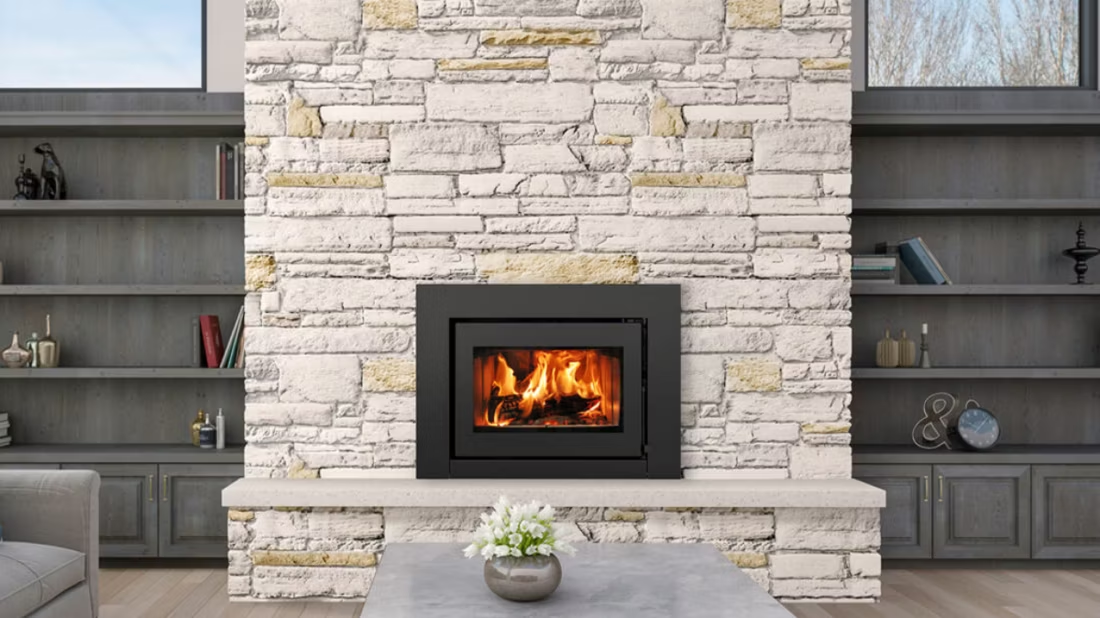
Open fireplaces suck—literally. As the fire burns, it consumes air your furnace already paid to heat and pulls it out through the chimney, so the house is actually colder after the fire goes out than before you lit it. An insert fixes this: it seals the chimney, puts fixed glass across the front, and turns that hole in your house into a real heat source.
Why is a fireplace insert so efficient?
An insert does two things: it seals the chimney completely, so you stop losing air you already paid to heat, and it radiates warmth into the room through the firebox and glass. Most add a heat-exchange fan that pulls cool room air underneath, wraps it around the hot firebox, and pushes it back out warm. Your home is more efficient before you've even lit the first fire.
Can I install a fireplace myself?
If you're putting a fire in your house on purpose, it's best to work with an expert. Unless you're genuinely experienced in framing, gas line, vent pipe, and the national code on clearances to combustibles, have a professional do it—and ideally the same company that sells you the fireplace, so warranty, service, and liability all live under one roof.
Does a fireplace add value to my home?
On average, a fireplace adds back to the home about the same amount you spent installing it. Add the monthly savings from heating the rooms you actually use instead of the whole house—often hundreds of dollars a year—and the value case is strong before you even count what a fire does for how your family uses the room.
Nearby Dealers
Hearth shops serving Vernon and the surrounding area. Every listing shows whether it is a WhyFire partner, a dealer we have verified as authorized for the brands we recommend, or a local business carrying hearth products. No manufacturer pays for placement. How we verify dealers →
The Ember Shop, Inc.
Home Escapes & More
Find your wood stove in Vernon.
Wood heat is a real but less common choice in Wilbarger County. Tell us about your home and how you'd use it, and we'll match you with a local dealer and send over a free Project Guide & Parts List—sized, vented, and ready to install.
Find Your Fireplace →