
Pellet stoves are a rare fit for Wharton County's mild winters.
With just 1,214 heating degree days and winter lows that average 42°F, most Wharton County homes never need a dedicated heating appliance. A small number of households still want one—for backup heat during a hard freeze, a hunting camp, or a rural property off the gas line—and I'll match you with a trusted local dealer who can tell you honestly whether a pellet unit makes sense for your situation.
Every Project Starts From One of These Five Situations
A heating appliance for a county that barely heats.
Wharton County sits on the Texas Gulf Coastal Plain south of Houston, home to about 25,273 people across Wharton, El Campo, East Bernard, and the rice and cotton farmland that surrounds them. This is a hot-humid Climate Zone 2A county, and its 1,214 heating degree days are roughly a seventh of what a place like Fargo, ND, racks up in a normal winter. Winter lows average 42°F, hard freezes are the exception rather than the rule, and most homes here are built and equipped around cooling load, not heating. Local hardwoods like oak, pecan, and mesquite are common in outdoor fire pits and the occasional wood fireplace, but a manufactured pellet appliance—with its hopper, auger, and shipped-in fuel bags—is a tool built for a much longer, colder heating season than Wharton County typically sees.
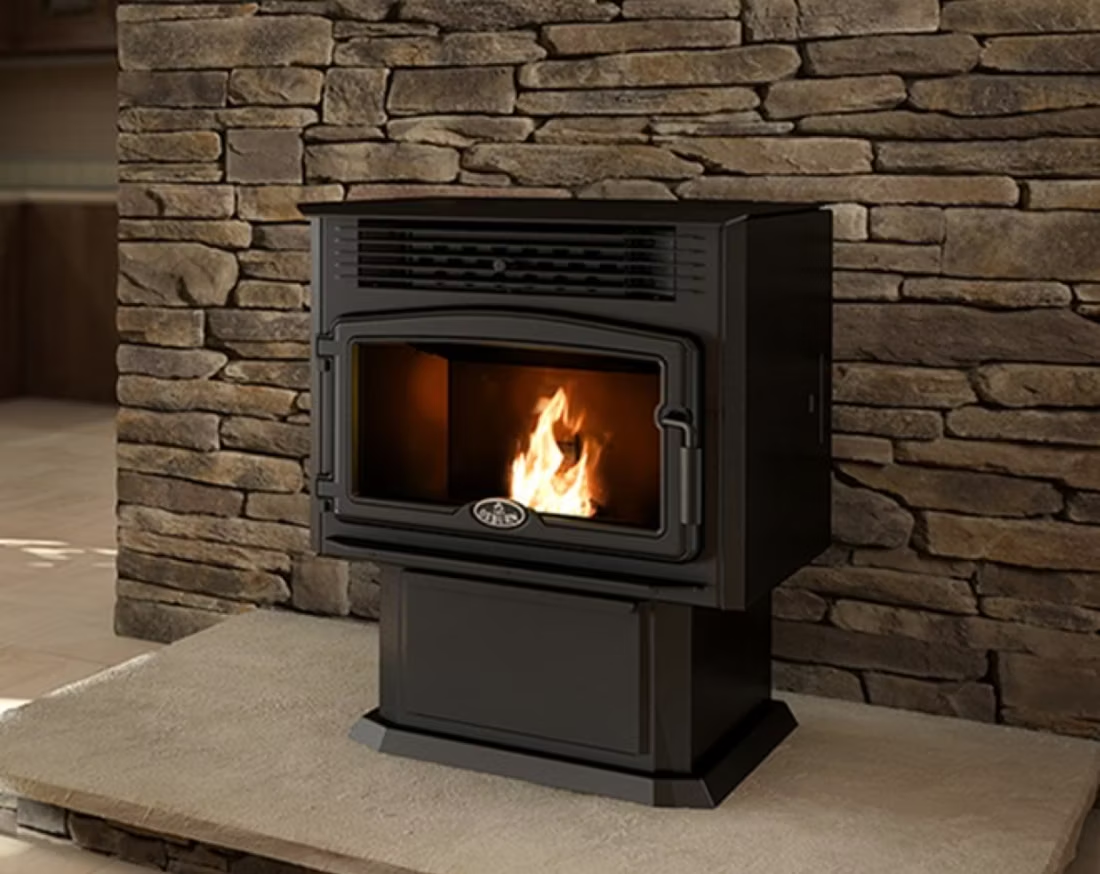
That doesn't mean pellet stoves never show up here. A handful of homeowners install one for a hunting or fishing camp without central heat, a rural property with an unreliable propane refill schedule, or simply as backup after a February freeze like Winter Storm Uri knocked out power and heat across the ERCOT grid. Regional pellet brands like Forest Energy and Lignetics are sold through farm and feed stores in the wider Houston-Rosenberg area rather than dedicated Wharton County hearth shops, so sourcing fuel takes a bit more planning than in a colder part of the state. If you're set on pellet heat for a specific use case, a local dealer can still get you a properly sized, correctly vented unit—we just won't pretend it's the obvious choice for most Wharton County homes.
Three steps. No salesperson until you're ready.
Tell us about your project
Your zip code, your situation, and the fuel you're leaning toward—or let the answers point you to one.
See what's actually available
The brands dealers within 100 miles genuinely carry—real options, never a catalog mirage.
Get your dealer & Project Guide
A trusted local dealer, plus the free Project Guide & Parts List that names every component of the job.
Frequently Asked Questions
How much does a pellet stove installation cost in Wharton County?
Because so few Wharton County homes install pellet stoves, there isn't a deep local pricing history the way there is for gas fireplaces, but a typical freestanding pellet stove with venting nationally runs in the neighborhood of $3,000 to $6,000 installed, depending on the unit and whether new venting has to be run through a wall or roof. Homes without any existing chimney or flue—common in the ranch-style and manufactured homes typical across the county—will land toward the higher end once the vent kit and wall penetration are added. A local dealer can give you a firm number once they've seen the space.
Does it actually make sense to install a pellet stove in Wharton County?
For most homes here, no—with only 1,214 heating degree days and winter lows averaging 42°F, a properly sized central system or a small supplemental heater covers the handful of genuinely cold nights each year. Where a pellet stove earns its place is narrower: a hunting camp near the Colorado River bottomland without central heat, a rural property outside El Campo or Louise that wants backup warmth during an occasional hard freeze, or a household that remembers losing power and heat during Winter Storm Uri in February 2021 and wants a standalone option. If that's your situation, a local dealer can help you decide if pellet is the right tool or if a different fuel fits better.
Do I need a permit to install a pellet stove in Wharton County?
Most jurisdictions require a building permit for any new fuel-burning appliance, including pellet stoves, and Wharton County's permitting office is no exception—expect to need sign-off on the vent path and clearances even for a freestanding unit. Because pellet installs are uncommon locally, it's worth confirming with your contractor that they've pulled this specific type of permit before, since many county inspectors see far more gas fireplace and HVAC permits than pellet stove ones.
Where can I actually buy pellet stove fuel near Wharton County?
You won't find a dedicated pellet fuel retailer in most of Wharton County the way you would in a colder climate. Regional brands like Forest Energy and Lignetics are typically available through farm and feed supply stores or hardware retailers in the greater Houston-Rosenberg corridor, and some owners buy several tons at once during fall to avoid repeat trips. If you're seriously considering a pellet stove for a camp or rural property, ask your local dealer where they source bags before you commit—reliable fuel access matters more here than the stove itself.
Pellet vs. gas vs. electric—what actually makes sense in Wharton County?
Given how mild the heating season is here, gas and electric fireplaces are the standard choices for a reason: both are widely stocked by local dealers, both require no fuel storage or delivery planning, and both can be sized as a small supplemental unit rather than a full heating appliance. A direct-vent gas fireplace or a plug-in electric insert covers ambiance and the occasional cold snap without asking you to manage pellet bags or hopper cleaning. Pellet only pulls ahead in a narrow set of cases—an off-grid camp, or a strong personal preference for that stove-style look and feel—and even then, most local dealers will walk you through the tradeoffs honestly rather than just sell you a pellet unit.
What size pellet stove would I even need in Wharton County?
Smaller than you'd guess. With winter lows averaging 42°F and only 1,214 heating degree days, most homes need supplemental heat for a room or two on the coldest nights, not a whole-house solution. A compact pellet stove rated for 800-1,200 square feet is more than enough for a typical camp or rural living area here—sizing for a full 2,000+ square foot heating load, the way you might in a genuinely cold climate, would leave the unit running on its lowest setting almost year-round.
Does Gulf Coast humidity cause problems storing pellet fuel?
Yes, and it's one of the bigger practical headaches of running a pellet stove in a county like this. Wharton County's humidity is high most of the year, and wood pellets absorb moisture readily, swelling, crumbling, and losing their burn quality if bags aren't kept sealed and off a damp floor. If you go this route, plan on airtight storage—a sealed bin in a dry outbuilding or garage—rather than stacking bags in an open shed, and buy in quantities you'll actually burn within a season rather than stockpiling for years.
Will a pellet stove still work if the power goes out?
No, and this is worth understanding before you buy one for backup heat. Pellet stoves rely on an electric auger to feed fuel and a blower to distribute heat, so when the power goes out, the stove stops—which is exactly the scenario many Wharton County households were thinking about after Winter Storm Uri caused widespread ERCOT outages during the February 2021 freeze. If backup heat during a grid failure is your main goal, a wood-burning option or a gas fireplace with battery-backup ignition is generally a more reliable choice than pellet.
Are there rebates or efficiency incentives for a pellet stove in Wharton County?
There's no dedicated Wharton County pellet rebate program, and given how little the county relies on pellet heat, don't expect the kind of state-level incentives you'd see in a colder state. It's still worth asking your utility provider and checking current federal tax credit rules for biomass-fueled stoves, since national credits change from year to year and can apply regardless of your local climate. A local dealer who's filed the paperwork before is often the fastest way to confirm what actually applies to your specific unit.
Why is my open fireplace making my house colder?
Open fireplaces suck—literally. As the fire burns, it consumes air your furnace already paid to heat and pulls it out through the chimney, so the house is actually colder after the fire goes out than before you lit it. An insert fixes this: it seals the chimney, puts fixed glass across the front, and turns that hole in your house into a real heat source.
What's the difference between an insert and a zero-clearance fireplace?
An insert is a fireplace that slides into a pre-existing wood-burning fireplace—if you don't have one, there's nothing to insert it into. A zero-clearance fireplace is built into a framed wall, which makes it the answer for remodels and new construction. Simple test: existing masonry fireplace means insert; blank or framed wall means zero-clearance.
How much should I budget for a fireplace?
For an average home—covering the fireplace, the vent pipe, and basic installation—a budget between $3,900 and $5,500 gives you a lot of options across wood, gas, and pellet. By the time you add finish work, gas line, and electrical, the average complete installation lands between $5,000 and $12,000 all-in. In a remodel or new build, a good rule is to put about 2.5% of the total project cost toward the fireplace.
Can I install a fireplace myself?
If you're putting a fire in your house on purpose, it's best to work with an expert. Unless you're genuinely experienced in framing, gas line, vent pipe, and the national code on clearances to combustibles, have a professional do it—and ideally the same company that sells you the fireplace, so warranty, service, and liability all live under one roof.
Stove and Fireplace Dealers in Wharton County
Listings include WhyFire partner dealers, dealers we have verified as authorized for the brands we recommend, and established local businesses that carry hearth products. Every listing shows which one it is. The ones marked Preferred run on WhyFire's software, so they can show you real pricing and book your appointment right here. No manufacturer pays for placement. How we verify dealers →
Patio 1
Fireplaces By Roye
Patio 1
All Thingz U Need Inc
EarthCore Industries
USA Supreme Services, LLC
Tru Lite Gas Products
South Texas Brick
Pellet Brands Stocked Around Wharton County
Manufacturers will point you to the nearest stocking dealer.
Get your free Wharton County pellet stove Project Guide & Parts List.
Tell me about your property and how you plan to use the stove—camp, backup heat, or a rural home off the gas line—and I'll match you with a trusted local dealer and send a free Project Guide & Parts List: the exact equipment, vent kit, and recommended installer for your pellet project in Wharton County.
Find Your Fireplace →