
Find the right gas fireplace for a Wharton County home.
Mild Gulf Coast winters mean Wharton County homeowners want ambiance and occasional real heat, not a furnace substitute. Find the right gas unit and connect with a trusted local dealer.
Every Project Starts From One of These Five Situations
Ambiance first, with real heat on the rare cold snap.
Wharton County sits in climate zone 2A on the Texas Gulf Coast plain, where winter lows average around 42°F and the county sees only a light, short winter heating season a year—a fraction of what a place like Fargo, ND sees in a single hard month. That's not a climate that demands a primary heat source. It's a climate where a gas fireplace earns its place as the visual centerpiece of a living room, and occasionally proves its worth during the county's periodic hard freezes, when a norther drops temperatures well below the seasonal average and the grid gets stressed.
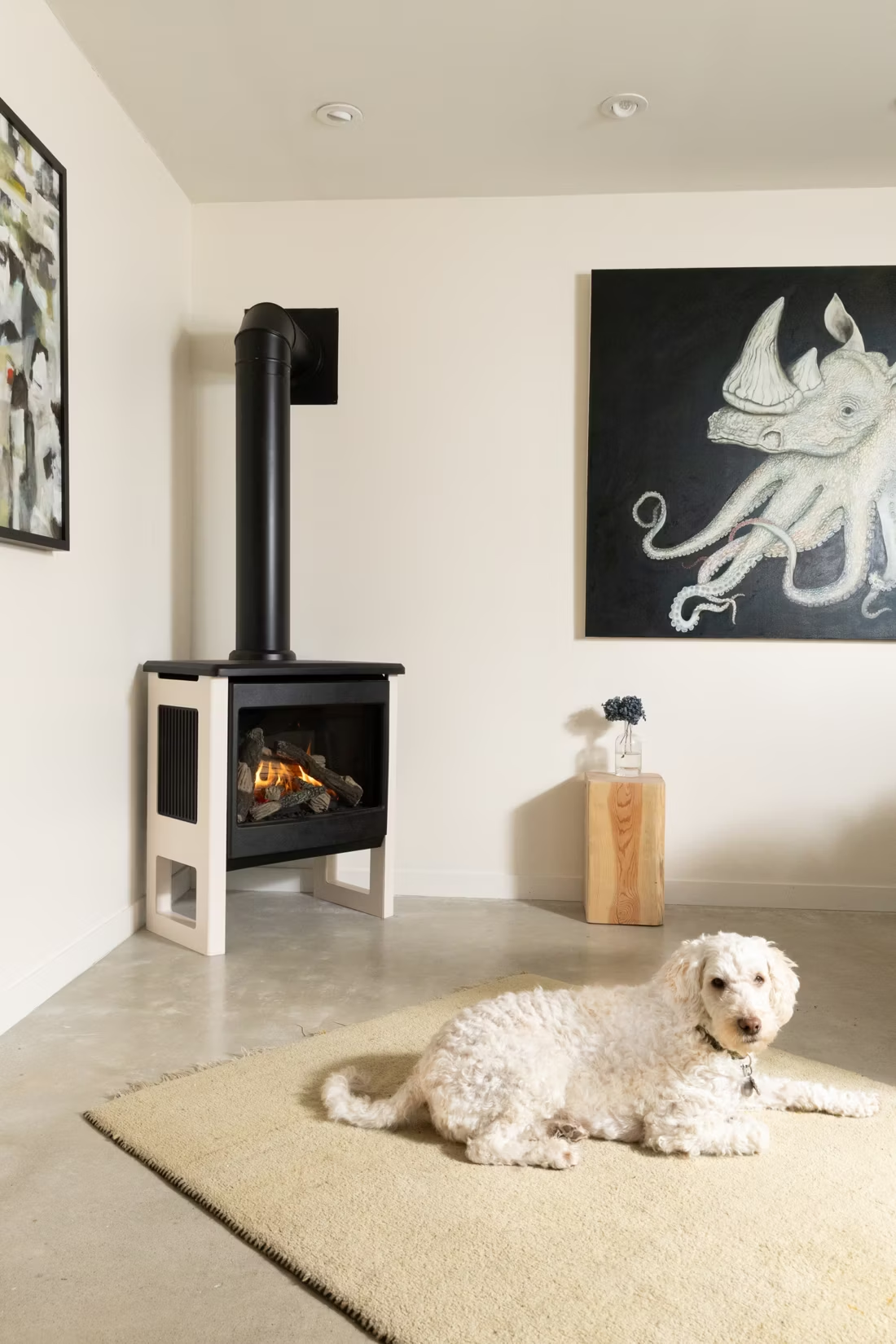
Wood heat and pellet stoves have essentially no foothold here—nobody in Wharton, El Campo, or East Bernard is heating a home with cordwood or hopper-fed pellets when winter barely arrives. Gas is different. Homes across the county run on a mix of natural gas and propane depending on location, and a direct-vent gas fireplace or insert gives you instant flame at the flip of a switch, a finished look for a remodel, and—with the right ignition system—heat that keeps working even if the power drops during a freeze event.
Three steps. No salesperson until you're ready.
Tell us about your project
Your zip code, your situation, and the fuel you're leaning toward—or let the answers point you to one.
See what's actually available
The brands dealers within 100 miles genuinely carry—real options, never a catalog mirage.
Get your dealer & Project Guide
A trusted local dealer, plus the free Project Guide & Parts List that names every component of the job.
Frequently Asked Questions
How much does a gas fireplace installation cost in Wharton County?
Costs in Wharton County generally track national averages for direct-vent gas units, typically running from the low thousands for a straightforward insert into an existing masonry fireplace to considerably more for a new built-in unit with fresh gas line and venting work in a remodel. Homes on propane rather than natural gas may see added cost if a new tank or line run is required. Because gas fireplaces here are usually installed for ambiance and occasional use rather than daily heating, many homeowners choose a mid-range direct-vent insert rather than a larger appliance sized for constant winter operation. A local retailer can give a firm number after seeing your existing fireplace or framing.
Is wood heat or a pellet stove ever a good fit in Wharton County?
Rarely. With winter lows averaging around 42°F and only a light, short winter heating season a year, Wharton County simply doesn't get the sustained cold that makes wood or pellet heat practical as anything more than a novelty. A small number of rural properties with oak, pecan, or mesquite on the land might keep an outdoor fire pit or occasional wood-burning unit for atmosphere, but it's not something local hearth dealers stock or recommend as a heating solution. If you want real, reliable heat with visual warmth, gas is the fuel that actually fits this climate.
Do I need natural gas, or can I run a fireplace on propane?
Either works, and which one you use depends mostly on where you live in the county. Homes inside city limits in Wharton or El Campo with existing natural gas service can often add a fireplace to that line with minimal extra work. Homes further out in unincorporated parts of the county are more likely to run on propane, either from an existing tank serving the house or a new tank set up specifically for the fireplace. Most direct-vent fireplace models can be configured for either fuel—your installer sets the correct orifice and regulator for whichever you have.
Will my gas fireplace still work if the power goes out?
It depends on the ignition system. Units with intermittent pilot ignition (IPI) include a battery backup that keeps the fireplace operating on demand even without grid power—which matters in Wharton County during the occasional winter freeze event when ERCOT-area outages have made headlines in recent years. Some manufacturers, including Valor, use a pilot-generated electrical system that needs no batteries at all. If backup heat during a cold snap is a real consideration for your household, ask your local dealer specifically about the ignition system on any unit you're considering, since not all models handle outages the same way.
What's the difference between a gas fireplace, insert, and stove?
A gas fireplace is a fully built-in unit framed into a wall, typically chosen for new construction or a larger remodel. A gas insert is sized to slide into an existing masonry fireplace opening, converting an old wood-burning firebox into a sealed, efficient gas unit that vents through the existing chimney with a liner. A gas stove is a freestanding cabinet-style unit that sits out from the wall. For the many older homes around Wharton and East Bernard with an existing brick fireplace that rarely gets used for wood, an insert is usually the simplest and most cost-effective upgrade.
Do I need a permit to install a gas fireplace in Wharton County?
Yes, in most cases—a building permit and, for the gas line work, a permit tied to a licensed gas-fitter or plumber, with jurisdiction depending on whether the home is inside Wharton, El Campo, East Bernard, or unincorporated county land. Most established hearth dealers coordinate this as part of the installation rather than leaving the homeowner to track down separate trades and inspections. If you're doing a full fireplace conversion or adding gas service to a home that didn't previously have it, expect the permitting step to take a bit longer than a straightforward insert swap.
Vented vs. vent-free gas fireplaces—which should I choose?
Vented (direct-vent) units draw combustion air from outside and exhaust it back outside through a sealed pipe, which is why they're the standard, code-accepted choice nearly everywhere, including throughout Wharton County. Vent-free units burn directly into the room without external venting; they're legal in Texas but come with strict room-sizing requirements and an oxygen depletion sensor, and some other states restrict them outright. Given how mild winters are here, some homeowners are drawn to vent-free for the lower installation cost and lack of venting work, but a direct-vent unit still delivers a cleaner, more consistent result without any indoor air quality tradeoffs. Ask your local dealer to walk through both if cost is the deciding factor.
How often should a gas fireplace be serviced in Wharton County?
An annual check is the standard recommendation, even in a climate like Wharton County's where the fireplace might only run occasionally through a mild winter and a handful of cold fronts. A technician checks the burner, pilot assembly, venting, and any electronic ignition components, and cleans the glass and interior. Units that see light seasonal use still accumulate dust and spider webs in the burner assembly over a Gulf Coast summer, so skipping the annual service isn't a shortcut worth taking even if the fireplace barely ran the winter before.
Gas fireplace vs. electric fireplace—which fits a Wharton County home better?
Gas delivers real, felt heat and the look of an actual flame, and with the right ignition system it can still run during a power outage—relevant during the county's occasional hard freeze. Electric fireplaces need no venting or gas line at all, install almost anywhere with a standard outlet, and cost far less upfront, but they rely entirely on grid power and produce heat via a resistive element rather than combustion. For a primary living room centerpiece in a Wharton or El Campo home, gas tends to win on look and heat output. For a bedroom, rental property, or a secondary room where installation simplicity matters more than authentic flame, electric is often the practical choice.
What's the difference between an insert and a zero-clearance fireplace?
An insert is a fireplace that slides into a pre-existing wood-burning fireplace—if you don't have one, there's nothing to insert it into. A zero-clearance fireplace is built into a framed wall, which makes it the answer for remodels and new construction. Simple test: existing masonry fireplace means insert; blank or framed wall means zero-clearance.
Can I put a TV above my fireplace?
Yes—with an asterisk. Fireplaces are hot and TVs don't like heat. Either put a mantel between them to deflect rising warmth, or choose a fireplace with heat-management technology that creates a cool zone on the wall above—the wall stays around 125 degrees, barely warm, while the room still gets full heat. If you like clean lines and don't want a mantel, heat management is the answer.
Can I install a fireplace myself?
If you're putting a fire in your house on purpose, it's best to work with an expert. Unless you're genuinely experienced in framing, gas line, vent pipe, and the national code on clearances to combustibles, have a professional do it—and ideally the same company that sells you the fireplace, so warranty, service, and liability all live under one roof.
Does a fireplace add value to my home?
On average, a fireplace adds back to the home about the same amount you spent installing it. Add the monthly savings from heating the rooms you actually use instead of the whole house—often hundreds of dollars a year—and the value case is strong before you even count what a fire does for how your family uses the room.
Stove and Fireplace Dealers in Wharton County
Listings include WhyFire partner dealers, dealers we have verified as authorized for the brands we recommend, and established local businesses that carry hearth products. Every listing shows which one it is. The ones marked Preferred run on WhyFire's software, so they can show you real pricing and book your appointment right here. No manufacturer pays for placement. How we verify dealers →
Patio 1
Fireplaces By Roye
Patio 1
All Thingz U Need Inc
EarthCore Industries
USA Supreme Services, LLC
Tru Lite Gas Products
South Texas Brick
Get matched with a local Wharton County gas fireplace dealer.
Tell us about your home and project, and we'll match you with a trusted local dealer and send over a free Project Guide & Parts List—the exact parts, including the vent kit, for your gas fireplace project.
Find Your Fireplace →