
Gas Fireplace Warmth for Wharton's Mild Winters.
On the Gulf Coastal Plain, a gas fireplace is more about ambiance and backup warmth during cold snaps than daily heating. Find the right unit and get matched with a trusted local dealer.
Every Project Starts From One of These Five Situations
Ambiance first, heat second—and that's the honest pitch here.
Wharton sits at just 104 feet elevation on the Gulf Coastal Plain, about an hour southwest of Houston, in rice and cotton country along the Colorado River. Winters here are mild—the average winter low is 42°F and the area sees only a short, light winter heating season. Compare that to a place like Fargo, ND, which endures a long, brutal winter heating season nearly the whole year through, and it's clear a fireplace in Wharton isn't doing the same job it does up north. Most of the year, a gas fireplace here is about the glow and the gathering, not survival heat.
That said, gas has a real practical case in Wharton beyond looks. Texas has seen what happens to the grid during hard freezes—the February 2021 winter storm left much of the state, including Wharton County, without power for days. A gas fireplace with a standing pilot or battery backup keeps working when the electricity doesn't, which matters even in a county where AEP Texas Central, CenterPoint Energy, and Jackson Electric Cooperative are the primary providers and the average residential rate runs around 13.4¢/kWh. CenterPoint also distributes natural gas in parts of the Gulf Coast region, while homes outside city limits or served by the rural electric co-op more often rely on propane tanks.
Three steps. No salesperson until you're ready.
Tell us about your project
Your zip code, your situation, and the fuel you're leaning toward—or let the answers point you to one.
See what's actually available
The brands dealers within 100 miles genuinely carry—real options, never a catalog mirage.
Get your dealer & Project Guide
A trusted local dealer, plus the free Project Guide & Parts List that names every component of the job.
Frequently Asked Questions
How much does a gas fireplace installation cost in Wharton?
Most gas fireplace installations in Wharton run between $3,500 and $8,500, depending on whether you're installing a vent-free log set into an existing masonry fireplace (the lower end), a direct-vent insert, or a full built-in unit with new venting and gas line work (the higher end). Because Wharton's mild winters mean many homeowners want a fireplace primarily for looks and occasional use rather than serious heat output, vent-free gas log sets are a common, lower-cost choice here. A local dealer can give you a firm number after seeing your existing chimney or framing.
I have an old masonry fireplace that I never use—can I convert it to gas?
Yes, and it's one of the most common projects in Wharton's older homes, many of which have a brick fireplace that was built for looks or occasional oak or pecan fires and rarely gets lit given how short and mild the cold season is. Converting to a vented or vent-free gas log set typically runs $2,500 to $6,000, depending on whether the flue needs relining and whether you're on natural gas or propane. It keeps the existing brick surround and firebox while giving you instant on-off flame with none of the ash or creosote upkeep.
Is natural gas or propane more common for fireplaces in Wharton?
It depends on where in the county you are. CenterPoint Energy distributes natural gas in parts of the greater Gulf Coast region including some in-town Wharton addresses, so homes already on natural gas for cooking or water heating can often add a fireplace without much extra plumbing. Outside the city limits, and in areas served by Jackson Electric Cooperative for power, propane tanks are the more typical setup—a local propane supplier delivers and maintains the tank, and most gas fireplace models can be configured to run on either fuel. Your dealer will confirm which is available at your address before recommending a unit.
Will a gas fireplace keep working if the power goes out?
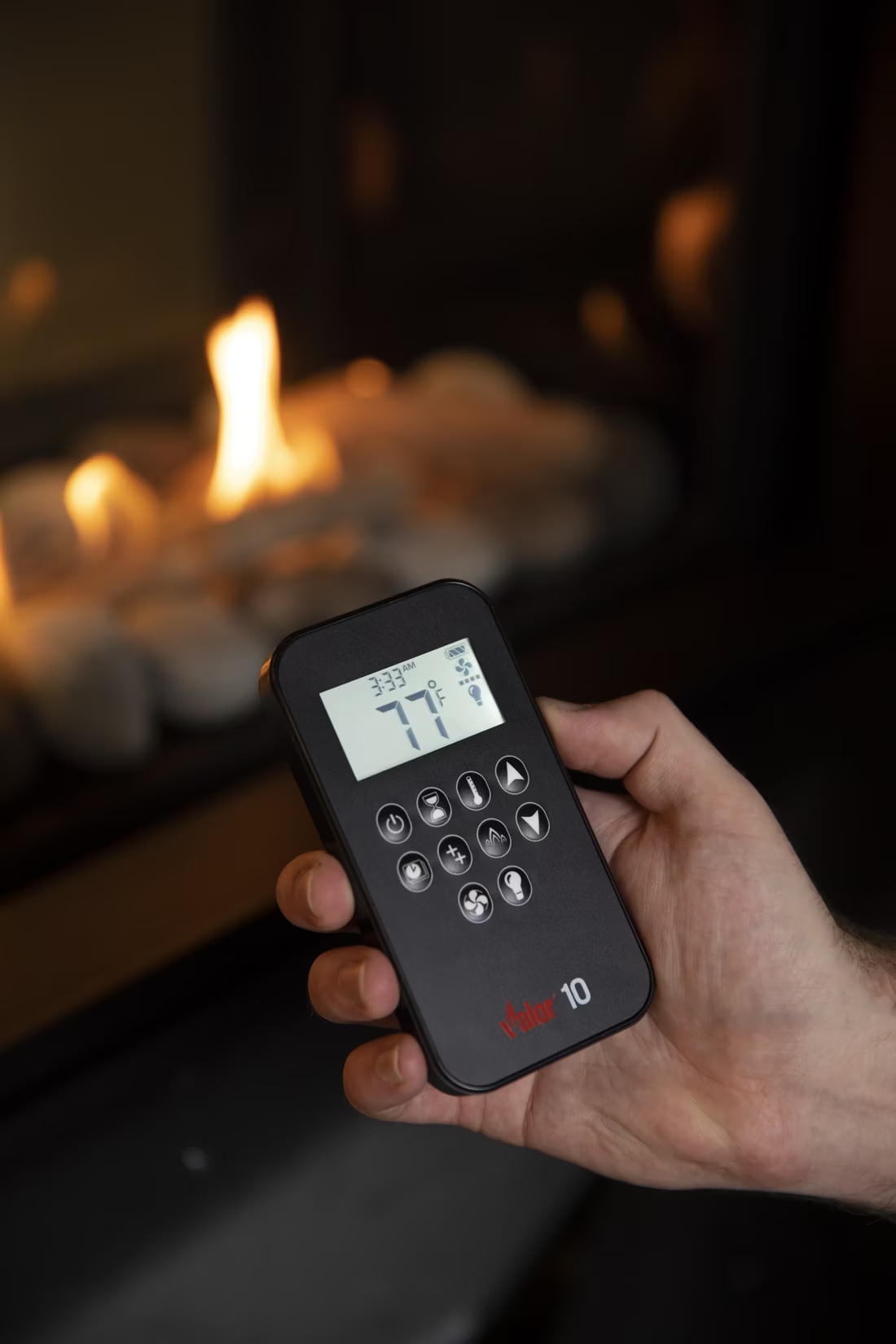
Most will, which is a real consideration in a county that felt the effects of the February 2021 ERCOT grid failure firsthand. Units with intermittent pilot ignition (IPI) run on battery backup and light on demand even with no utility power, as long as the batteries are fresh. Valor fireplaces take a different approach—their pilot assembly generates its own electricity through the thermocouple, so there's no battery to remember at all. For a Wharton home that wants a heat source that doesn't depend on the grid during the next hard freeze, that's worth asking your dealer about specifically.
What's the difference between a gas fireplace, gas insert, and gas stove?
A gas fireplace is a fully built-in unit framed into a wall—the right choice for new construction or a remodel. A gas insert drops into an existing masonry firebox, using your current chimney as the vent path, which suits many of Wharton's older ranch-style homes with a brick fireplace already in place. A gas stove is a freestanding cabinet-style unit that sits on the floor, useful when you want supplemental warmth in a sunroom or addition without opening up a wall. Given how many Wharton homes already have a fireplace they rarely use for wood, an insert or a simple log set conversion is usually the most cost-effective path.
Do I need a permit to install a gas fireplace in Wharton?
In most cases, yes—a building permit through the City of Wharton (or Wharton County for homes outside city limits) is required for new gas line runs and any structural work tied to venting. A licensed gas-fitter is required for the gas line itself regardless of jurisdiction. Local hearth dealers who install regularly in the area typically pull the permit and coordinate the gas-fitter as part of the job, so you're not left managing separate trades and inspections yourself.
Should I get a vented or vent-free gas fireplace in Wharton?
Vent-free (unvented) gas log sets are legal in Texas and popular in mild-climate areas like Wharton, where the fireplace is mostly used for evening ambiance and the occasional cold snap rather than sustained heating. They install without exterior venting, which keeps costs down for retrofits into an old masonry firebox. Vented direct-vent units cost more and require running a vent, but they burn cleaner into the outdoors and put out more real heat if you do want to warm a room during one of the area's occasional freezes. A local dealer will walk through both options and the room-sizing rules that apply to vent-free installs.
How often does a gas fireplace need to be serviced in Wharton?
An annual inspection is recommended even in a climate like Wharton's, where a fireplace might only get lit a few dozen times a year. A technician checks the pilot, burner, gas connections, and glass, and confirms the venting (if any) is clear—wasps and other insects nesting in an unused vent cap over a long Gulf Coast summer are a common issue found during these visits. Expect to pay around $125 to $200 for a standard annual service call from a local hearth or gas appliance technician.
Should I consider a wood-burning fireplace instead of gas?
Probably not as a primary option. Oak, pecan, and mesquite are all plentiful locally—mesquite in particular is prized for barbecue smoking—but with only a short, light winter heating season and winter lows averaging 42°F, sustained wood-burning for heat is essentially unheard of in Wharton. A handful of rural homeowners keep a wood-burning unit for atmosphere or for backup during a hard freeze, but most who want that look go with a gas log set instead: same visual warmth, none of the ash, creosote, or year-round wood storage that make less sense in a climate this mild. Gas is the practical choice for the vast majority of homes here.
Can I put a TV above my fireplace?
Yes—with an asterisk. Fireplaces are hot and TVs don't like heat. Either put a mantel between them to deflect rising warmth, or choose a fireplace with heat-management technology that creates a cool zone on the wall above—the wall stays around 125 degrees, barely warm, while the room still gets full heat. If you like clean lines and don't want a mantel, heat management is the answer.
What's the difference between radiant and convective fireplace heat?
Most fireplaces are a thin metal box—they heat fine, but you rely on the fan to move the warmth into the room. Radiant models use a thick cast-ceramic firebox, about an inch and a quarter thick, that soaks up the fire's heat and radiates roughly 25–30% more warmth into the room with no fan running. If you watch TV in the same room or want heat in a power outage, radiant is worth asking about.
How much should I budget for a fireplace?
For an average home—covering the fireplace, the vent pipe, and basic installation—a budget between $3,900 and $5,500 gives you a lot of options across wood, gas, and pellet. By the time you add finish work, gas line, and electrical, the average complete installation lands between $5,000 and $12,000 all-in. In a remodel or new build, a good rule is to put about 2.5% of the total project cost toward the fireplace.
Does a fireplace add value to my home?
On average, a fireplace adds back to the home about the same amount you spent installing it. Add the monthly savings from heating the rooms you actually use instead of the whole house—often hundreds of dollars a year—and the value case is strong before you even count what a fire does for how your family uses the room.
Nearby Dealers
Hearth shops serving Wharton and the surrounding area. Every listing shows whether it is a WhyFire partner, a dealer we have verified as authorized for the brands we recommend, or a local business carrying hearth products. No manufacturer pays for placement. How we verify dealers →
Fireplaces By Roye
Patio 1
Find your gas fireplace in Wharton.
Tell us a bit about your home and we'll match you with a trusted local Wharton dealer and send over a free Project Guide & Parts List—the exact parts, including the vent kit, for your gas fireplace project.
Find Your Fireplace →