
Fireplace Warmth Built for Mild Hill Country Winters.
West Lake Hills winters rarely dip below the low 40s, so electric is the cleanest way to get real flame-look ambiance and the occasional supplemental heat a Hill Country home actually needs.
Every Project Starts From One of These Five Situations
Real ambiance without smoke, gas lines, or venting.
West Lake Hills sits at roughly 864 feet in the Travis County Hill Country, with average winter lows around 42°F and just under 1,500 heating degree days a year—a fraction of what a place like Duluth, MN sees in a single month. Wood and pellet stoves, workhorses across colder parts of the country, see almost no real demand here, and the drought-prone, Ashe juniper-and-oak hillsides that define this suburb aren't the place for spark-throwing appliances anyway. Electric fireplaces fill the actual need: a warm-looking flame for most of the year and genuine supplemental heat on the handful of nights that dip into the 20s and 30s.
West Lake Hills is known for custom hillside homes and architectural-review-heavy remodels, and electric units fit that world well—no chimney, no gas line, no venting to route through a cantilevered great room or a cedar-clad addition, just a dedicated circuit an electrician can run in an afternoon. Two co-ops serve most of the area, Bluebonnet Electric Cooperative and Pedernales Electric Cooperative, with residential rates in the 11-to-12-cent-per-kWh range, so running cost stays modest even for larger linear units used daily.
Three steps. No salesperson until you're ready.
Tell us about your project
Your zip code, your situation, and the fuel you're leaning toward—or let the answers point you to one.
See what's actually available
The brands dealers within 100 miles genuinely carry—real options, never a catalog mirage.
Get your dealer & Project Guide
A trusted local dealer, plus the free Project Guide & Parts List that names every component of the job.
Frequently Asked Questions
How much does an electric fireplace installation cost in West Lake Hills?
Most electric fireplace projects in West Lake Hills run $400 to $2,500. A plug-in insert or mantel package that uses an existing outlet sits at the low end. A built-in linear wall unit or a custom millwork surround—common in the area's newer hillside builds—runs higher once an electrician adds a dedicated 120V or 240V circuit and a finish carpenter frames the surround. Because these are low-voltage, no-venting projects, they're consistently the least expensive fireplace category to install, even in a higher-end market like this one.
Do I need a permit to install an electric fireplace in West Lake Hills?
A simple plug-in unit typically doesn't require a permit. But if the project involves adding a new electrical circuit or altering a wall for a built-in linear fireplace, the City of West Lake Hills Building Department will want an electrical permit, and many properties here also fall under HOA or architectural review given the hillside lot restrictions common in the area. A licensed electrician pulling the permit and a local hearth dealer coordinating the install is the easiest way to keep the project compliant without you having to chase paperwork.
Electric vs. gas—which makes more sense for a West Lake Hills home?
Gas fireplaces are common here too, usually run on propane where natural gas service isn't available on a given street, and they put out more real heat if you want a unit that can genuinely warm a room on a 30-degree night. Electric skips the gas line, tank, and annual burner service entirely, and it's the simpler retrofit for a remodel, a media wall, or a primary suite where you mostly want the look and a little supplemental warmth. Given how mild winters run here—average lows in the low 40s—a lot of homeowners choose electric specifically because they never needed serious heat output in the first place.
Will an electric fireplace actually heat a room, or is it just for looks?
Most residential electric fireplaces put out 4,000 to 5,000 BTUs, enough to noticeably warm a 300-to-400-square-foot room, which covers a bedroom, home office, or den. It won't replace central HVAC for the whole house, but with only about 1,442 heating degree days a year in West Lake Hills, most homeowners aren't asking it to—they're using it to take the chill off a single room on a cold snap while central heat handles the rest of the house.
What type of electric fireplace fits a West Lake Hills home best?
Built-in linear units are popular in the newer hillside and remodel projects around West Lake Hills, since they fit flush into a media wall or custom surround and read as a modern architectural feature rather than an appliance. Mantel-style electric fireplaces work well in more traditional homes or as a lower-cost upgrade to an existing room. Freestanding electric stoves are the rare choice here—they're better suited to colder-climate homes that want a stove-like footprint, which isn't the typical West Lake Hills request.
How much does it cost to run an electric fireplace here?
A typical 1,500-watt electric fireplace run on the heat setting for 5 hours costs roughly 90 cents to a dollar, based on the 11.42-to-12.22-cent-per-kWh residential rates charged by Bluebonnet Electric Cooperative and Pedernales Electric Cooperative, the two co-ops serving West Lake Hills. Run in ambiance-only mode (flame effect, no heater), draw drops to under 100 watts, so the cost is negligible—most homeowners here run the flame effect year-round and only switch on the heater during the occasional cold snap.
Are electric fireplaces a good fit for a wildfire-prone hillside lot?
Yes, and it's a real consideration in this area. West Lake Hills sits on drought-prone, cedar-and-oak-covered terrain where wildfire risk is a genuine concern for homeowners and insurers alike. Electric fireplaces produce no open flame, no embers, and no chimney that needs spark arrestors or clearance from vegetation, which makes them a lower-risk choice than a wood-burning appliance on a wooded hillside lot—something worth mentioning if your homeowner's insurance carrier asks about heating appliances during underwriting.
Will my electric fireplace work if the power goes out?
No—electric fireplaces need power to run, so during an outage from either Bluebonnet Electric Cooperative or Pedernales Electric Cooperative, the unit will go dark along with everything else on the circuit. That's a real tradeoff compared to a wood-burning appliance, but given how mild West Lake Hills winters run, most homeowners aren't relying on the fireplace as emergency heat—it's there for daily ambiance and comfort, not storm survival.
Why isn't wood or pellet heat common in West Lake Hills?
Wood stoves and pellet stoves are built for climates with real sustained cold—think Bozeman, MT or Fargo, ND, where a single stove can carry a home's heat load for months. West Lake Hills averages just 1,442 heating degree days a year and winter lows around 42°F, so there's rarely enough sustained cold to justify a wood or pellet system, and the region's drought-and-wildfire conditions make an open-flame, ember-producing appliance a harder sell on most hillside lots. Electric fills the gap homeowners actually have: the look and feel of a fire without the fuel storage, venting, or fire risk.
Can I put a TV above my fireplace?
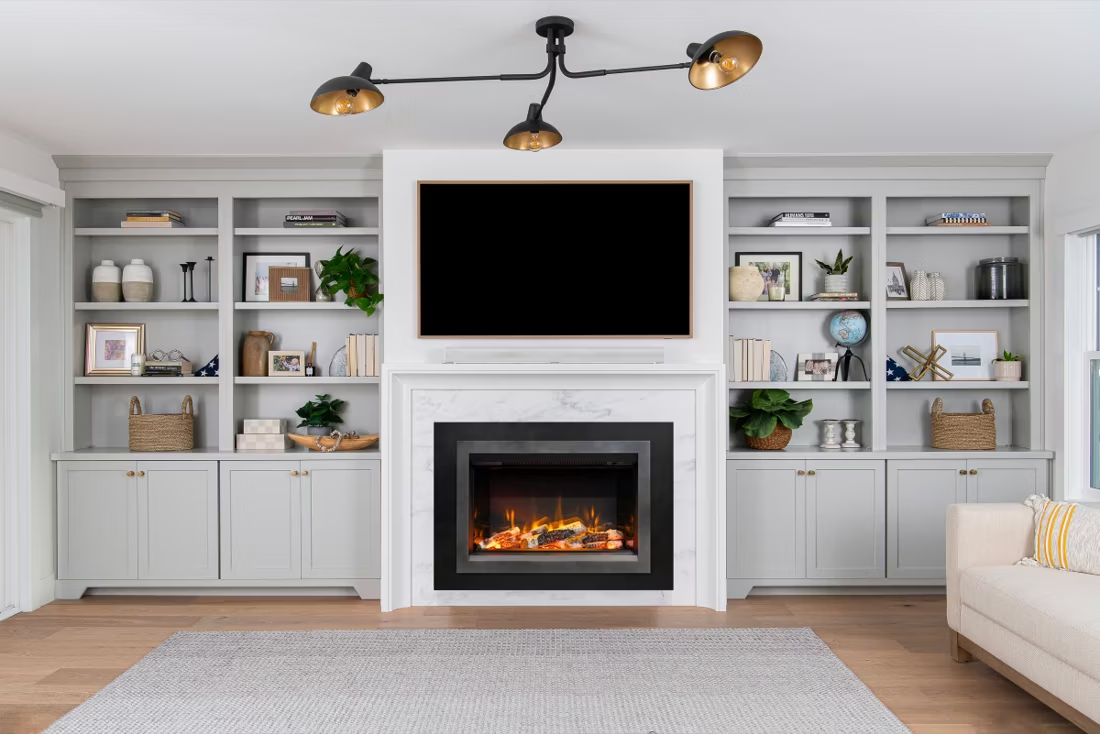
Yes—with an asterisk. Fireplaces are hot and TVs don't like heat. Either put a mantel between them to deflect rising warmth, or choose a fireplace with heat-management technology that creates a cool zone on the wall above—the wall stays around 125 degrees, barely warm, while the room still gets full heat. If you like clean lines and don't want a mantel, heat management is the answer.
Do electric fireplaces actually produce heat?
Yes—most put out around 4,800–5,000 BTUs from a standard outlet, which comfortably warms a bedroom, office, or den as a comfort-zone heater. What they won't do is carry a whole house the way wood, gas, or pellet can. Think of electric as ambiance-first with honest supplemental heat: flames on with no heat in July, flames plus warmth in January.
Does a fireplace add value to my home?
On average, a fireplace adds back to the home about the same amount you spent installing it. Add the monthly savings from heating the rooms you actually use instead of the whole house—often hundreds of dollars a year—and the value case is strong before you even count what a fire does for how your family uses the room.
What is an in-home preview and do I need one?
It's a visit where a hearth professional measures your space, confirms the model you picked actually works in your home, and walks the specs—framing, gas line, venting, finish work—before anything is ordered. Some details you just can't know until you see the house. Never make a down payment without one; it's the single most-skipped step that burns buyers.
Nearby Dealers
Hearth shops serving West Lake Hills and the surrounding area. Every listing shows whether it is a WhyFire partner, a dealer we have verified as authorized for the brands we recommend, or a local business carrying hearth products. No manufacturer pays for placement. How we verify dealers →
EarthCore Industries
Backyard & Patio Store - Austin
Tri-Supply - Austin
Jules Design Bar
Webco Distributing Company, Inc.
Crafted Flames
Gas Logs Express & Bbq
Parrish & Company Inc - Round Rock
Georgetown Energy
Quality Fire
Electric Service in West Lake Hills
An electric fireplace's heater draws about 1,500 watts—pennies per hour at local rates.
Bluebonnet Electric Coop, Inc
Pedernales Electric Coop, Inc
Find your electric fireplace in West Lake Hills.
Tell us a bit about your home and we'll put together a free Project Guide & Parts List—the right electric fireplace or insert for your space, plus a trusted local West Lake Hills-area dealer to install it.
Find Your Fireplace →