
Pellet Heat in West Columbia—Rare, But Not Impossible.
With winter lows averaging 47°F and only about 1,044 heating degree days a year, West Columbia isn't pellet-stove country. But for the right home or use case, one can still make sense—and we'll help you sort out whether yours is that home.
Every Project Starts From One of These Five Situations
West Columbia's mild winters make pellet heat the exception, not the rule.
West Columbia sits at just 35 feet of elevation on the Gulf Coastal Plain in Brazoria County, where winters are short and mild—average lows hover around 47°F, and the area logs roughly 1,044 heating degree days a year. Compare that to a place like Duluth, Minnesota, which racks up nearly 10,000 HDD in a typical winter, and it's clear why pellet stoves never became part of the local heating culture here. Most homes in West Columbia rely on central electric heat pumps or gas furnaces for the handful of genuinely cold nights each year, not a standalone hearth appliance.
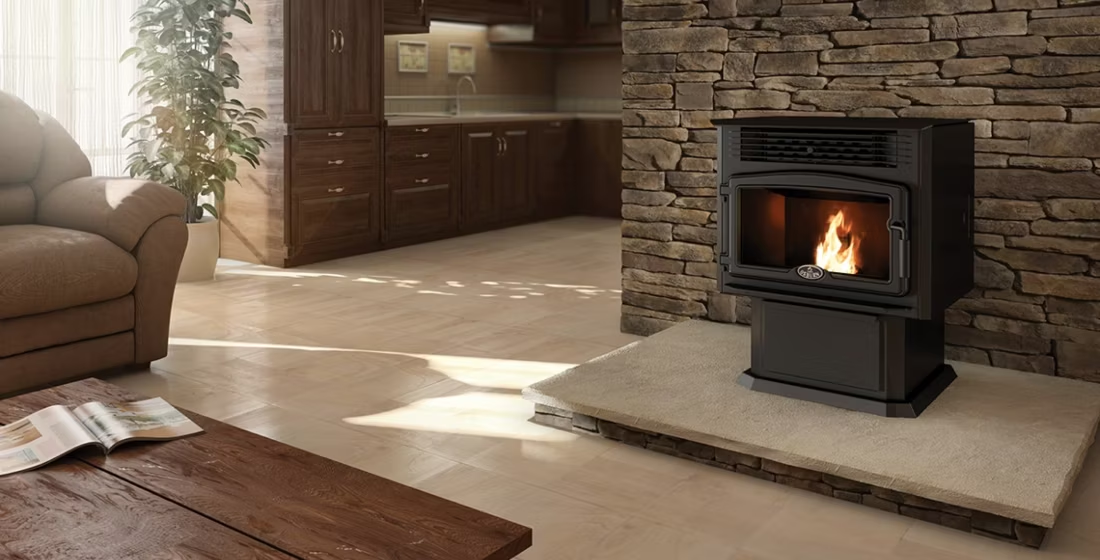
That said, a small number of homeowners here do install pellet stoves—usually for a sunroom, a workshop, a hunting camp elsewhere in the county, or simply for the look and ambiance of a real flame without the mess of cordwood. Regional pellet brands like Forest Energy and Lignetics are available through Texas retailers, though you'll find fewer stocking dealers this close to the coast than you would further north or inland. If you're considering one, it's worth going in with clear eyes about what a pellet stove will and won't do for a West Columbia home—and that's exactly what this page is for.
Three steps. No salesperson until you're ready.
Tell us about your project
Your zip code, your situation, and the fuel you're leaning toward—or let the answers point you to one.
See what's actually available
The brands dealers within 100 miles genuinely carry—real options, never a catalog mirage.
Get your dealer & Project Guide
A trusted local dealer, plus the free Project Guide & Parts List that names every component of the job.
Frequently Asked Questions
Are pellet stoves actually common in West Columbia?
No, and it's worth saying plainly: with an average winter low of 47°F and roughly 1,044 heating degree days a year, West Columbia doesn't have the sustained cold that makes pellet stoves a practical primary heat source. Most homes here run on electric heat pumps or gas central systems from CenterPoint Energy or a regional propane provider. The homeowners who do install pellet stoves in this area are usually adding one for a specific room, a detached structure, or aesthetic reasons rather than whole-home heating.
What does a pellet stove installation typically cost?
Nationally, a pellet stove installation—unit, venting, and labor—typically runs $3,000 to $6,000, with simpler installs on the lower end and units requiring new wall penetrations or hearth pad work landing higher. In a market like West Columbia where pellet demand is low, expect fewer local installers to choose from, which can mean a longer lead time or a slightly higher labor rate if the nearest qualified installer is coming from Angleton, Lake Jackson, or the greater Houston area. Get a firm, in-home quote before committing—this is not a fuel type where a generic online price is reliable.
Why would anyone install a pellet stove somewhere this warm?
A handful of legitimate reasons come up locally: a sunroom or converted garage that gets cold on the occasional 30-degree night, a detached workshop or she-shed without central HVAC, a second property in Brazoria County used seasonally, or simply wanting the visual and ambiance of a real fire without maintaining a wood-burning chimney. None of these are whole-house heating use cases—they're targeted, occasional-use installs, and that distinction should drive the size and model you choose.
Can a pellet stove keep my house warm if the power goes out, like during Winter Storm Uri?
This is the most important thing to understand before buying one here. Pellet stoves require electricity to run the auger that feeds fuel and the blower that pushes heat into the room—no power, no fire, regardless of how many pellets you have on hand. During events like the February 2021 ERCOT grid failure, a pellet stove without a battery backup or generator would have gone dark right along with everything else. If your goal is heat you can count on during a Texas grid emergency, a vented gas fireplace with a standing pilot, or a properly permitted propane appliance, is generally a more reliable choice for this specific concern than a pellet stove.
What size pellet stove makes sense for a sunroom or addition in West Columbia?
Because pellet stoves here are almost always supplemental rather than primary heat, most West Columbia installs are on the small end—units in the 20,000 to 30,000 BTU range are usually plenty for a single room, sunroom, or small addition given how mild the winters run. Going bigger than that for a space this size usually just means more cycling and wasted fuel. A local dealer can size it against your actual square footage and insulation rather than a rule of thumb.
Where do I buy pellets in or near West Columbia?
Because pellet stoves are uncommon this close to the coast, dedicated pellet retailers are thin on the ground locally. Regional brands like Forest Energy and Lignetics are distributed through farm supply and hardware chains across Texas, and feed stores in Brazoria County sometimes carry bagged pellets seasonally, but don't expect the year-round stocking you'd see in a colder market. Many West Columbia pellet-stove owners plan ahead and buy a season's worth at once, or order pallets directly from a distributor, rather than relying on walk-in restocking during a cold snap.
Would a gas fireplace make more sense than a pellet stove here?
For most West Columbia homes, yes. Gas service is well established through CenterPoint Energy and propane providers across Brazoria County, and a direct-vent gas fireplace or insert gives you instant, thermostat-controlled heat without needing electricity to feed fuel—a real advantage in a region that sees occasional grid stress during winter storms. Pellet stoves make more sense when you specifically want the look of a wood fire and don't have gas service readily available to the room in question. Talk through both options with a local dealer before you decide.
Do I need a permit, and what electrical work is involved?
Yes—a pellet stove installation typically requires a building permit through the City of West Columbia or Brazoria County, covering the venting penetration and hearth clearance requirements. You'll also need a dedicated electrical circuit for the stove's auger motor and blower, which your electrician will coordinate with whichever utility serves your address—Texas-New Mexico Power, CenterPoint Energy, or Jackson Electric Cooperative are all active in this part of Brazoria County. At the local residential rate of about $0.1342 per kWh, running the stove's electronics costs very little; the permit and wiring work is the bigger project than the ongoing power draw.
Can Find My Fireplace still help me if pellet stoves are rare in my area?
Yes. We're not a manufacturer or a retailer—we're a neutral matchmaker, and part of that job is telling you honestly when a fuel type is a niche fit for your climate, which pellet is in West Columbia. If you've thought it through and a pellet stove is still the right call for your sunroom, workshop, or weekend property, we'll match you with a trusted dealer who actually installs them in this region and send you a free Project Guide & Parts List—the specific parts, including the vent kit, and the dealer we recommend for your project.
What's the difference between an insert and a zero-clearance fireplace?
An insert is a fireplace that slides into a pre-existing wood-burning fireplace—if you don't have one, there's nothing to insert it into. A zero-clearance fireplace is built into a framed wall, which makes it the answer for remodels and new construction. Simple test: existing masonry fireplace means insert; blank or framed wall means zero-clearance.
How often does a pellet stove need cleaning?
A clean pellet stove is a happy pellet stove. Plan on cleaning the burn pot about once a week when you're burning regularly—ash and clinkers gum up the air holes just like a pellet barbecue. Most pellet stove problems trace back to skipped cleaning that nobody explained up front. Some designs make it easy with a trapdoor burn pot: pull a lever and the gunk drops into the ash pan.
How much should I budget for a fireplace?
For an average home—covering the fireplace, the vent pipe, and basic installation—a budget between $3,900 and $5,500 gives you a lot of options across wood, gas, and pellet. By the time you add finish work, gas line, and electrical, the average complete installation lands between $5,000 and $12,000 all-in. In a remodel or new build, a good rule is to put about 2.5% of the total project cost toward the fireplace.
What is an in-home preview and do I need one?
It's a visit where a hearth professional measures your space, confirms the model you picked actually works in your home, and walks the specs—framing, gas line, venting, finish work—before anything is ordered. Some details you just can't know until you see the house. Never make a down payment without one; it's the single most-skipped step that burns buyers.
Nearby Dealers
Hearth shops serving West Columbia and the surrounding area. Every listing shows whether it is a WhyFire partner, a dealer we have verified as authorized for the brands we recommend, or a local business carrying hearth products. No manufacturer pays for placement. How we verify dealers →
Fireplaces By Roye
Pellet Brands Stocked Around West Columbia
Manufacturers will point you to the nearest stocking dealer.
Find your pellet stove in West Columbia.
Tell us about your space and how you plan to use it, and we'll give you a straight answer on whether pellet is the right call—then match you with a trusted local dealer and a free Project Guide & Parts List for your project.
Find Your Fireplace →