
Find your fireplace for Brazoria County.
Fireplace resources for every city and rural community in Brazoria County—from Pearland to Freeport. With winter lows averaging 46°F and just over 1,000 heating degree days a year, this is a mild-climate county, and the right fireplace here looks different than it does further north.
Every Project Starts From One of These Five Situations
Mild winters, real heating needs, across Brazoria County, Texas.
Brazoria County sits in climate zone 2A along the Gulf Coast, where winter lows average 46°F and the county logs roughly 1,074 heating degree days a year—a fraction of what a place like Duluth, Minnesota racks up in a single hard month. Cold snaps do happen, and Winter Storm Uri in February 2021 showed how fast a Texas freeze can strain the grid and leave homes without power or heat for days. That event pushed more Brazoria County homeowners toward gas fireplaces and gas-log inserts that can run without electricity, and toward electric fireplaces for supplemental warmth in bedrooms and living rooms the rest of the year. Oak, pecan, and mesquite are common in the area's woodlots, but wood-burning fireplaces are largely decorative or absent here—the heating load simply doesn't call for a woodpile, and pellet stoves are similarly rare outside a handful of hobbyist installs.
What you'll find on this hub: hearth retailers, service technicians, and fuel suppliers serving every community in the county—from Pearland and Alvin in the north to Angleton, Lake Jackson, and Freeport along the coast, out to West Columbia and Sweeny. Pick your fuel below to drill into specifics—local dealers, installation costs, recommended units, and the resources that match your project. Whether you're adding a gas fireplace for outage backup or an electric unit for year-round ambiance, this is the starting point.
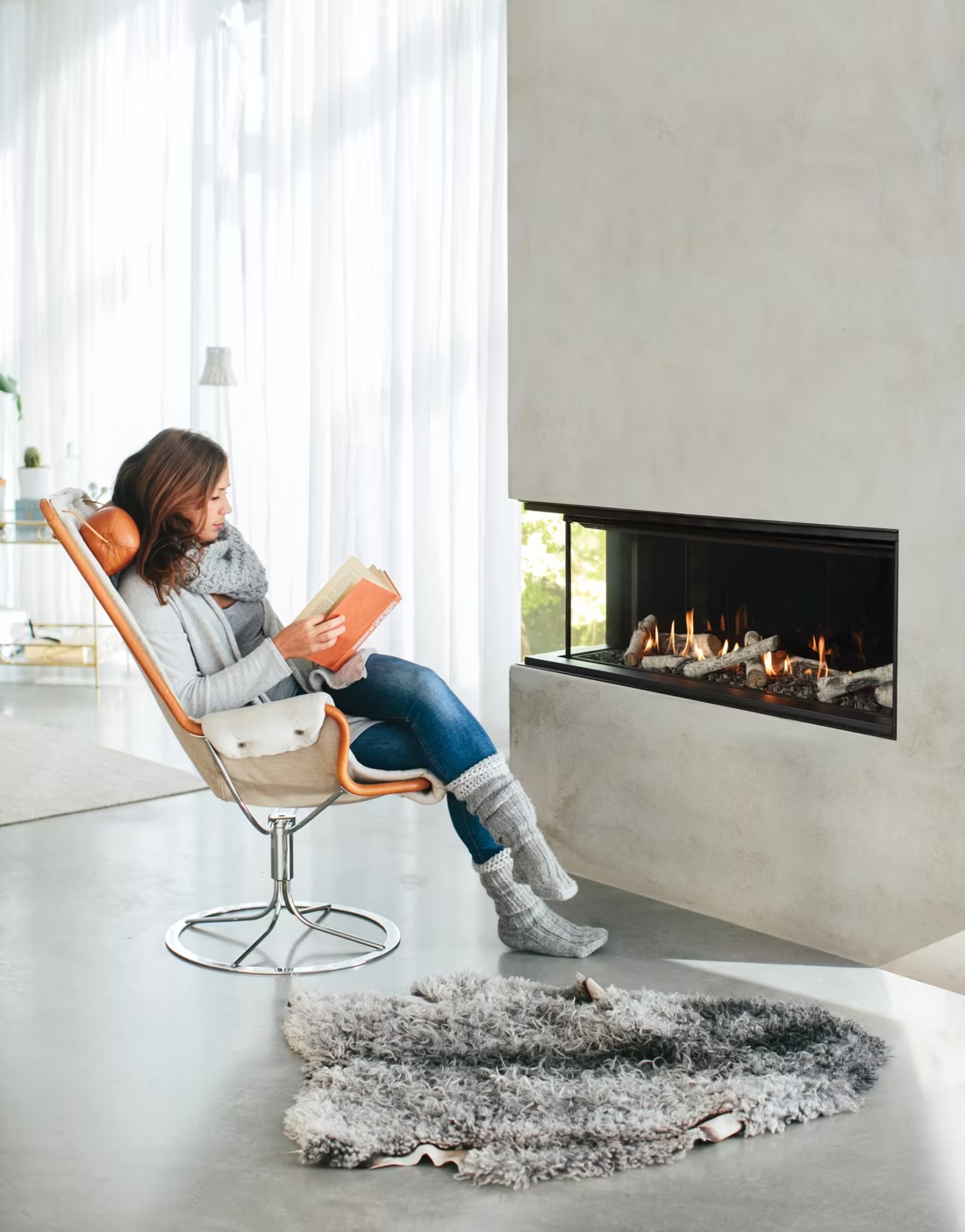
Four fuels. One honest answer for Brazoria County.
Three steps. No salesperson until you're ready.
Tell us about your project
Your zip code, your situation, and the fuel you're leaning toward—or let the answers point you to one.
See what's actually available
The brands dealers within 100 miles genuinely carry—real options, never a catalog mirage.
Get your dealer & Project Guide
A trusted local dealer, plus the free Project Guide & Parts List that names every component of the job.
Frequently Asked Questions
Which fuel works best in Brazoria County?
Gas and electric are the two fuels that make sense for most Brazoria County homes. Gas fireplaces and gas-log inserts are the practical choice for anyone who wants real backup heat—they run without grid power, which mattered a lot to homeowners here during Winter Storm Uri, and they install cleanly in homes already built for the Gulf Coast's mild climate. Electric fireplaces are the low-commitment option—no venting, no gas line, good for ambiance in a living room or bedroom, and useful supplemental warmth on the county's occasional 40s-and-below nights. Wood-burning units are essentially not a fit here—with only about 1,074 heating degree days a year, the heating load doesn't justify a woodpile, and pellet stoves are rare outside a small number of hobbyist installs. If you like the look of a wood fire, most local dealers will point you toward a gas-log setup instead.
Do I need a permit for a gas fireplace install in Brazoria County?
In most cases, yes. Gas fireplace, insert, and gas-log installations typically require a building permit and a separate gas-line permit with a licensed gas-fitter completing the connection work. Within incorporated cities like Pearland, Alvin, or Lake Jackson, permits are pulled through that city's building department; in unincorporated parts of the county, they go through Brazoria County's permitting office. Electric fireplace installs usually don't need a permit unless it's a built-in unit requiring a new dedicated circuit. Most local hearth retailers handle the permitting as part of the installation, so you generally don't have to navigate it yourself.
Are wood-burning fireplaces still installed in Brazoria County?
Rarely, and mostly in older homes that already have a masonry chimney. New wood-burning installs are uncommon—the county's mild winters (46°F average low, roughly 1,074 heating degree days) don't create the demand that drives wood heat further north, and there's no local air quality program pushing wood-stove replacements the way there is in colder, smokier regions. Oak, pecan, and mesquite are all available locally for the rare homeowner who wants an occasional decorative fire, but most dealers in the county will steer new customers toward gas logs, which give the same look with far less maintenance and no chimney sweeping.
Does a gas fireplace actually help during a power outage?
Yes, if it's the right kind. A standard gas fireplace with a pilot light or millivolt ignition system can run without household electricity, which is exactly what many Brazoria County homeowners needed during Winter Storm Uri in February 2021, when parts of the CenterPoint Energy grid went down for days in freezing temperatures. Gas fireplaces with electronic ignition or blower-dependent models may still need power for some features, so it's worth asking your dealer specifically about outage performance if that's a priority. Electric fireplaces, by contrast, are entirely dependent on grid power and won't help during an outage—worth knowing before you choose between the two.
What's the typical cost range for fireplace installation across fuel types in Brazoria County?
Gas fireplace, insert, or gas-log conversion: roughly $3,500–$9,000, depending on whether existing gas service is in place or a new line has to be run. Electric fireplace: $200–$3,000 for the unit itself, plus $400–$1,200 in labor for anything beyond a plug-and-play install, which covers most wall-mount and built-in setups. Wood and pellet installs are uncommon enough locally that most retailers don't carry standard packages for them—pricing would be closer to a special-order project. For fuel-specific detail tied to local retailer pricing, see the county + gas and county + electric pages above.
Can one local dealer handle both gas and electric fireplace installs?
Yes—most hearth retailers serving Brazoria County carry both gas and electric lines, since those are the two fuels that actually fit the local climate. That's convenient if you're deciding between a gas-log insert for outage backup and an electric unit for ambiance and supplemental heat; a multi-fuel dealer can show you both in a showroom and talk through the trade-offs for your specific home. Wood and pellet units are handled by only a small number of specialty or big-box outlets in the region, since demand is limited this far south.
Wood, gas, pellet, or electric—how do I choose?
Match the fuel to your life, not the other way around. Wood: lowest fuel cost and total power-outage independence, but you're hauling and stacking. Gas: press a button, set a thermostat, no maintenance to speak of. Pellet: wood economics with automatic feeding, in exchange for weekly cleaning and a need for electricity. Electric: plugs in anywhere with honest supplemental heat. Nobody regrets the fuel that fits how they actually live.
How much should I budget for a fireplace?
For an average home—covering the fireplace, the vent pipe, and basic installation—a budget between $3,900 and $5,500 gives you a lot of options across wood, gas, and pellet. By the time you add finish work, gas line, and electrical, the average complete installation lands between $5,000 and $12,000 all-in. In a remodel or new build, a good rule is to put about 2.5% of the total project cost toward the fireplace.
Does a fireplace add value to my home?
On average, a fireplace adds back to the home about the same amount you spent installing it. Add the monthly savings from heating the rooms you actually use instead of the whole house—often hundreds of dollars a year—and the value case is strong before you even count what a fire does for how your family uses the room.
What is an in-home preview and do I need one?
It's a visit where a hearth professional measures your space, confirms the model you picked actually works in your home, and walks the specs—framing, gas line, venting, finish work—before anything is ordered. Some details you just can't know until you see the house. Never make a down payment without one; it's the single most-skipped step that burns buyers.
Stove and Fireplace Dealers in Brazoria County
Listings include WhyFire partner dealers, dealers we have verified as authorized for the brands we recommend, and established local businesses that carry hearth products. Every listing shows which one it is. The ones marked Preferred run on WhyFire's software, so they can show you real pricing and book your appointment right here. No manufacturer pays for placement. How we verify dealers →
Fireplaces By Roye
Patio 1
USA Supreme Services, LLC
Find your fireplace in Brazoria County.
Pick your fuel below and I'll match you with a trusted local dealer and send you a free Project Guide & Parts List—a plan for your gas or electric fireplace project in Brazoria County, with the exact parts and your recommended installer.
Find Your Fireplace →