
Steady heat that skips the wood-hauling, right here in Wake Village.
Clean, low-maintenance heat for Bowie County's mild winters and the occasional Arctic front. Find the right pellet stove and connect with a trusted local dealer.
Every Project Starts From One of These Five Situations
Mild winters, real cold fronts—pellet heat that keeps up.
Wake Village sits in Bowie County in the piney woods of far northeast Texas, just outside Texarkana, at an elevation of 352 feet. Winters here are mild by any national standard—averaging a winter low around 33°F and a light overall heating season, just a small fraction of the winter heating load a place like Duluth, MN or Bozeman, MT racks up in a single cold snap. Even so, this stretch of the Ark-La-Tex gets real Arctic-front weather most Januarys: ice storms and hard freezes that roll down out of the plains and catch homes without a solid backup heat plan.
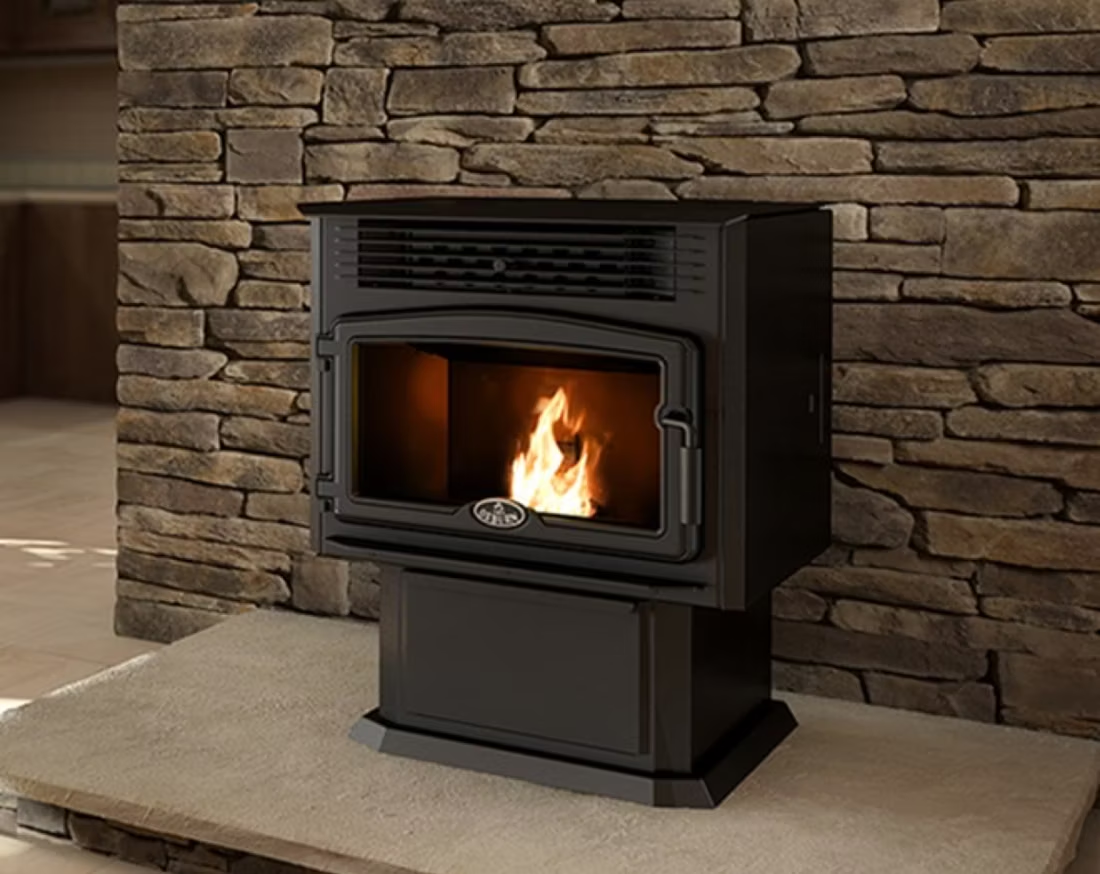
Wood fireplaces already run deep in this area—oak, pecan, and mesquite are all common and easy to source locally—but pellet stoves have carved out a real niche for homeowners who want fire and honest heat without stacking, splitting, or sweeping ash the way a full wood setup demands. Regional pellet brands like Forest Energy and Lignetics are stocked at farm-and-ranch retailers throughout the Ark-La-Tex, and because Bowie County carries no air quality non-attainment designation or wood-burning curtailment periods, there's no local burn-ban bureaucracy standing between you and a fire on a cold night.
Three steps. No salesperson until you're ready.
Tell us about your project
Your zip code, your situation, and the fuel you're leaning toward—or let the answers point you to one.
See what's actually available
The brands dealers within 100 miles genuinely carry—real options, never a catalog mirage.
Get your dealer & Project Guide
A trusted local dealer, plus the free Project Guide & Parts List that names every component of the job.
Frequently Asked Questions
How much does a pellet stove installation cost in Wake Village?
Across the Ark-La-Tex region, a pellet stove installation typically runs $3,000 to $6,000 installed, depending on the unit and whether it's a freestanding stove venting through an exterior wall or an insert going into an existing fireplace opening. Because Wake Village winters are mild, most homeowners here are sizing for supplemental heat rather than a whole-home primary system, which keeps most installs toward the lower end of that range. A local dealer will give you a firm number after seeing your home and venting path.
What size pellet stove do I actually need in a climate this mild?
With an average winter low around 33°F and only a light overall heating season, most Wake Village homes don't need a large pellet stove sized for round-the-clock burning the way a home in Fargo, ND or International Falls, MN would. A smaller or mid-size unit is usually enough to heat a main living area and take the edge off the coldest nights in January and February. Going bigger than you need just means more cycling on low settings, which isn't where pellet stoves run most efficiently—a local dealer can size it correctly based on your square footage and layout.
Will a pellet stove keep my house warm if the power goes out during an ice storm?
Not on its own. Pellet stoves rely on an electric auger to feed fuel and a blower to circulate heat, so when SWEPCO or Bowie-Cass Electric Coop lines go down in an ice storm, the stove stops running unless you have a battery backup or small generator wired in. If reliable heat during power outages is your top priority, a wood stove or fireplace insert—which needs no electricity at all—is worth considering alongside pellet. Many local homeowners actually keep a small wood-burning option as backup even if pellet is their day-to-day choice.
Do I need a permit to install a pellet stove in Wake Village?
Yes, a building permit is generally required for a new pellet stove installation, whether it's processed through the City of Wake Village or Bowie County depending on your address. The good news is pellet venting is simpler than a masonry wood chimney—it's typically a small-diameter pipe running straight through an exterior wall—so the permit and inspection process tends to move faster than a full wood-burning fireplace build. Most local installers handle the permit paperwork as part of the job.
Where can I buy pellets locally, and what do they cost?
Forest Energy and Lignetics are the two regional brands most commonly stocked at farm-and-ranch and hearth retailers around the Ark-La-Tex, including outlets serving the Texarkana area. Expect roughly $230 to $300 per ton at regional retail prices, with premium hardwood blends running toward the higher end. Buying by the ton (roughly 50 forty-pound bags) ahead of the winter season, rather than bag-by-bag as cold fronts arrive, is generally the better value.
Pellet stove or wood stove—which fits Wake Village better?
Wood is already the local tradition here, with oak, pecan, and mesquite all readily available for cutting or purchase, and a wood stove keeps working with zero electricity during ice-storm outages. Pellet stoves trade that off for real convenience: no splitting or stacking, a thermostat you can set and walk away from, and a cleaner burn with far less ash. For a mild climate like this one, where heating need is modest most winters, pellet is a strong fit for anyone who wants fire and heat without the labor of a wood setup—as long as you have a plan for outages.
How much maintenance does a pellet stove actually require?
Day to day, you're emptying the ash pan every few days to weekly depending on use, and refilling the hopper—most units hold enough pellets for a day or more of runtime on a given setting. Once a year, plan on a professional cleaning of the burn pot, exhaust venting, and blower components, which is a shorter and less involved job than a wood chimney sweep. Given how mild the burning season is here, most Wake Village units see lighter annual use than they would in a colder climate, which extends the interval between major service visits.
How does venting work for a pellet stove compared to a wood fireplace?
Pellet stoves vent through a small-diameter pipe that typically runs straight out an exterior wall, rather than requiring a full masonry chimney or Class A pipe running through the roof like a wood stove often needs. That makes pellet installs faster and less invasive in homes without an existing fireplace or chimney—a real advantage for a lot of Wake Village houses that were never built with a hearth in the first place.
Is running a pellet stove cheaper than heating with electricity here?
It depends on use, but pellet fuel generally costs less per unit of heat than electric resistance heat at Southwestern Electric Power Co's or Bowie-Cass Electric Coop's residential rates, which run around 12.5 to 13.5 cents per kWh in this area. Because Wake Village's heating season is short, the total savings over a full winter are modest compared to a colder climate—but for the main room where you actually sit, running a pellet stove instead of cranking electric baseboard or a space heater on the coldest nights is usually the cheaper option.
Why is a fireplace insert so efficient?
An insert does two things: it seals the chimney completely, so you stop losing air you already paid to heat, and it radiates warmth into the room through the firebox and glass. Most add a heat-exchange fan that pulls cool room air underneath, wraps it around the hot firebox, and pushes it back out warm. Your home is more efficient before you've even lit the first fire.
What's the difference between an insert and a zero-clearance fireplace?
An insert is a fireplace that slides into a pre-existing wood-burning fireplace—if you don't have one, there's nothing to insert it into. A zero-clearance fireplace is built into a framed wall, which makes it the answer for remodels and new construction. Simple test: existing masonry fireplace means insert; blank or framed wall means zero-clearance.
Can I install a fireplace myself?
If you're putting a fire in your house on purpose, it's best to work with an expert. Unless you're genuinely experienced in framing, gas line, vent pipe, and the national code on clearances to combustibles, have a professional do it—and ideally the same company that sells you the fireplace, so warranty, service, and liability all live under one roof.
Should the dealer who sells my fireplace also install it?
Ideally, yes. A fireplace project involves vent pipe, gas line, electrical, and often tile or stone. Hire three or four separate trades and you own the liability and the game of telephone between them. One company selling and installing means one accountable party, start to finish—ask about factory training, on-time completion records, and what happens if an inspection fails.
Nearby Dealers
Hearth shops serving Wake Village and the surrounding area. Every listing shows whether it is a WhyFire partner, a dealer we have verified as authorized for the brands we recommend, or a local business carrying hearth products. No manufacturer pays for placement. How we verify dealers →
Acme Brick Company
Red River Lumber & Design Center
LaGrone Williams Hardware
Pro Sweeps
Pellet Brands Stocked Around Wake Village
Manufacturers will point you to the nearest stocking dealer.
Find your pellet stove in Wake Village.
Tell us a bit about your home and we'll put together a free Project Guide & Parts List for your Wake Village pellet project—the right unit, the vent kit, and a trusted local dealer to install it.
Find Your Fireplace →