
A niche choice for winters that rarely bite.
With winter lows averaging 44°F and only about 970 heating degree days a year, Val Verde County isn't pellet-stove country the way a northern county is. A small number of Del Rio-area homeowners still install one for ambiance, backup heat during a rare hard freeze, or a ranch property off the gas grid—and I'll match you with a trusted local dealer who'll tell you honestly whether that's you.
Every Project Starts From One of These Five Situations
A border county built for mesquite smokers, not full-time heating.
Val Verde County sits in Climate Zone 2B along the Rio Grande, anchored by Del Rio and the Amistad Reservoir. Winters here are short and mild, with average lows around 44°F and roughly 970 heating degree days a season—a fraction of what a Central Texas county like Bexar logs, and nowhere near what drives heating demand in colder parts of the country. Oak, pecan, and mesquite grow throughout the surrounding ranch land, but locally that wood is far more likely to end up in a smoker or a mesquite-fired barbecue pit than feeding a dedicated heating appliance.
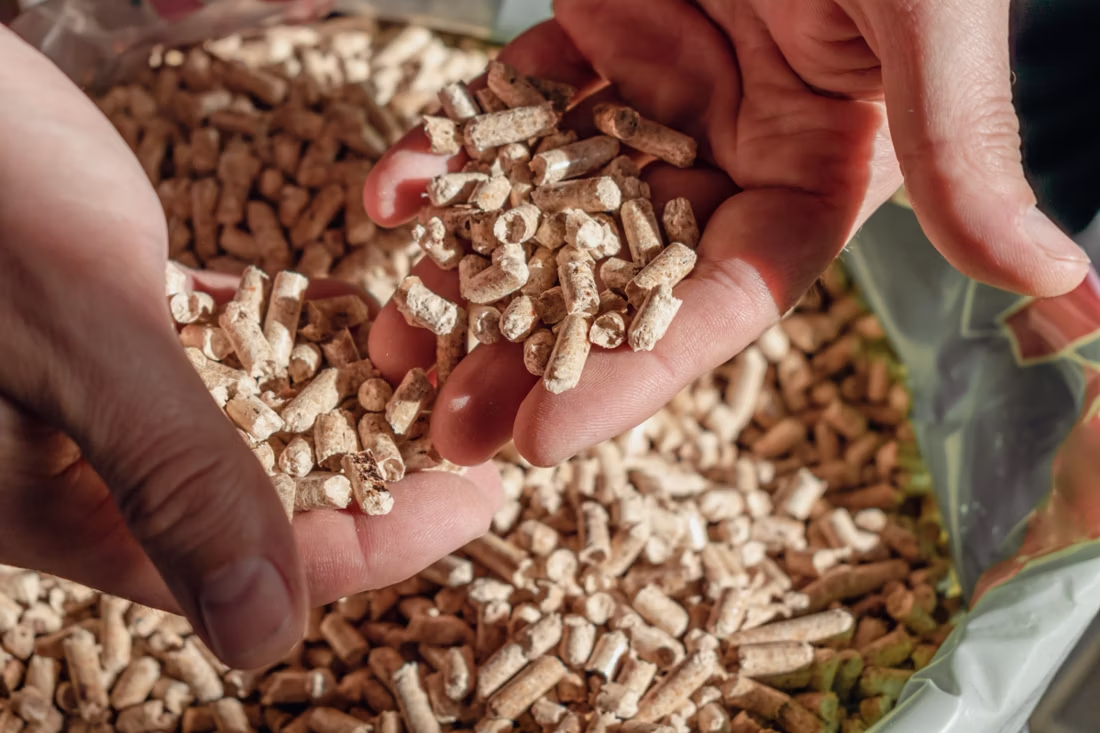
That's the honest reason pellet fuel is rated not-applicable for most homes in Val Verde County: there simply isn't enough sustained cold to justify the expense of a dedicated pellet-burning stove, and the county has no air quality restrictions steering homeowners toward cleaner-burning alternatives the way non-attainment areas elsewhere do. Gas and electric fireplaces remain the standard choices for most Del Rio homes. If you still want a pellet unit—for ambiance, a rare hard freeze, or a rural property without gas service—a trusted local dealer can walk you through what's actually available given how thin the regional supply chain is out here.
Three steps. No salesperson until you're ready.
Tell us about your project
Your zip code, your situation, and the fuel you're leaning toward—or let the answers point you to one.
See what's actually available
The brands dealers within 100 miles genuinely carry—real options, never a catalog mirage.
Get your dealer & Project Guide
A trusted local dealer, plus the free Project Guide & Parts List that names every component of the job.
Frequently Asked Questions
Are pellet stoves actually available in Val Verde County?
They're available, but they're a special-order item rather than a stocked product for most local hearth dealers, who focus their floor space on gas fireplaces and inserts since that's what most Del Rio homes actually run. If a dealer does carry pellet appliances, Forest Energy and Lignetics are the regional bag brands most likely to be sourced in from suppliers serving the wider South Texas market. Expect a longer lead time than you'd get for a gas unit, and confirm stock before committing to a project timeline.
Does a pellet stove make sense for occasional cold snaps in Del Rio?
For most homes, no—a 970-HDD winter with lows averaging 44°F just doesn't generate the sustained heating load that makes a pellet stove's higher upfront cost pay off. A gas fireplace or insert, which is standard equipment throughout the county, handles an overnight freeze just as well with instant on-demand heat and no hopper to load or ash pan to empty. Pellet tends to make more sense here for a homeowner who specifically wants the look and feel of a real fire rather than for anyone chasing heating efficiency.
What size pellet stove would I need in Val Verde County, if any?
Because true heating load is minimal this far south, most Val Verde County installs—where they happen at all—are small, supplemental-heat-rated units rather than whole-home stoves. Sizing here is driven more by the room you want to warm on the coldest nights of the year than by the county-wide heating season, so a local dealer will size based on the specific space, not a standard cold-climate BTU chart.
Can I burn local oak, pecan, or mesquite in a pellet stove?
No—pellet stoves burn manufactured wood pellets, not raw cordwood, so the oak, pecan, and mesquite common on Val Verde County ranch land can't go straight into a pellet hopper. That local wood is better suited to a traditional fireplace, a mesquite smoker, or an open fire pit. If you want to use locally sourced wood for heat, that points toward a wood-burning appliance rather than pellet, though wood heat is itself uncommon here given how mild the winters run.
Do I need a permit to install a pellet stove in Val Verde County?
Yes, a building permit is required for a new pellet stove installation whether you're inside Del Rio city limits or in the unincorporated county, and the vent run has to meet code clearances just like a gas appliance would. Because so few pellet units go in locally, it's worth confirming with your installer that they've pulled this specific type of permit before—a dealer who regularly handles gas fireplace permits in the county can usually walk the pellet permit through the same process.
Where can I actually buy pellet fuel in Val Verde County?
Local retail stock is thin, since so few households burn pellets here. Forest Energy and Lignetics bags turn up at regional farm and ranch supply stores that also serve the wider South Texas market, but you may need to call ahead or plan a supply run toward San Antonio if you want to stock up before a cold snap. Buying a season's worth of bags in the fall rather than waiting for a freeze is the safer bet, since local suppliers don't keep the volume in stock that a northern dealer would.
Would gas or electric make more sense than pellet for my home?
For most Val Verde County homes, yes. Gas fireplaces and inserts are rated standard here and give you instant, thermostat-controlled heat with no fuel to store, which fits a climate where you might only need real heat output a handful of nights a year. Electric fireplaces, also standard locally, are the simplest option if you want the visual of a fire for ambiance without worrying about venting or fuel supply at all—a strong fit for a rental, a secondary room, or a homeowner who just wants the look without the upkeep.
If I still want a pellet stove, what should I ask a local dealer?
Ask directly whether they've installed pellet appliances in the county before, how they source Forest Energy or Lignetics pellets locally, and what the actual venting path looks like for your specific room. Also ask them to compare the install cost and annual fuel cost against a gas insert for your same space—given how mild Del Rio winters run, that side-by-side comparison usually settles the decision quickly.
What's a realistic first step if I'm considering pellet heat here?
Start with an honest conversation with a trusted local dealer about your actual usage—ambiance versus real heating need, how often you'd realistically run it during a typical 970-HDD Del Rio winter, and whether a rural property without gas access changes the calculus. That conversation, more than a spec sheet, is what determines whether pellet is worth pursuing over the gas and electric options most of the county already relies on.
Why is my open fireplace making my house colder?
Open fireplaces suck—literally. As the fire burns, it consumes air your furnace already paid to heat and pulls it out through the chimney, so the house is actually colder after the fire goes out than before you lit it. An insert fixes this: it seals the chimney, puts fixed glass across the front, and turns that hole in your house into a real heat source.
Why is a fireplace insert so efficient?
An insert does two things: it seals the chimney completely, so you stop losing air you already paid to heat, and it radiates warmth into the room through the firebox and glass. Most add a heat-exchange fan that pulls cool room air underneath, wraps it around the hot firebox, and pushes it back out warm. Your home is more efficient before you've even lit the first fire.
Can a fireplace actually lower my heating bill?
Yes—by creating a comfort zone. A furnace heats every square foot of the house just to warm the one room you're in; a gas fireplace on low burns roughly a sixth of the gas a typical furnace does. Set the furnace around 55–60 degrees as a baseline, then heat the rooms your family actually uses. Families who heat this way commonly save $20–$60 a month.
What is an in-home preview and do I need one?
It's a visit where a hearth professional measures your space, confirms the model you picked actually works in your home, and walks the specs—framing, gas line, venting, finish work—before anything is ordered. Some details you just can't know until you see the house. Never make a down payment without one; it's the single most-skipped step that burns buyers.
Pellet Brands Stocked Around Val Verde County
Manufacturers will point you to the nearest stocking dealer.
Get your free Project Guide & Parts List for a pellet project in Val Verde County.
Tell me about your home and how you'd actually use a pellet stove, and I'll match you with a trusted local dealer and send a free Project Guide & Parts List—an honest look at pellet versus the gas and electric options most Del Rio homes already run, plus the exact parts and vent kit if pellet turns out to be the right call.
Find Your Fireplace →