
Fireplaces built for Del Rio's mild winters.
With winter lows averaging 44°F and one of the mildest heating climates in the country, Val Verde County homes lean on gas and electric fireplaces for comfort and ambiance—not survival heat. Find a trusted local retailer serving Del Rio, Comstock, Lake Amistad, and beyond.
Every Project Starts From One of These Five Situations
Border-country heat needs in Val Verde County, Texas.
Val Verde County sits where the Rio Grande and Devils River meet Lake Amistad, on the edge of the Chihuahuan Desert. This is Climate Zone 2B—hot, dry, and mild in winter. The average winter low sits around 44°F, and the county logs only about 970 heating degree days a year. For comparison, a city like Duluth, Minnesota racks up more than 8,000 HDD in the same span. That gap explains why wood and pellet heat, while part of the region's cooking and smoking tradition with local oak, pecan, and mesquite, aren't really a fireplace fuel here—they show up in backyard pits and smokers more than in living rooms. Gas and electric fireplaces are the fuels that actually fit this climate: occasional cold snaps, ambiance most of the year, and no need for a wood chimney sized for a hard freeze.
What you'll find on this hub: gas and electric hearth retailers, service technicians, and fuel suppliers serving Del Rio and the smaller communities scattered across the county—Comstock along Highway 90, Langtry near the Pecos River crossing, and the ranches and lake homes around Amistad Reservoir. Pick your fuel below for local dealers, installation costs, and the resources that match your project, whether you're finishing a Del Rio home or a weekend place near the lake.
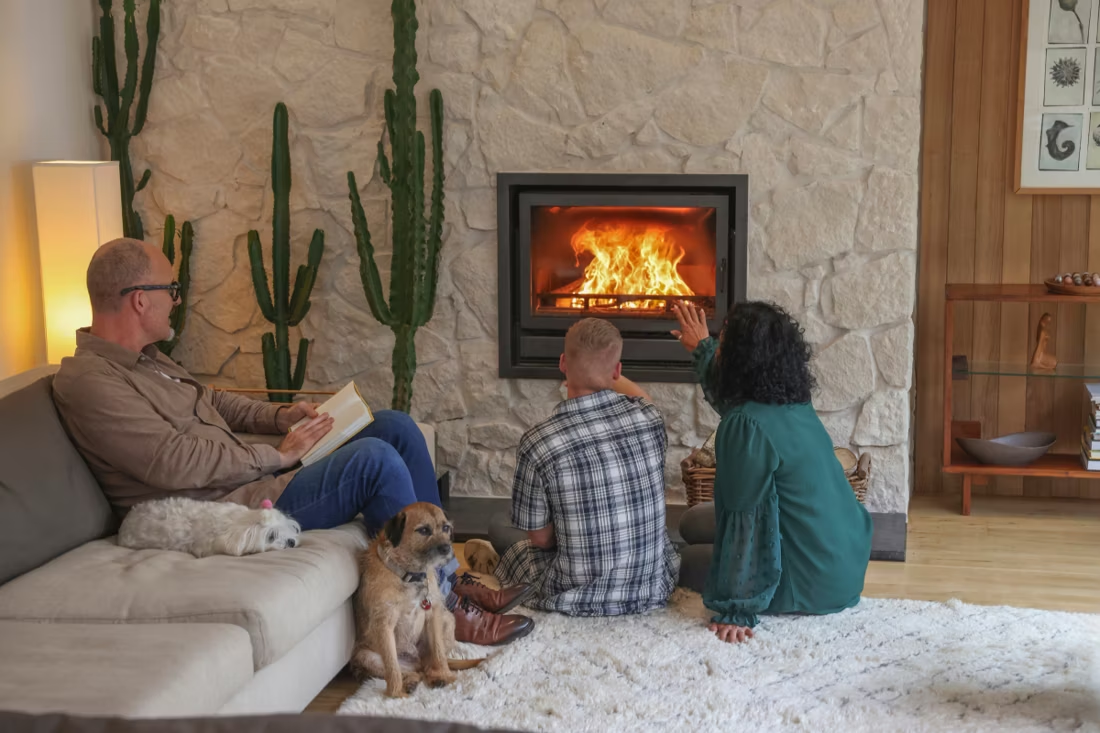
Four fuels. One honest answer for Val Verde County.
Three steps. No salesperson until you're ready.
Tell us about your project
Your zip code, your situation, and the fuel you're leaning toward—or let the answers point you to one.
See what's actually available
The brands dealers within 100 miles genuinely carry—real options, never a catalog mirage.
Get your dealer & Project Guide
A trusted local dealer, plus the free Project Guide & Parts List that names every component of the job.
Frequently Asked Questions
Which fuel works best in Val Verde County?
Gas and electric are the two fuels that actually make sense here. Gas fireplaces and inserts—whether run on propane in outlying areas or natural gas within Del Rio's service area—give instant heat for the occasional hard freeze and a clean look the rest of the year. Electric fireplaces are popular for supplemental warmth and ambiance in bedrooms, additions, and homes near Lake Amistad where a full gas line isn't practical. Wood and pellet fireplaces are not a realistic fit for this climate—with only about 970 heating degree days a year and winter lows averaging 44°F, there simply isn't enough cold-weather demand to justify a wood chimney or a pellet hopper. A handful of ranch homes keep a wood-burning fireplace for atmosphere or occasional grilling with local oak or mesquite, but it's not a heating decision.
Do wood-burning fireplaces make sense in Del Rio's climate?
Not for heat. Del Rio and the rest of Val Verde County sit in Climate Zone 2B, where winter is short and mild—this isn't a place that needs a stove that can hold a fire through a subzero night the way homes in Bismarck, North Dakota do. Some homeowners still install a wood-burning fireplace for the look and feel, or because they already have the masonry, and local oak, pecan, and mesquite are available for occasional use. But if you're deciding what to install new, gas or electric will do more for your money and your maintenance schedule than a wood setup built for a climate this county doesn't have.
Do I need a permit to install a gas or electric fireplace in Val Verde County?
Generally yes for gas, and it depends for electric. Gas fireplace, insert, or stove installations typically require a building permit plus a separate gas line permit and licensed gas-fitter for the connection work—that applies whether you're inside Del Rio city limits or in unincorporated parts of the county, though the office you file with differs (City of Del Rio versus the county building department). Electric fireplaces usually skip the permit process for plug-in units, but built-in electric fireplaces that require new wiring or a dedicated circuit typically need an electrical permit. Most local retailers handle this paperwork as part of installation, so you're not filing it yourself.
Are there any air quality or burn restrictions in Val Verde County?
No—Val Verde County doesn't have the wood-smoke air quality concerns you'd find in a place like the Klamath Basin or other inversion-prone mountain valleys. There's no non-attainment designation or seasonal burn curtailment tied to residential heating here. That's part of why gas and electric fireplaces dominate the local market: the driver isn't an air-quality rule pushing people away from wood, it's simply that the climate doesn't call for wood heat in the first place.
What's the typical cost range for fireplace installation in Val Verde County?
Gas fireplace, insert, or stove installations typically run $4,000–$10,000 depending on whether a new gas line needs to be run and how much venting work is involved—conversions in homes with existing gas service land on the lower end. Electric fireplaces are the more budget-friendly option: $200–$3,000 for the unit itself, and $400–$1,200 in labor for anything beyond a simple plug-and-play wall unit, which covers most inserts and built-ins. Given the rarity of wood and pellet installs here, most local retailer quotes you'll see are for gas or electric—ask for a written estimate that separates unit cost, venting or wiring, and any propane tank or line work.
How does service work for homes out near Comstock, Langtry, or Lake Amistad?
Most gas and electric fireplace technicians serving Val Verde County are based in Del Rio and travel out to Comstock, Langtry, and the ranch and lake properties around Amistad Reservoir. Expect a modest travel fee for calls outside city limits, and plan ahead—rural service appointments book up fastest right before the occasional winter cold front moves through. If you're on a well or generator system near the lake, ask your retailer about backup options for your gas unit's igniter or electric fireplace's power draw during outages, since redundancy matters more the farther you are from town.
What is an in-home preview and do I need one?
It's a visit where a hearth professional measures your space, confirms the model you picked actually works in your home, and walks the specs—framing, gas line, venting, finish work—before anything is ordered. Some details you just can't know until you see the house. Never make a down payment without one; it's the single most-skipped step that burns buyers.
Should the dealer who sells my fireplace also install it?
Ideally, yes. A fireplace project involves vent pipe, gas line, electrical, and often tile or stone. Hire three or four separate trades and you own the liability and the game of telephone between them. One company selling and installing means one accountable party, start to finish—ask about factory training, on-time completion records, and what happens if an inspection fails.
Wood, gas, pellet, or electric—how do I choose?
Match the fuel to your life, not the other way around. Wood: lowest fuel cost and total power-outage independence, but you're hauling and stacking. Gas: press a button, set a thermostat, no maintenance to speak of. Pellet: wood economics with automatic feeding, in exchange for weekly cleaning and a need for electricity. Electric: plugs in anywhere with honest supplemental heat. Nobody regrets the fuel that fits how they actually live.
Can a fireplace actually lower my heating bill?
Yes—by creating a comfort zone. A furnace heats every square foot of the house just to warm the one room you're in; a gas fireplace on low burns roughly a sixth of the gas a typical furnace does. Set the furnace around 55–60 degrees as a baseline, then heat the rooms your family actually uses. Families who heat this way commonly save $20–$60 a month.
Find your fireplace in Val Verde County.
Tell us about your Del Rio-area project and we'll match you with a trusted local dealer and send a free Project Guide & Parts List—the exact parts, including the vent kit, and the retailer we recommend for your home.
Find Your Fireplace →