
A Little Warmth for Spring's Rare Cold Snaps.
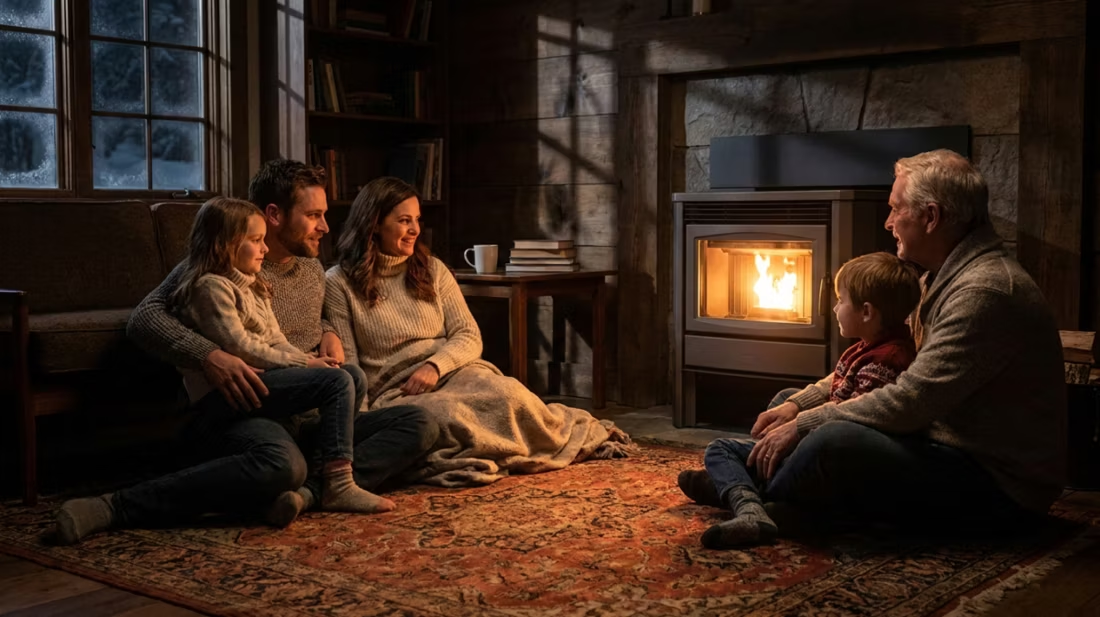
Pellet stoves aren't common in Harris County's mild winters, but for the handful of Spring homeowners who want one, we'll connect you with a dealer who actually installs them here.
Every Project Starts From One of These Five Situations
Spring winters rarely call for supplemental heat.
Spring sits in unincorporated Harris County just north of Houston, at only 106 feet of elevation in climate zone 2A. Winter lows average around 44°F, and the whole heating season adds up to roughly 1,266 heating degree days—a small fraction of what a place like Duluth, MN or Fargo, ND racks up in a single January. Pellet stoves are built to run for hours on end feeding cold-climate homes through long, brutal winters. That's simply not the reality most years along the I-45 corridor.
That doesn't mean nobody in Spring wants one. A pellet stove or insert can still make sense for a sunroom, a weekend property up in the Hill Country, or a homeowner who just likes the look and the low ash of pellet fuel over an open fireplace. Worth knowing before you commit: pellet stoves need electricity to run the auger and combustion blower, which matters here because Harris County sees real hurricane-season outages through CenterPoint Energy's grid. Unlike a wood stove, a pellet unit goes cold the moment the power does, unless you pair it with a generator or battery backup. Regional pellet brands like Forest Energy and Lignetics do show up on shelves around Houston, but the installer base is thin, so most Spring projects route through hearth dealers based in the metro area.
Three steps. No salesperson until you're ready.
Tell us about your project
Your zip code, your situation, and the fuel you're leaning toward—or let the answers point you to one.
See what's actually available
The brands dealers within 100 miles genuinely carry—real options, never a catalog mirage.
Get your dealer & Project Guide
A trusted local dealer, plus the free Project Guide & Parts List that names every component of the job.
Frequently Asked Questions
How much does a pellet stove installation cost in Spring, TX?
Because pellet stoves are a niche request here rather than a routine one, pricing varies more dealer to dealer than it would in a market where they're the norm. Expect somewhere in the $3,500 to $7,000 range for a freestanding pellet stove or insert, including venting and the dedicated electrical outlet the unit needs nearby. Most Spring homeowners end up working with a hearth dealer based in the greater Houston area rather than a shop in town, so it's worth getting two quotes rather than one.
Why don't more people in Spring have pellet stoves?
The math just doesn't push people there. Harris County averages about 1,266 heating degree days a year and winter lows that hover around 44°F—mild enough that a central HVAC system covers the handful of cold nights each winter without help. Compare that to Burlington, VT or Minneapolis, MN, where homes rack up 7,000 to 8,000 heating degree days and a pellet stove earns its keep as daily supplemental heat. In Spring, a pellet stove is closer to a design choice or an occasional-use amenity than a heating necessity.
Will a pellet stove work during a power outage?
No—this is the biggest thing to understand before buying one in this area. A pellet stove's auger, igniter, and combustion blower all run on household electricity, so when CenterPoint Energy or Entergy Texas power goes down during hurricane season, the stove goes down with it. If backup heat during an outage is part of your reasoning for wanting a hearth appliance, a vented gas fireplace or a wood-burning unit is a more reliable choice in Spring. If you still want pellet, plan on pairing it with a small generator or a battery backup system sized for the stove's electrical draw.
Where can I find pellet fuel near Spring?
Pellets aren't milled locally—there's no regional pellet production the way there is in the Pacific Northwest—so bags sold around Harris County are trucked in from out-of-state mills. Forest Energy and Lignetics are the two brands most commonly stocked at larger retailers and farm-supply stores in the Houston area. Because demand is low compared to cold-climate markets, it's worth calling ahead in late fall to make sure a store has pellets in stock rather than assuming year-round availability.
Should I get a pellet insert or a freestanding pellet stove?
An insert fits into an existing masonry fireplace opening and uses your current chimney chase for venting—a common option in the older subdivisions around Spring built with wood-burning fireplaces in the 1970s through 1990s. A freestanding stove sits on its own hearth pad and can go almost anywhere with the right clearances, which suits newer homes without an existing fireplace. Given how few Spring homes are built around a pellet-heating need in the first place, the choice usually comes down to whether you already have a fireplace opening to use.
Do I need a permit to install a pellet stove in Spring?
Spring itself is unincorporated, so there's no city building department—permitting for most of the area runs through Harris County's permit office rather than a city hall. A pellet appliance still needs to meet code for venting and clearances, and most dealers who install pellet units in this area handle that paperwork as part of the job, the same way they would for a gas fireplace. Because pellet installs are infrequent here, it's worth confirming directly with your installer that they've pulled a Harris County permit before work begins rather than assuming it's automatic.
Would gas make more sense than pellet for my home in Spring?
For most Spring homeowners, yes. Natural gas service is widely available through CenterPoint Energy across the Houston metro, and gas fireplaces and inserts are a standard, well-supported category here with plenty of local installers and technicians. A gas unit lights instantly, needs no fuel storage, and—with the right ignition system—can even run during a power outage. Pellet stoves ask you to store bagged fuel, feed a hopper, and depend on grid power to operate. Unless you specifically want the look and feel of a pellet fire, gas is the more practical fit for this climate and this infrastructure.
How much maintenance does a pellet stove need?
Pellet stoves need the burn pot cleaned every few days of use, the hopper and auger checked periodically for jams, and a full professional inspection and venting cleaning at least once a year. Given how lightly most pellet stoves in Spring get used—a handful of cool evenings a winter rather than a full heating season—many owners find the ash and soot buildup is minimal compared to what a cold-climate household would see. Still, don't skip the annual service; the exhaust venting on a pellet unit is smaller-diameter than a wood chimney and can clog with even modest use.
Pellet vs. wood—does either make sense in Spring?
Both are unusual choices for this climate, and for similar reasons—1,266 heating degree days a year just doesn't generate much demand for supplemental hearth heat. That said, a small number of Spring homeowners keep a wood-burning fireplace going for ambiance on the rare cold snap, often burning locally available oak, pecan, or mesquite from area firewood suppliers rather than heating with it day to day. Pellet offers cleaner burning and push-button convenience but depends entirely on grid power; wood works with zero electricity and pairs with wood already common in East Texas. Neither is a heating necessity here—it comes down to which experience you'd rather have on the handful of nights you'd use it.
What's the difference between an insert and a zero-clearance fireplace?
An insert is a fireplace that slides into a pre-existing wood-burning fireplace—if you don't have one, there's nothing to insert it into. A zero-clearance fireplace is built into a framed wall, which makes it the answer for remodels and new construction. Simple test: existing masonry fireplace means insert; blank or framed wall means zero-clearance.
Why is my open fireplace making my house colder?
Open fireplaces suck—literally. As the fire burns, it consumes air your furnace already paid to heat and pulls it out through the chimney, so the house is actually colder after the fire goes out than before you lit it. An insert fixes this: it seals the chimney, puts fixed glass across the front, and turns that hole in your house into a real heat source.
Can I install a fireplace myself?
If you're putting a fire in your house on purpose, it's best to work with an expert. Unless you're genuinely experienced in framing, gas line, vent pipe, and the national code on clearances to combustibles, have a professional do it—and ideally the same company that sells you the fireplace, so warranty, service, and liability all live under one roof.
What is an in-home preview and do I need one?
It's a visit where a hearth professional measures your space, confirms the model you picked actually works in your home, and walks the specs—framing, gas line, venting, finish work—before anything is ordered. Some details you just can't know until you see the house. Never make a down payment without one; it's the single most-skipped step that burns buyers.
Nearby Dealers
Hearth shops serving Spring and the surrounding area.
All Thingz U Need Inc
Gas Equipment Company - Houston
Pellet Brands Stocked Around Spring
Manufacturers will point you to the nearest stocking dealer.
Find your pellet stove in Spring.
Tell us about your home and we'll put together a free Project Guide & Parts List for your pellet project in Spring—the exact parts, including the vent kit, and a recommended local dealer who actually installs pellet appliances in Harris County.
Find Your Fireplace →