
Instant Gas Warmth for Spring's Occasional Cold Snaps.
Spring sees maybe a handful of nights below freezing each winter—but when a cold front or hurricane outage hits, a gas fireplace means real warmth at the flip of a switch. Find the right unit and connect with a trusted local dealer.
Every Project Starts From One of These Five Situations
Built for ambiance, ready for the freeze.
Spring sits in unincorporated Harris County just north of Houston, in climate zone 2A at 106 feet of elevation. Winter lows average 44°F and the area sees only a short, mild heating season each year—a fraction of what a place like Fargo, ND racks up before Halloween. Nobody in Spring is heating a home with a fireplace through a long winter. What drives demand here is different: ambiance in the evenings, resale appeal in the neighborhood's many 1990s-and-2000s master-planned subdivisions, and real backup warmth during the rare but memorable events—Winter Storm Uri in 2021, or the hurricane-driven outages that hit Harris County most summers and falls.
Natural gas service reaches most of Spring through CenterPoint Energy, which distributes gas throughout the Houston metro area including the 77373, 77383, and 77387 zip codes. A large share of Spring's housing stock was built with a wood-burning masonry firebox as a standard builder feature—many homeowners now convert those fireboxes to gas logs rather than deal with ash, smoke, and firewood in a climate where wood heat was never really necessary. Homes on the rural edges of 77387 near San Bernard Electric Cooperative territory sometimes sit outside CenterPoint's gas lines and rely on propane instead. Either way, the right gas fireplace or log set gets you real flame and instant heat without the upkeep a wood-burning setup demands in a climate that rarely calls for it.
Three steps. No salesperson until you're ready.
Tell us about your project
Your zip code, your situation, and the fuel you're leaning toward—or let the answers point you to one.
See what's actually available
The brands dealers within 100 miles genuinely carry—real options, never a catalog mirage.
Get your dealer & Project Guide
A trusted local dealer, plus the free Project Guide & Parts List that names every component of the job.
Frequently Asked Questions
How much does a gas fireplace installation cost in Spring?
Converting an existing builder-grade masonry firebox to vented or vent-free gas logs—the most common project in Spring—typically runs $600 to $3,000, depending on the log set quality and whether a gas line already reaches the fireplace. A full direct-vent gas insert or a new built-in gas fireplace for a remodel or addition runs higher, generally $3,500 to $9,000, once framing, venting, and a dedicated gas line are factored in. Because so many Spring homes already have a masonry chimney from the original wood-burning firebox, conversions here tend to land on the lower end compared to homes needing venting run from scratch.
Can I convert my existing wood-burning fireplace to gas?
Yes, and it's the single most common gas project in Spring. Most homes in this part of Harris County were built with a standard wood-burning masonry firebox, and a huge share of those get converted to gas logs rather than continue as wood fireplaces—there's little practical reason to manage ash and firewood in a climate with only a short, mild heating season each year. A vented gas log set uses your existing chimney with minimal modification and typically costs $600 to $2,000 installed. A sealed gas insert with a liner runs higher but delivers real heat output instead of just visual flame, which matters more if you want the fireplace to double as backup heat during a winter freeze or storm outage.
Do I need natural gas, or can I use propane?
Most of Spring, including the 77373 and 77383 zip codes, is served by CenterPoint Energy's natural gas distribution lines, so if your home already has a gas range or water heater, adding a fireplace is usually a straightforward tap-in. Homes on the outer edges of 77387 or in more rural pockets served by San Bernard Electric Cooperative sometimes fall outside CenterPoint's gas footprint and run on propane instead, either from an existing tank or a new tank set by a local propane supplier. Nearly every gas fireplace and log set on the market can be configured for either fuel—your installer sets the orifice and regulator to match.
Will my gas fireplace work during a power outage?
For most Spring homeowners, this matters less for winter cold and more for hurricane season—CenterPoint's own outage maps light up every time a tropical system rolls through Harris County. Gas fireplaces with IPI (intermittent pilot ignition) run their pilot and ignition off small onboard batteries, so they'll light on demand even with the grid down, as long as those batteries are fresh. Valor fireplaces take a different approach: the pilot's thermocouple generates its own electricity, so there are no batteries to check or replace at all. Either way, an outage-ready gas fireplace gives you real heat and light during a multi-day outage without relying on a generator.
What's the difference between a gas fireplace, gas insert, and gas log set?
A gas log set drops into an existing wood-burning masonry firebox and uses the existing chimney for venting—the simplest and least expensive option, and the most common conversion in Spring's older subdivisions. A gas insert is a sealed, high-efficiency unit that also fits into an existing firebox but uses a liner run through the chimney, delivering real heat output rather than just flame for looks. A gas fireplace is a fully built-in unit for new construction or a remodel where no existing firebox exists. For most Spring homes with a builder-grade wood-burning fireplace already in place, a log set or insert makes more sense than tearing out and rebuilding.
Do I need a permit to install a gas fireplace in Spring?
Spring is unincorporated, so building and gas permits go through the Harris County Permits Office rather than a city building department. Gas line work specifically requires a licensed Texas plumber or gasfitter—this isn't a DIY step, and it's one reason to go through a certified hearth retailer who coordinates the gas line, venting, and inspection together. A simple log set conversion using an existing gas line at the fireplace sometimes doesn't require a new permit, but any new gas line run or insert installation typically does. Your local installer can confirm what's required for your specific project.
What's the difference between vented and vent-free gas fireplaces?
Vented gas fireplaces and log sets exhaust combustion byproducts outside through the chimney or a sealed vent—they're the safer, more universally recommended choice and produce a more realistic-looking flame. Vent-free (or "ventless") units burn directly into the room and are legal in Texas, subject to room-size and ventilation rules, which is part of why they're common in Spring as a lower-cost log set option for existing masonry fireboxes. Vent-free units put out more usable heat per dollar of gas burned, which appeals to homeowners who want a real backup heat source for freeze events, but they do release some moisture and combustion byproducts into the house. Ask a local retailer to walk through both for your specific firebox and room size.
How often should my gas fireplace be serviced?
An annual inspection is recommended even in a mild climate like Spring's, where a gas fireplace might only run a few dozen hours a year. A technician checks the burner, pilot assembly, gas connections, and any battery backup or electronic ignition, and cleans the glass and logs. Local gas appliance service providers in the Houston area typically charge $125 to $225 for this visit. Because Spring units see lighter overall use than fireplaces in colder climates, the bigger risk here is a unit sitting unused for months and failing to light reliably right when a freeze or outage hits—which is exactly when you don't want to discover a problem.
Gas vs. wood—which makes sense in Spring?
Honestly, wood-burning heat isn't something Spring homes need. With only a short, mild heating season each year and winter lows averaging 44°F, there's no real case for wood as a heat source the way there is in colder parts of the country. Many Spring homes were built with a wood-burning masonry firebox as a standard feature, and oak, pecan, and mesquite are all burned locally for backyard smokers and the occasional fire—but as a fireplace fuel, wood mostly means smoke, ash, and creosote upkeep with little heating payoff in this climate. Gas delivers the same evening ambiance without any of that, plus real backup heat during a freeze or storm outage. For Spring, gas is the practical choice for nearly every home; wood-burning fireplaces here tend to get converted to gas rather than the reverse.
Why is my open fireplace making my house colder?
Open fireplaces suck—literally. As the fire burns, it consumes air your furnace already paid to heat and pulls it out through the chimney, so the house is actually colder after the fire goes out than before you lit it. An insert fixes this: it seals the chimney, puts fixed glass across the front, and turns that hole in your house into a real heat source.
Can I put a TV above my fireplace?
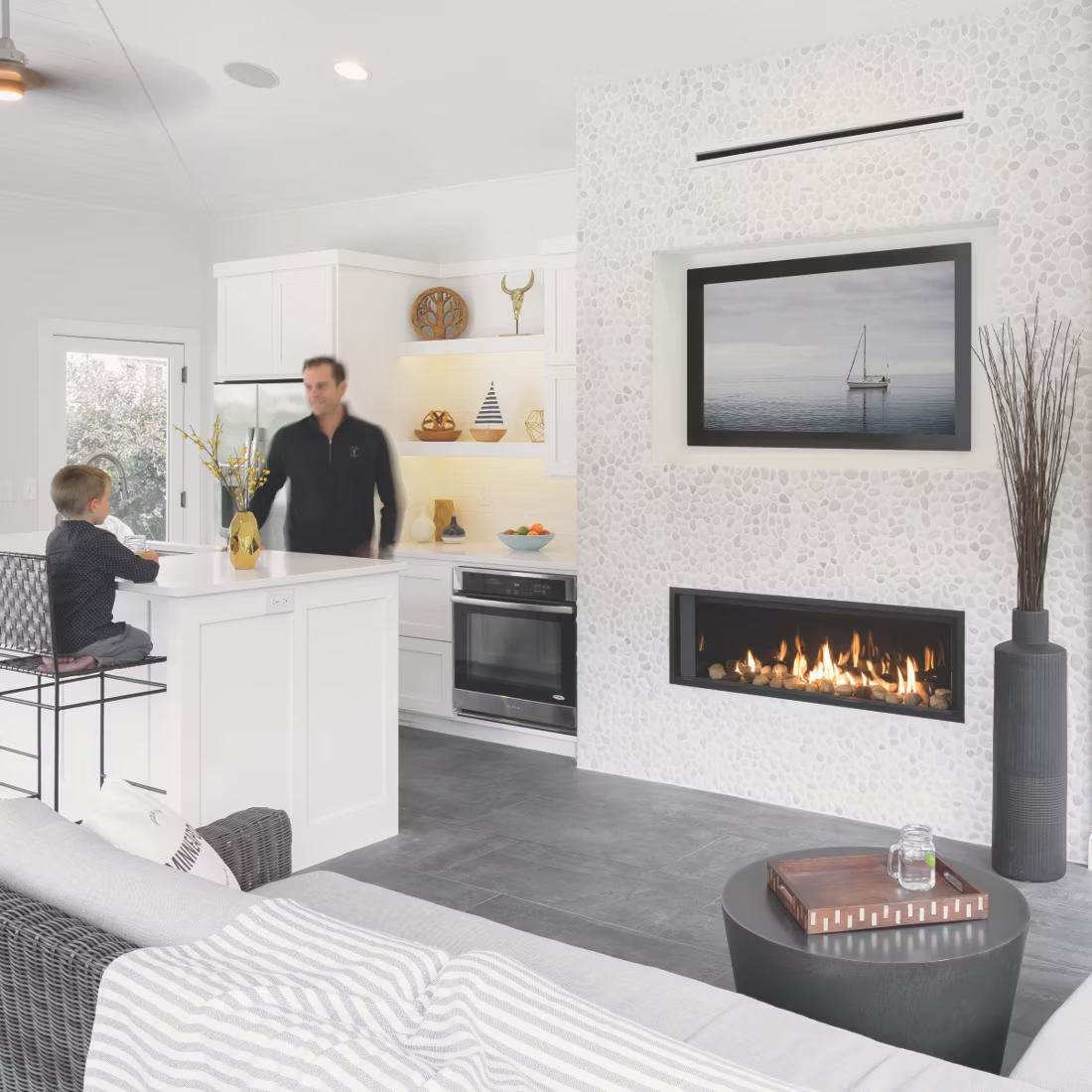
Yes—with an asterisk. Fireplaces are hot and TVs don't like heat. Either put a mantel between them to deflect rising warmth, or choose a fireplace with heat-management technology that creates a cool zone on the wall above—the wall stays around 125 degrees, barely warm, while the room still gets full heat. If you like clean lines and don't want a mantel, heat management is the answer.
What is an in-home preview and do I need one?
It's a visit where a hearth professional measures your space, confirms the model you picked actually works in your home, and walks the specs—framing, gas line, venting, finish work—before anything is ordered. Some details you just can't know until you see the house. Never make a down payment without one; it's the single most-skipped step that burns buyers.
Can a fireplace actually lower my heating bill?
Yes—by creating a comfort zone. A furnace heats every square foot of the house just to warm the one room you're in; a gas fireplace on low burns roughly a sixth of the gas a typical furnace does. Set the furnace around 55–60 degrees as a baseline, then heat the rooms your family actually uses. Families who heat this way commonly save $20–$60 a month.
Nearby Dealers
Hearth shops serving Spring and the surrounding area.
All Thingz U Need Inc
Gas Equipment Company - Houston
Find your gas fireplace in Spring, Texas.
Tell us a bit about your home and firebox, and we'll put together a free Project Guide & Parts List—the right gas fireplace, insert, or log set for your space, the parts you'll need including venting, and a trusted local dealer near Spring to install it.
Find Your Fireplace →