
Keep Your Family Warm and Safe—No Matter What
Winters here average a low of 46°F, so wood heat isn't standard—but a well-chosen stove still has a place for ambiance, a guest house, or backup heat when the power goes out after a storm.
Every Project Starts From One of These Five Situations
Santa Fe's mild Gulf Coast winters don't call for wood heat.
Santa Fe sits in Galveston County at just 27 feet of elevation, in climate zone 2A—hot and humid, with only a short, mild winter heating season. Compare that to a genuinely wood-dependent market like Duluth, MN, which has a long, brutal winter heating season, and it's clear why wood isn't the default heat source in most Santa Fe homes. Central air conditioning and heat pumps handle the vast majority of the region's climate control, and the local wood supply—oak, pecan, and mesquite—is more likely to end up in a backyard smoker than a firebox.
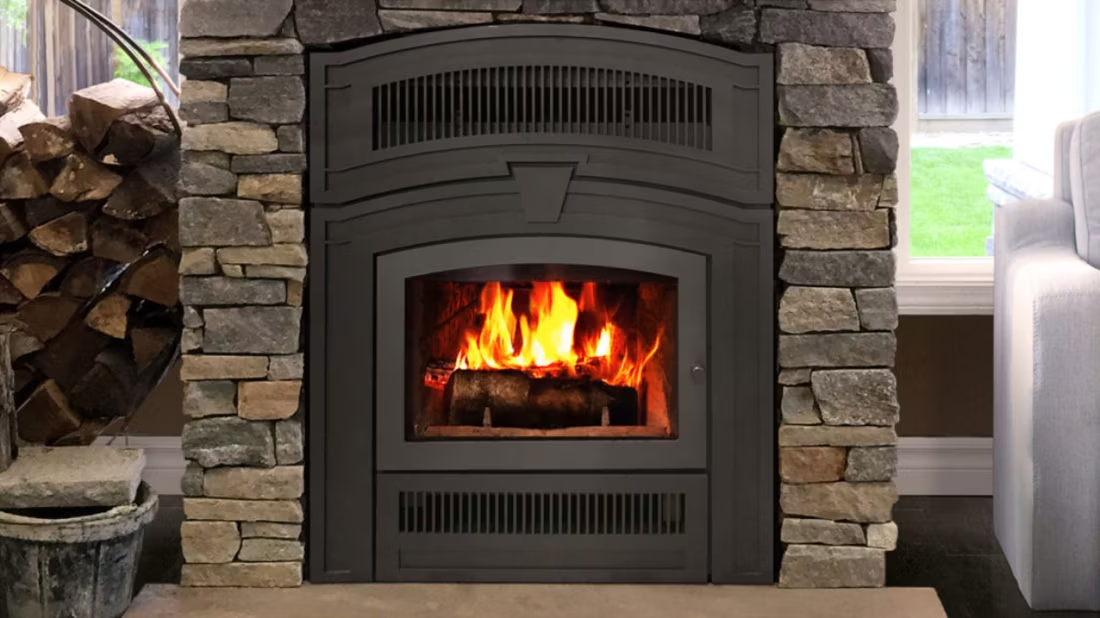
That said, wood stoves aren't unheard of here. A small number of Santa Fe homeowners install one for the atmosphere of a real fire on the handful of genuinely cold nights each winter, for a detached workshop or guest house, or—increasingly, given the area's exposure to Gulf hurricanes—as a source of heat that doesn't depend on the grid. Galveston County has seen extended power outages after storms like Ike and Harvey, and a wood stove is one of the few heating appliances that keeps working when Texas-New Mexico Power, CenterPoint Energy, or Entergy Texas lines go down. If you're considering one, the honest starting point is matching the stove to that actual use case rather than treating it as primary heat.
Three steps. No salesperson until you're ready.
Tell us about your project
Your zip code, your situation, and the fuel you're leaning toward—or let the answers point you to one.
See what's actually available
The brands dealers within 100 miles genuinely carry—real options, never a catalog mirage.
Get your dealer & Project Guide
A trusted local dealer, plus the free Project Guide & Parts List that names every component of the job.
Frequently Asked Questions
Does a wood stove make sense for a home in Santa Fe, TX?
For most homes here, no—not as a primary heat source. With an average winter low around 46°F and only a short, mild winter heating season, the climate simply doesn't demand it the way a Midwest or mountain winter would. Where a wood stove does make sense in Santa Fe is as a secondary appliance: a small stove in a workshop, sunroom, or guest house, or a unit chosen specifically as storm-outage backup heat. Being honest about which of those you're solving for changes the size and type of stove you want.
What does a wood stove installation cost in Santa Fe?
Because so few installations happen in this market compared to colder regions, pricing varies more project to project than in a place with a dozen hearth shops competing for business. A modest freestanding stove with straightforward Class A chimney venting typically lands in the $3,000–$7,000 range installed, with the low end covering a small stove in an outbuilding and the high end reflecting a full masonry chimney build in a main house. Get quotes from at least two installers—in a lower-volume market like Galveston County, prices for the same job can swing more than they would in, say, Bismarck, ND.
Do I need a permit to install a wood stove in Galveston County?
Yes—a building permit is required for any new wood-burning appliance and chimney installation, whether you're inside Santa Fe city limits or unincorporated Galveston County. The county has no air quality non-attainment designation and no winter burn-ban history like you'd find in a wood-heavy market such as Klamath Falls, OR, so the permitting is mostly about structural and fire-code compliance—proper clearances, hearth pad sizing, and venting through the roof. Most installers pull the permit as part of the job.
Why would anyone install a wood stove somewhere this warm?
Two honest reasons come up most often locally. First, ambiance—a real fire on the occasional 30-degree night in January feels different than a gas log, and some homeowners simply want that. Second, and more practically for Galveston County: hurricane resilience. When storms like Ike or Harvey knock out power for days, a wood stove keeps generating heat and can even support basic cooking, with zero dependence on Texas-New Mexico Power, CenterPoint Energy, or Entergy Texas restoring service. Neither reason means you need a large, whole-home stove—most Santa Fe installs are modest in scale.
What firewood is available locally, and is it good for heating?
Oak, pecan, and mesquite are the three woods you'll find most easily around Santa Fe and Galveston County—but locally, most of that supply is cut and sold for smoking and barbecue, not for stove heating. All three burn hot and dense, so they work fine in a wood stove once seasoned properly (6+ months, ideally covered, given the region's humidity). Just expect to source firewood from a barbecue-wood supplier or tree service rather than a dedicated firewood dealer, since there isn't much local demand for stove-length cordwood.
Wood stove or gas fireplace—which fits a Santa Fe home better?
For the vast majority of Santa Fe homeowners, gas is the more practical choice for everyday use—it lights instantly, requires no fuel storage in a humid climate, and matches how most people here actually use supplemental heat: for a handful of cool evenings a year. A wood stove earns its place in narrower circumstances—as hurricane-season backup heat that works without electricity, or in a detached space like a workshop or camp house. If grid-independent heat during storm season is the goal, wood is worth a serious look; if it's just about a nice flame in the living room, gas is usually the easier answer.
Can a wood stove actually work as emergency heat after a hurricane?
Yes, and it's one of the more legitimate reasons to install one in this area. A properly installed wood stove needs no electricity to produce heat, unlike a gas fireplace's electronic ignition (unless it's a Valor with a self-powering thermocouple) or any electric unit. After a major storm knocks out Texas-New Mexico Power, CenterPoint Energy, or Entergy Texas service for days, a wood stove with a stocked supply of seasoned oak or pecan can heat a room and warm food. If backup resilience is your main driver, tell your installer that upfront—it affects stove sizing and chimney placement relative to the rest of the home.
What size wood stove makes sense for occasional or backup use?
Smaller than you'd think. For a workshop, guest house, or single-room backup setup in a climate this mild, a small stove rated for under 1,000 square feet is usually plenty—you're not fighting single-digit overnight lows like a Fargo, ND homeowner would be. Oversizing is the most common mistake in low-heating-demand markets like Santa Fe: a stove that's too big for the space smolders at low output, builds creosote faster, and is harder to control. A local installer can size this correctly based on the actual room or structure you're heating.
Where can I find someone who installs wood stoves near Santa Fe, TX?
This isn't a market with wood-stove specialists on every corner the way a mountain town might have, so your best bet is a hearth dealer serving the greater Galveston/Houston area who handles wood, gas, and electric installs and has actual experience with wood-burning permits in Galveston County. Ask specifically about their wood-stove installation count in the last year—in a low-demand market, that experience varies a lot between dealers. We match Santa Fe homeowners with trusted local pros who genuinely install wood appliances here rather than treating it as an afterthought to their gas business.
What's the difference between an insert and a zero-clearance fireplace?
An insert is a fireplace that slides into a pre-existing wood-burning fireplace—if you don't have one, there's nothing to insert it into. A zero-clearance fireplace is built into a framed wall, which makes it the answer for remodels and new construction. Simple test: existing masonry fireplace means insert; blank or framed wall means zero-clearance.
Why is my open fireplace making my house colder?
Open fireplaces suck—literally. As the fire burns, it consumes air your furnace already paid to heat and pulls it out through the chimney, so the house is actually colder after the fire goes out than before you lit it. An insert fixes this: it seals the chimney, puts fixed glass across the front, and turns that hole in your house into a real heat source.
What is an in-home preview and do I need one?
It's a visit where a hearth professional measures your space, confirms the model you picked actually works in your home, and walks the specs—framing, gas line, venting, finish work—before anything is ordered. Some details you just can't know until you see the house. Never make a down payment without one; it's the single most-skipped step that burns buyers.
Can a fireplace actually lower my heating bill?
Yes—by creating a comfort zone. A furnace heats every square foot of the house just to warm the one room you're in; a gas fireplace on low burns roughly a sixth of the gas a typical furnace does. Set the furnace around 55–60 degrees as a baseline, then heat the rooms your family actually uses. Families who heat this way commonly save $20–$60 a month.
Nearby Dealers
Hearth shops serving Santa Fe and the surrounding area. Every listing shows whether it is a WhyFire partner, a dealer we have verified as authorized for the brands we recommend, or a local business carrying hearth products. No manufacturer pays for placement. How we verify dealers →
USA Supreme Services, LLC
Patio 1
South Texas Brick
Tru Lite Gas Products
Fireplaces By Roye
EarthCore Industries
Find your wood stove in Santa Fe.
Tell us about your project—whether it's ambiance, an outbuilding, or hurricane-season backup heat—and we'll match you with a trusted local dealer and send a free Project Guide & Parts List with the exact parts, including the vent kit, for your Santa Fe home.
Find Your Fireplace →