
Warmth that doesn't quit when the Texas grid does.
Santa Fe winters rarely get harsh, but Gulf Coast storms and hard freezes can take the power out for days. Find the right gas fireplace and connect with a trusted local dealer in Galveston County.
Every Project Starts From One of These Five Situations
Mild winters, real cold snaps, and a grid that doesn't always hold.
Santa Fe sits at just 27 feet above sea level in Galveston County, in climate zone 2A, where the average winter low hovers around 46 degrees and the winter heating season is light, amounting to only a fraction of the heating load a place like Duluth, MN or Bismarck, ND sees. Wood-burning stoves are effectively absent here; the humidity, mild temperatures, and lack of a real cutting season make cordwood heat impractical, and most homeowners with an old masonry firebox use it for looks more than warmth.
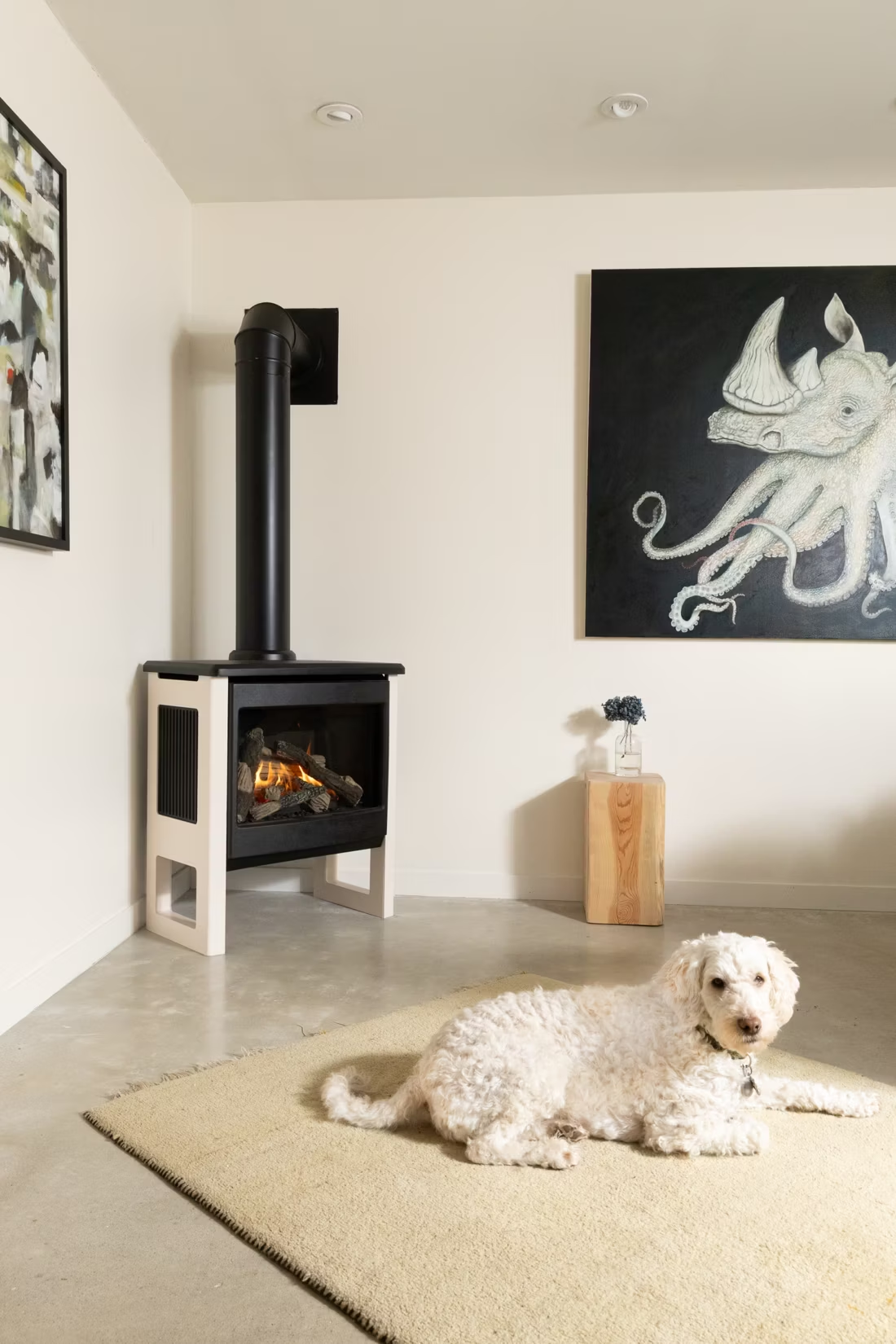
Gas fireplaces fill that gap. They deliver real, instant heat for the handful of genuinely cold nights each winter, and—just as important along this stretch of the Gulf Coast—many models keep working when the power doesn't, whether that's a hurricane-season outage or a rare hard freeze like the one that knocked out ERCOT service across Texas in February 2021. CenterPoint Energy runs natural gas lines through much of the city and surrounding Galveston County; homes further out in unincorporated areas typically run on a propane tank instead. Either way, the right unit gives you heat, light, and a reason to stay put during the next storm.
Three steps. No salesperson until you're ready.
Tell us about your project
Your zip code, your situation, and the fuel you're leaning toward—or let the answers point you to one.
See what's actually available
The brands dealers within 100 miles genuinely carry—real options, never a catalog mirage.
Get your dealer & Project Guide
A trusted local dealer, plus the free Project Guide & Parts List that names every component of the job.
Frequently Asked Questions
How much does a gas fireplace installation cost in Santa Fe?
Most gas fireplace installations in Santa Fe run between $3,800 and $9,000. A direct-vent insert dropped into an existing masonry wood-burning fireplace—a common project here, since so many older Santa Fe homes have a firebox that rarely gets used—sits toward the lower end if a gas line is already nearby. A new built-in fireplace for a remodel or new construction, especially one that needs a fresh gas line run from the meter or a new propane tank set for homes outside the CenterPoint Energy gas footprint, runs higher. A local installer will give you a firm number after seeing the space.
Do I need natural gas, or should I plan on propane?
It depends on where in Santa Fe you're located. CenterPoint Energy's natural gas distribution lines reach a good portion of the city and the more built-up parts of Galveston County, so if your water heater or range already runs on natural gas, adding a fireplace is usually a straightforward tie-in. Homes further out toward the unincorporated edges of the 77510 and 77517 zip codes are more often on propane, supplied by a local tank company. Nearly every gas fireplace on the market can be set up for either fuel—your installer just configures the correct orifice and regulator for whichever you have.
Will a gas fireplace still work if the power goes out?
Most will, which is exactly why they're worth having on the Gulf Coast. Units with intermittent pilot ignition (IPI) run on a small battery backup that kicks in automatically when the power drops, so the fireplace lights on demand just like normal. Valor takes it a step further—their fireplaces generate their own electricity through the pilot's thermocouple, so there are no batteries to remember at all. After events like the February 2021 freeze that left parts of the Texas grid down for days, a lot of Galveston County homeowners specifically ask for battery-free or battery-backup ignition when they're shopping. It's a fair question to bring to any local dealer.
What's the difference between a gas fireplace, gas insert, and gas stove?
A gas fireplace is a fully built-in unit framed into a wall—the right call for new construction or a remodel without an existing firebox. A gas insert slides into an existing masonry fireplace opening and uses the chimney as its vent path, which is the more common project in Santa Fe given how many homes here already have an unused wood-burning firebox. A gas stove is freestanding and sits out on the floor, which works well in a room without any existing fireplace at all. For most Santa Fe homeowners converting an old firebox, an insert is the simplest and most cost-effective route.
Do I need a permit to install a gas fireplace in Santa Fe?
Yes. Properties inside city limits go through the City of Santa Fe Building Department, while homes in the unincorporated parts of Galveston County—a large share of the 77510 and 77517 zip codes—permit through the Galveston County Permits Office instead. Either way, the gas line connection has to be done by a licensed gas fitter, and most local hearth retailers coordinate the building permit, the gas work, and the final inspection together so you're not managing separate trades yourself.
Should I get a vented or vent-free gas fireplace?
Vented (direct-vent) gas fireplaces pull combustion air from outside and exhaust it back outside through a sealed pipe—they're the standard recommendation almost everywhere, including Santa Fe. Vent-free units are legal in Texas and burn without any external venting, which some homeowners like for flexibility in a room without an existing chimney, but they release some water vapor and combustion byproducts into the room. Given how humid the Gulf Coast already runs for most of the year, most local installers steer homeowners toward a direct-vent unit rather than adding more moisture to the air. Ask your dealer to walk through both options for your specific room.
How often does a gas fireplace need to be serviced in Santa Fe?
Plan on an annual inspection, typically $125 to $200, where a technician checks the burner, pilot assembly, gas connections, and venting, and cleans the glass and interior. It matters a bit more here than it would inland—the salt air off Galveston Bay can accelerate corrosion on exterior vent caps and termination points, so a yearly look at the venting hardware specifically is worth asking your service tech to prioritize.
What size gas fireplace do I actually need in a climate this mild?
Smaller than you might think. With such a light winter heating load and winter lows that average in the mid-40s, most Santa Fe homes are better served by a fireplace sized for ambiance and occasional supplemental heat—often in the 20,000 to 30,000 BTU range—rather than the larger, primary-heat units you'd see recommended in a place like Bozeman, MT. Oversizing wastes money on the unit and can make a room uncomfortably hot on the handful of nights you actually run it. A local retailer can size the room correctly during an in-home visit.
Gas or electric fireplace—which makes more sense for my home?
Both are common choices in Santa Fe. Electric fireplaces are cheaper to install (often $400 to $1,500), need no venting or gas line, and run off standard household power from Texas-New Mexico Power, CenterPoint Energy, or Entergy Texas at roughly 13.7 cents per kWh—but they only work when the grid does, and their heat output is modest. Gas fireplaces cost more upfront but deliver real, substantial heat and, with a battery-backup or self-powered ignition system, keep running through a hurricane-season outage or a hard freeze. For a supplemental accent in a guest room, electric is often plenty. For a room you actually want warm during a storm, gas is usually the better call.
Does a gas fireplace work when the power is out?
Yes—modern gas fireplaces have a battery backup for the ignition system that lasts for weeks, so no power equals no problem. Your furnace can't say that: no electricity, no blower, no heat. It's one of the most common reasons families add a fireplace, and worth confirming on any model you're considering.
What's the difference between radiant and convective fireplace heat?
Most fireplaces are a thin metal box—they heat fine, but you rely on the fan to move the warmth into the room. Radiant models use a thick cast-ceramic firebox, about an inch and a quarter thick, that soaks up the fire's heat and radiates roughly 25–30% more warmth into the room with no fan running. If you watch TV in the same room or want heat in a power outage, radiant is worth asking about.
Does a fireplace add value to my home?
On average, a fireplace adds back to the home about the same amount you spent installing it. Add the monthly savings from heating the rooms you actually use instead of the whole house—often hundreds of dollars a year—and the value case is strong before you even count what a fire does for how your family uses the room.
What is an in-home preview and do I need one?
It's a visit where a hearth professional measures your space, confirms the model you picked actually works in your home, and walks the specs—framing, gas line, venting, finish work—before anything is ordered. Some details you just can't know until you see the house. Never make a down payment without one; it's the single most-skipped step that burns buyers.
Nearby Dealers
Hearth shops serving Santa Fe and the surrounding area. Every listing shows whether it is a WhyFire partner, a dealer we have verified as authorized for the brands we recommend, or a local business carrying hearth products. No manufacturer pays for placement. How we verify dealers →
USA Supreme Services, LLC
Patio 1
South Texas Brick
Tru Lite Gas Products
Fireplaces By Roye
EarthCore Industries
Find your gas fireplace in Santa Fe.
Tell us a bit about your home and we'll put together a free Project Guide & Parts List—the right gas fireplace or insert, the vent kit it needs, and a trusted local Galveston County dealer to install it.
Find Your Fireplace →