
Keep Your Family Warm and Safe—No Matter What
With such a short, mild winter and winter lows averaging 42°F, Sandy Oaks rarely needs wood heat to survive the season. But plenty of homeowners still want a real wood fire—for gatherings, for backup heat during grid outages, or simply because oak and mesquite are already stacked in the yard.
Every Project Starts From One of These Five Situations
Mild winters make wood a choice, not a necessity.
Sandy Oaks sits in Bexar County southeast of San Antonio, at 629 feet elevation in climate zone 2A. The math here is different from the northern towns where wood stoves are load-bearing infrastructure: a short, mild winter and an average winter low of 42°F mean most homes never need supplemental heat at all, let alone a stove running around the clock. Compare that to a place like Duluth, Minnesota, which faces a long, brutal winter and depends on wood as genuine backup heat—Sandy Oaks isn't that kind of climate, and it's worth saying so plainly.
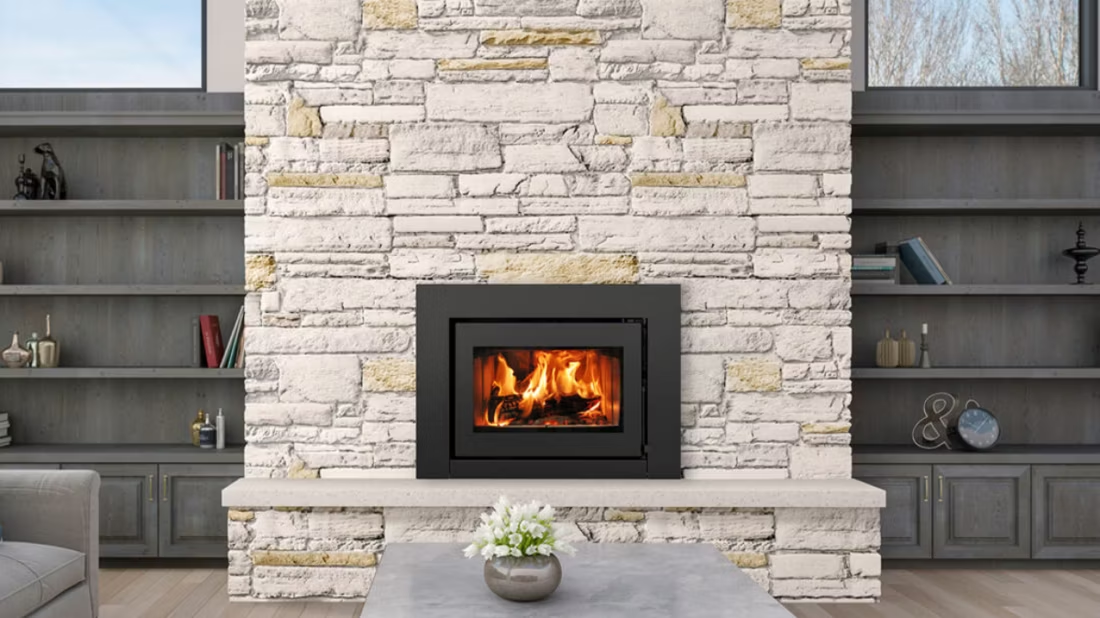
That doesn't mean wood is off the table. Bexar County homeowners have easy access to oak, pecan, and mesquite—the same species locals already split and stack for backyard smokers and BBQ pits—and a fair number of Sandy Oaks households want a wood-burning fireplace for the atmosphere of a real fire, for entertaining, or as genuine off-grid backup after the statewide ERCOT grid failures during Winter Storm Uri made a lot of Texans rethink having a non-electric heat source. For most homes here, though, gas and electric fireplaces are the more practical everyday choice, and a good local dealer will tell you that honestly rather than upsell a wood unit that will sit unused ten months a year.
Three steps. No salesperson until you're ready.
Tell us about your project
Your zip code, your situation, and the fuel you're leaning toward—or let the answers point you to one.
See what's actually available
The brands dealers within 100 miles genuinely carry—real options, never a catalog mirage.
Get your dealer & Project Guide
A trusted local dealer, plus the free Project Guide & Parts List that names every component of the job.
Frequently Asked Questions
Does a wood-burning fireplace actually make sense in Sandy Oaks's climate?
For most homes, not as a primary heat source. With such a short, mild winter and winter lows averaging 42°F, Sandy Oaks winters just don't demand it the way a place like Bozeman, Montana or Duluth, Minnesota does. Where wood does make sense here is as a secondary feature: a fireplace for the handful of genuinely cold nights each winter, for entertaining, or as backup heat that doesn't depend on the electric grid. A trusted local dealer can walk through your home and tell you honestly whether a wood unit fits your goals or whether gas or electric would serve you better.
What wood species are actually available to burn locally?
Oak, pecan, and mesquite are the three you'll find most easily around Bexar County—the same trio local pitmasters use for smoking brisket. Oak splits cleanly and burns long and steady, which makes it the best all-around choice for an indoor fireplace. Mesquite burns hot and fast with a strong aroma; it's excellent for a quick evening fire but needs more frequent reloading than oak. Pecan falls in between—good heat, pleasant smell, and easy to find since it's a byproduct of the region's pecan orchards and tree removal work.
Is a wood stove worth having as backup heat during a Texas winter storm?
It's one of the stronger arguments for wood heat in a climate like this one. Sandy Oaks doesn't need wood for routine warmth, but the February 2021 grid failure during Winter Storm Uri left much of ERCOT territory—including Bexar County—without power for days during a hard freeze. A wood-burning stove or fireplace doesn't care whether the grid is up, which is exactly the appeal for homeowners who lived through that week. If backup heat is your main reason for considering wood, say so when you talk to a local dealer—it changes which unit and venting setup makes sense.
Do I need a permit to install a wood-burning fireplace in Sandy Oaks?
Generally yes—new wood-burning appliance installations typically require a building permit, whether that's through the City of Sandy Oaks or unincorporated Bexar County depending on the property's exact location. Most licensed installers handle the permit application and inspection scheduling as part of the job, so it's rarely something you have to manage yourself. Because wood installs are less common here than gas or electric, it's worth confirming your installer has actually pulled a wood-stove or masonry-fireplace permit before, not just gas line permits.
What's the real difference between installing a wood fireplace here versus a gas insert?
A wood-burning fireplace needs a proper chimney or Class A venting, clearances to combustibles, and an ongoing supply of split, seasoned wood—a real commitment for a climate that only asks for heat a few weeks a year. A gas fireplace or insert, by contrast, lights instantly, needs no fuel storage, and is the far more common choice in Sandy Oaks precisely because it matches how little the climate demands. If you're on the fence, ask a local dealer to walk you through both: many Bexar County homeowners end up choosing gas for daily convenience and reserve wood-burning for a dedicated outdoor fire pit or smoker instead.
How much does a wood-burning fireplace installation cost in Sandy Oaks?
Because wood units are a smaller share of installs in this climate, expect a bit more lead time for special-ordering compared to gas or electric. A factory-built, zero-clearance wood fireplace typically runs a few thousand dollars installed, while a true masonry fireplace with a full chimney build costs considerably more due to the brick and mortar work involved. Get a firm number from a local installer after they've seen your home—venting path and whether you're starting from scratch or retrofitting an existing chase both move the price significantly.
Can I use an indoor wood fireplace for the same wood I'd use in a backyard smoker?
The wood itself—oak, pecan, mesquite—works in both, but the equipment isn't interchangeable. An indoor fireplace or stove is built and vented for space heating and ambiance, not for controlling smoke and temperature the way a dedicated offset smoker or pellet grill does. What tends to happen locally is homeowners who already keep a woodpile for weekend BBQ find it easy to justify an indoor fireplace too, since the fuel supply is already there. Just don't expect to cook brisket in your living room fireplace.
Are there any air quality restrictions on wood burning in Sandy Oaks?
No—Bexar County doesn't carry the winter inversion or wood-smoke non-attainment issues that restrict burning in some Western mountain towns. San Antonio-area air quality monitoring focuses mainly on summer ozone, not wintertime wood smoke, and there's no local burn-curtailment program tied to particulate levels. That said, any new wood stove you install will still need to meet current EPA emissions standards, which your installer will confirm as part of the sale.
Wood vs. gas vs. electric—which actually fits a Sandy Oaks home?
For most Sandy Oaks households, gas and electric fireplaces are the practical fit—they match a climate that rarely drops below the low 40s and don't require fuel storage or chimney maintenance for a unit that would otherwise sit idle most of the year. Wood makes the most sense for a specific homeowner: someone who wants a genuine fire for entertaining, has room to store oak or mesquite anyway, or wants heat that keeps working if the ERCOT grid goes down again. None of these are wrong answers—the point is matching the fuel to what you actually need, which is exactly what a local dealer consultation is for.
Why is a fireplace insert so efficient?
An insert does two things: it seals the chimney completely, so you stop losing air you already paid to heat, and it radiates warmth into the room through the firebox and glass. Most add a heat-exchange fan that pulls cool room air underneath, wraps it around the hot firebox, and pushes it back out warm. Your home is more efficient before you've even lit the first fire.
Do I have to leave the stove door cracked open to start a fire?
On many stoves, yes—a new fire needs extra air, and cracking the door a couple inches is how most stoves get it. But some modern stoves offer an automatic startup air system: engage it when you light, and timed air jets feed the fire for the first 20 minutes with the door fully shut, then close automatically. It's mechanical—like an egg timer, no electricity—and it means you can load it, light it, and walk away.
How much should I budget for a fireplace?
For an average home—covering the fireplace, the vent pipe, and basic installation—a budget between $3,900 and $5,500 gives you a lot of options across wood, gas, and pellet. By the time you add finish work, gas line, and electrical, the average complete installation lands between $5,000 and $12,000 all-in. In a remodel or new build, a good rule is to put about 2.5% of the total project cost toward the fireplace.
What is an in-home preview and do I need one?
It's a visit where a hearth professional measures your space, confirms the model you picked actually works in your home, and walks the specs—framing, gas line, venting, finish work—before anything is ordered. Some details you just can't know until you see the house. Never make a down payment without one; it's the single most-skipped step that burns buyers.
Nearby Dealers
Hearth shops serving Sandy Oaks and the surrounding area. Every listing shows whether it is a WhyFire partner, a dealer we have verified as authorized for the brands we recommend, or a local business carrying hearth products. No manufacturer pays for placement. How we verify dealers →
Area – San Antonio, Tx
Installed Building Products, LLC
Orange County Bldg Materl
Home & Patio
Bbq Outfitters
Pico Propane Operating
Find your wood fireplace in Sandy Oaks.
Tell us about your home and what you actually want a wood fireplace to do—ambiance, entertaining, or grid-outage backup—and we'll give you an honest read, match you with a trusted local dealer, and send over a free Project Guide & Parts List with the exact parts, including the vent kit, for your project.
Find Your Fireplace →