
A Rare Choice for a Mild South Texas Winter.
Pellet heat isn't the norm around Sandy Oaks, but for the right home it can still make sense. Get an honest read on fit, then connect with a real dealer who works this market.
Every Project Starts From One of These Five Situations
Pellet stoves are the exception here, not the rule.
Sandy Oaks sits in Bexar County just southeast of San Antonio, in climate zone 2A, where the average winter low is a mild 42°F and the area logs only about 1,241 heating degree days a year. For comparison, a city like Duluth, MN racks up over 9,000 HDD in the same period—this is simply not a place where homes are built to run a heating appliance all winter. The oak, pecan, and mesquite that grow throughout the area are far more likely to end up in a smoker for brisket than stacked as cordwood or bagged as heating fuel.
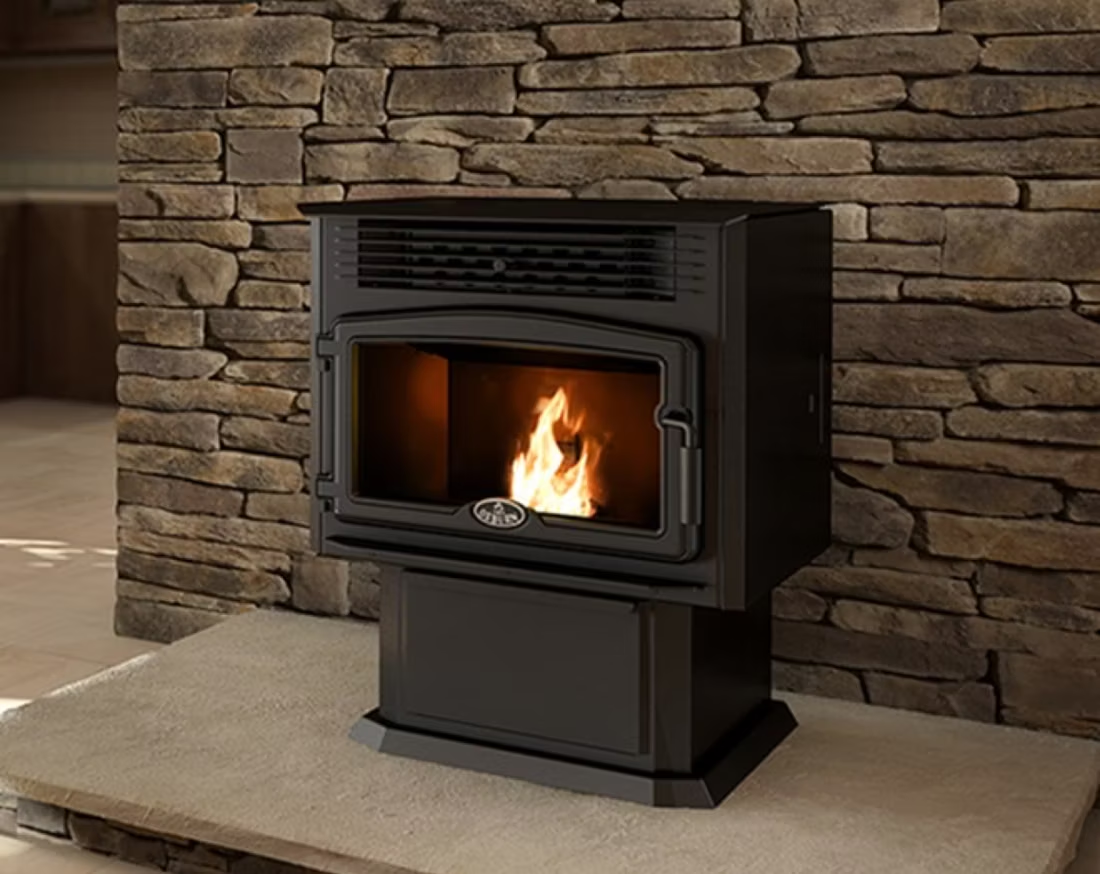
That said, a handful of Sandy Oaks homeowners still want a pellet stove—for the ambiance of a real flame, as backup warmth during an unusual cold snap like the February 2021 freeze, or simply because they like the low-maintenance burn a pellet appliance offers over a wood stove. If that's you, dealers in the greater San Antonio market carry pellet inserts and stoves, and bagged fuel from brands like Forest Energy and Lignetics is available through specialty hearth retailers, though not on every hardware store shelf the way it is in colder states. One thing worth knowing up front: a pellet stove's auger and blower run on electricity, so during an outage on the Karnes Electric Cooperative, Guadalupe Valley Electric Cooperative, or Bandera Electric Cooperative lines that serve this area, the stove goes cold along with everything else—unlike a wood-burning fireplace, which doesn't need power to throw heat.
Three steps. No salesperson until you're ready.
Tell us about your project
Your zip code, your situation, and the fuel you're leaning toward—or let the answers point you to one.
See what's actually available
The brands dealers within 100 miles genuinely carry—real options, never a catalog mirage.
Get your dealer & Project Guide
A trusted local dealer, plus the free Project Guide & Parts List that names every component of the job.
Frequently Asked Questions
Does a pellet stove actually make sense in Sandy Oaks's climate?
For most homes here, not as a primary heat source—with only 1,241 heating degree days and winter lows averaging 42°F, the typical Sandy Oaks home is heated by a central electric heat pump or gas furnace that runs a fraction of the season compared to a colder market. Where a pellet stove earns its keep locally is as a supplemental or occasional-use appliance: warming a den on the coldest nights of January, providing backup heat during a hard freeze, or simply adding the look and feel of a real fire to a living room. If your goal is whole-home heating efficiency, a heat pump upgrade will usually pay off faster than a pellet stove in this climate.
What does a pellet stove installation cost in Sandy Oaks?
Because pellet appliances are a niche product in this part of Bexar County, most homeowners end up working with a dealer based in the San Antonio metro rather than a storefront in Sandy Oaks itself. Across Texas, a typical pellet stove or insert installation—unit, venting, and hearth pad—runs roughly $3,500 to $6,500, with the low end covering a simple freestanding stove and the high end covering an insert into an existing masonry fireplace with liner work. Get a firm number from a dealer after an in-home visit, since venting path and hearth clearance requirements vary house to house.
Where do I buy pellet fuel near Sandy Oaks?
Pellet fuel isn't stocked at every big-box store in this area the way it is in states with heavier winter demand. Brands like Forest Energy and Lignetics are the regional standards and are typically carried by specialty hearth retailers in San Antonio rather than local hardware stores. Because supply isn't as dense here, it's worth buying a season's worth of bags—usually sold by the ton—before cold weather hits rather than counting on restocking mid-winter.
Do I need a permit to install a pellet stove in Sandy Oaks?
Likely yes, though Sandy Oaks is a small city without its own dedicated building department, so most residential permitting in the area runs through Bexar County Development Services. A pellet stove installation typically needs a permit covering the vent penetration through the wall or roof and confirmation of proper hearth clearances, similar to any solid-fuel appliance. A licensed local installer can tell you exactly what Bexar County requires for your address and pull the permit as part of the job.
Will my pellet stove work during a power outage?
No—pellet stoves rely on an electric auger to feed fuel and a blower to distribute heat, so they shut down when the power does. That matters in this area: the February 2021 freeze knocked out ERCOT-connected power across Bexar County for days, including customers on Karnes Electric Cooperative and Guadalupe Valley Electric Cooperative lines. If reliable heat during a grid outage is your top priority, a battery backup or small generator can keep a pellet stove running through a short outage, but a wood-burning appliance or a propane unit with a standing pilot will get you through a multi-day outage without any power at all.
What size pellet stove do I need for a Sandy Oaks home?
Sizing here is a different exercise than it is in a cold-climate market, since most Sandy Oaks buyers aren't asking a pellet stove to carry the whole house through winter. A small to mid-size unit rated for the room or open living area you actually want warmed on a 30-degree night is usually plenty—think 1,000 to 1,500 square feet of coverage rather than whole-home BTU sizing. A local dealer can size the unit correctly for the specific room and insulation level of your home during a quick consultation.
How much maintenance does a pellet stove need in this climate?
Less than it would in a place where the stove runs daily from November through March. Routine care still applies—emptying the ash pot, wiping down the hopper and auger, and cleaning the glass—but because most Sandy Oaks owners are burning occasionally rather than continuously, that upkeep happens far less often. An annual professional inspection before the first cold snap each year is still the right call to make sure the venting, gaskets, and electrical components are in good shape after months of sitting idle.
Are there rebates available for installing a pellet stove in Texas?
Texas doesn't run a state-level efficiency rebate program for pellet appliances the way some cold-climate states do. It's worth checking directly with your electric provider—Karnes Electric Cooperative, Guadalupe Valley Electric Cooperative, or Bandera Electric Cooperative, depending on which serves your address—since co-ops occasionally run general weatherization or efficiency incentive programs, though pellet-specific rebates are uncommon here given how limited local demand is.
Pellet vs. gas—which is the more practical choice for a Sandy Oaks home?
For most homeowners in this area, gas is the more practical everyday pick: it lights instantly, needs no fuel storage, and is installed and serviced by a wider bench of local dealers since it's the standard here. Pellet is the choice for someone who specifically wants the look of a wood-pellet flame, doesn't mind keeping bags of fuel on hand from a San Antonio-area supplier, and is comfortable with hopper and ash maintenance in exchange for that ambiance. Given how mild winters are here, most Sandy Oaks buyers who install a pellet unit are doing it for supplemental warmth and atmosphere rather than as their main source of heat—gas tends to fill that main-heat role instead.
Why is a fireplace insert so efficient?
An insert does two things: it seals the chimney completely, so you stop losing air you already paid to heat, and it radiates warmth into the room through the firebox and glass. Most add a heat-exchange fan that pulls cool room air underneath, wraps it around the hot firebox, and pushes it back out warm. Your home is more efficient before you've even lit the first fire.
What's the difference between an insert and a zero-clearance fireplace?
An insert is a fireplace that slides into a pre-existing wood-burning fireplace—if you don't have one, there's nothing to insert it into. A zero-clearance fireplace is built into a framed wall, which makes it the answer for remodels and new construction. Simple test: existing masonry fireplace means insert; blank or framed wall means zero-clearance.
Can I install a fireplace myself?
If you're putting a fire in your house on purpose, it's best to work with an expert. Unless you're genuinely experienced in framing, gas line, vent pipe, and the national code on clearances to combustibles, have a professional do it—and ideally the same company that sells you the fireplace, so warranty, service, and liability all live under one roof.
Does a fireplace add value to my home?
On average, a fireplace adds back to the home about the same amount you spent installing it. Add the monthly savings from heating the rooms you actually use instead of the whole house—often hundreds of dollars a year—and the value case is strong before you even count what a fire does for how your family uses the room.
Nearby Dealers
Hearth shops serving Sandy Oaks and the surrounding area. Every listing shows whether it is a WhyFire partner, a dealer we have verified as authorized for the brands we recommend, or a local business carrying hearth products. No manufacturer pays for placement. How we verify dealers →
Area – San Antonio, Tx
Installed Building Products, LLC
Orange County Bldg Materl
Home & Patio
Bbq Outfitters
Pico Propane Operating
Pellet Brands Stocked Around Sandy Oaks
Manufacturers will point you to the nearest stocking dealer.
Find your pellet fireplace in Sandy Oaks.
Tell us about your home and how you'd actually use a pellet stove, and we'll match you with a trusted local dealer and send over a free Project Guide & Parts List—sized and specified for your Sandy Oaks project.
Find Your Fireplace →