
Keep Your Family Warm and Safe—No Matter What
Saginaw doesn't need wood heat the way Bismarck or Duluth do—but between ERCOT grid scares and genuine appreciation for a real fire, plenty of Tarrant County homeowners still want one. We'll help you find out what actually makes sense for your house.
Every Project Starts From One of These Five Situations
Here, wood is about backup and ambiance—not daily heat.
Saginaw sits at just 731 feet elevation on the northwest edge of the Fort Worth-Dallas metroplex, and its climate reflects that: a mild, short heating season with winter lows averaging around 35°F. That's a fraction of what a wood-dependent city like Bismarck, ND or Duluth, MN sees in a single hard winter. Most Saginaw homes are built and heated around central gas or electric systems, and for good reason—a full wood-heating setup is overkill for a season that rarely produces more than a handful of nights near freezing.
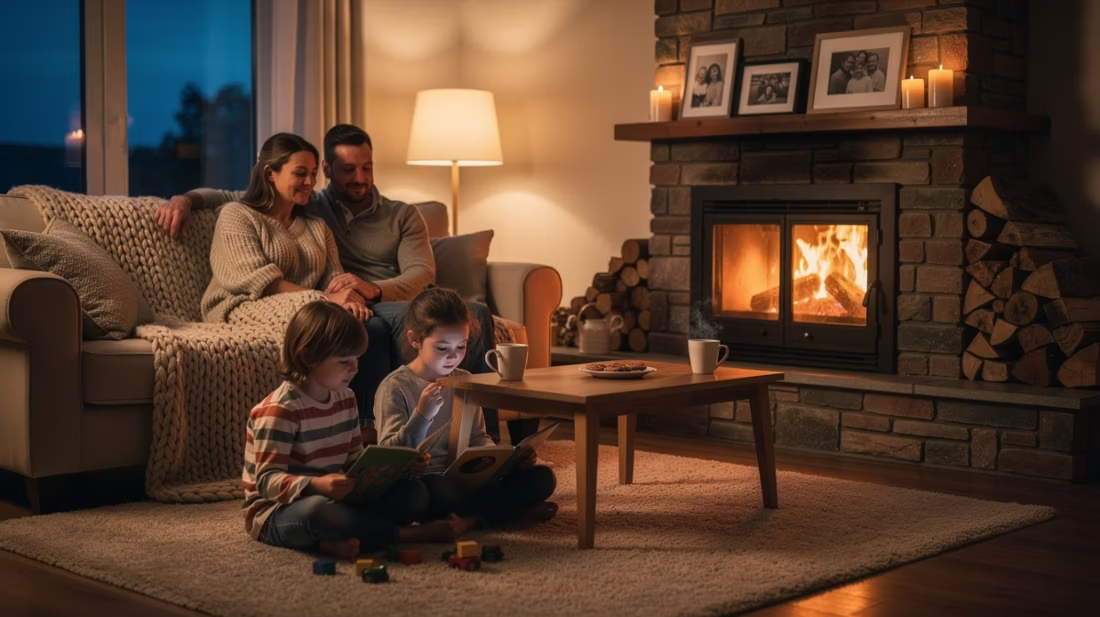
That said, wood hasn't disappeared from Saginaw households. February 2021's Winter Storm Uri, when ERCOT rolling blackouts left North Texas homes without power for days in the cold, pushed a real number of local homeowners toward wood-burning stoves and fireplace inserts as a no-electricity backup. Others simply want the ambiance of a real fire on the handful of genuinely cold nights each winter, or already have a masonry fireplace they use occasionally. Oak, pecan, and mesquite are all locally abundant—the same species Tarrant County pitmasters reach for at the smoker—and any of the three burns fine in a properly sized stove or insert, even if it's lit a dozen times a year rather than daily.
Three steps. No salesperson until you're ready.
Tell us about your project
Your zip code, your situation, and the fuel you're leaning toward—or let the answers point you to one.
See what's actually available
The brands dealers within 100 miles genuinely carry—real options, never a catalog mirage.
Get your dealer & Project Guide
A trusted local dealer, plus the free Project Guide & Parts List that names every component of the job.
Frequently Asked Questions
How much does a wood stove or fireplace insert cost to install in Saginaw?
Because wood-burning installs are uncommon in this market compared to gas or electric, pricing tends to be quoted project-by-project rather than off a standard local range. As a general guide, a freestanding wood stove with Class A chimney venting typically runs $4,000-$7,500 installed, and converting an existing masonry fireplace with a wood-burning insert usually falls in the $3,500-$6,500 range depending on liner length and hearth work. Ask any local dealer for a firm quote after an in-home visit—with so few wood jobs relative to gas conversions, installers will want to see your chimney or wall configuration first.
Is wood heat actually practical in Saginaw's climate?
For most homes, no—not as a primary heat source. With only a mild, short heating season and winter lows that average in the mid-30s, Saginaw's heating load is a small fraction of what a stove-dependent climate like Helena, MT or Burlington, VT sees. Where wood does make sense is as supplemental or emergency heat: something that can keep a room warm and functional if the power grid goes down, or that adds real ambiance on the coldest nights of January and February. Homeowners chasing whole-house wood heat here are usually better served by their existing gas or electric system doing the daily work.
What firewood species are available locally, and how do they burn?
Oak, pecan, and mesquite are the three woods you'll find most readily around Tarrant County, and all three double as popular smoking woods for Texas barbecue. Oak is the most balanced choice for a stove—dense, long-burning, and moderate on smoke. Pecan burns hot and aromatic, similar to hickory, and works well once seasoned for at least six months. Mesquite burns very hot and fast with a strong, resinous smoke—great in short bursts but less ideal for an all-night burn, and it should be well-seasoned to avoid heavy creosote buildup in the flue.
Do I need a permit to install a wood stove in Saginaw?
Yes—new wood-burning appliance installations, including freestanding stoves and fireplace inserts, require a building permit through the City of Saginaw, and the unit itself needs to meet current EPA emissions standards. Most hearth dealers that do wood installs in this area also handle gas work day-to-day, so ask specifically about their wood-burning permit experience and whether they'll pull the permit and schedule the inspection for you—it's a smaller volume of work here than in colder states, so not every installer does it regularly.
Does a wood stove make sense as backup heat during a power outage?
It's the single biggest reason we hear from Saginaw homeowners looking into wood heat. Winter Storm Uri in February 2021 left large parts of the ERCOT grid—including areas served by Oncor Electric Delivery, United Electric Cooperative, and Denton County Electric Cooperative—without power for days during a hard freeze. A wood stove or fireplace insert doesn't need electricity to produce heat, which makes it one of the few home heating options that keeps working when the grid doesn't. If that scenario is your main motivation, a smaller, simpler freestanding stove sized for one or two rooms is usually the more practical (and less expensive) choice than a whole-house system.
Are there local restrictions on wood burning in Saginaw?
Saginaw doesn't carry the winter-inversion or wood-smoke non-attainment designations you'd see in a place like the Klamath Basin, and there are no routine burn curtailment periods here. The one thing to watch for is Tarrant County outdoor burn bans, which the county occasionally issues during drought conditions—these apply to open outdoor fires, not EPA-certified indoor wood stoves or inserts, but it's worth checking current county status before doing any outdoor brush burning alongside your firewood prep.
What size wood stove do I actually need in Saginaw?
Smaller than you'd guess if you're used to seeing stove-sizing guides written for colder states. Since most Saginaw installs are for supplemental heat, ambiance, or grid-outage backup rather than whole-home heating, a small to mid-size stove (rated for 1,000-1,500 sq ft) is plenty for the room or open living area it's serving, even in an uninsulated older home. Oversizing a stove for a mild climate like this one just means more smoldering, low-temperature burns—which produces more creosote, not more useful heat. A local dealer can size it correctly based on the specific room, not a generic climate chart.
Should I consider a pellet stove instead of wood?
Pellet stoves are even less common in Saginaw than wood-burning units, mainly because the mild heating load doesn't reward the extra convenience pellets offer in colder climates. Regional pellet brands like Forest Energy and Lignetics are available through some Texas dealers, but given how few days a year most homes here actually need supplemental heat, the simplicity of an occasional wood fire—no hopper, no auger, no electricity dependency—tends to fit the local use case better, especially if backup heat during an outage is part of the goal.
Wood vs. gas—which makes more sense for a Saginaw home?
For nearly all Saginaw homes, gas is the more practical everyday choice—it's instant, clean, and works well paired with the central HVAC systems most local houses already have. Wood's advantage is narrower but real: it works without electricity, which matters given ERCOT's track record during hard freezes, and it offers the kind of real-fire ambiance a gas unit can't fully replicate. Most homeowners who end up going with wood here are adding it as a second, backup-and-ambiance option alongside gas or electric heat—not replacing their primary system with it.
Why is my open fireplace making my house colder?
Open fireplaces suck—literally. As the fire burns, it consumes air your furnace already paid to heat and pulls it out through the chimney, so the house is actually colder after the fire goes out than before you lit it. An insert fixes this: it seals the chimney, puts fixed glass across the front, and turns that hole in your house into a real heat source.
Why is a fireplace insert so efficient?
An insert does two things: it seals the chimney completely, so you stop losing air you already paid to heat, and it radiates warmth into the room through the firebox and glass. Most add a heat-exchange fan that pulls cool room air underneath, wraps it around the hot firebox, and pushes it back out warm. Your home is more efficient before you've even lit the first fire.
Can I install a fireplace myself?
If you're putting a fire in your house on purpose, it's best to work with an expert. Unless you're genuinely experienced in framing, gas line, vent pipe, and the national code on clearances to combustibles, have a professional do it—and ideally the same company that sells you the fireplace, so warranty, service, and liability all live under one roof.
What is an in-home preview and do I need one?
It's a visit where a hearth professional measures your space, confirms the model you picked actually works in your home, and walks the specs—framing, gas line, venting, finish work—before anything is ordered. Some details you just can't know until you see the house. Never make a down payment without one; it's the single most-skipped step that burns buyers.
Nearby Dealers
Hearth shops serving Saginaw and the surrounding area.
See what's possible for wood heat in Saginaw.
Tell us about your home and how you'd use a wood stove or insert—ambiance, backup heat, or both—and we'll match you with a local dealer and a free Project Guide & Parts List sized to your space.
Find Your Fireplace →