
Keep Your Family Warm and Safe—No Matter What
Wood heat isn't the default here, but it's not unheard of either. See where it makes sense in Rowlett and connect with a dealer who actually installs it.
Every Project Starts From One of These Five Situations
Here, wood heat is the exception, not the rule.
Rowlett sits on the shore of Lake Ray Hubbard in the Dallas-Fort Worth metro, in climate zone 3A, where the average winter low is a mild 34°F and the area logs only about 2,577 heating degree days a year. Compare that to a place like Duluth, MN, which racks up roughly 10,000 HDD, and it's clear why most Rowlett homes are built around central heat pumps and gas furnaces rather than a wood-burning stove doing the heavy lifting. That's the honest reason our data flags wood as a niche fit for this market rather than a standard one.
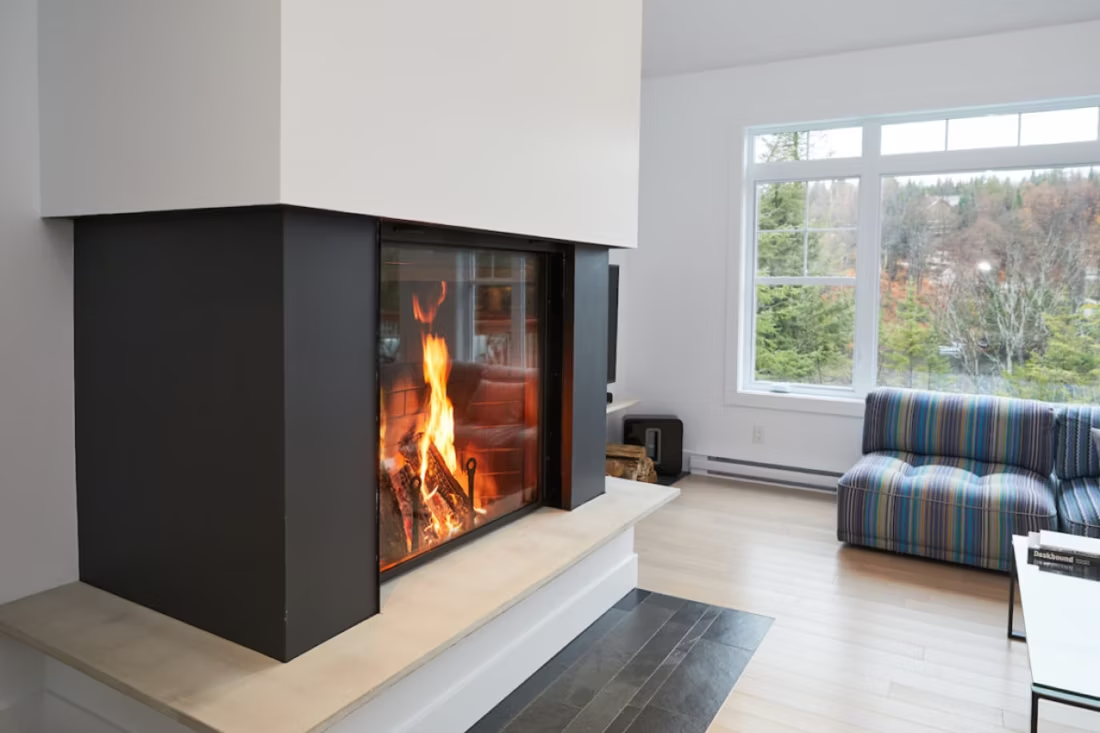
That said, a real number of Rowlett homeowners still install a wood-burning fireplace or stove—for the ambiance of a genuine fire on the handful of nights each winter that dip into the 20s, as a resilience measure after events like Winter Storm Uri in February 2021 left parts of Dallas County without power for days, or simply because they grew up with wood heat and want it in their own home. When they do, local firewood is easy to come by: oak, pecan, and mesquite are all common species cut and sold across North Texas.
Three steps. No salesperson until you're ready.
Tell us about your project
Your zip code, your situation, and the fuel you're leaning toward—or let the answers point you to one.
See what's actually available
The brands dealers within 100 miles genuinely carry—real options, never a catalog mirage.
Get your dealer & Project Guide
A trusted local dealer, plus the free Project Guide & Parts List that names every component of the job.
Frequently Asked Questions
How much does a wood-burning fireplace or stove installation cost in Rowlett?
Because wood-burning installs are a smaller share of the market here compared to gas or electric, there isn't a deep well of local pricing data—but a typical factory-built (zero-clearance) wood fireplace or freestanding stove install in a North Texas home generally runs $3,000 to $8,000, depending on whether you need new chimney chase work, roof penetration, and a hearth pad, versus retrofitting an existing masonry opening. A trusted local dealer can give you a firm number after seeing your home, since venting path is the biggest cost variable.
Does a wood stove actually make sense for Rowlett's climate?
For most homes, no—not as a primary heat source. With an average winter low around 34°F and only about 2,577 heating degree days a year, Rowlett's heating season is short and mild compared to genuinely cold-climate markets like Bismarck, ND. Most homeowners here who add a wood stove or fireplace are after supplemental warmth for a handful of cold nights, ambiance, or backup capability—not whole-house heat. If that's your goal, it's a reasonable project; if you're expecting it to replace your HVAC system, it's the wrong tool for this climate.
Does Winter Storm Uri change the case for wood heat here?
For some homeowners, yes. When ERCOT grid failures during the February 2021 freeze left parts of Dallas County without power for days, homes with a working wood-burning fireplace or stove had a heat source that didn't depend on the grid. Since then, a number of Rowlett and Rockwall County homeowners have added a wood stove specifically as a backup plan for the next multi-day outage, even though they use it rarely otherwise. If that's your motivation, say so when you're matched with a local dealer—it changes which units and venting configurations make sense.
What firewood species are available around Rowlett?
Oak, pecan, and mesquite are the three you'll see most often from North Texas firewood sellers. Oak and pecan are dense, burn long, and produce relatively little sparking, making them good choices for indoor stoves and fireplaces. Mesquite burns hot but pops and throws sparks more than the other two, so it's better suited to an enclosed firebox with a good screen or glass door than an open hearth. Because pecan and mesquite are also popular smoking woods in Texas barbecue country, seasoned cordwood of both is usually easy to source locally as a byproduct of that trade.
Do I need a permit to install a wood-burning fireplace in Rowlett?
Yes—any new wood-burning fireplace, stove, or chimney installation requires a building permit through the City of Rowlett's building inspection process, and most local installers handle that paperwork as part of the job. The good news is that Rowlett and Dallas County don't carry the winter air-quality restrictions you'd find in a nonattainment area—there's no seasonal burn curtailment tied to wood smoke here. Ozone Action Day advisories in DFW are a summer, ground-level issue and aren't aimed at wood-burning appliances.
Wood-burning fireplace vs. gas fireplace—which is the better fit in Rowlett?
For most Rowlett homes, gas is the mainstream choice: it's instant, requires no wood handling or ash cleanup, and fits the way most people here actually use a fireplace—a few hours in the evening during a mild North Texas winter. Wood is the right call for a smaller group of homeowners who specifically want a real fire, self-sufficient backup heat during grid outages, or the option to burn locally sourced oak and pecan. Both are legitimate projects; the right one depends on why you want a fireplace in the first place, and a local dealer can walk through that with you.
What size wood stove do I need for a Rowlett home?
Given how mild the heating season is here, most Rowlett installs are smaller stoves—sized for a single living room or open-concept main floor rather than whole-home heating. A stove rated for 1,000 to 1,500 square feet is plenty for the great majority of homes in this market, since it's supplementing (or backing up) a central HVAC system rather than replacing it. Oversizing a stove for a climate this mild just means smoldering, low-temperature fires and creosote buildup—a local dealer can size it correctly based on the room, not the whole house.
How often does a wood-burning chimney need cleaning here?
Even with light seasonal use, the Chimney Safety Institute of America recommends an annual inspection for any wood-burning appliance, and Rowlett is no exception—light use doesn't mean zero creosote buildup, and mesquite in particular can leave more residue than oak or pecan. Plan on a sweep and inspection once a year, ideally before the first cold snap in November or December, even if you only burn a handful of times each winter.
Wood-burning fireplace vs. electric fireplace—which makes more sense in Rowlett?
Electric fireplaces are a strong option for this market: they need no chimney, no venting, and no permit for the appliance itself, they run on standard household power through Oncor, TNMP, or Hilco Electric Cooperative depending on your service area, and at Rowlett's residential rate of roughly $0.149/kWh, running one for ambiance costs only a few cents an hour. The tradeoff is that electric units go dark in a power outage—the exact scenario, like Winter Storm Uri, that leads some homeowners toward wood instead. If ambiance and low upfront cost matter most, electric wins; if backup heat independent of the grid matters, wood is worth the extra install cost.
Why is a fireplace insert so efficient?
An insert does two things: it seals the chimney completely, so you stop losing air you already paid to heat, and it radiates warmth into the room through the firebox and glass. Most add a heat-exchange fan that pulls cool room air underneath, wraps it around the hot firebox, and pushes it back out warm. Your home is more efficient before you've even lit the first fire.
What does it take to replace an existing fireplace?
Fireplaces are like icebergs—bigger behind the wall than in front of it. Replacement means removing the surrounding tile or stone (the finish material laps onto the fireplace face), pulling the old unit, setting the new one in the same enclosure, and re-finishing the wall. A hearth professional can determine what's behind your wall without demolition during an in-home preview.
Can I install a fireplace myself?
If you're putting a fire in your house on purpose, it's best to work with an expert. Unless you're genuinely experienced in framing, gas line, vent pipe, and the national code on clearances to combustibles, have a professional do it—and ideally the same company that sells you the fireplace, so warranty, service, and liability all live under one roof.
Can a fireplace actually lower my heating bill?
Yes—by creating a comfort zone. A furnace heats every square foot of the house just to warm the one room you're in; a gas fireplace on low burns roughly a sixth of the gas a typical furnace does. Set the furnace around 55–60 degrees as a baseline, then heat the rooms your family actually uses. Families who heat this way commonly save $20–$60 a month.
Nearby Dealers
Hearth shops serving Rowlett and the surrounding area.
Gas Equipment Company - Carrollton
Grillers Choice
Solara Custom Doors & Lighting
Get matched with a Rowlett wood-fireplace dealer.
Tell us about your home and why you want a wood-burning fireplace or stove—ambiance, backup heat, or both—and we'll match you with a trusted local dealer and send over a free Project Guide & Parts List covering the exact unit and vent kit your install needs.
Find Your Fireplace →