
Keep Your Family Warm and Safe—No Matter What
With winter lows averaging 36°F, wood isn't the heating backbone here that it is up north—but a properly installed stove or insert still earns its place for ambiance, backup heat, and the smell of oak or pecan on a cold front.
Every Project Starts From One of These Five Situations
In Richland Hills, wood is chosen for atmosphere, not survival.
Richland Hills sits at 555 feet in the Dallas-Fort Worth metro, in climate zone 3A, with a mild winter heating load and an average winter low of 36°F. Compare that to Fargo, ND or Duluth, MN, where homes face nearly four times the winter heating load and wood heat is a matter of getting through February—Richland Hills homeowners are dealing with a handful of genuinely cold nights and the occasional Arctic front, not a five-month heating season. Most homes here already run on gas or electric central HVAC that handles the workload just fine.
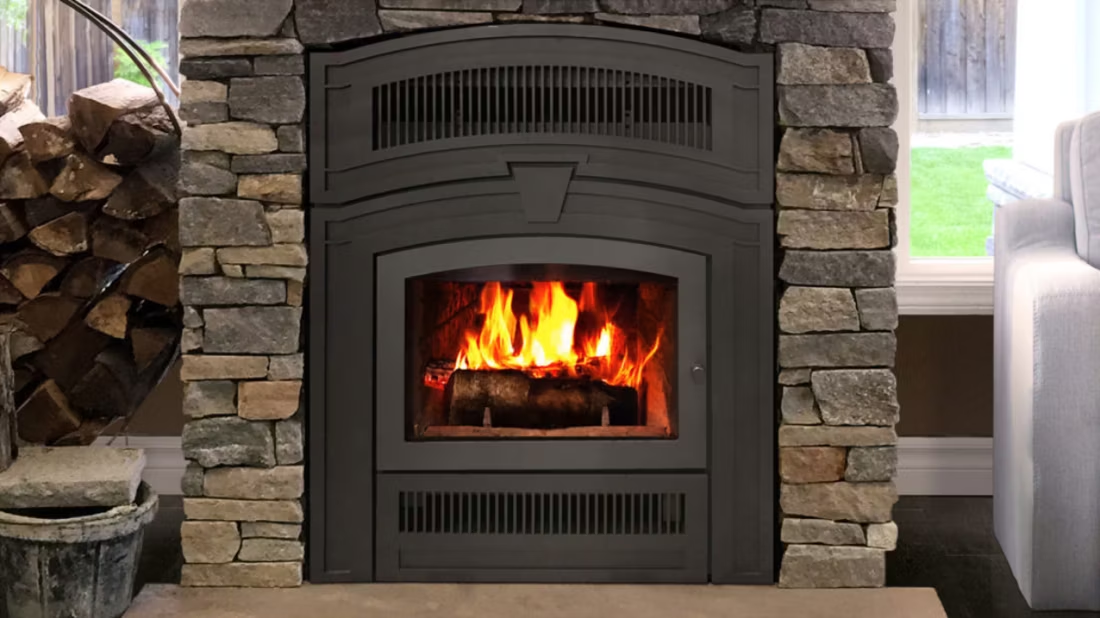
That doesn't mean wood is irrelevant. Plenty of Tarrant County homes built in the 1960s through 1980s came with a standard masonry wood-burning fireplace, and a fair number of owners either keep it as-is for occasional fires or upgrade it with an insert for real heat output. There's also the ERCOT factor: after the February 2021 grid failure left much of North Texas without power for days during a genuine cold snap, some homeowners started viewing a wood-burning unit as legitimate backup heat rather than just a mantel decoration. If that's your goal—or you just want real fires with local oak, pecan, or mesquite—a properly vented, code-compliant install still matters, even in a mild climate.
Three steps. No salesperson until you're ready.
Tell us about your project
Your zip code, your situation, and the fuel you're leaning toward—or let the answers point you to one.
See what's actually available
The brands dealers within 100 miles genuinely carry—real options, never a catalog mirage.
Get your dealer & Project Guide
A trusted local dealer, plus the free Project Guide & Parts List that names every component of the job.
Frequently Asked Questions
How much does a wood stove or insert installation cost in Richland Hills?
Because dedicated wood-burning installers are scarcer in the DFW metro than gas fireplace specialists, expect a somewhat wider quote range: roughly $3,500 to $8,000 for a wood-burning insert into an existing masonry fireplace (common in older Richland Hills ranch homes), and up to $9,000-$10,000 for a freestanding stove that requires new Class A chimney work in a home without an existing flue. Get quotes from at least two Fort Worth-area hearth dealers, since pricing varies more here than in markets where wood is the norm.
Do I even need a full-size wood stove given how mild the winters are here?
Probably not. With an average winter low around 36°F and a heating season that's mostly mild with occasional cold fronts, a stove sized for a northern climate's overnight burn times will oversize and overheat a typical Richland Hills home. Most local buyers do better with a small to mid-size stove or insert (rated for 1,000-1,800 sq ft) used for supplemental heat in one room during cold snaps, rather than a large catalytic unit meant to carry a whole house through a five-month winter.
Where can I find a qualified wood stove installer near Richland Hills?
Look for NFI (National Fireplace Institute) or CSIA (Chimney Safety Institute of America) certification—credentials that matter more here precisely because wood installs are less routine than gas conversions in this market. Most Fort Worth and Arlington-area hearth retailers who install wood units also handle gas, so ask specifically about their wood-burning experience and how many installs they do per year. Given how few homes in Richland Hills run wood as primary heat, a shop with genuine wood-burning chops is worth the extra call.
I have an old masonry fireplace—can I just add a wood insert instead of a full stove?
Yes, and for Richland Hills this is usually the more sensible path. Many homes in this part of Tarrant County were built with a standard open masonry wood-burning fireplace that's inefficient—most of the heat goes straight up the flue. A wood insert drops into that existing opening, uses the chimney you already have, and turns a decorative fire into a real, closeable heat source. It's a smaller project than building venting from scratch, which matters in a market where full new-construction wood installs are uncommon.
Do I need a permit to install a wood-burning fireplace in Richland Hills?
Yes—new wood-burning installations require a building permit through the City of Richland Hills Building Department, and work inside city limits falls under Tarrant County code as well for unincorporated edge cases. There's no state-level emissions certification requirement or wood-burning curtailment program here the way there is in some Western states—air quality concerns in this area are listed as none for wood smoke specifically. Most local installers will pull the permit as part of the job.
What's the best wood stove for a mild climate like Richland Hills?
Skip the big cold-climate catalytic stoves built for 20-hour burns at sub-zero temperatures—you don't need that here. A smaller non-catalytic stove or a mid-size insert from a brand like Pacific Energy or Vermont Castings is a better fit for a Tarrant County home that only needs supplemental heat during occasional cold fronts. Prioritize a model with a clean-burning secondary combustion system over one built purely for long overnight burn times.
How often should my chimney be inspected if I only burn a handful of times a year?
Annually, same as anywhere—the CSIA recommendation doesn't change just because you're burning less. Light use in a mild climate like Richland Hills' actually brings its own risk: chimneys that sit unused for months at a time can develop nesting birds, squirrels, or wasp activity during the long Texas warm season, which a pre-season inspection catches before your first fire of the year. Plan the sweep for early fall, ahead of the first real cold front.
What firewood is available locally, and where do I get it?
Oak, pecan, and mesquite are the common species around the DFW metro—the same woods used heavily for barbecue smoking in this region, so supply is easy to find through local firewood dealers and seasonal roadside vendors. Seasoned oak typically runs $250-$350 per cord and burns long and steady; mesquite burns hot and fast with a distinct aroma but isn't ideal for long overnight fires; pecan splits the difference with good coal production. Buy seasoned wood (moisture under 20%) rather than green—it matters even more here since fewer local buyers season their own supply year-round.
Wood vs. gas—which actually makes sense for a Richland Hills home?
For most homeowners here, gas is the practical choice: instant on-off, no ash or chimney maintenance, and it fits how little heating this climate actually demands. Wood makes sense for a smaller group—people who want the authentic look and smell of a real fire, who already have a masonry fireplace worth upgrading, or who specifically want a heat source that works without electricity after grid events like the February 2021 winter storm. If backup heat during an outage is part of your reasoning, wood is the only option on this page that keeps working when the power doesn't.
Why is my open fireplace making my house colder?
Open fireplaces suck—literally. As the fire burns, it consumes air your furnace already paid to heat and pulls it out through the chimney, so the house is actually colder after the fire goes out than before you lit it. An insert fixes this: it seals the chimney, puts fixed glass across the front, and turns that hole in your house into a real heat source.
What's the difference between an insert and a zero-clearance fireplace?
An insert is a fireplace that slides into a pre-existing wood-burning fireplace—if you don't have one, there's nothing to insert it into. A zero-clearance fireplace is built into a framed wall, which makes it the answer for remodels and new construction. Simple test: existing masonry fireplace means insert; blank or framed wall means zero-clearance.
Does a fireplace add value to my home?
On average, a fireplace adds back to the home about the same amount you spent installing it. Add the monthly savings from heating the rooms you actually use instead of the whole house—often hundreds of dollars a year—and the value case is strong before you even count what a fire does for how your family uses the room.
Can I install a fireplace myself?
If you're putting a fire in your house on purpose, it's best to work with an expert. Unless you're genuinely experienced in framing, gas line, vent pipe, and the national code on clearances to combustibles, have a professional do it—and ideally the same company that sells you the fireplace, so warranty, service, and liability all live under one roof.
Nearby Dealers
Hearth shops serving Richland Hills and the surrounding area. Every listing shows whether it is a WhyFire partner, a dealer we have verified as authorized for the brands we recommend, or a local business carrying hearth products. No manufacturer pays for placement. How we verify dealers →
Brothers Supply Co.
Fireside Innovations
Acme Brick Tile & Stone
Alliance Materials, Inc.
Texas Building Supply
Rodak's Coffee And Bbq Grills
Bbq Outfitters
EarthCore Industries
Cosentino – Dallas
Pittman Supply Company
Overhead Door Co. Of Dallas
Jacksons Home & Garden
Distrinctive Outdoor Environments, LLC
Find your wood fireplace in Richland Hills.
Tell us a bit about your home and we'll put together a free Project Guide & Parts List—the exact parts, including venting, for a wood stove or insert project in Richland Hills—and match you with a trusted local dealer who actually installs wood-burning units in this market.
Find Your Fireplace →