
An honest look at pellet heat in a city that rarely needs it.
With just a light, short heating season each year and an average winter low of 36°F, Richardson doesn't have the cold-weather demand that drives pellet stove adoption elsewhere. If you still want one—for ambiance, backup, or a room that runs cold—I'll match you with a real Dallas-area dealer who can tell you honestly whether it fits your house.
Every Project Starts From One of These Five Situations
A mild climate that doesn't need heavy heating hardware.
Richardson sits at 634 feet in the Dallas-Fort Worth metro, climate zone 3A, with an average winter low of 36°F and only a light, short heating season—a fraction of what a city like Duluth or Fargo racks up in a single hard month. Most Richardson homes lean on central gas furnaces or electric heat pumps sized for occasional cold snaps rather than a long heating season, which is exactly why we flag pellet—and wood—as not-applicable fuel categories for this market. It isn't that pellet stoves don't exist here; it's that the climate math rarely justifies one as a primary or even serious secondary heat source.
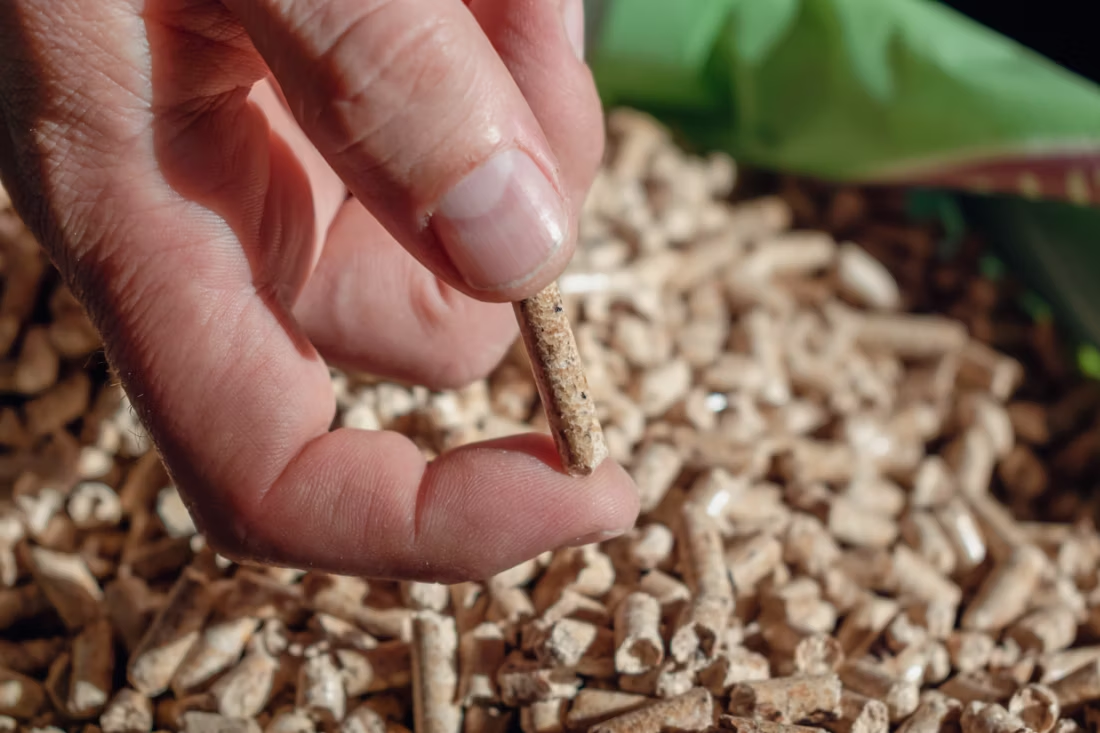
That said, a small number of Richardson homeowners still install pellet units—often transplants from colder states who liked the low-maintenance burn back home, or people who want supplemental warmth in a sunroom or converted garage on the handful of nights each winter that dip into the 20s. Regional pellet brands like Forest Energy and Lignetics do reach North Texas hearth dealers, so product isn't the obstacle; low local demand and thin dealer stock are. Some interest also traces back to Winter Storm Uri and ERCOT grid concerns, but it's worth knowing upfront: pellet stoves need electricity to run the auger and blower, so they don't solve an outage problem the way a wood stove would.
Three steps. No salesperson until you're ready.
Tell us about your project
Your zip code, your situation, and the fuel you're leaning toward—or let the answers point you to one.
See what's actually available
The brands dealers within 100 miles genuinely carry—real options, never a catalog mirage.
Get your dealer & Project Guide
A trusted local dealer, plus the free Project Guide & Parts List that names every component of the job.
Frequently Asked Questions
How much does a pellet stove installation cost in Richardson?
Nationally, an installed pellet stove typically runs $3,000 to $6,000 depending on the unit and venting work, and Richardson installs tend to land on the lower end of that simply because most projects here are smaller, supplemental setups—a sunroom, a converted garage, or a single cold-prone room—rather than a whole-house heating retrofit. Because pellet demand is thin in North Texas, get quotes from more than one Dallas-area dealer; installer availability and pricing can vary more here than in a market where pellet stoves are the norm.
Does a pellet stove actually make sense for a Richardson home?
For most Richardson houses, honestly, not as primary heat—with only a light, short heating season and winter lows averaging 36°F, a central gas furnace or heat pump already covers the handful of genuinely cold weeks each year more efficiently than a standalone pellet appliance. Where it does make sense is as a supplemental unit for a specific space, or for homeowners who simply like the low-mess, thermostat-like convenience of a pellet burn over splitting and stacking wood. A local dealer can walk through your actual layout and tell you plainly whether it's worth it before you spend money on one.
Will a pellet stove keep my house warm if the power goes out, like during Winter Storm Uri?
No, not on its own—this is the most important thing to understand before buying one in Richardson. Pellet stoves rely on an electric auger to feed fuel and a blower to circulate heat, so an ERCOT-driven outage during a hard freeze will shut a pellet stove down along with the rest of the house. Some owners pair a pellet unit with a small battery backup or generator specifically for this scenario, but if outage resilience during extreme cold is your main concern, a vented gas fireplace or a wood-burning setup is the more dependable backup—worth discussing with your dealer alongside the pellet option.
What size pellet stove do I need in Richardson?
Small. Given an average winter low of 36°F and a heating season that's short by national standards, most Richardson installs are sized for a single room or open living area rather than the whole house—think a unit rated for 1,000 to 1,500 square feet at most, and often less if you're just taking the edge off a sunroom or bonus room on the coldest nights. Oversizing is the more common mistake locally, since dealers used to serving colder markets sometimes default to bigger units than a North Texas home actually needs.
Where can I buy pellets in Richardson, and how much do they cost?
Forest Energy and Lignetics are the regional brands most likely to show up at Dallas-area hearth and hardware retailers, though because pellet stoves are uncommon here, don't expect the pallet-stacked inventory you'd see at a big-box store in a colder state—call ahead or ask your installer where they source fuel. Given low local turnover, budget for pricing that may run a bit above what pellet-heavy markets pay, and consider buying a season's supply at once rather than restocking mid-winter if local stock is thin.
Do I need a permit to install a pellet stove in Richardson?
Yes—any new vented hearth appliance, pellet stoves included, typically requires a building permit through the City of Richardson's permitting office, covering the unit itself and the venting penetration through the wall or roof. Because pellet installs are infrequent here compared to gas fireplace or HVAC work, it's worth confirming with the city and your installer that the inspector reviewing your permit is familiar with pellet-specific venting requirements rather than assuming wood-stove or gas rules apply directly.
How much does it cost to run a pellet stove's auger and blower with local electric rates?
Richardson is served by Oncor Electric Delivery, with Texas-New Mexico Power and Hilco Electric Cooperative covering parts of the surrounding area, and residential rates run around $0.1491 per kWh. A pellet stove's auger and blower motors are low-draw compared to central AC or a heat pump, so the electrical cost of running one is minor—a few dollars a month in typical use. The real cost driver is the pellets themselves, not the electricity, which is the opposite of what many first-time buyers expect.
Would a gas fireplace make more sense than a pellet stove in Richardson?
For most homes here, yes. Gas fireplaces are a standard, well-supported category in Richardson with broad dealer availability, straightforward venting, and instant on-demand heat that suits the short, mild cold spells this climate actually produces. Pellet stoves require ongoing fuel handling and hopper loading for a heating need that, with such a light, short heating season, is modest at best. Pellet still has a place for homeowners who specifically want that appliance and burn style, but if your goal is simply supplemental warmth with minimum fuss, a gas insert is usually the more practical local fit.
Since wood isn't common here either, why do people still burn oak, pecan, and mesquite in Richardson?
Oak, pecan, and mesquite are everywhere in North Texas, but locally they're overwhelmingly firewood for the grill and smoker, not the woodstove—Richardson's mild winters simply don't generate the demand for cordwood heating that colder regions have. That same logic extends to pellet fuel: without a real heating need driving volume, neither wood nor pellet appliances have built up the dealer density, permit familiarity, or fuel supply chain you'd find in a place like Duluth or Bozeman. It's a climate story more than a preference story.
What does it take to replace an existing fireplace?
Fireplaces are like icebergs—bigger behind the wall than in front of it. Replacement means removing the surrounding tile or stone (the finish material laps onto the fireplace face), pulling the old unit, setting the new one in the same enclosure, and re-finishing the wall. A hearth professional can determine what's behind your wall without demolition during an in-home preview.
What do I measure to size a fireplace insert?
Four numbers tell you what fits: the front width, the front height, the back width, and the overall depth of your existing fireplace opening. Grab a tape measure, jot those down, and snap a photo of the wall—those two things do more to move your project forward than anything else you can do today.
How much should I budget for a fireplace?
For an average home—covering the fireplace, the vent pipe, and basic installation—a budget between $3,900 and $5,500 gives you a lot of options across wood, gas, and pellet. By the time you add finish work, gas line, and electrical, the average complete installation lands between $5,000 and $12,000 all-in. In a remodel or new build, a good rule is to put about 2.5% of the total project cost toward the fireplace.
Can a fireplace actually lower my heating bill?
Yes—by creating a comfort zone. A furnace heats every square foot of the house just to warm the one room you're in; a gas fireplace on low burns roughly a sixth of the gas a typical furnace does. Set the furnace around 55–60 degrees as a baseline, then heat the rooms your family actually uses. Families who heat this way commonly save $20–$60 a month.
Nearby Dealers
Hearth shops serving Richardson and the surrounding area.
Gas Equipment Company - Carrollton
Grillers Choice
Solara Custom Doors & Lighting
Pellet Brands Stocked Around Richardson
Manufacturers will point you to the nearest stocking dealer.
Get matched with a Richardson-area pellet stove dealer.
Tell me about your space and what you're hoping to solve—ambiance, a cold room, or outage backup—and I'll match you with a trusted local dealer who'll tell you honestly whether pellet is the right call for your Richardson home, plus a free Project Guide & Parts List with the vent kit and parts spelled out if it is.
Find Your Fireplace →